Artwork
Pere Ives
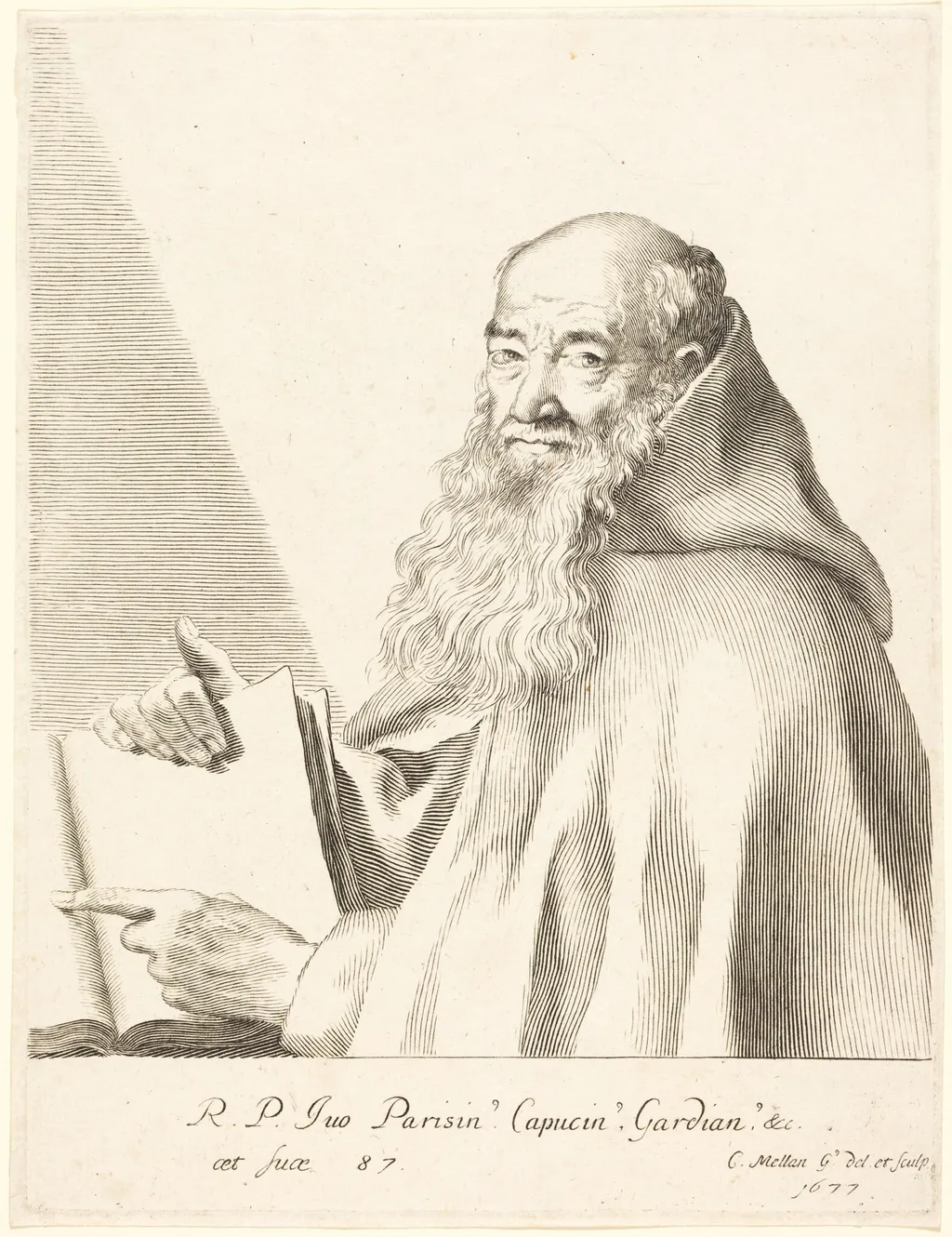
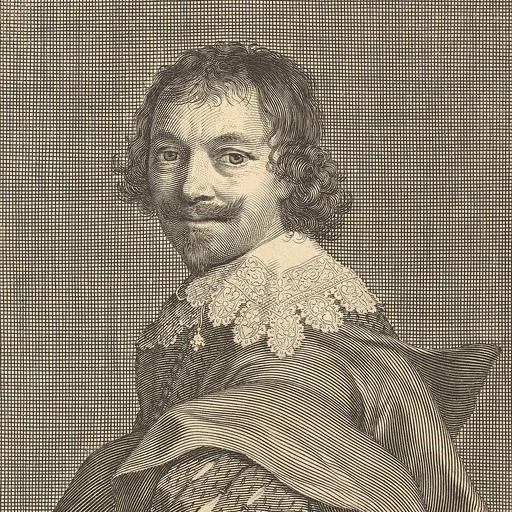
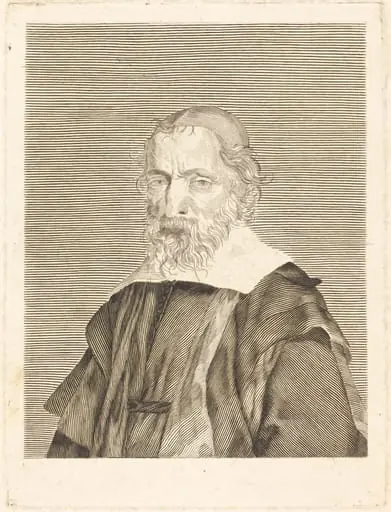
Pere Ives is an ink print by the Baroque artist Claude Mellan. It dates from 1677 and is held in the collection of the National Gallery of Art.
About this work
Overview
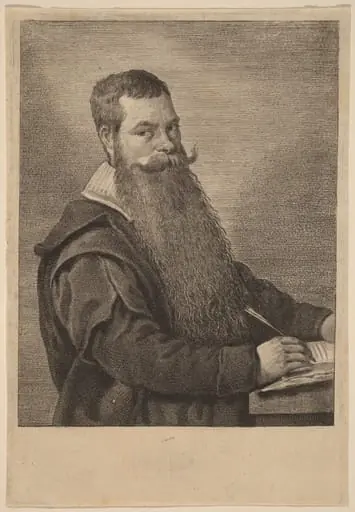
Claude Mellan’s 1677 engraving titled “Pere Ives” presents a solitary figure against a uniform beige backdrop. The subject, an elderly man with flowing white hair and beard, is dressed in a simple robe and holds a sheet of paper, gesturing toward it with his left hand while the right hand supports the document.
Subject & Meaning
The dignified appearance—white hair, beard, and modest attire—suggests the figure may represent a cleric or learned individual. His pointed emphasis on the paper implies a focus on written content, perhaps a sermon, scholarly treatise, or official correspondence, inviting viewers to consider the importance of the text.
Technique & Style
Executed in the Baroque period, the engraving demonstrates Mellan’s precise line work and tonal modulation. The artist employs fine hatching to render the texture of the robe and the delicate features of the face, while the plain background heightens the figure’s presence, a common Baroque strategy to concentrate attention on the subject.
History & Provenance
Created in 1677, the print is attributed to Claude Mellan, a French engraver known for his meticulous approach. No specific ownership record precedes its inclusion in museum collections, but the work is documented in catalogues of 17th‑century French prints.
Context
Mellan worked during a time when engraving served both artistic and documentary purposes, often reproducing portraits of notable religious or academic figures. “Pere Ives” fits within this tradition, reflecting the period’s interest in portraying authority through restrained yet detailed visual language.
Artist & collection