Artwork
Saint Bruno
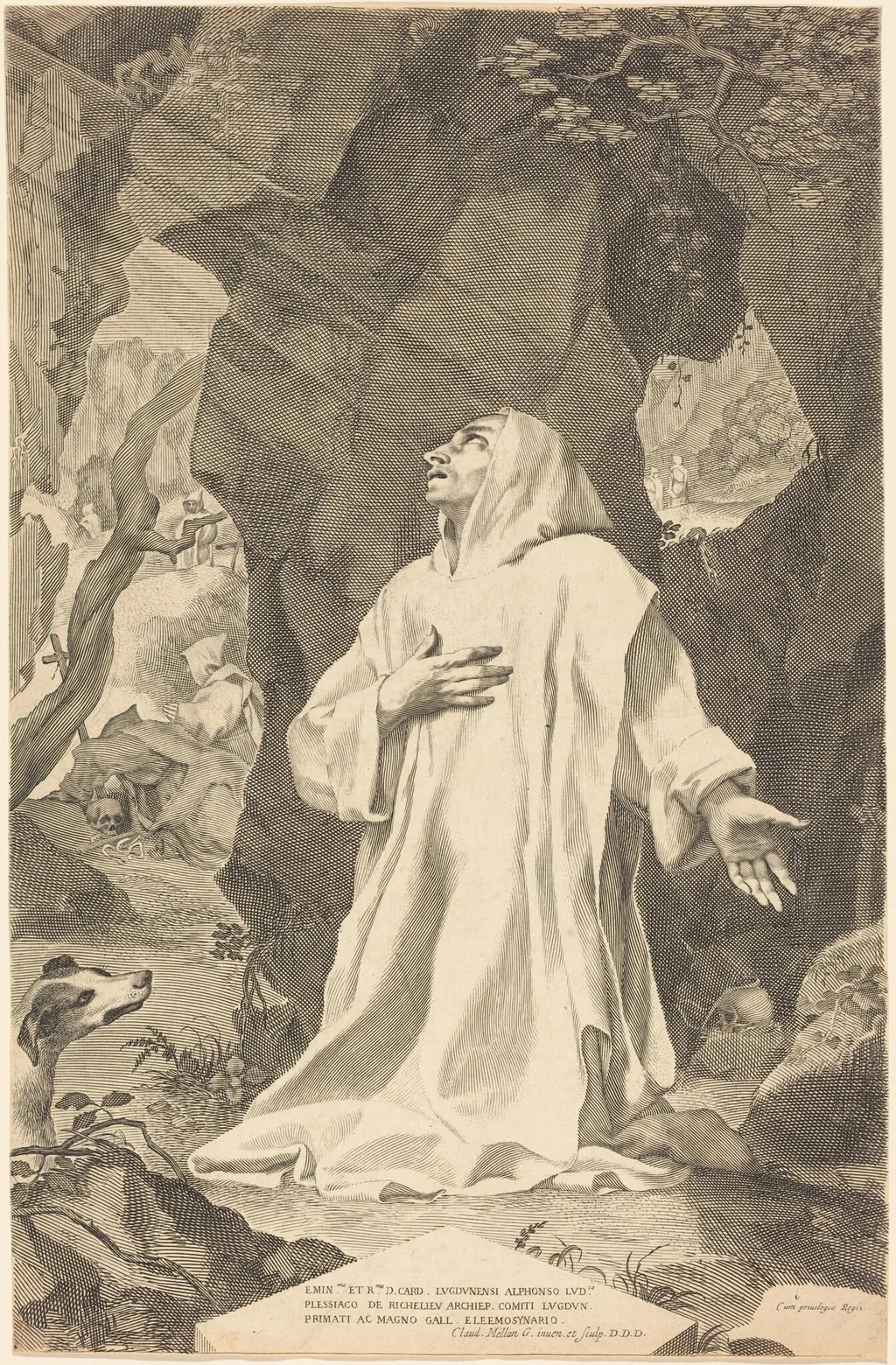
Saint Bruno is an ink print by the Renaissance artist Claude Mellan. It dates from 1643 and is held in the collection of the National Gallery of Art.
About this work
Overview
Claude Mellan’s 1643 engraving presents Saint Bruno, founder of the Carthusian order, in a solitary, natural setting.
Claude Mellan’s 1643 engraving presents Saint Bruno, founder of the Carthusian order, in a solitary, natural setting. The figure stands amid craggy rocks and sparse foliage, his white habit and hood contrasting with the dark terrain. A small dog gazes upward from the lower left, while the saint’s right hand rests on his chest and his left extends outward, suggesting a gesture of blessing or prayer.
Subject & Meaning
The composition emphasizes the saint’s contemplative solitude, linking his spiritual devotion to the austere landscape. The white habit symbolizes purity, while the outstretched hand may convey intercession or instruction to his followers. The attentive dog, a common emblem of fidelity, reinforces themes of loyalty and the harmonious relationship between the holy figure and creation.
Technique & Style
Mellan employs his characteristic single-line engraving technique, creating tonal variation through meticulous cross‑hatching and delicate gradations of light. The rendering of rock texture and foliage demonstrates a nuanced control of line density, producing a sense of depth without resorting to heavy shading. This approach yields a refined, almost luminous quality that accentuates the saint’s serene presence.
History & Provenance
Executed in 1643, the print reflects Mellan’s mature period, during which he produced several religious subjects for devotional use. While specific ownership records are scarce, the engraving circulated among collectors of 17th‑century French prints, contributing to the broader dissemination of Carthusian iconography in post‑Baroque Europe.
Artist & collection


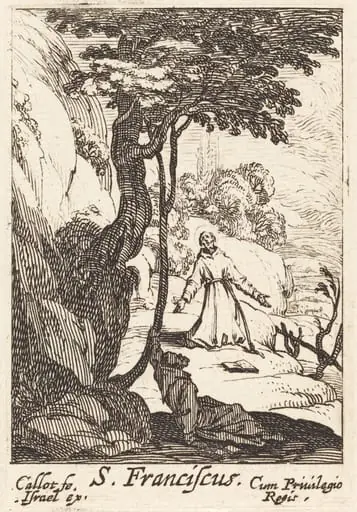 Saint Francis
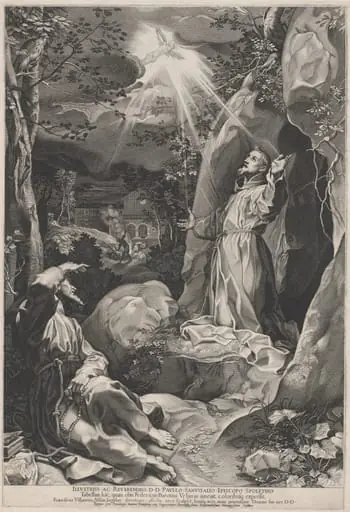 Saint Francis Receiving the Stigmata
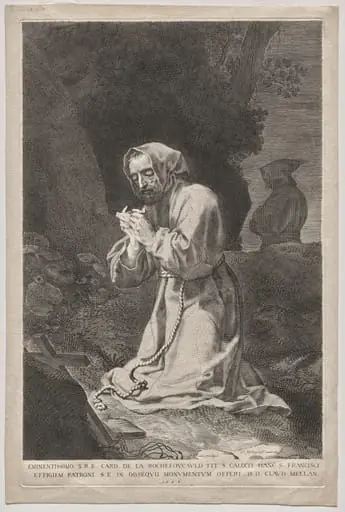 St. Francis
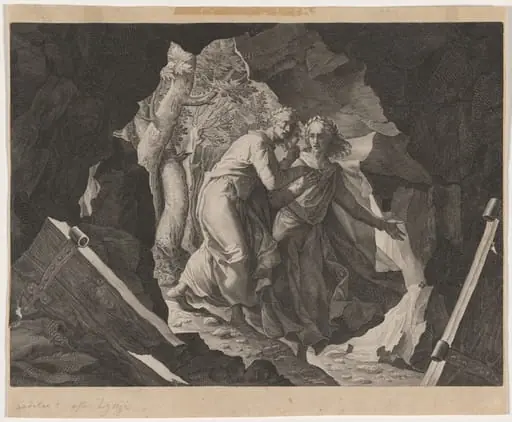 Dante and Virgil in Hell
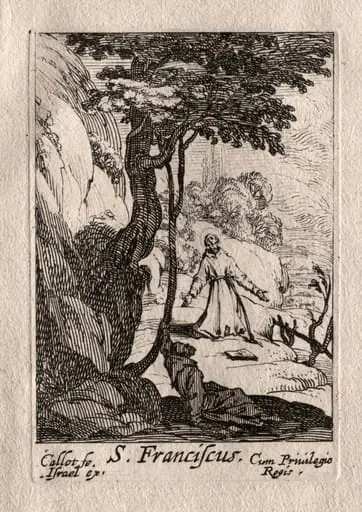 Les Penitents: St. François
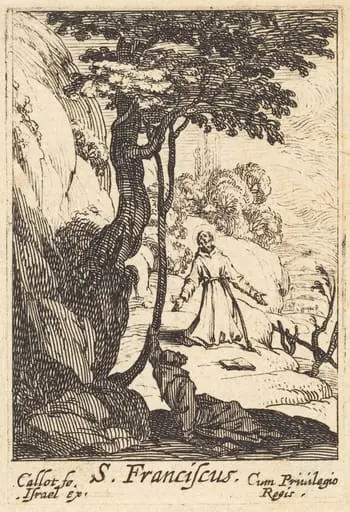 Saint Francis
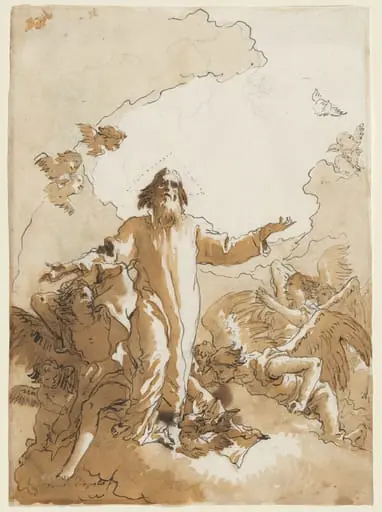 God the Father Standing in Clouds Surrounded by Angels and Putti
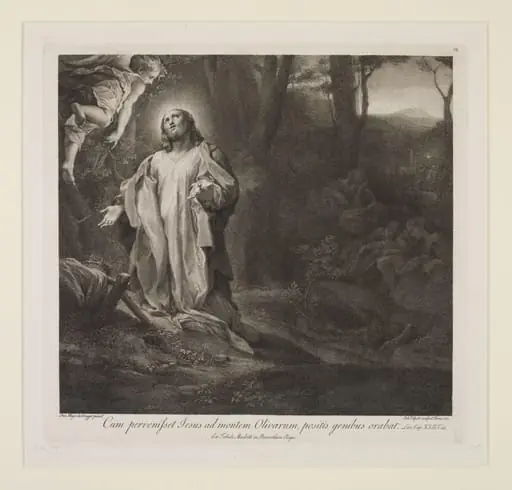 Christ Praying on the Mount of Olives
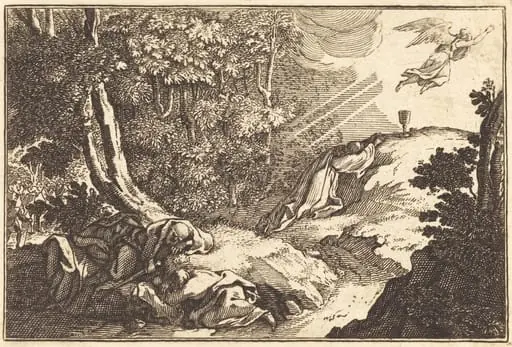 Agony in the Garden
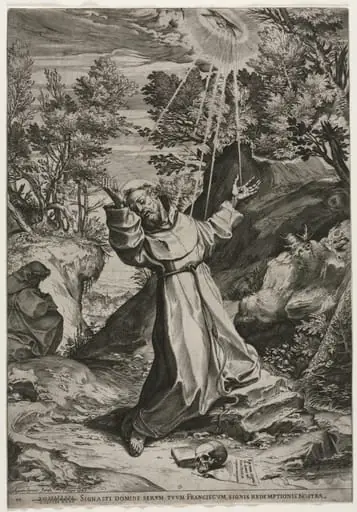 St. Francis Receiving the Stigmata
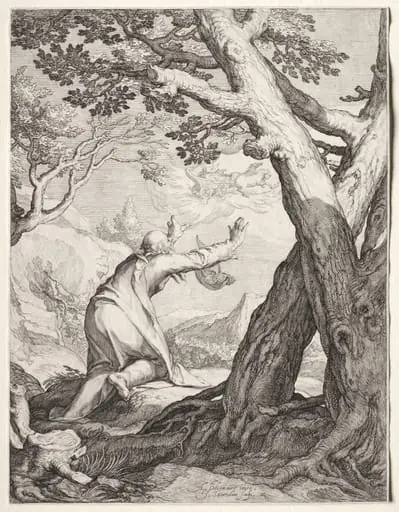 Elisha and Elijah's Chariot of Fire
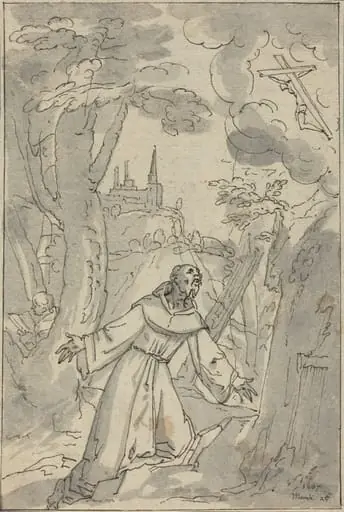 The Stigmatization of Saint Francis