Artwork
Christ Praying on the Mount of Olives
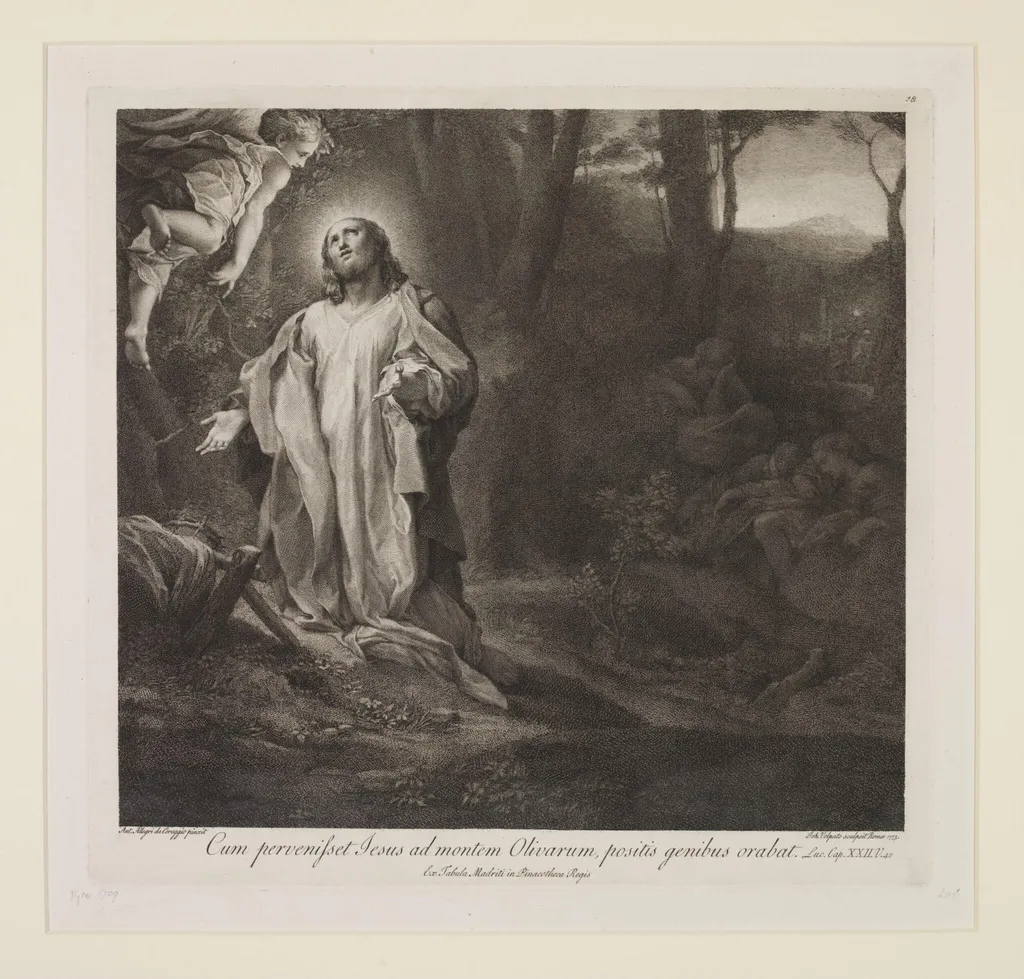
Christ Praying on the Mount of Olives is a print by Giovanni Volpato. It is held in the collection of the Victoria and Albert Museum.
About this work
Overview
This print, created by Giovanni Volpato in 1850, reproduces a composition originally by Correggio. It belongs to the 'Schola Italica Picturæ' series, a collection aimed at disseminating Renaissance imagery through engraved reproductions. Executed on paper, the work reflects 19th-century interest in preserving and circulating classical religious subjects through printmaking techniques.
Subject & Meaning
The halo and solemn posture reinforce his sacred identity, while the quiet natural setting underscores the intimacy of the moment.
The scene depicts Christ in prayer on the Mount of Olives, moments before his arrest, as described in the Gospels. Kneeling with arms outstretched and head raised, he embodies surrender and spiritual anguish. A hovering angel, gazing downward, signifies divine reassurance. The halo and solemn posture reinforce his sacred identity, while the quiet natural setting underscores the intimacy of the moment.
Technique & Style
Volpato employed engraving to translate Correggio’s painterly effects into linear form. Subtle tonal gradations suggest chiaroscuro, lending depth and emotional weight to the figures. The delicate rendering of foliage and cloud cover contrasts with the crisp outlines of Christ and the angel, emphasizing spiritual presence amid natural stillness. The print’s fine lines reflect the precision characteristic of 19th-century reproductive engraving.
History & Provenance
Produced as part of the 'Schola Italica Picturæ' series, this print was intended for scholarly and collector audiences in mid-19th century Europe. Volpato, known for his skill in reproducing Old Master compositions, worked from established paintings rather than creating original designs. The print’s circulation helped sustain interest in Renaissance art during a period of growing art historical scholarship.
Context
In the 1850s, reproductive prints like this one served as accessible conduits for art education and religious devotion. The choice of Correggio’s composition reflects ongoing reverence for High Renaissance ideals of grace and emotional expression. Volpato’s involvement aligns with broader efforts to systematize and preserve Italy’s artistic heritage through mechanical reproduction.
Legacy
Though not an original work, this print contributed to the continued visibility of Correggio’s religious imagery in the 19th century. It exemplifies how engraving bridged elite painting traditions and broader public engagement with sacred art. Today, such prints remain valuable as historical artifacts of artistic transmission and the evolving role of print in cultural memory.
Artist & collection

Artist
Giovanni Volpato (1735–1803) was an Italian engraver. He was also an excavator, dealer in antiquities and manufacturer of biscuit porcelain figurines.

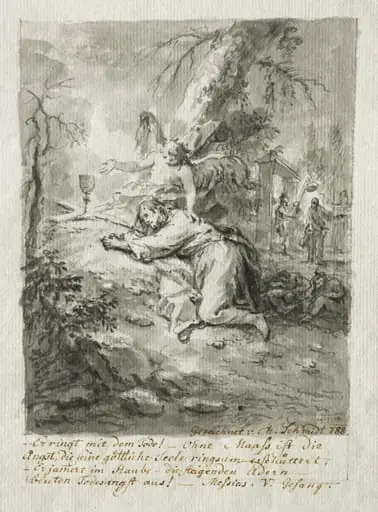 Christ on the Mount of Olives, The Flagellation, Christ Crowned with Thorns, The Crucifixion
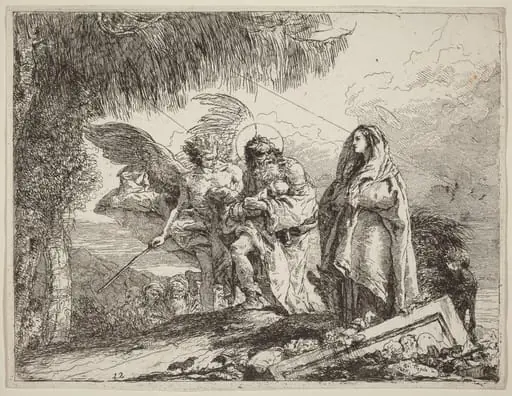 The Flight, Holy Family Walking with Angel
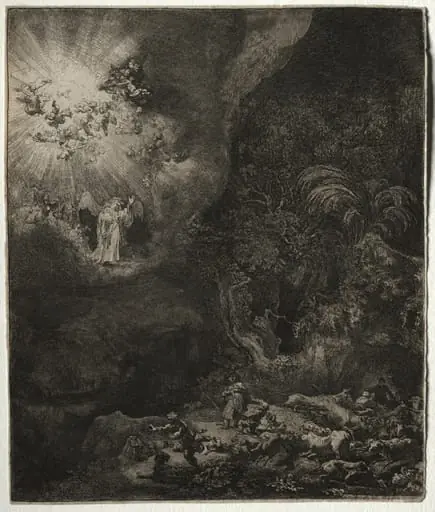 The Angel Appearing to the Shepherds
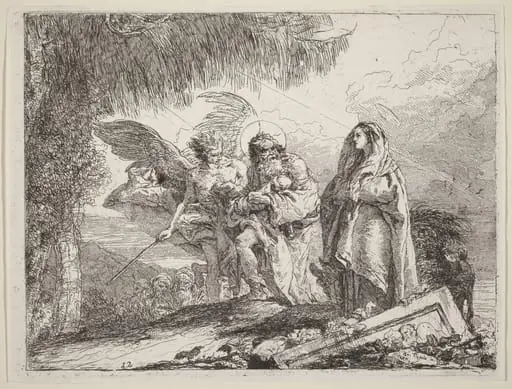 The Flight, Holy Family Walking with Angel
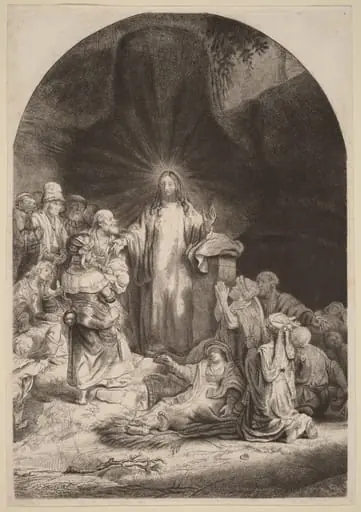 Christ Preaching and Healing (Fragment from the Hundred Guilder Print)
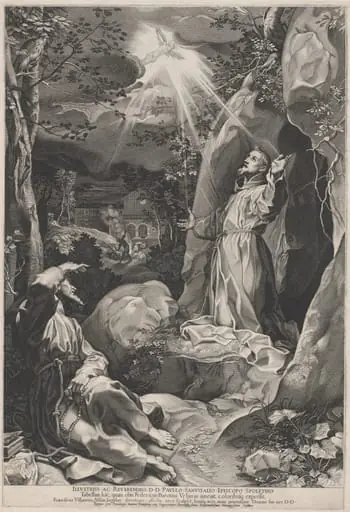 Saint Francis Receiving the Stigmata
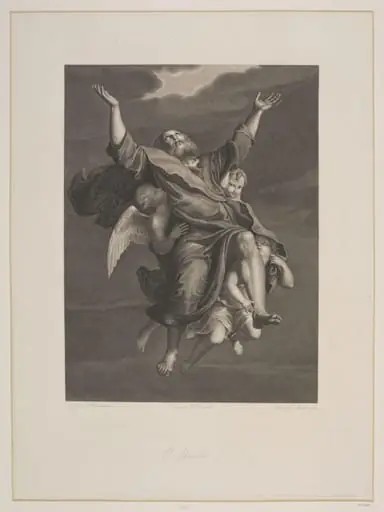 Ascension of St. Paul
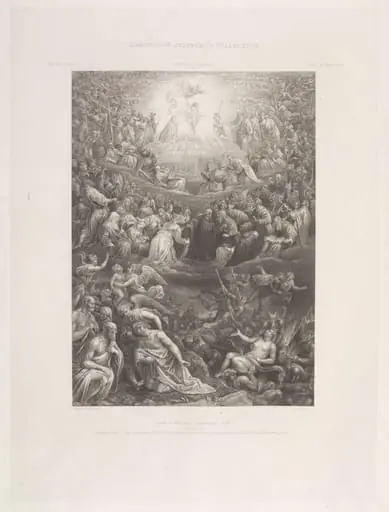 The Last Judgment