Artwork
Saint Francis Receiving the Stigmata
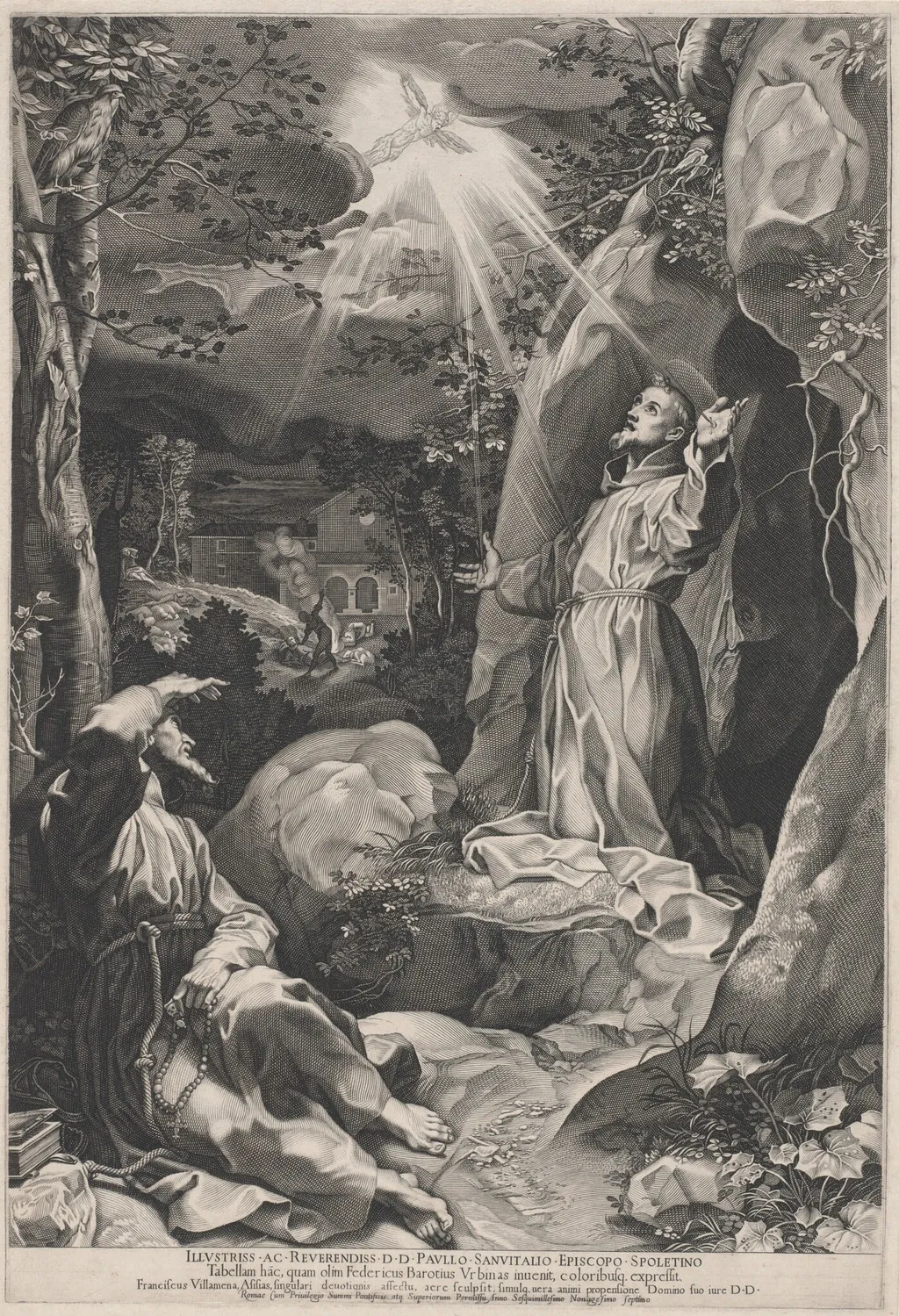
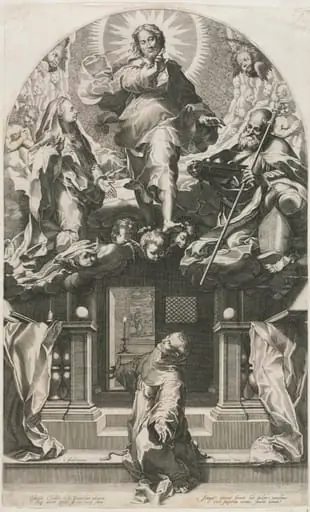
Saint Francis Receiving the Stigmata is an ink print by the Renaissance artist Francesco Villamena. It dates from 1597 and is held in the collection of the National Gallery of Art.
About this work
Overview
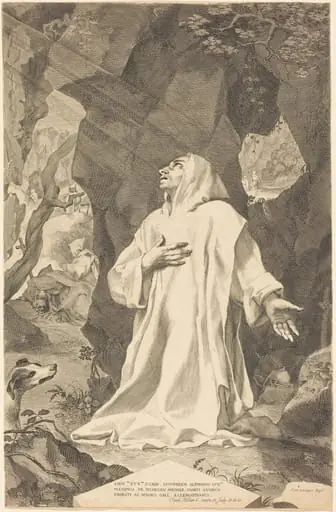
Francesco Villamena, an Italian engraver from Assisi active in the late sixteenth century, produced an engraving titled Saint Francis Receiving the Stigmata in 1597. Executed on laid paper, the print presents a monochrome scene in which Saint Francis, clad in a simple habit, looks upward as a luminous dove appears above him, while a fellow monk kneels nearby, gesturing toward the celestial sign.
Subject & Meaning
The image captures the moment of Saint Francis of Assisi’s reception of the stigmata, the miraculous appearance of Christ’s wounds on the saint’s body. The dove, a traditional symbol of the Holy Spirit, underscores the divine origin of the marks, while the kneeling companion emphasizes the event’s devotional significance for the Franciscan community.
Technique & Style
Villamena employed fine cross‑hatching to render tonal variations, creating depth and texture across the rocky landscape and the figures’ drapery. The use of black ink on laid paper yields a stark chiaroscuro effect, typical of late‑Renaissance printmaking and reflective of his training under Cornelis Cort and the influence of Agostino Carracci.
History & Provenance
Born in 1564, Villamena worked primarily in the religious print market of Italy, producing works for devotional use. The 1597 engraving was likely circulated among Franciscan patrons and collectors of sacred imagery, though specific ownership records for surviving copies are limited.
Context
The print belongs to a broader wave of Counter‑Reformation art that sought to reinforce Catholic piety through vivid visual narratives. Engravings such as this served both as instructional tools and as portable objects of personal devotion, aligning with the era’s emphasis on accessible religious imagery.
Legacy
Villamena’s Saint Francis engraving illustrates the technical skill and devotional intent characteristic of late Renaissance printmakers. While not as widely reproduced as works by his contemporaries, the piece contributes to the visual tradition of Franciscan iconography and demonstrates the enduring appeal of print media for disseminating sacred stories.
Artist & collection
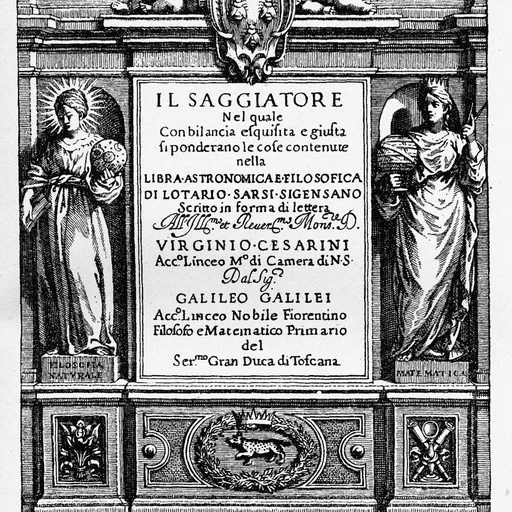
Artist
Francesco Villamena (1564–1624) was an Italian engraver, drawing teacher and art collector.