Artwork
The Holy Family
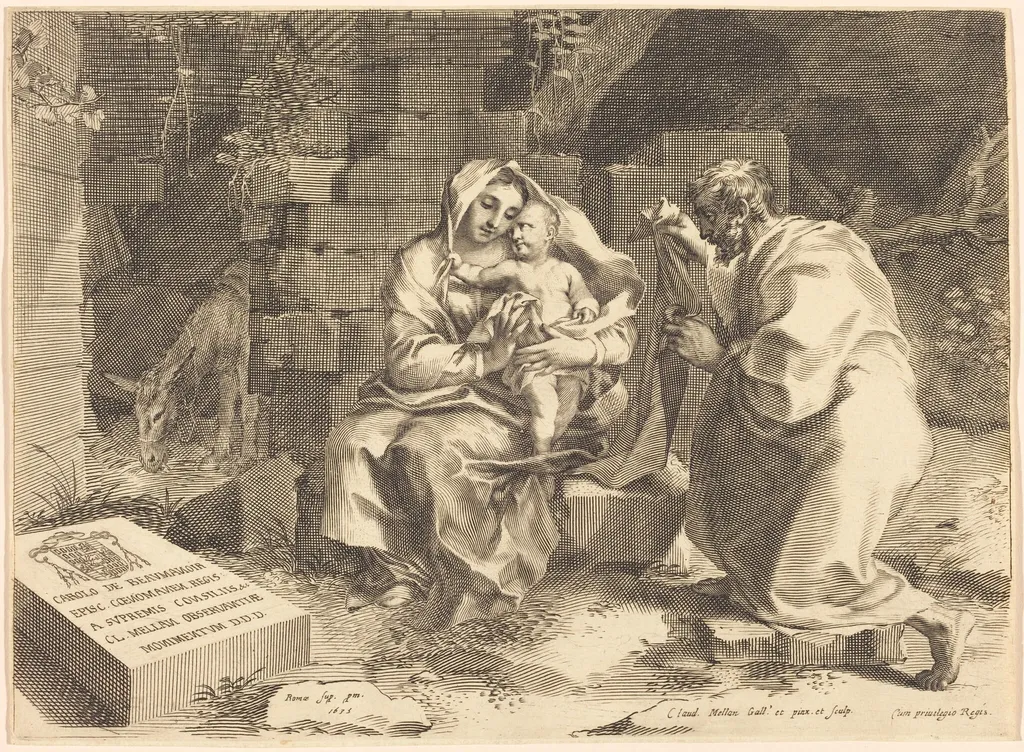
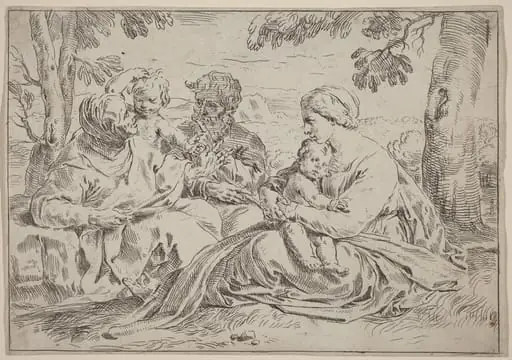
The Holy Family is an ink print by the Baroque artist Claude Mellan. It dates from 1635 and is held in the collection of the National Gallery of Art.
About this work
Overview
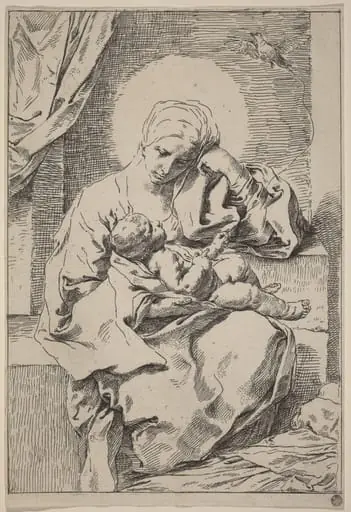
Created in 1635, this black-and-white engraving by Claude Mellan depicts a quiet domestic scene centered on the Holy Family.
Created in 1635, this black-and-white engraving by Claude Mellan depicts a quiet domestic scene centered on the Holy Family. Rendered entirely in ink lines, the composition captures Mary with the infant Jesus, while another figure, likely Saint Elizabeth, leans in with a gentle gesture. The setting is minimal—a rocky outcrop suggests a secluded space—emphasizing intimacy over grandeur. The work exemplifies the precision possible in printmaking during the early Baroque period.
Subject & Meaning
The scene portrays a tender, private moment between Mary, Jesus, and a companion figure, possibly Elizabeth, reinforcing themes of familial devotion and spiritual closeness. The absence of halos or overt symbols shifts focus to human connection rather than divine spectacle. The quiet interaction—Mary’s embrace, the other woman’s hand on the child’s shoulder—conveys tenderness and protective care, aligning with Counter-Reformation ideals of accessible, emotionally resonant piety.
Technique & Style
Mellan employed fine, interwoven lines to model form through cross-hatching, building volume and texture without tone or wash. The density and direction of the lines create subtle gradations of light and shadow, giving the figures a sculptural presence against the rough terrain. This meticulous approach, characteristic of French engraving of the time, prioritizes clarity and control, transforming linear marks into lifelike surfaces with remarkable economy.
History & Provenance
The engraving was produced in Paris during Mellan’s mature period, when he was renowned for his technical mastery in reproductive and devotional prints. It was likely circulated among religious patrons and collectors interested in intimate spiritual imagery. No early ownership records are widely documented, but its survival in multiple museum collections suggests it was valued for its craftsmanship and devotional clarity.
Context
In mid-17th century France, engraving served both artistic and religious purposes, especially as the Church encouraged imagery that fostered personal devotion. Mellan’s work reflects this trend, offering a restrained alternative to the dramatic compositions of Italian Baroque art. His focus on line over color aligned with French aesthetic preferences and the technical limitations of print reproduction, making his engravings widely accessible to educated audiences.
Legacy
Mellan’s engraving influenced later printmakers through its refined use of line to suggest volume and emotion. While not widely reproduced in popular media, it remains a studied example of Baroque graphic art for its technical discipline and emotional restraint. Art historians note its role in demonstrating how subtle mark-making could convey spiritual depth without overt symbolism, shaping the evolution of narrative printmaking in Europe.
Artist & collection

 The Holy Family
 The Holy Family
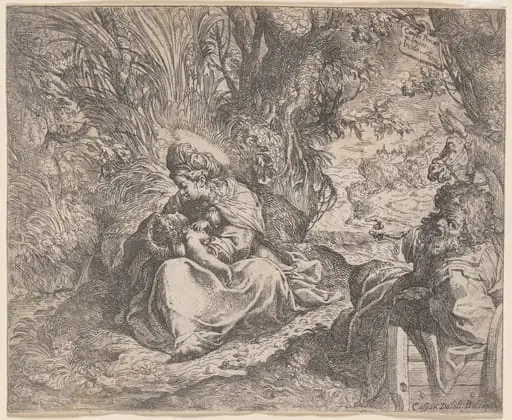 The Rest on the Flight into Egypt
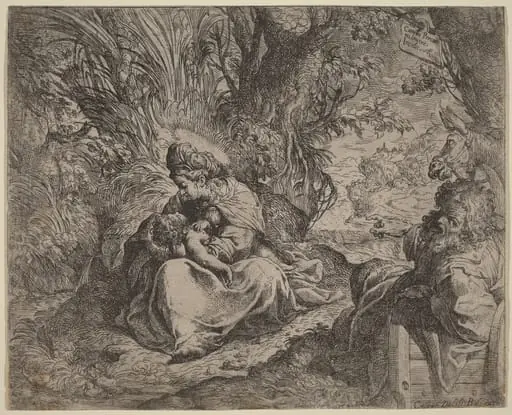 The Rest on the Flight into Egypt
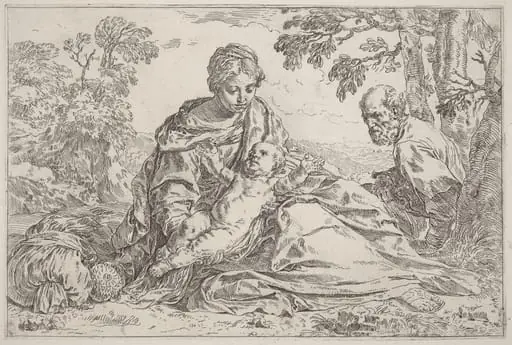 The Rest on the Flight into Egypt
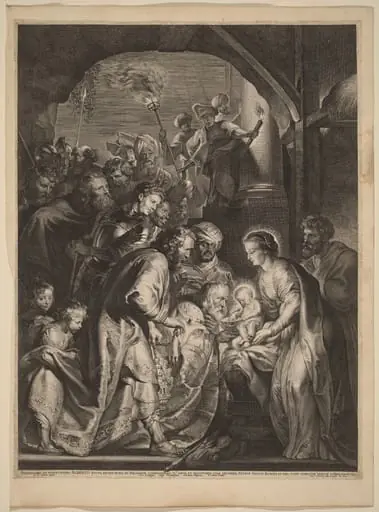 The Adoration of the Magi
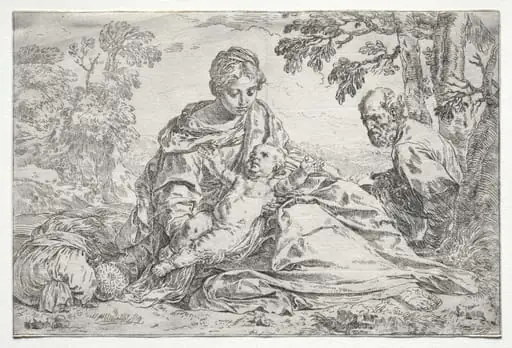 Rest on the Flight into Egypt
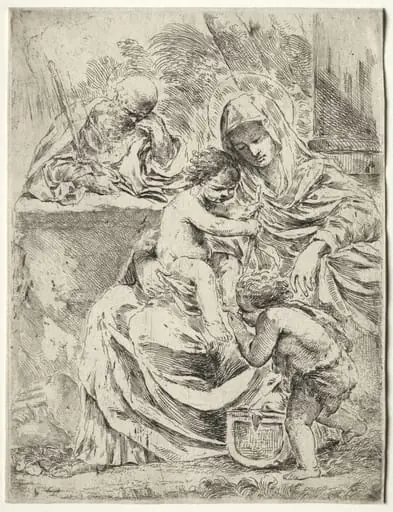 The Holy Family
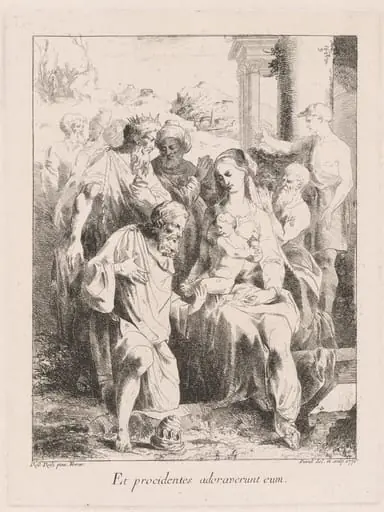 Adoration of the Magi
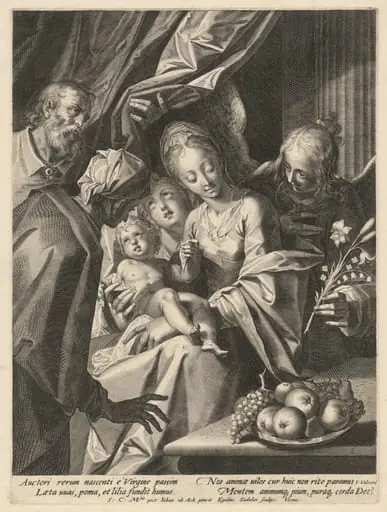 The Holy Family with Saint Anne and Two Angels
 The Virgin and Child with a Bird
 The Nativity