Artwork
Portrait of Guy Aldonce de Durfort de Lorges (1630-1702)
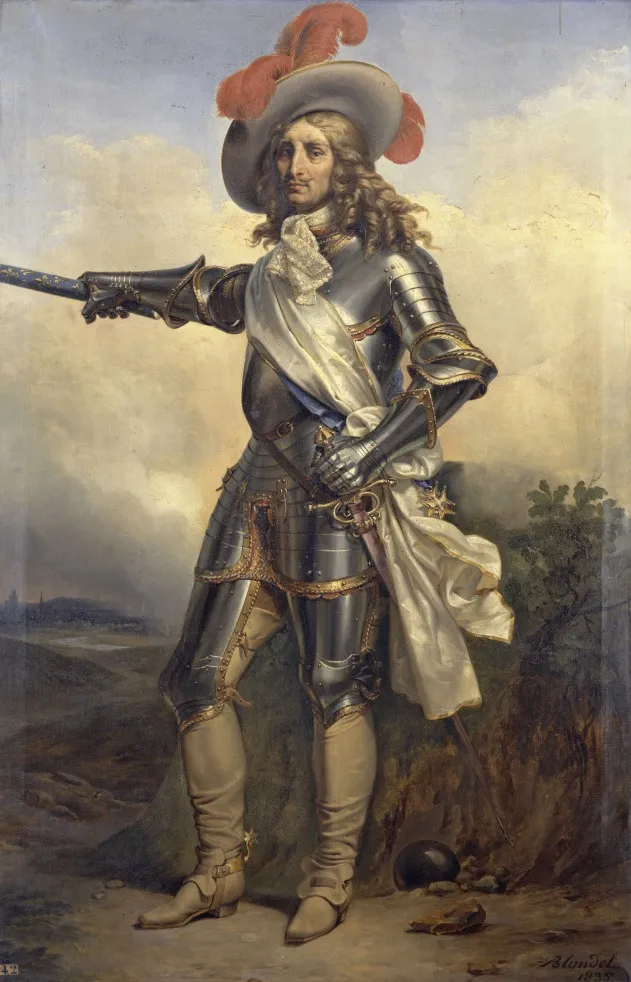
Portrait of Guy Aldonce de Durfort de Lorges (1630-1702) is an oil painting by the Neoclassicist artist Merry-Joseph Blondel. It dates from 1827 and is held in the collection of the Palace of Versailles.
About this work
Overview
Painted around 1827 by Merry-Joseph Blondel, this oil portrait depicts Guy Aldonce de Durfort de Lorges, a French military commander of the late 17th century.
Painted around 1827 by Merry-Joseph Blondel, this oil portrait depicts Guy Aldonce de Durfort de Lorges, a French military commander of the late 17th century. Though created over a century after the subject’s death, the work reflects the Neoclassical interest in historical dignity and formal portraiture. Blondel, trained under Jean-Baptiste Regnault and a Prix de Rome winner, brought academic precision to the composition, aligning it with the institutional tastes of early 19th-century France.
Subject & Meaning
The subject, Guy Aldonce de Durfort de Lorges, was a marshal of France and a prominent figure in Louis XIV’s army. The portrait emphasizes his military rank through armor, a ceremonial sword, and a white sash, symbols of noble service. The outdoor setting with distant landscape suggests both his connection to the land he defended and the enduring legacy of his service. The portrait does not capture a moment in time but constructs an idealized image of aristocratic valor.
Technique & Style
Blondel employed careful modeling of light and shadow to render the metallic surfaces of the armor with realism, enhancing its reflective qualities and three-dimensionality. The gold accents and textured fabric of the sash contrast with the muted tones of the landscape, directing focus to the figure. The brushwork is controlled and refined, typical of Neoclassical training, with attention to anatomical precision and compositional balance rather than expressive spontaneity.
History & Provenance
The painting entered the collection of the Palace of Versailles, where it remains today. Its placement there aligns with the 19th-century effort to reinforce national identity through historical imagery. Though painted long after Durfort’s death, its inclusion in the royal residence underscores the enduring symbolic value of military leadership in French heritage. The work was likely commissioned or acquired as part of a broader initiative to visually document France’s military aristocracy.
Context
Blondel created this portrait during a period when French institutions sought to reconcile revolutionary change with monarchical tradition. Neoclassicism, with its emphasis on order and historical precedent, provided a visual language for this reconciliation. Portraits like this one served to legitimize contemporary authority by linking it to an idealized past, particularly one associated with the Sun King’s reign and its military achievements.
Legacy
As a professor at the École des Beaux-Arts, Blondel influenced generations of academic painters. This portrait exemplifies the institutional approach to history and portraiture that dominated French art until the late 19th century. While later movements rejected its formality, the work remains a documented artifact of how 19th-century France chose to remember its military elite — through composed, dignified imagery rooted in classical ideals.
Artist & collection
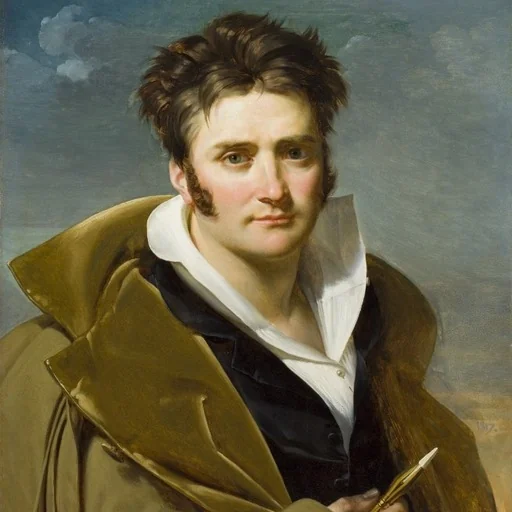
Artist
Merry-Joseph Blondel (French pronunciation: ; 25 July 1781 – 12 June 1853) was a French history painter of the Neoclassical school.

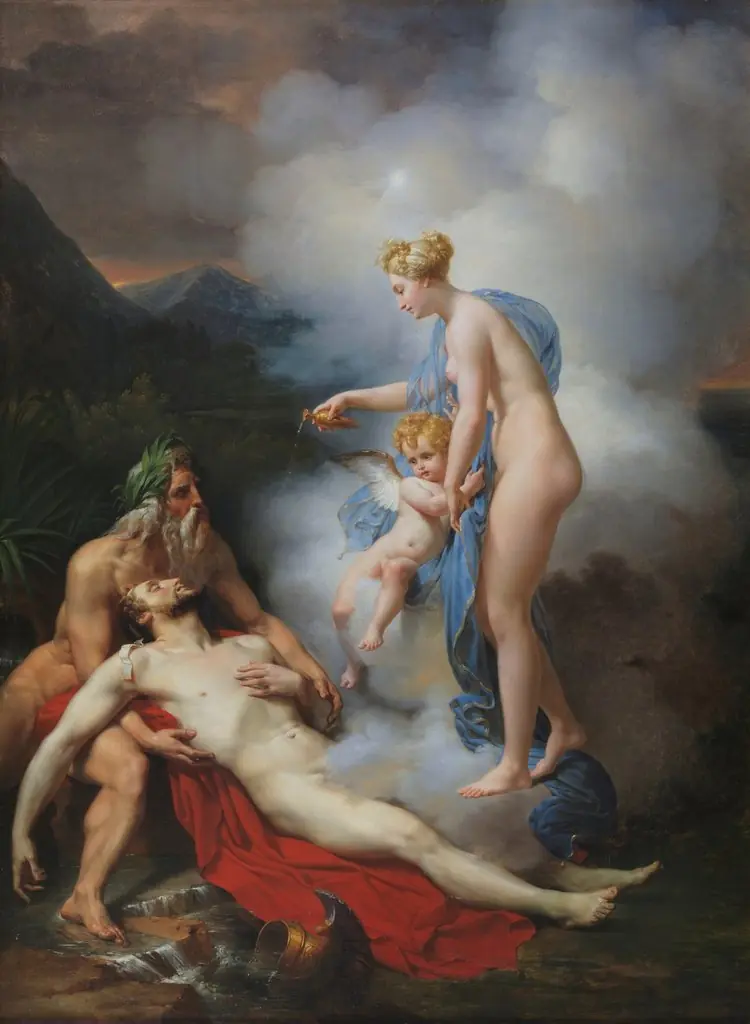 Aeneas Becomes a God
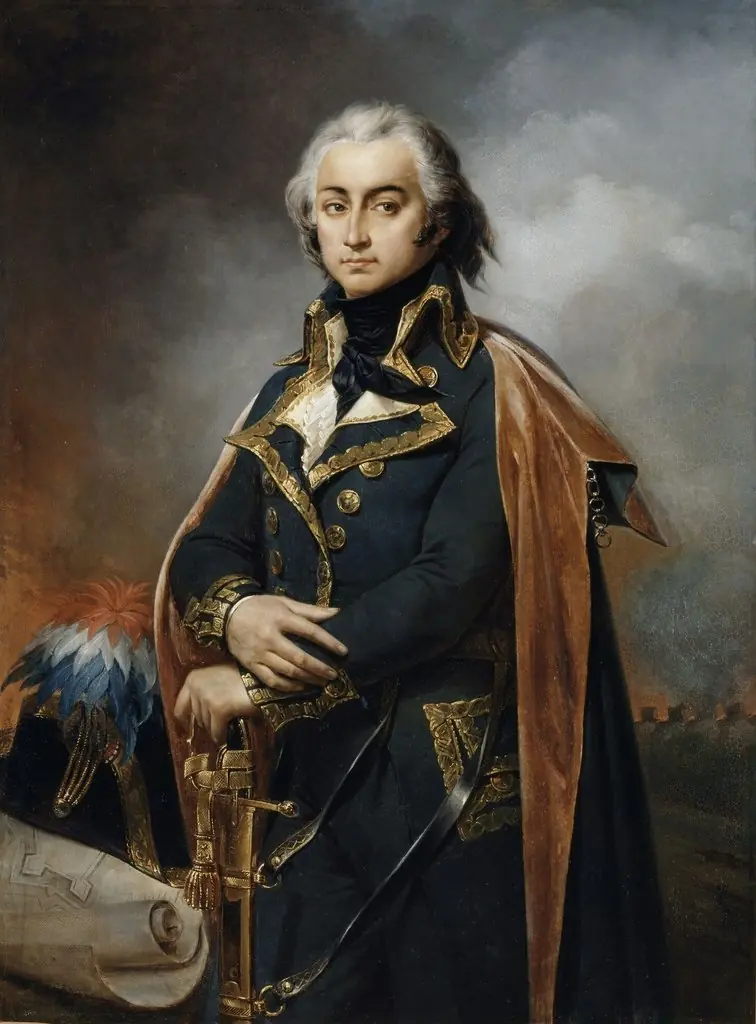 Cyrus-Marie-Adélaïde de Timbrune, Count of Valence, General-in-Chief of the Army of the Ardennes
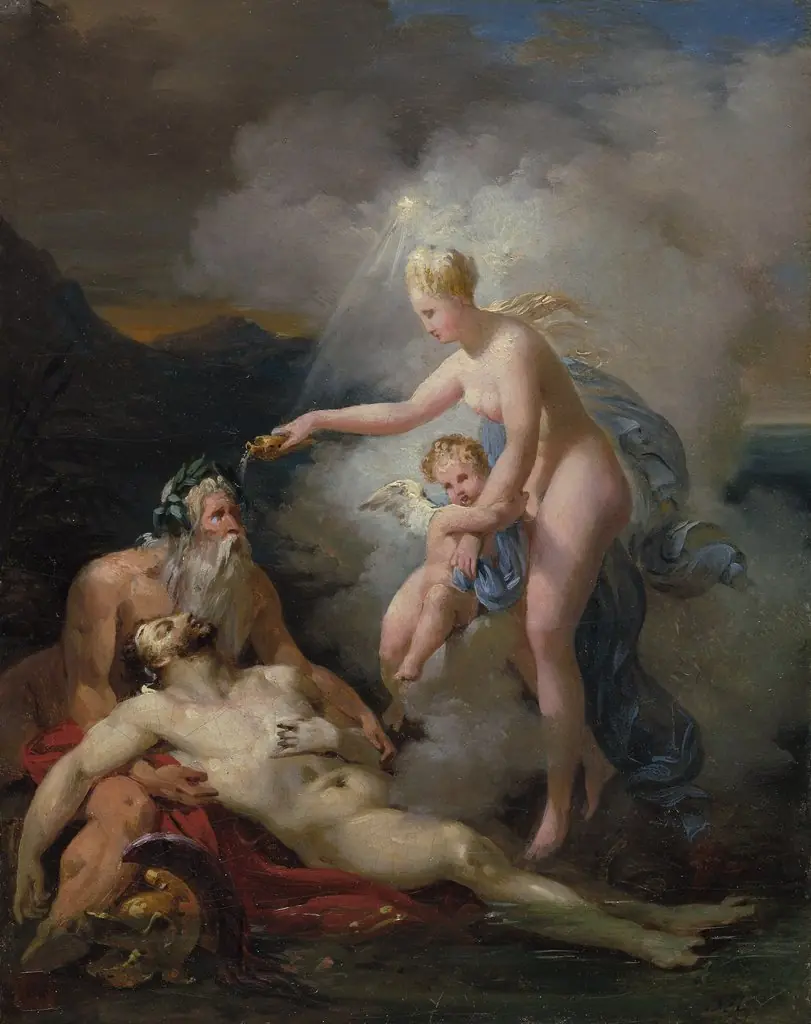 Venus Healing Aeneas
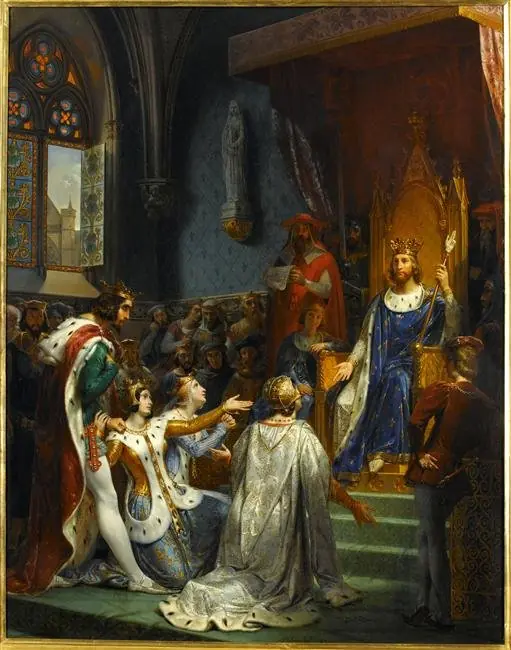 John II receives the submission of Charles II of Navarre
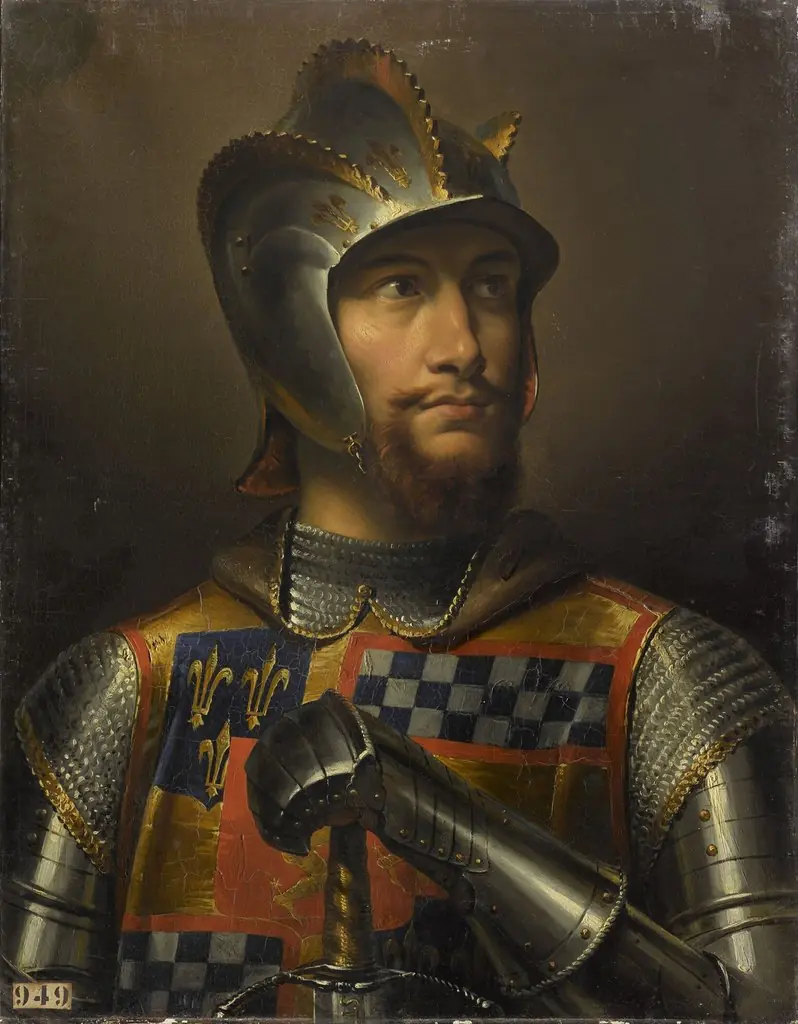 Jean II Stuart, connétable de Buchan (+ 1424)
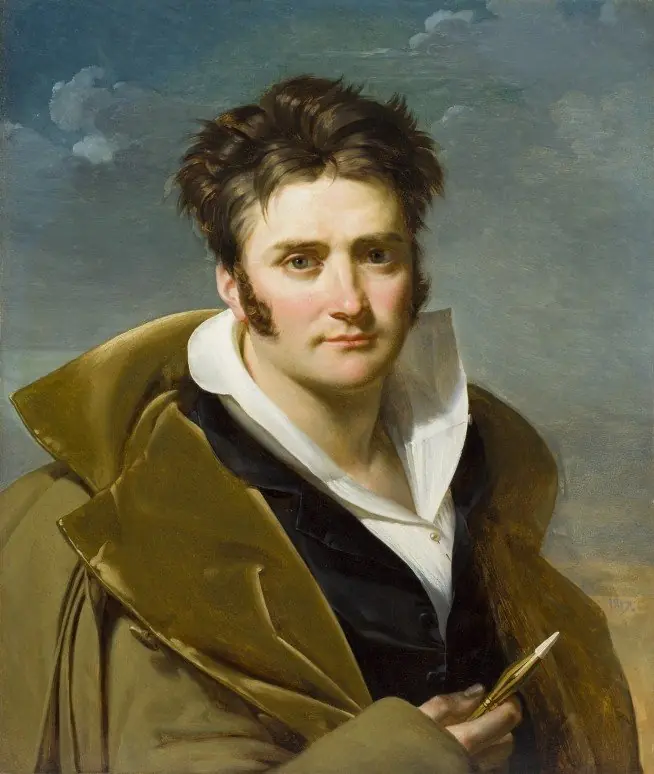 Self-portrait
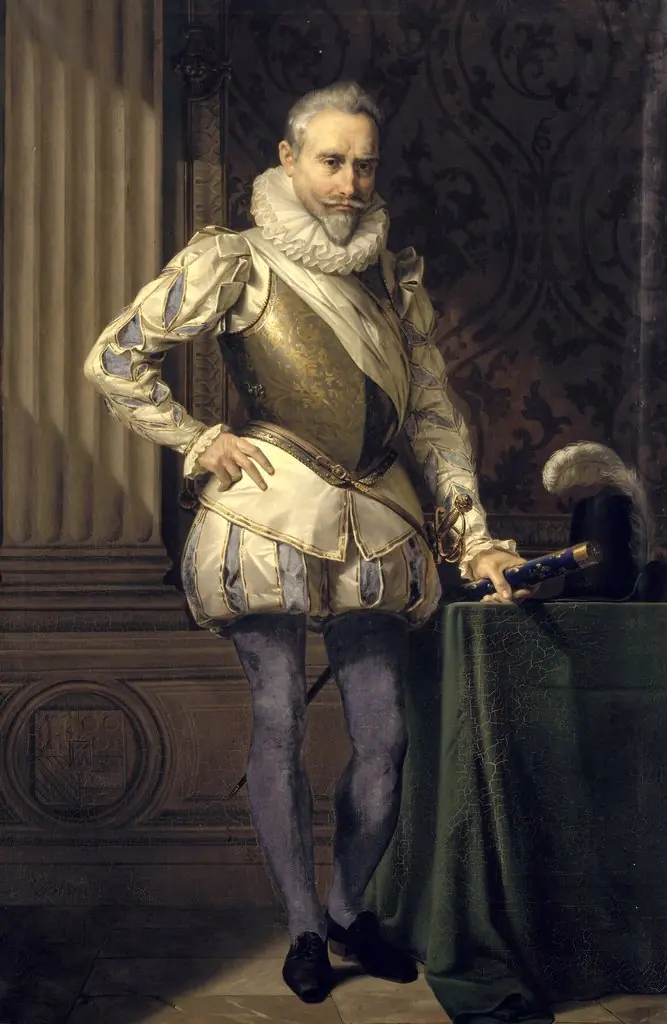 Portrait of Henri de La Tour d'Auvergne, duc de Bouillon
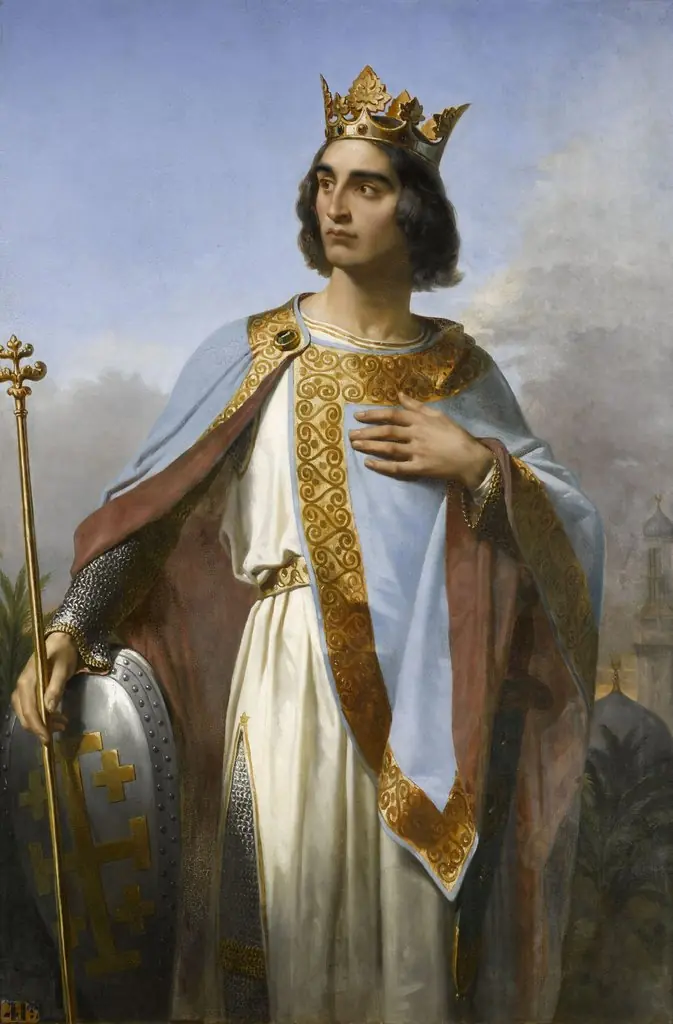 Baudouin I, King of Jerusalem
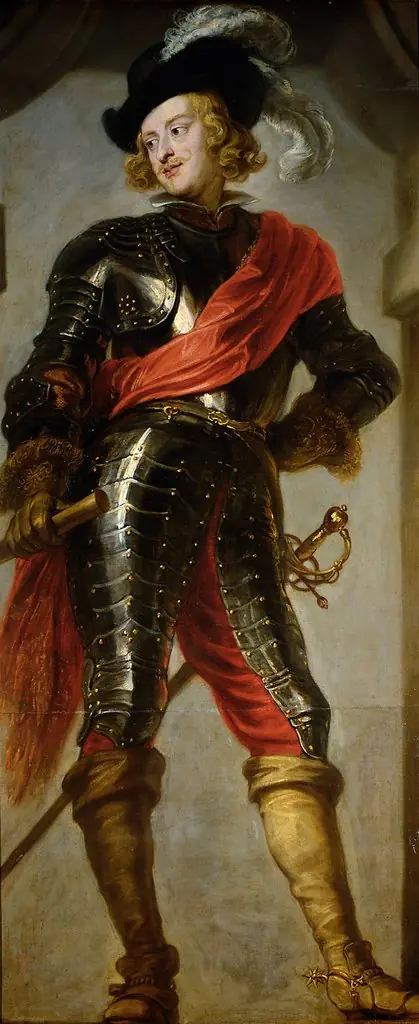 Cardinal-Infante Ferdinand of Austria
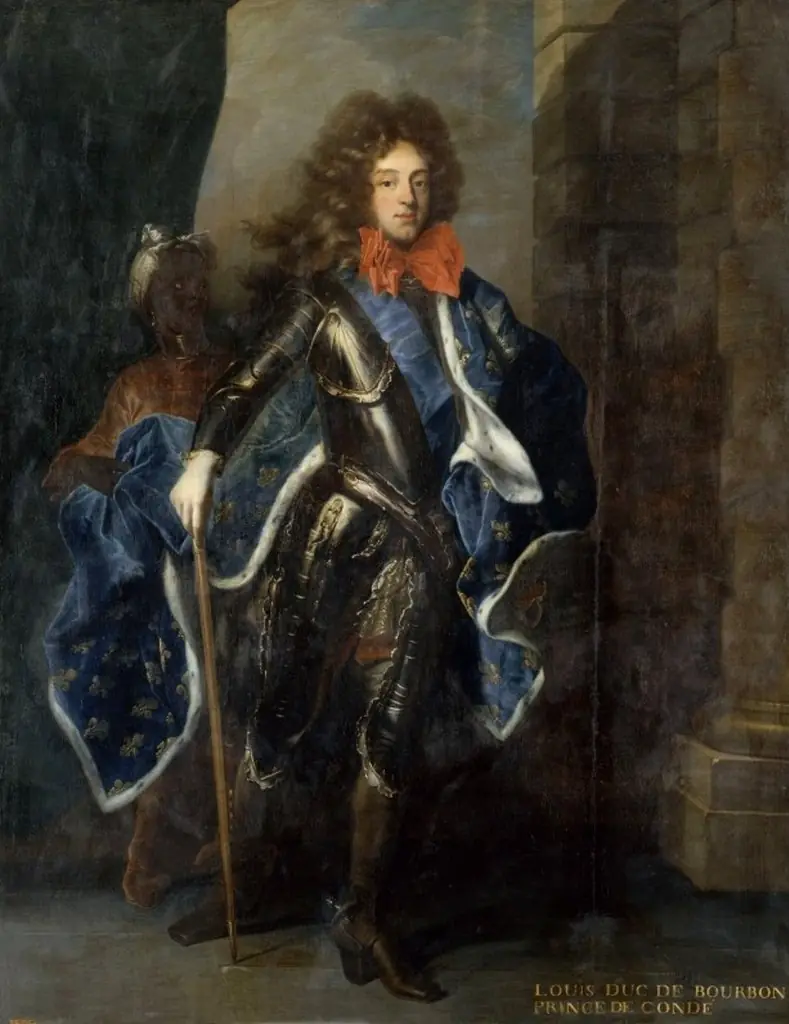 Portrait de Louis III. de Bourbon, prince de Condé (1668–1710)
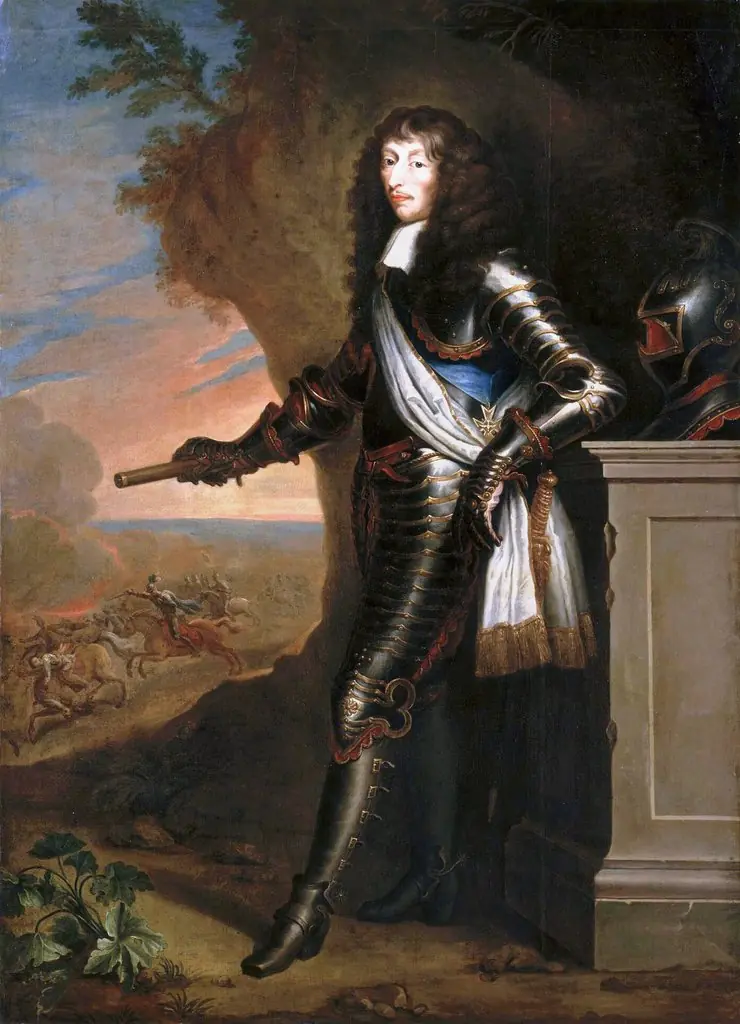 Portrait of Louis de Bourbon, Prince of Condé (1621-1686)
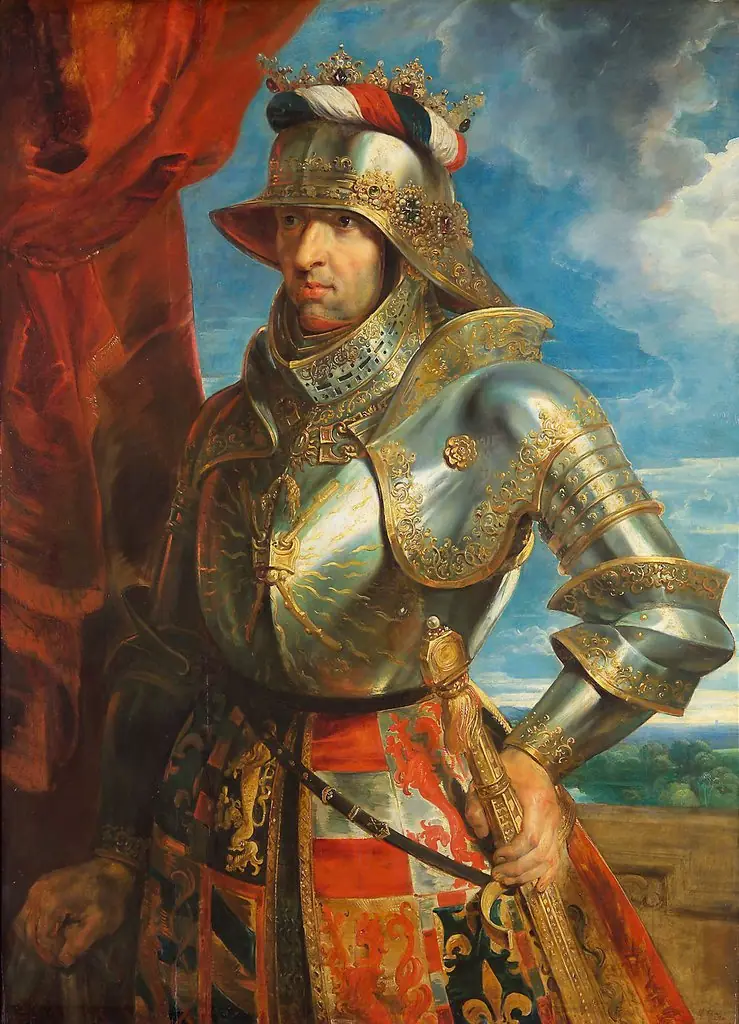 Philip the Handsome
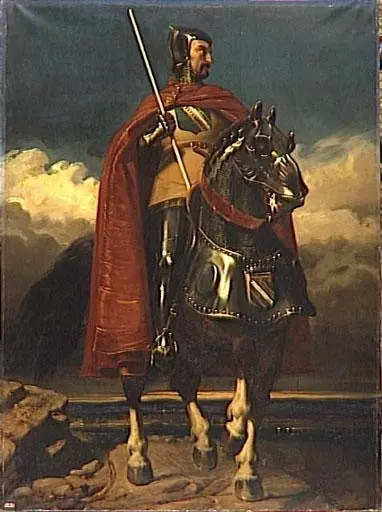 Louis de Champagne, comte de Sancerre, connétable de France en 1397
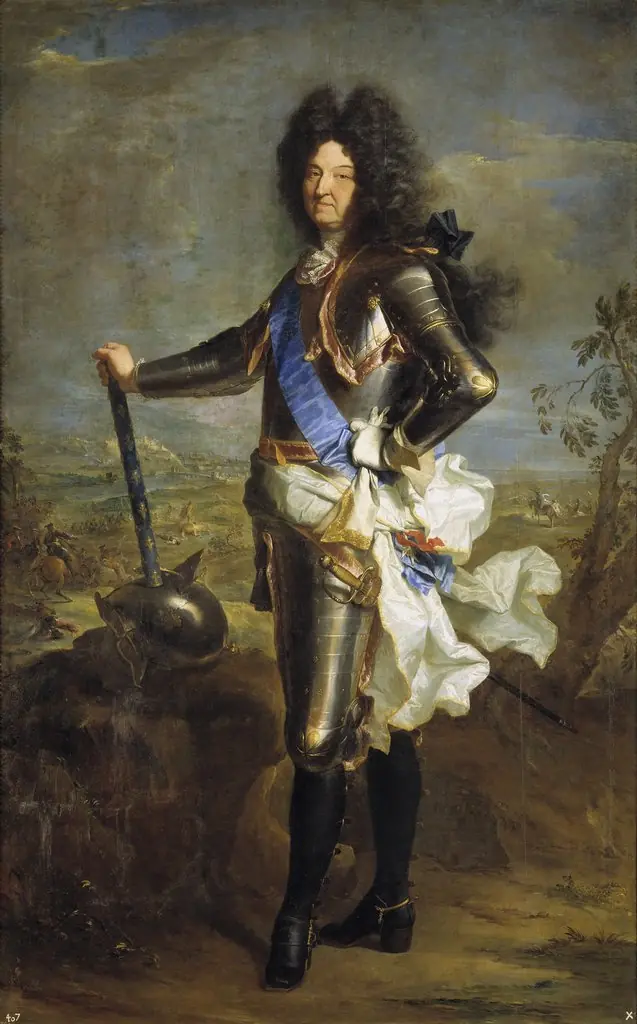 Louis XIV
 Pierre de Rohan, seigneur de Gye
 St George
 François-Louis Rousselet, marquis de Château-Renaud, maréchal de France (1637-1716)
 Portrait of Piero di Lorenzo de' Medici
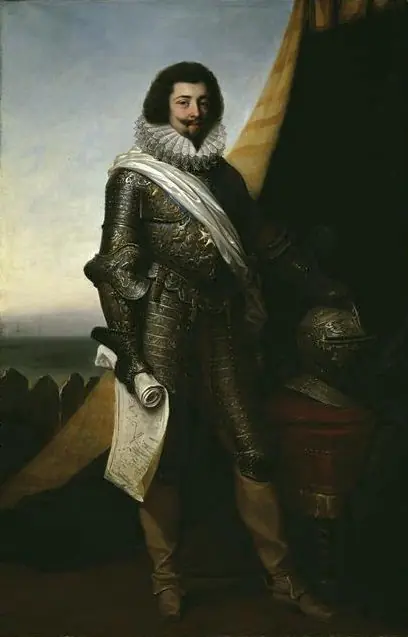 François de Bassompierre, maréchal de France en 1622 (1579-1646)
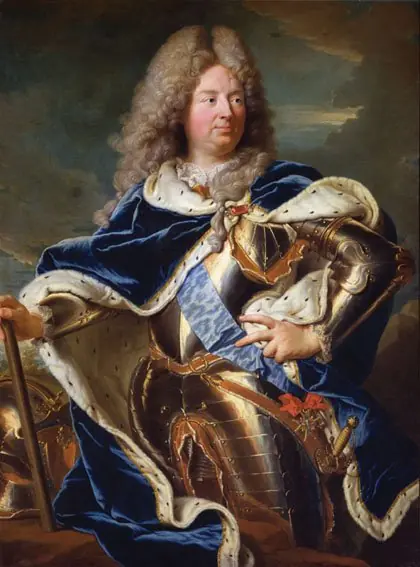 Portrait of the Duke of Antin