Artwork
Collège Henri IV, Paris, ou Lycée Napoléon (Henry IV College or Napoleon School)
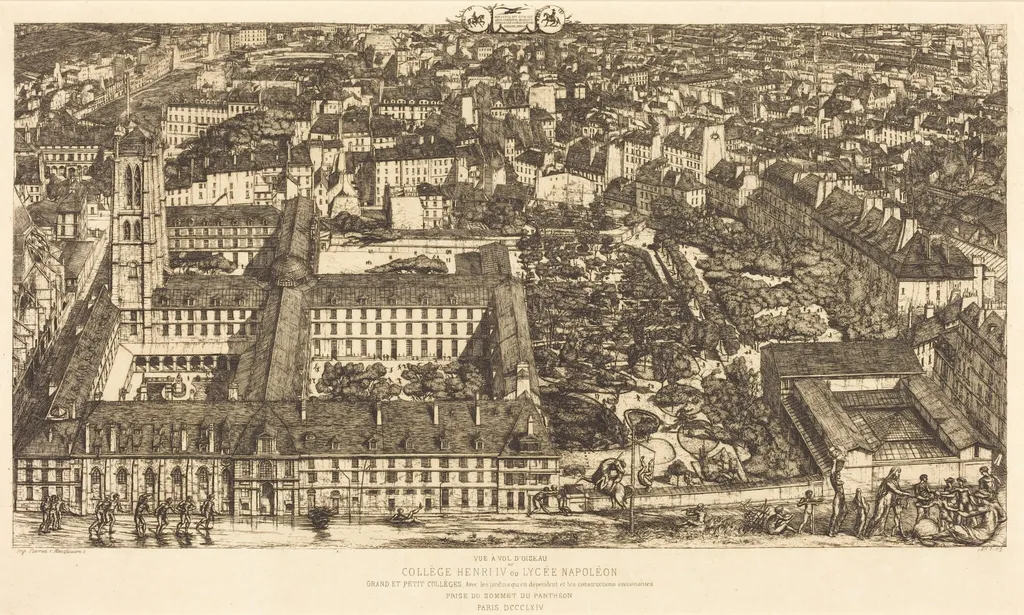
Collège Henri IV, Paris, ou Lycée Napoléon (Henry IV College or Napoleon School) is an ink print by the Impressionist artist Charles Meryon. It dates from 1864 and is held in the collection of the National Gallery of Art.
About this work
Overview
Executed in black ink on laid paper, the work reflects his lifelong dedication to etching, a medium he favored due to his color blindness.
Charles Meryon produced this etching in 1864, capturing the courtyard of the Collège Henri IV, later known as the Lycée Napoléon. Executed in black ink on laid paper, the work reflects his lifelong dedication to etching, a medium he favored due to his color blindness. The print presents a bustling urban scene with meticulous attention to architectural detail and atmospheric depth, characteristic of his approach to Parisian subjects.
Subject & Meaning
The scene depicts the schoolyard of a historic Parisian institution, teeming with students, staff, and passersby. Children engage in play, while adults move along the edges, suggesting the institution’s role as a social hub. The juxtaposition of medieval and modern architectural elements hints at the building’s layered history, transforming the courtyard into a microcosm of Parisian life during the mid-19th century.
Technique & Style
Meryon employed fine, controlled etching lines to render texture and shadow, creating a sense of volume in the stone facades and depth in the crowded space. The use of atmospheric perspective draws the eye toward the distant hill, while the dense clustering of figures and architectural details conveys movement and quiet disorder. His technique avoids romanticization, favoring precise observation and tonal nuance.
History & Provenance
The Collège Henri IV, founded in the 16th century, was renamed Lycée Napoléon in 1804 and later reverted to its original name. Meryon’s etching documents the building during a period of transition, shortly before major renovations. The print was likely part of his broader series on Parisian architecture, circulated among collectors and artists interested in urban topography and historical preservation.
Context
Created during the Second Empire, the etching reflects Paris’s rapid modernization under Napoleon III. While Haussmann’s renovations transformed the city’s streets, institutions like the Lycée Napoléon retained older structures amid new urban pressures. Meryon’s focus on such sites offered a counterpoint to the era’s grand narratives, emphasizing quiet, enduring spaces within a changing metropolis.
Legacy
Meryon’s etchings, including this one, established a new standard for architectural printmaking in 19th-century France. His ability to convey both the physical weight of stone and the vitality of daily life influenced later generations of printmakers. Though less celebrated in his lifetime, his work is now recognized for its quiet intensity and its role in documenting Paris’s evolving urban fabric.
Artist & collection
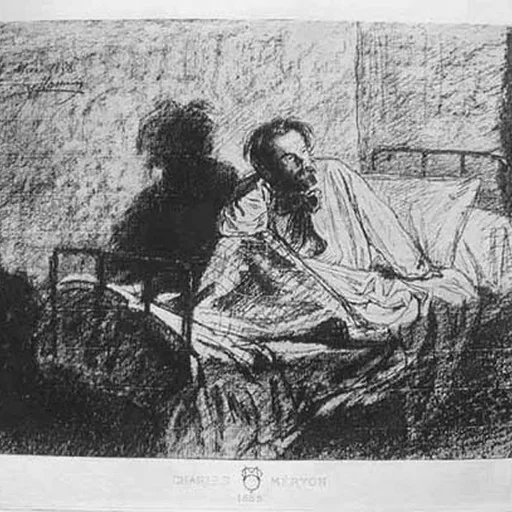
Artist
Charles Meryon (sometimes Méryon, 23 November 1821 – 14 February 1868) was a French artist who worked almost entirely in etching, as he had colour blindness.

 Paris
Paris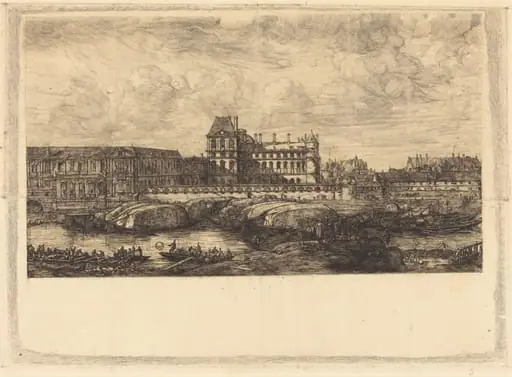 L'ancien Louvre d'après une peinture de Zeeman, 1651 (The Old Louvre, from a Painting by Zeeman, l651)
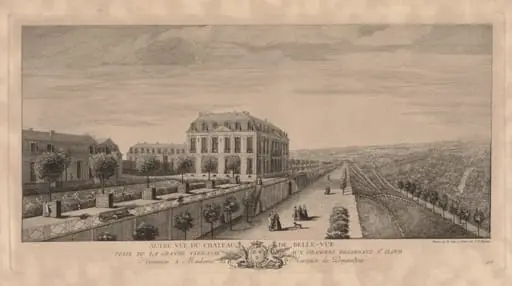 Chateau Bellevue
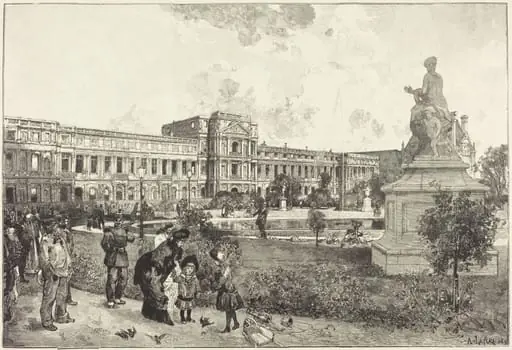 Les ruins du Palais des Tuilleries avant leur démolition
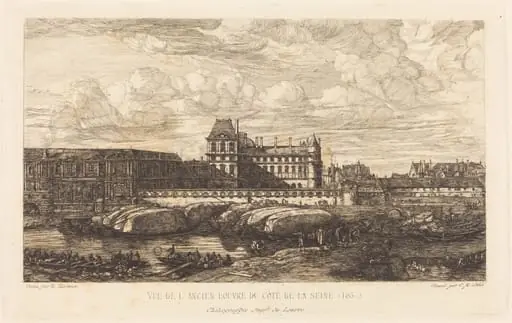 L'ancien Louvre d'après une peinture de Zeeman, 1651 (The Old Louvre, from a Painting by Zeeman, 1651)
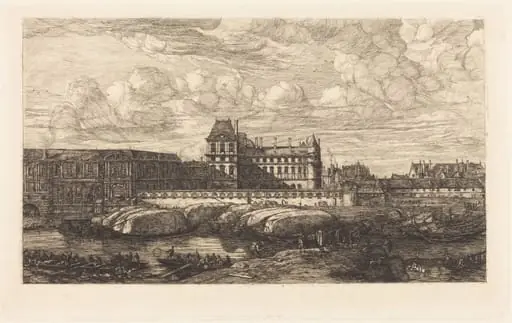 L'ancien Louvre d'après une peinture de Zeeman, 1651 (The Old Louvre, from a Painting by Zeeman, 1651)
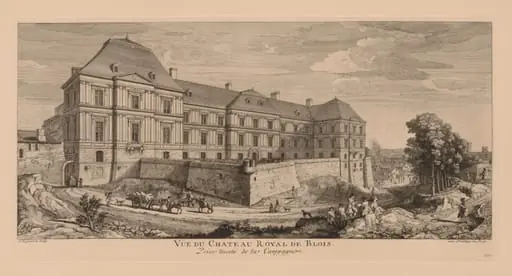 Vue du Château royal de Blois, prise du côté de la campagne