Artwork
College Henri IV
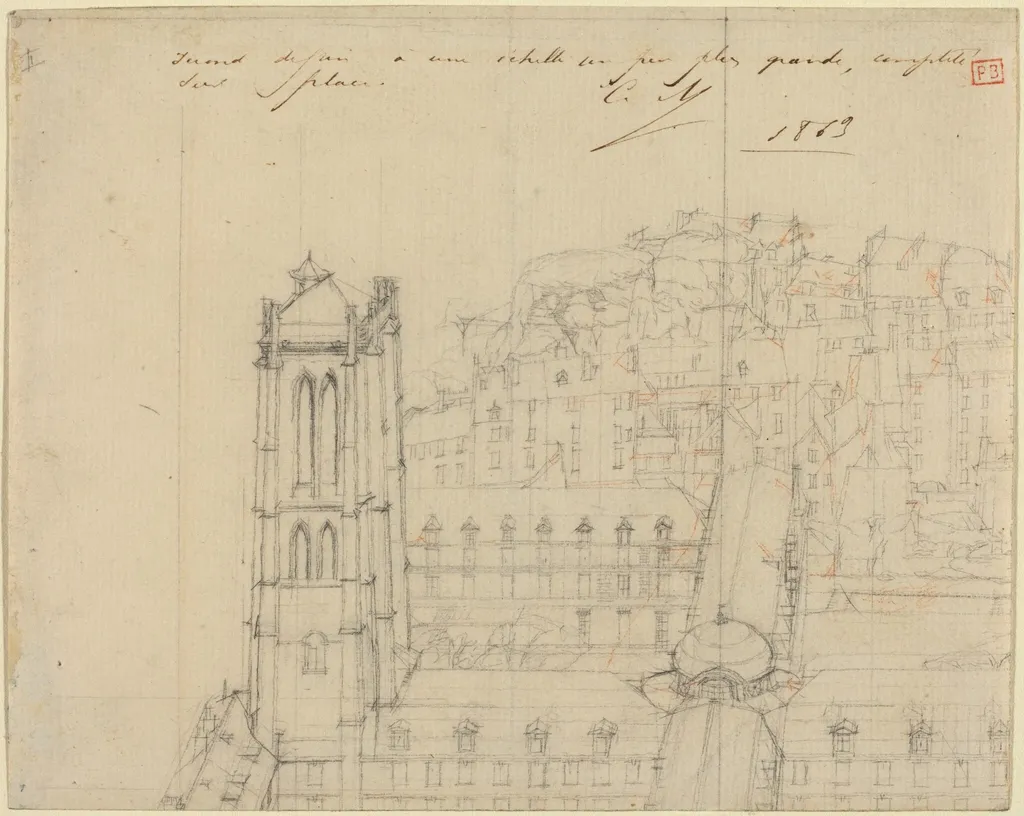
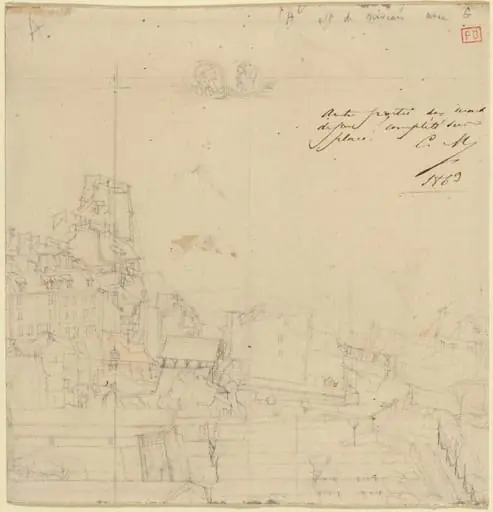
College Henri IV is a graphite drawing by the Impressionist artist Charles Meryon. It dates from 1863 and is held in the collection of the National Gallery of Art.
About this work
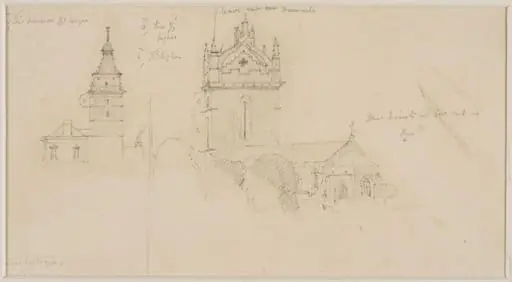
This sketch shows a tall, narrow building with pointed windows and a steep roof—likely a church or old school.
This sketch shows a tall, narrow building with pointed windows and a steep roof—likely a church or old school. The lines are loose but precise, focusing on shapes and shadows. In the background, more buildings crowd together, drawn quickly with faint red chalk marks.
The artist used light pencil strokes to show depth, adding red chalk only for details like rooftops. This was done in 1863, part of a push to draw real places as they looked, not idealized.
Next, check out Realism to see how artists like this one focused on everyday scenes.
Overview
College Henri IV is a drawing executed in 1863 by the French artist Charles Meryon. Rendered on laid paper, the work combines graphite with touches of red chalk. It depicts a narrow, vertically‑stretched building—interpreted as a historic school or church—set against a cluster of surrounding structures rendered in looser strokes.
Subject & Meaning
The composition centers on a tall edifice with pointed windows and a steep roof, suggesting a Gothic architectural typology. Meryon’s focus on the building’s silhouette and its relationship to adjacent forms underscores his interest in the urban fabric of Paris, emphasizing the everyday presence of historic structures within the cityscape.
Technique & Style
Meryon employs light graphite lines to model volume and depth, while selective red chalk highlights specific elements such as rooftops. The drawing’s loose yet precise handling reflects a realist impulse to record the visual reality of a place, avoiding idealization and instead capturing the texture of stone, shadow, and atmospheric perspective.
History & Provenance
Created during a period when Meryon, largely confined to monochrome media because of his colour‑blindness, produced most of his output in etching, this paper drawing illustrates his occasional forays into direct drawing. The work remains a documented example of his 1863 series of urban studies, contributing to his reputation as a leading French etcher of the nineteenth century.
Artist & collection
Artist
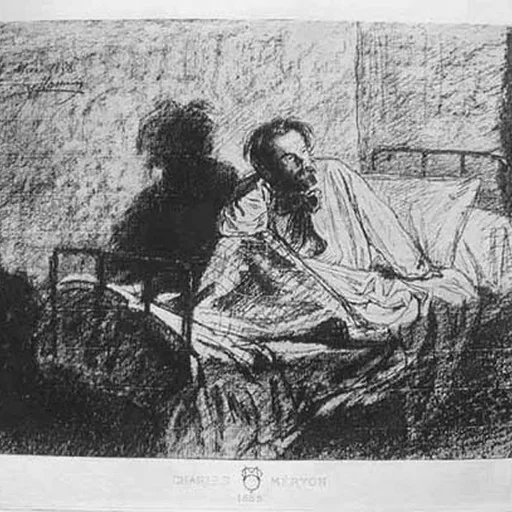
Charles Meryon (sometimes Méryon, 23 November 1821 – 14 February 1868) was a French artist who worked almost entirely in etching, as he had colour blindness.

 Untitled
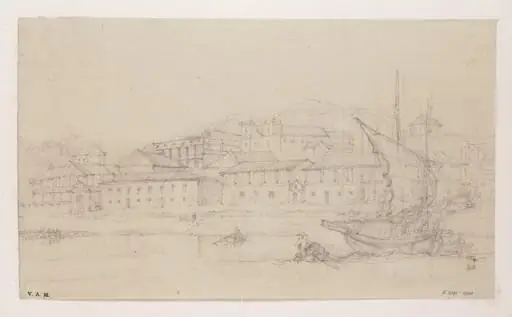 Macau with the church of S. Lourenço
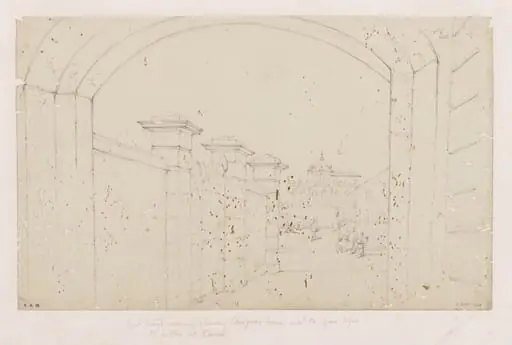 Chungqua's premises seen from the portico of the East India Company's 'factory' at Guangzhou (Canton)
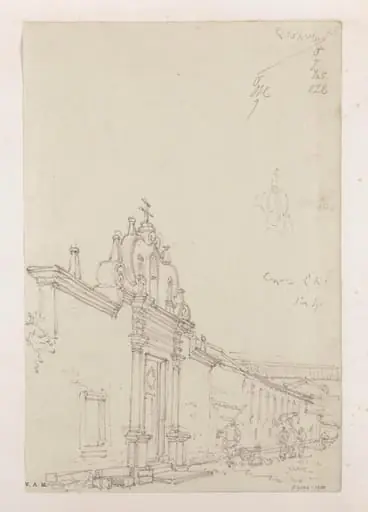 The gateway to the convent of Santa Clara, Macau
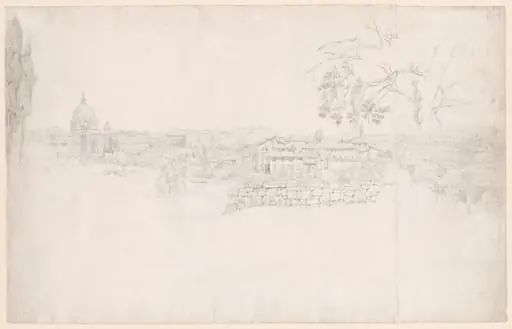 Fantasy Panorama of Rome from St. Peter's to the Castel San Angelo
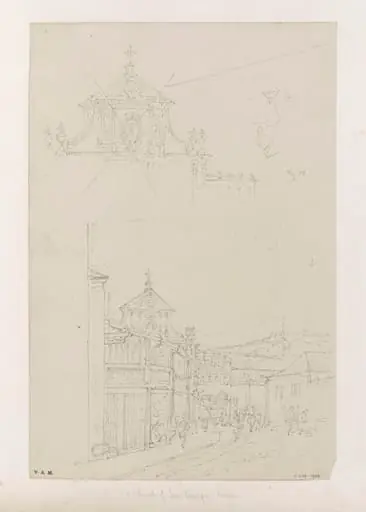 The church of San Domingos, Macau
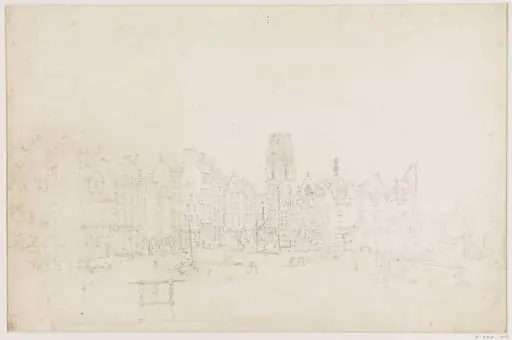 A view in Rotterdam
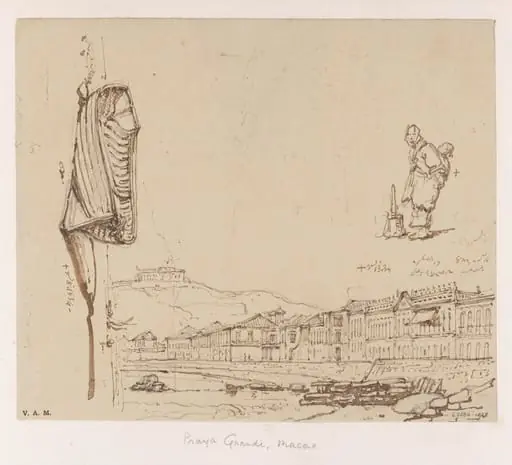 The Praya Grande, Macau, with studies of a boatwoman and a rowing boat
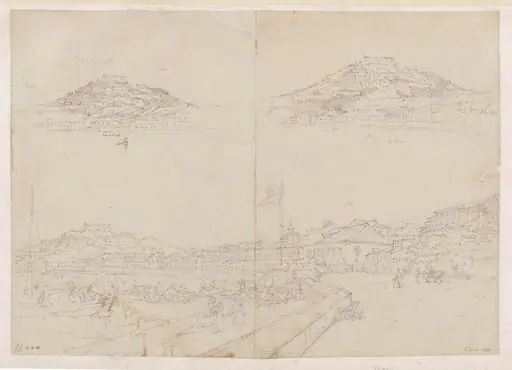 Penha Hill and the Praya Grande, Macau
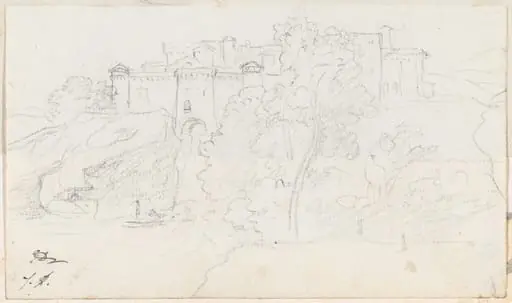 Castle on a Hill
 Architectural Fantasies with Temples and Pyramids
 College Henri IV