Artwork
Les deux chiens et l'ane mort (Two Dogs and the Dead Donkey)
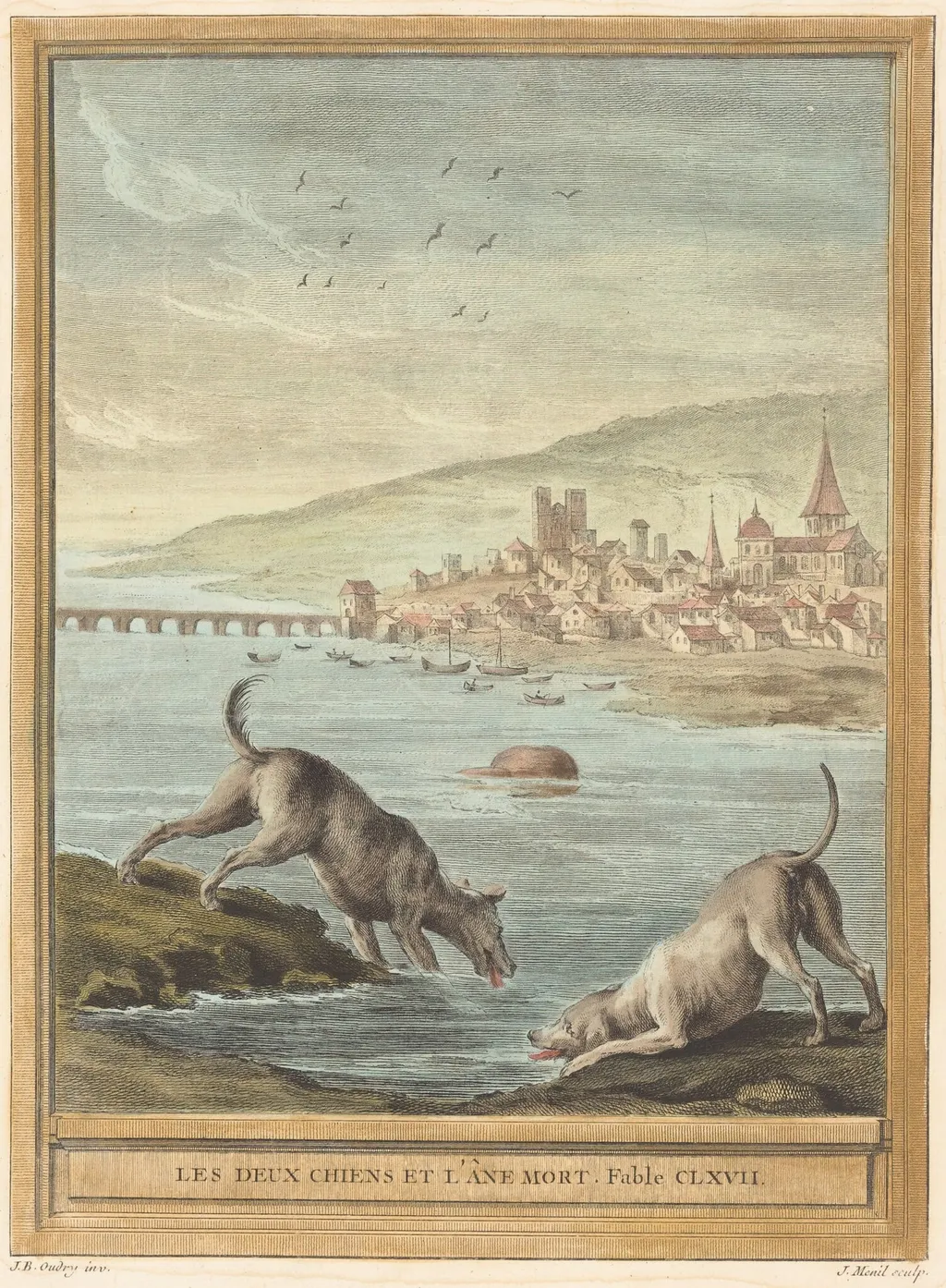
Les deux chiens et l'ane mort (Two Dogs and the Dead Donkey) is an ink print by the Romanticist artist Elie du Mesnil. It dates from 1756 and is held in the collection of the National Gallery of Art.
About this work
Overview
Les deux chiens et l’âne mort is a hand‑coloured etching executed in 1756 by the French printmaker Elie du Mesnil. The work presents a lively outdoor scene in which two dogs occupy the foreground, poised as if ready to leap, while a lifeless donkey lies nearby. A body of water and a distant settlement frame the composition, and birds traverse the sky above.
Subject & Meaning
The print juxtaposes vitality and stillness: the alert dogs suggest motion and curiosity, whereas the dead donkey introduces a note of mortality. This contrast may reflect eighteenth‑century interests in the natural world and the fleeting nature of life, inviting viewers to contemplate the relationship between animal behavior and the inevitability of death.
Technique & Style
Du Mesnil employed a traditional intaglio etching process, later applying hand‑applied colour washes to enhance tonal variation. The line work is fine and controlled, rendering the fur of the dogs and the texture of the donkey’s hide with subtle gradations. A muted palette of browns and grays unifies the scene, while the delicate shading conveys depth and atmospheric perspective.
History & Provenance
Created in the mid‑eighteenth century, the etching was likely produced for the market of collectors interested in genre scenes and animal studies. Surviving examples appear in several European print collections, though specific ownership records are scarce. The work has been cited in catalogues of du Mesnil’s oeuvre as a representative example of his animal prints.
Context
The piece belongs to a period when French artists increasingly explored everyday subjects, moving away from strictly religious or mythological themes. Du Mesnil’s focus on domestic animals aligns with contemporary interests in naturalism and the burgeoning study of animal anatomy, trends that would later inform the Romantic movement’s fascination with the wild and the sublime.
Artist & collection


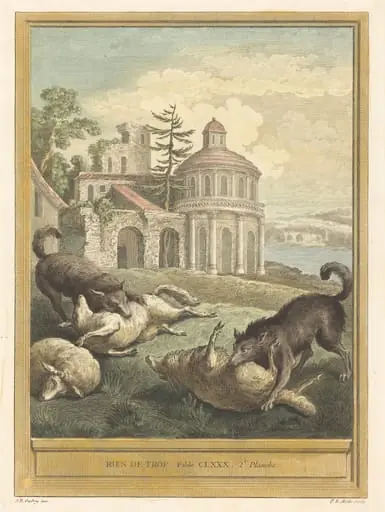 Rien de trop (Nothing in Excess)
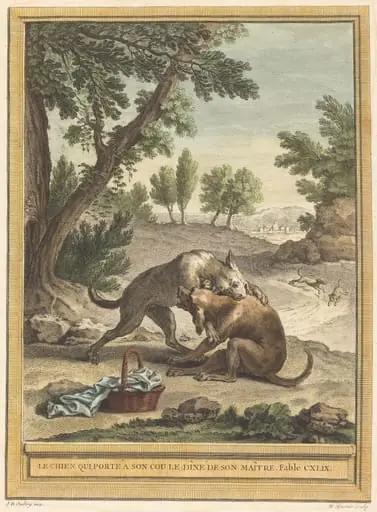 Le chien qui porte a son cou le diner de son maitre (The Dog Carrying His Master's Supper)
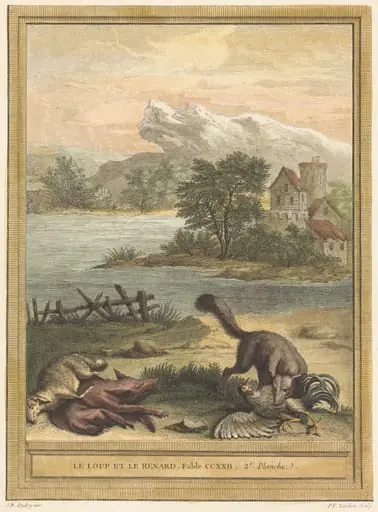 Le loup et le renard (The Wolf and the Fox)
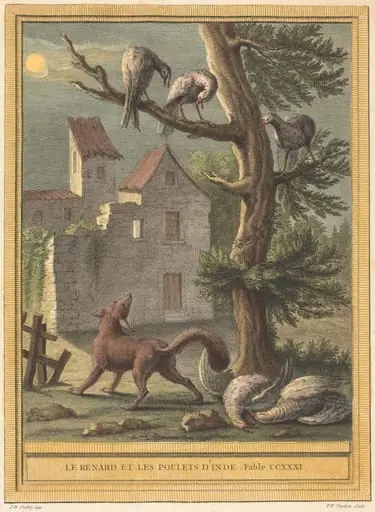 Le renard et les poulets d'Inde (The Fox and the Hens from India)
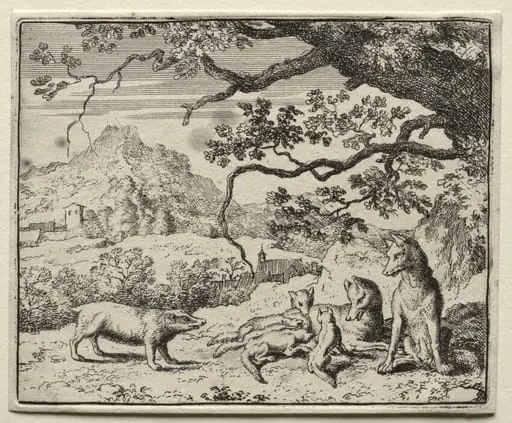 Reynard the Fox: The Badger Calls Reynard to Court
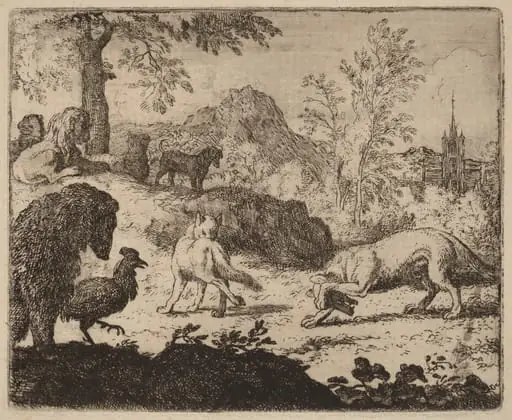 Reynard Blinds the Wolf in One Eye
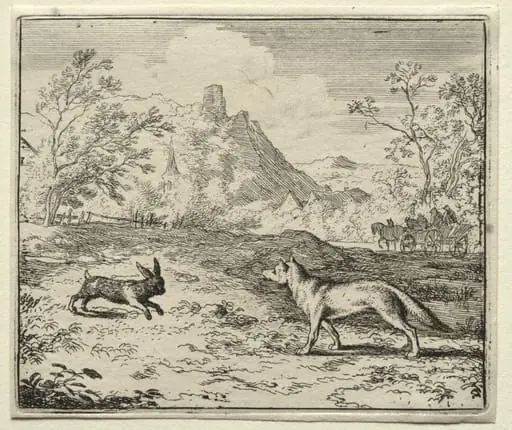 Reynard the Fox: Reynard and the Rabbit
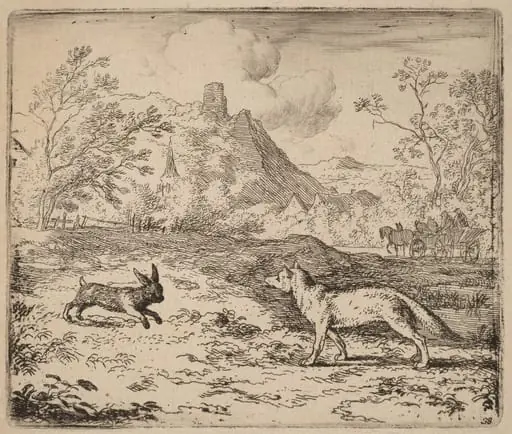 Reynard and the Rabbit
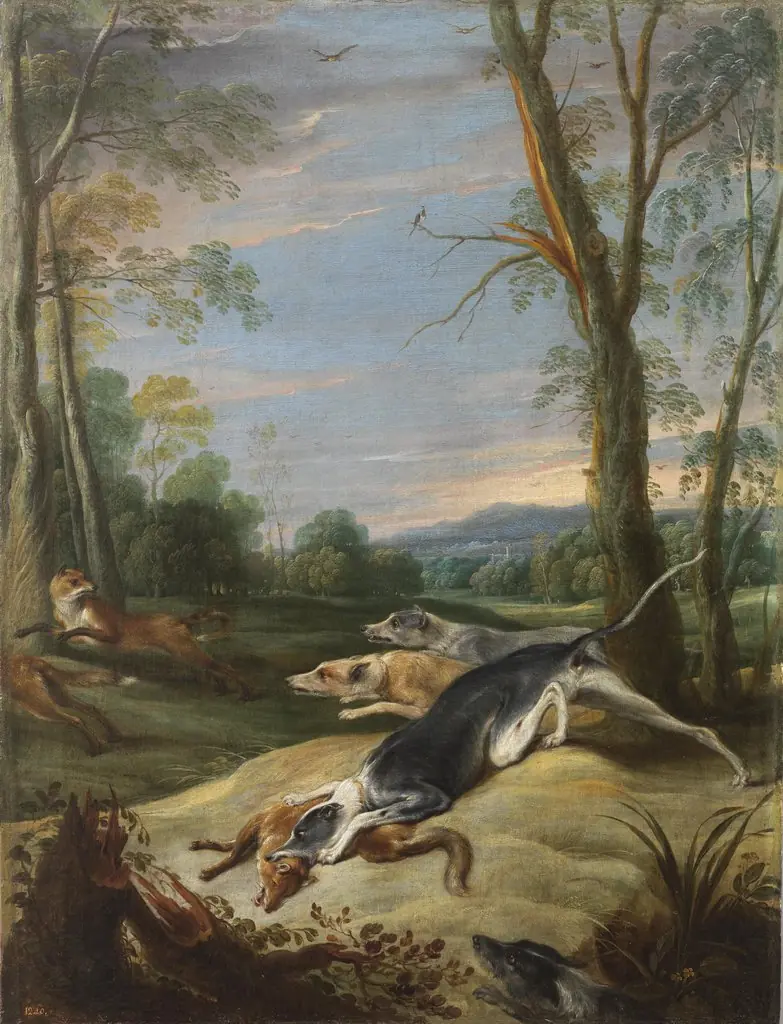 Vixens Chased by Dogs