Artwork
L'ane et le chien (The Donkey and the Dog)
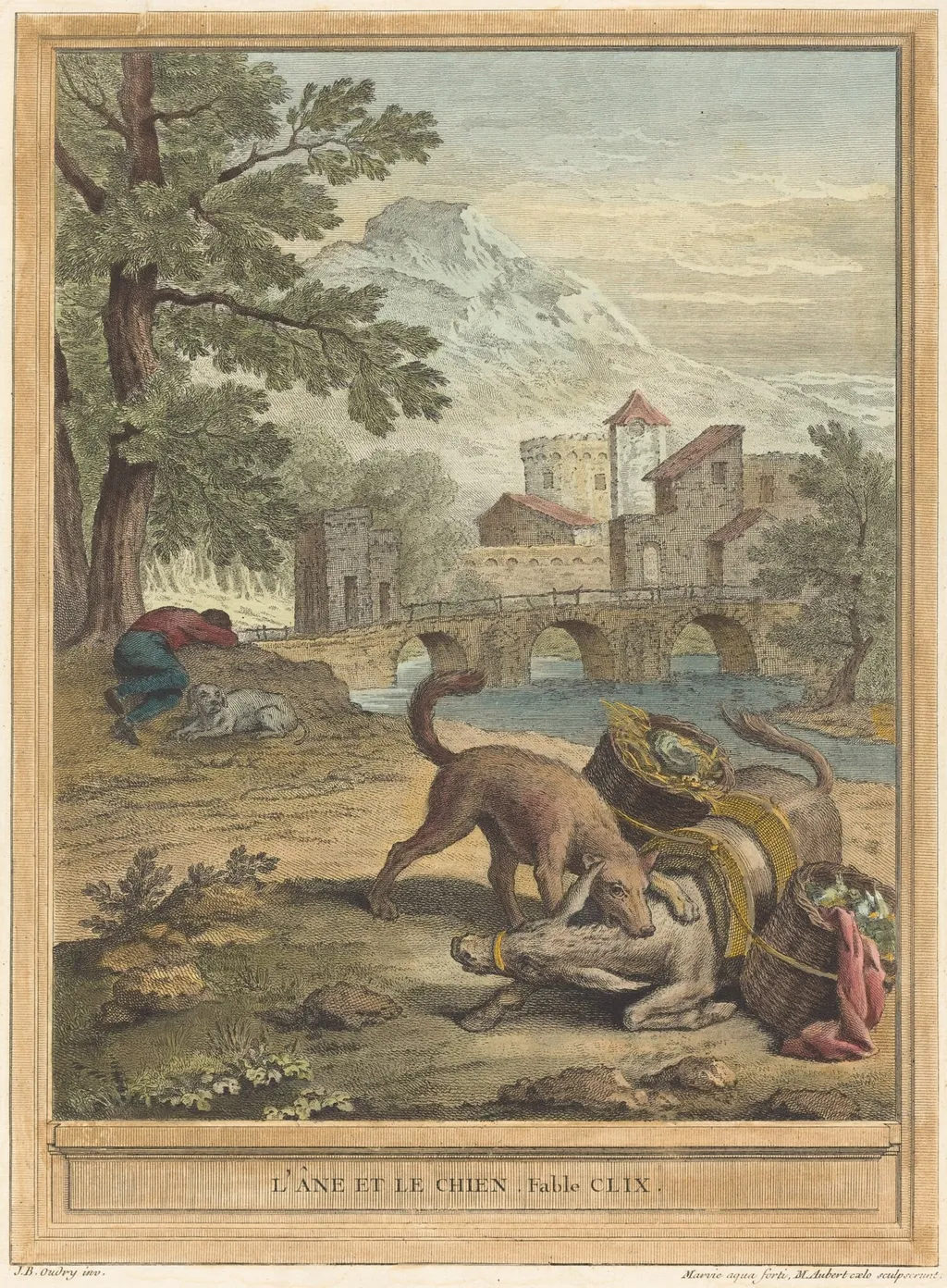
L'ane et le chien (The Donkey and the Dog) is an ink print by the Romanticist artist Michel Aubert. It dates from 1756 and is held in the collection of the National Gallery of Art.
About this work
Overview
Two figures observe the animals from the riverbank, their contrasting expressions suggesting differing interpretations of the event.
Created in 1756 by Michel Aubert, L'ane et le chien is a hand-colored etching depicting a rural scene in which a donkey and a dog are entangled in ropes near a river. The composition includes a modest village with a stone bridge, a fortified structure, and distant mountains. Two figures observe the animals from the riverbank, their contrasting expressions suggesting differing interpretations of the event. The work belongs to the tradition of printmaking that combined technical precision with narrative nuance.
Subject & Meaning
The scene presents a moment of physical entanglement between two animals, framed by human observers whose reactions differ—one attentive, the other composed. The title, L'ane et le chien, invites interpretation beyond mere observation, possibly alluding to themes of cooperation, miscommunication, or the consequences of forced partnership. The ambiguity of the moment resists moralizing, instead inviting reflection on relationships and unintended outcomes.
Technique & Style
Aubert employed etching, a method involving acid-bitten lines on a metal plate, to achieve fine detail in the landscape and figures. Hand-coloring was added after printing, softening the monochrome lines with subtle washes of pigment. The composition balances naturalistic elements—textured foliage, architectural forms—with stylized spatial depth, reflecting 18th-century print conventions that prioritized clarity and narrative legibility over dramatic intensity.
History & Provenance
The print was produced in 1756, during a period when French printmakers increasingly turned to genre scenes for commercial appeal. While Aubert’s broader oeuvre is not extensively documented, this work survives in institutional collections, suggesting it was circulated among collectors interested in rural life and moral allegory. Its survival indicates modest but sustained interest in such prints during the mid-18th century.
Context
In mid-18th-century France, prints like this catered to an expanding middle-class audience seeking accessible imagery tied to everyday life. Rural scenes, often imbued with gentle moral undertones, were popular in print series. Aubert’s work aligns with this trend, drawing on familiar animal motifs and pastoral settings to engage viewers without overt didacticism, reflecting broader cultural tastes of the time.
Legacy
L'ane et le chien remains a modest but representative example of French printmaking from the pre-Revolutionary era. It contributes to the understanding of how visual narratives were constructed for non-elite audiences, blending observation with subtle symbolism. Though not widely known today, it endures as evidence of a quiet, widespread practice of storytelling through print.
Artist & collection


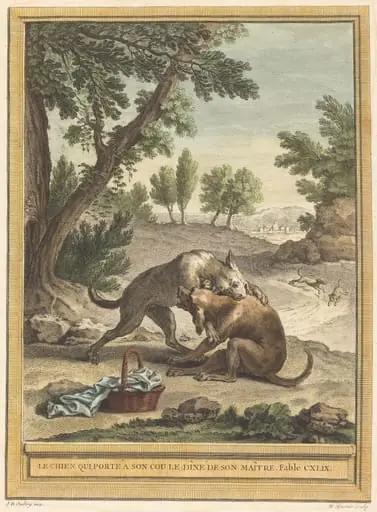 Le chien qui porte a son cou le diner de son maitre (The Dog Carrying His Master's Supper)
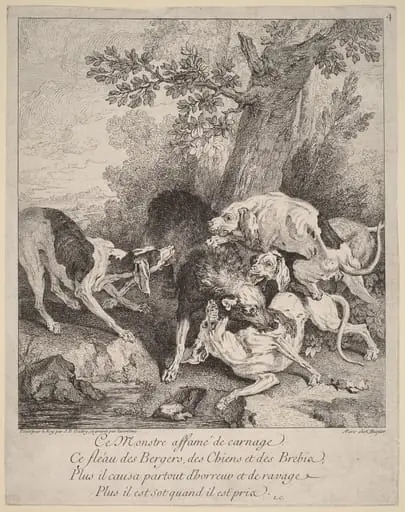 A Wolf Attacked by Dogs
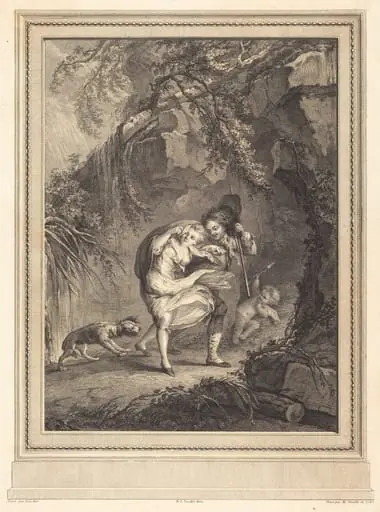 Le coup de vent (The Gust of Wind)
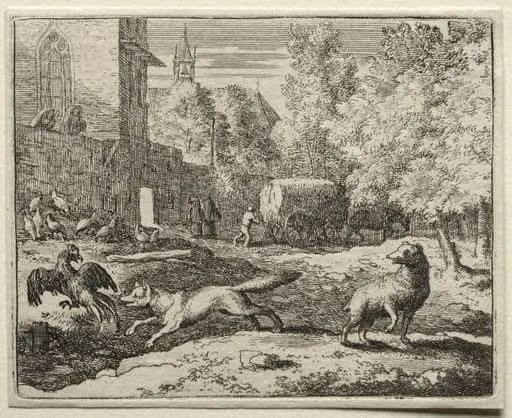 Reynard the Fox: Reynard Chasing Hens
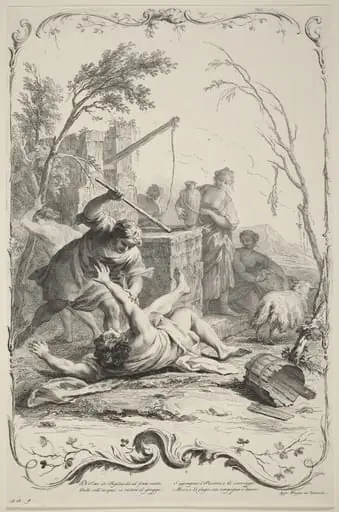 Moses Striking a Shepherd
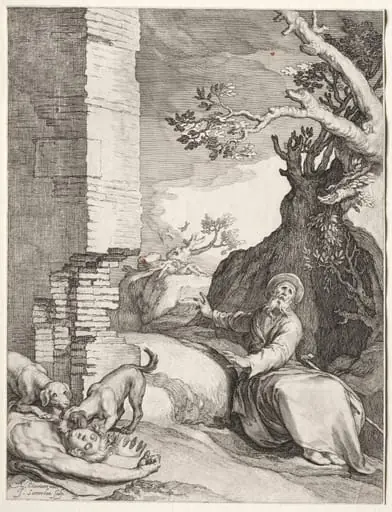 The Prediction of Ahijah
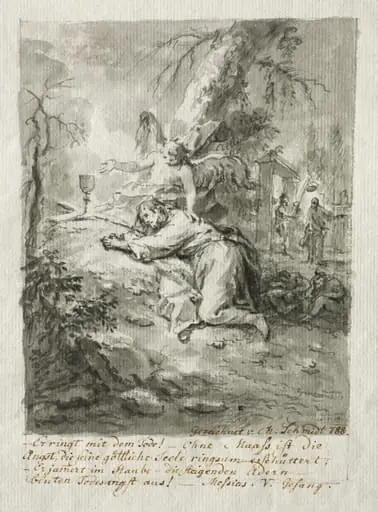 Christ on the Mount of Olives
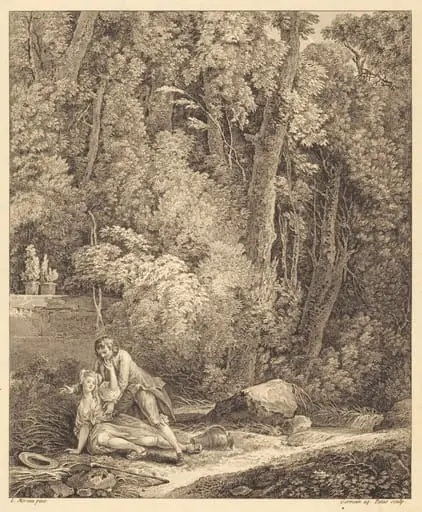 Le villageois entreprenant
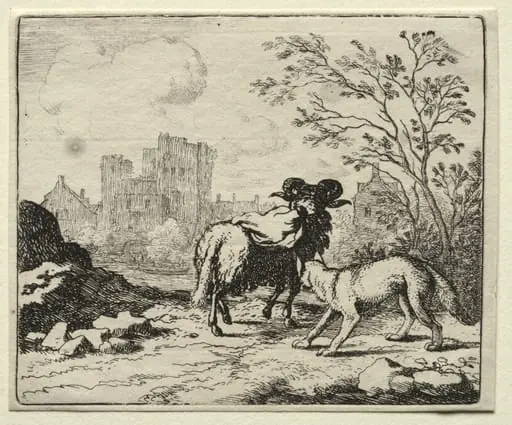 Reynard the Fox: Reynard Sends a Packet to the Lion
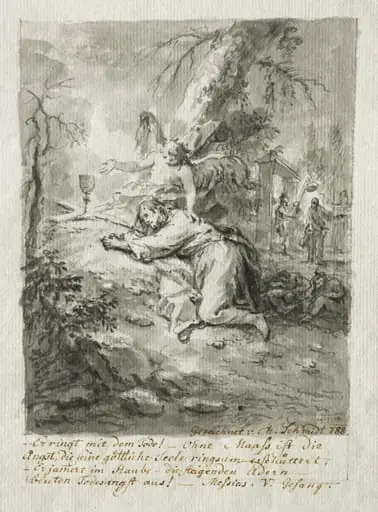 Christ on the Mount of Olives, The Flagellation, Christ Crowned with Thorns, The Crucifixion
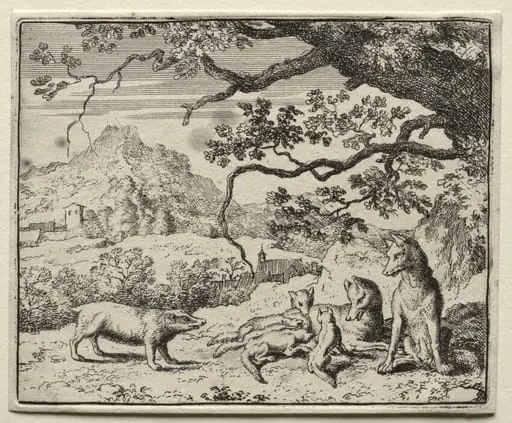 Reynard the Fox: The Badger Calls Reynard to Court
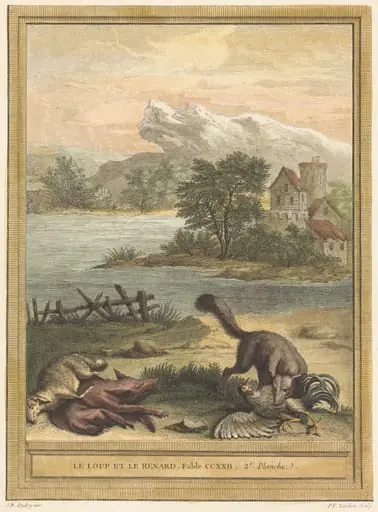 Le loup et le renard (The Wolf and the Fox)