Artwork
Compoziție suprarealistă
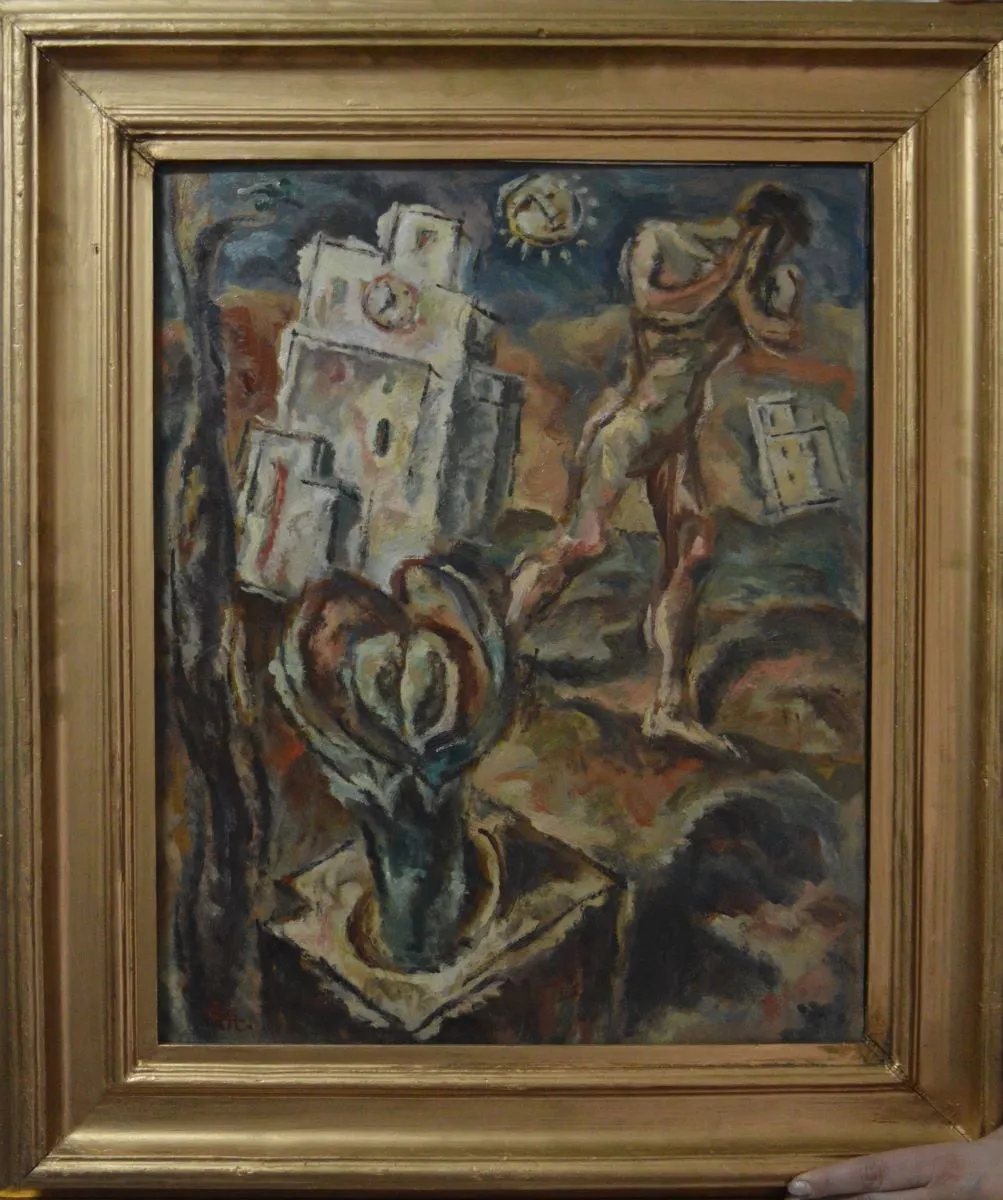
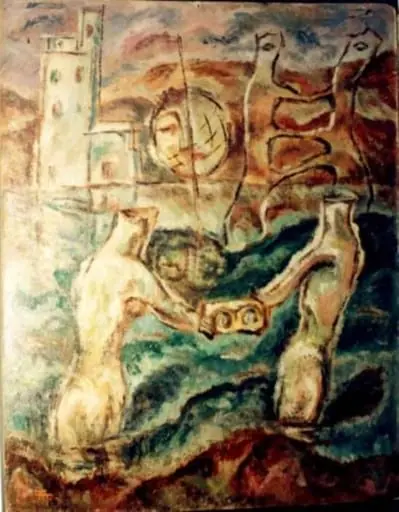
Compoziție suprarealistă is a print by Corneliu Michăilescu. It dates from 1936 and is held in the collection of the Bucharest Municipality Museum.
About this work
Overview
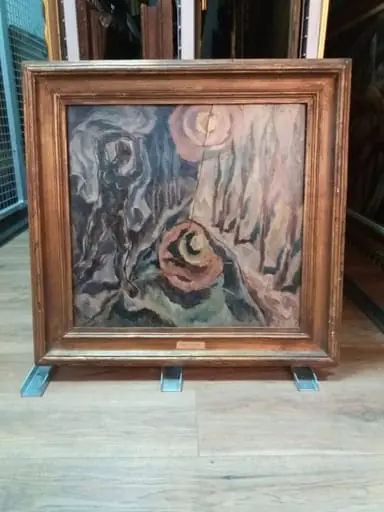
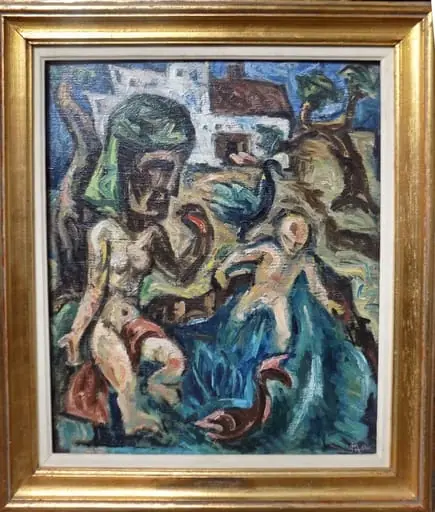
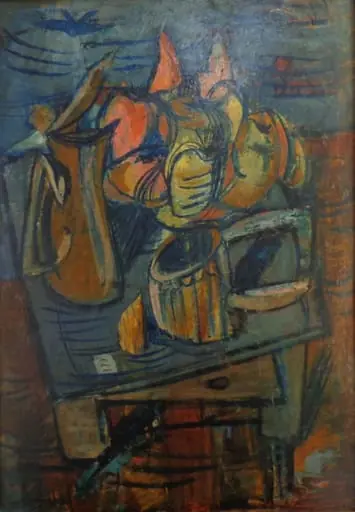
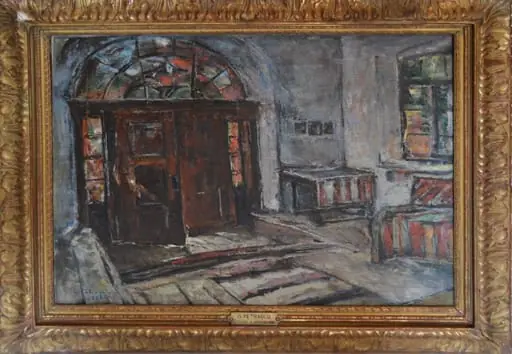
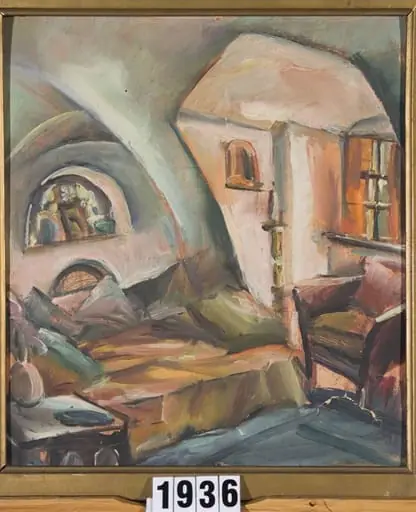
Compoziție suprarealistă, dated around 1936, is a painted work by Romanian artist Corneliu Michăilescu. It resides in the collection of the Museum of Ethnography. The piece presents a surreal, non-narrative scene composed of disjointed, symbolic forms. Its visual language resists easy classification, blending elements of dream logic with a tactile, physical presence through its handling of paint.
Subject & Meaning
The painting depicts a solitary figure mid-stride, arms raised, as if frozen in an unexplained gesture.
The painting depicts a solitary figure mid-stride, arms raised, as if frozen in an unexplained gesture. Behind them rises a tower embedded with multiple clock faces, suggesting fractured time. Below, a massive, spiraling wheel evokes mechanical or cosmic motion. These elements do not form a coherent story but instead generate a sense of psychological tension, hinting at inner turmoil or existential dislocation without explicit symbolism.
Technique & Style
Michăilescu applied paint thickly and unevenly, using impasto to create a textured, almost sculptural surface. The palette is dominated by deep blues, stark whites, and muted reds, enhancing the work’s somber, otherworldly tone. Brushstrokes are deliberate yet raw, rejecting smoothness in favor of tactile immediacy. This method gives the image a visceral, unstable quality, reinforcing its dreamlike disorientation.
History & Provenance
The painting was created in Romania during the interwar period, a time of cultural experimentation. It entered the Museum of Ethnography’s collection in the mid-20th century, where it has remained. Unlike many contemporaneous works, it was not widely exhibited or documented publicly, contributing to its relative obscurity in broader art historical narratives.
Context
While created during the height of European surrealism, the work does not align clearly with any established movement. It shares affinities with Romanian modernist tendencies that sought personal, symbolic expression over ideological conformity. Its isolation from mainstream avant-garde circles reflects the complex cultural landscape of interwar Romania, where artistic innovation often occurred outside institutional frameworks.
Legacy
Compoziție suprarealistă remains a singular example of Michăilescu’s output, notable for its emotional intensity and formal independence. It has not influenced broader art trends but holds value as a private, introspective response to modernity’s dislocations. Its preservation in an ethnographic museum underscores its role as a cultural artifact of individual vision rather than a canonical modernist statement.