Artwork
Intrarea în arhondărie (Mănăstirea Viforâta)
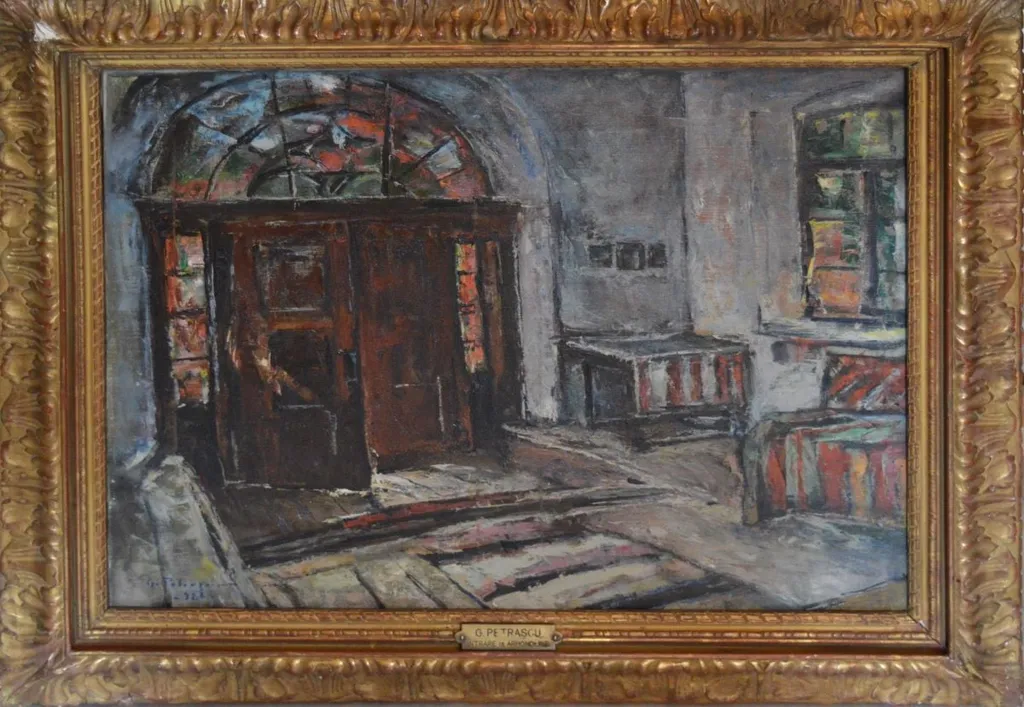
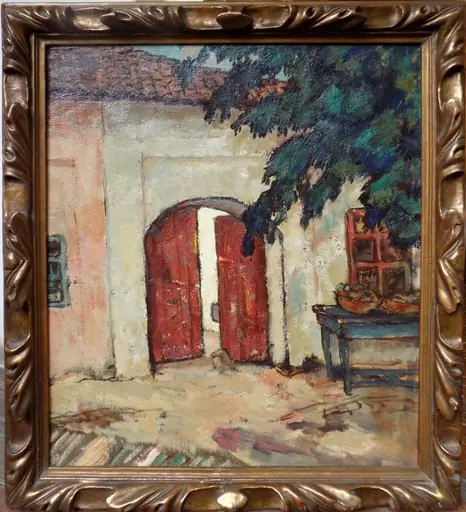
Intrarea în arhondărie (Mănăstirea Viforâta) is a print by Gheorghe Petrașcu. It dates from 1920 and is held in the collection of the Bucharest Municipality Museum.
About this work
Overview
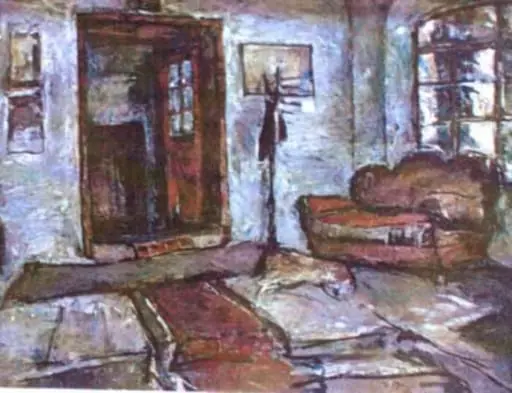
Painted around 1920 by Romanian artist Gheorghe Petrașcu, this work captures the entrance to the archondarion, or administrative wing, of Viforâta Monastery.
Painted around 1920 by Romanian artist Gheorghe Petrașcu, this work captures the entrance to the archondarion, or administrative wing, of Viforâta Monastery. Executed in oil, the piece reflects Petrașcu’s sustained interest in Romania’s ecclesiastical architecture and the quiet dignity of its interior spaces. Though not overtly narrative, the composition invites stillness, emphasizing spatial harmony over dramatic action.
Subject & Meaning
The scene centers on a heavy wooden door, its half-circular window above lined with small glass panes, flanked by another multi-pane window to the right. These architectural elements suggest a threshold between public and private, sacred and secular realms within the monastery. The absence of figures and the muted tones reinforce a sense of solitude, evoking contemplation rather than ceremony, as if the space itself holds memory.
Technique & Style
Petrașcu employs a restrained palette of browns, grays, and whites, with subtle shifts in tone to model form. Chiaroscuro defines the door’s recess and the window’s glow, lending depth without theatricality. Brushwork is deliberate but unobtrusive, favoring texture over detail—wood grain and plaster are suggested rather than rendered precisely. The composition is tightly framed, focusing attention on the doorway as both physical and symbolic entry point.
History & Provenance
Created during a period when Petrașcu was deeply engaged with Romania’s religious heritage, the painting remained in private hands until posthumous exhibitions brought it wider recognition. It was included in international shows such as the 1937 Paris International Exhibition and the Venice Biennale, where Romanian art was presented as part of a broader cultural revival. Its provenance traces through Romanian collectors and institutional acquisitions after the artist’s death in 1949.
Context
In early 20th-century Romania, artists like Petrașcu turned to monastic architecture as a source of national identity, especially amid political change. Viforâta Monastery, founded in the 17th century, represented continuity with Orthodox traditions. The archondarion, once used for governance and hospitality, was a space of quiet authority. Petrașcu’s depiction avoids romanticism, instead offering a sober, almost anthropological view of these enduring structures.
Legacy
Though less known internationally than some contemporaries, Petrașcu’s focus on interior religious spaces influenced later Romanian painters interested in atmosphere and spatial psychology. *Intrarea în arhondărie* remains a quiet example of how architecture can convey cultural memory without narrative. Its inclusion in major exhibitions helped establish Romanian art as part of interwar European visual discourse, grounded in local specificity rather than imported styles.
Artist & collection
Artist
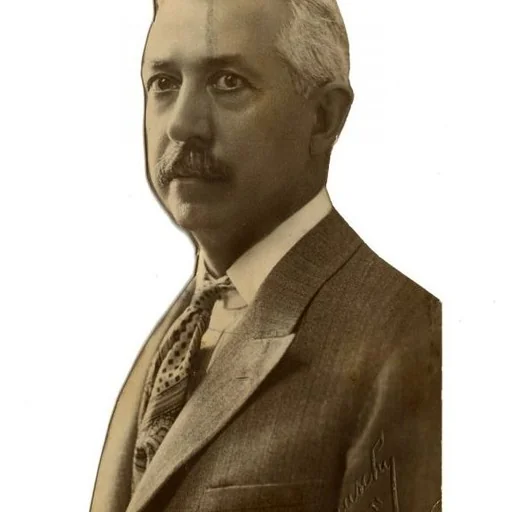
Gheorghe Petrașcu (Romanian pronunciation: ; 20 November 1872, Tecuci – 1 May 1949, Bucharest) was a Romanian painter.