Artwork
Judith and Holofernes
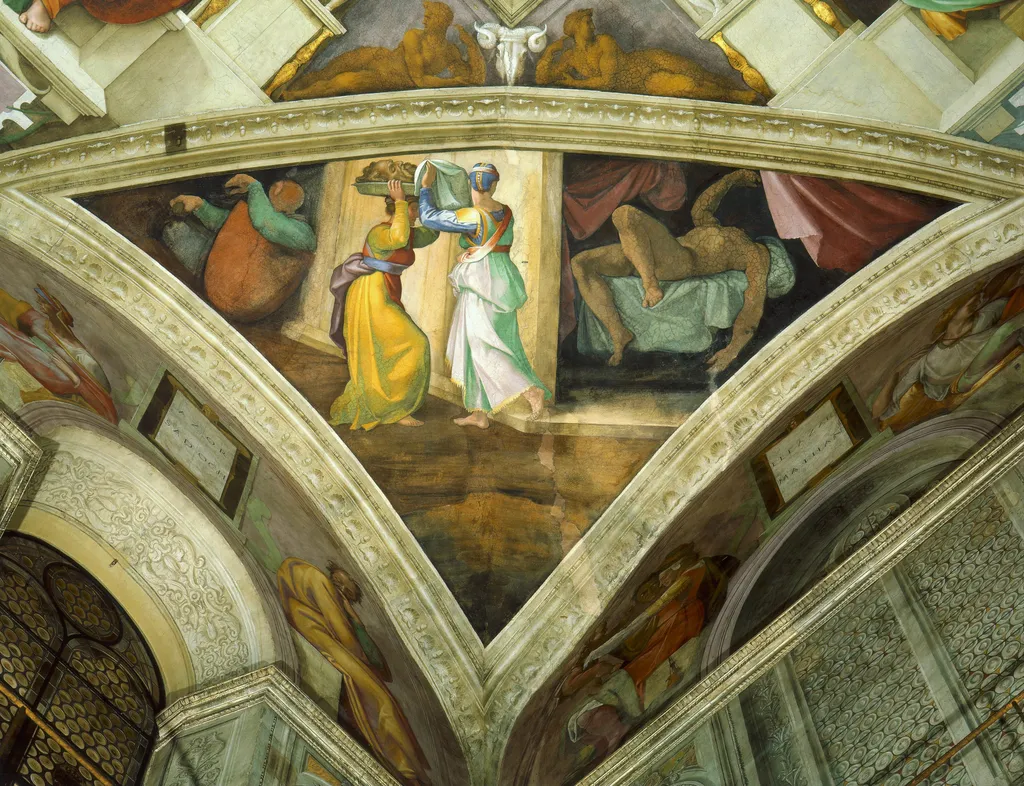
Judith and Holofernes is a fresco painting by the High Renaissance artist Michelangelo. It dates from 1508 and is held in the collection of the Vatican Museums.
About this work
Overview
Painted in 1508, this fresco by Michelangelo resides in the Sistine Chapel’s ceiling space, part of a broader decorative program commissioned by Pope Julius II.
Painted in 1508, this fresco by Michelangelo resides in the Sistine Chapel’s ceiling space, part of a broader decorative program commissioned by Pope Julius II. Though less prominent than the chapel’s central narratives, the scene of Judith and Holofernes appears among other Old Testament figures. Executed in buon fresco, it reflects Michelangelo’s transition from sculpture to large-scale wall painting during this period.
Subject & Meaning
The scene illustrates the biblical story from the Book of Judith, in which the widow Judith decapitates the Assyrian general Holofernes to save her people. Michelangelo captures the moment immediately after the act: Judith, gripping the sword, holds the severed head aloft while Holofernes lies lifeless on his bed. The tension in her posture suggests vigilance, not triumph, emphasizing moral resolve over violence.
Technique & Style
Michelangelo rendered the figures with sculptural solidity, using sharp contours and muscular anatomy even in the female form. The dark interior is defined by minimal architectural elements, focusing attention on the bodies. The red drapery of the bed intensifies the scene’s drama, while the figures’ twisting poses reflect his study of classical statuary and anatomical dissection, characteristic of High Renaissance ideals.
History & Provenance
Commissioned as part of the Sistine Chapel’s ceiling decoration, the fresco was painted alongside other biblical scenes between 1508 and 1512. It remained largely unchanged after completion, though later restorations in the 20th century clarified pigments obscured by centuries of soot and varnish. Its placement among prophetic figures underscores its symbolic role in the chapel’s theological narrative.
Context
During the High Renaissance, biblical heroines like Judith were used to symbolize divine justice and civic virtue. Michelangelo’s depiction aligns with contemporary humanist interests in classical themes and moral strength. The fresco’s inclusion among male prophets and sibyls suggests a deliberate pairing of female agency with broader spiritual authority, reflecting Renaissance reinterpretations of gender and power.
Legacy
Though overshadowed by the chapel’s more monumental scenes, this fresco contributed to the evolving representation of female agency in Western art. Its emphasis on physical tension and psychological gravity influenced later Baroque treatments of violent biblical moments. Scholars continue to analyze its placement and execution as evidence of Michelangelo’s conceptual depth beyond his sculptural fame.
Artist & collection

Artist
Michelangelo di Lodovico Buonarroti Simoni (6 March 1475 – 18 February 1564), known mononymously as Michelangelo, was an Italian sculptor, painter, architect, and poet of the High Renaissance.

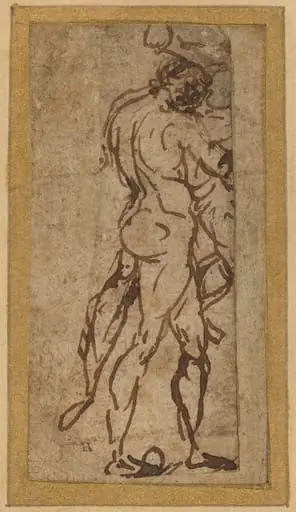
![Male Nude [recto], by Michelangelo](https://artifactworldgallery.com/img/michelangelo--male-nude-recto--8c3354d89884753a-w320.webp)
![Male Nude [verso], by Michelangelo](https://artifactworldgallery.com/img/michelangelo--male-nude-verso--d48a81b2ad2bdbb8-w320.webp)
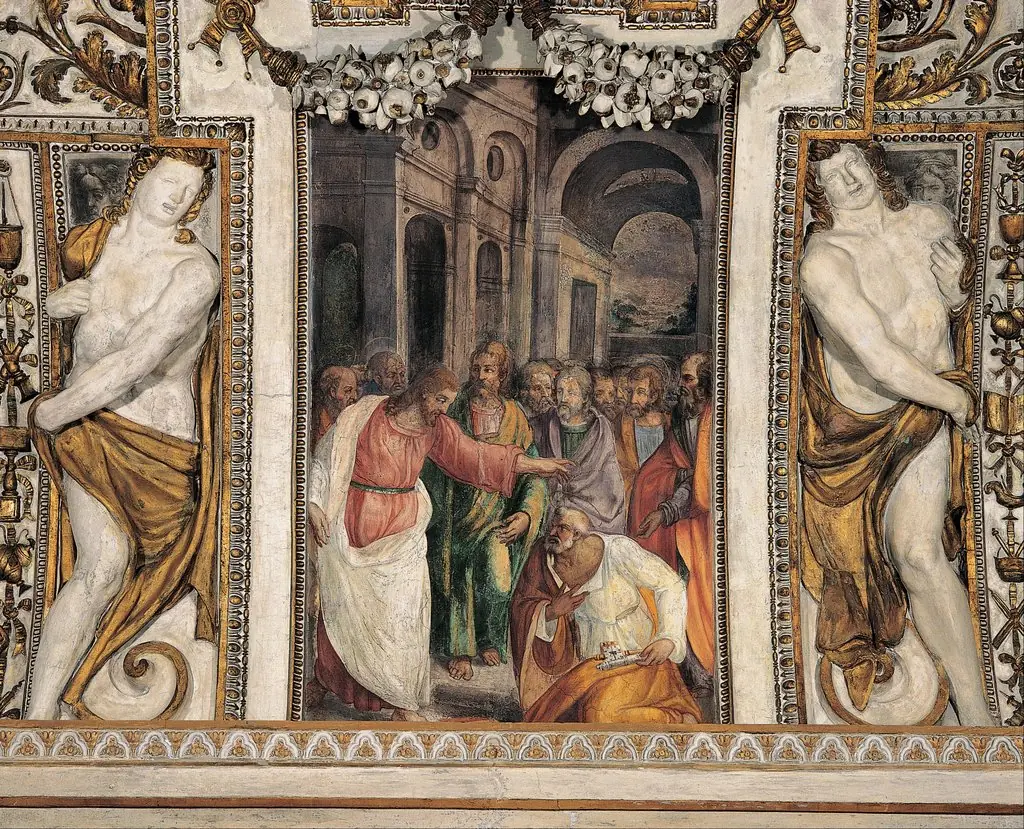 Deliver of the Keys to Saint Peter
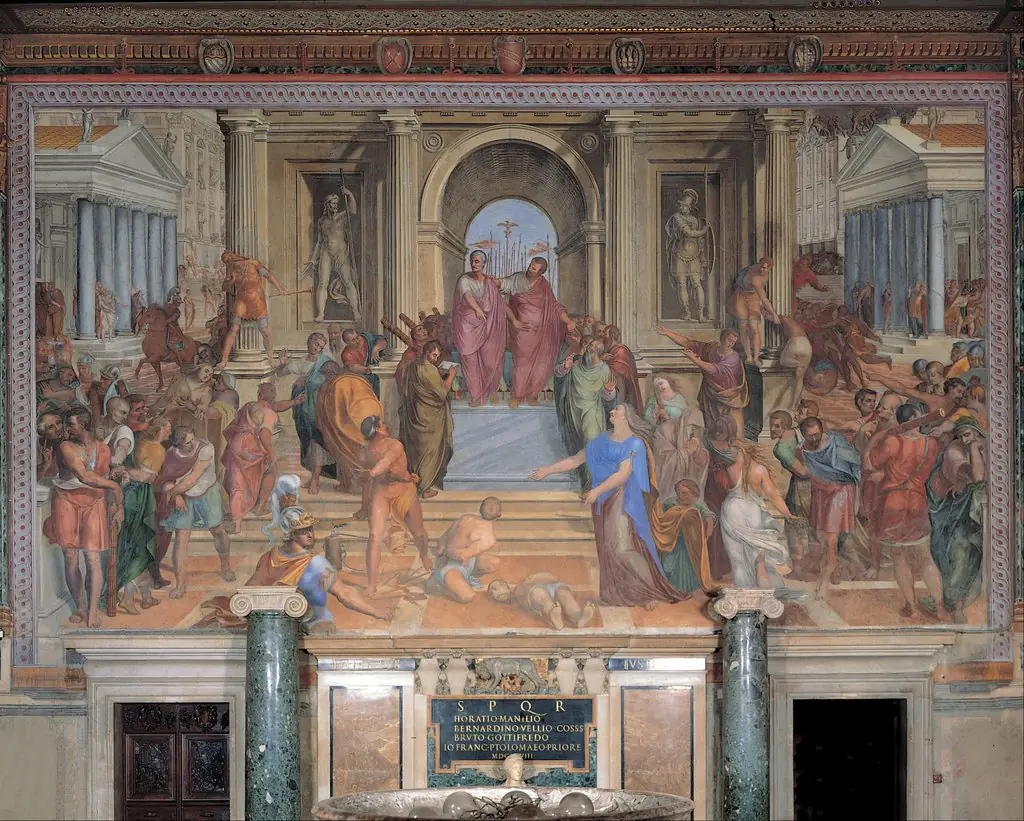 Justice of Brutus
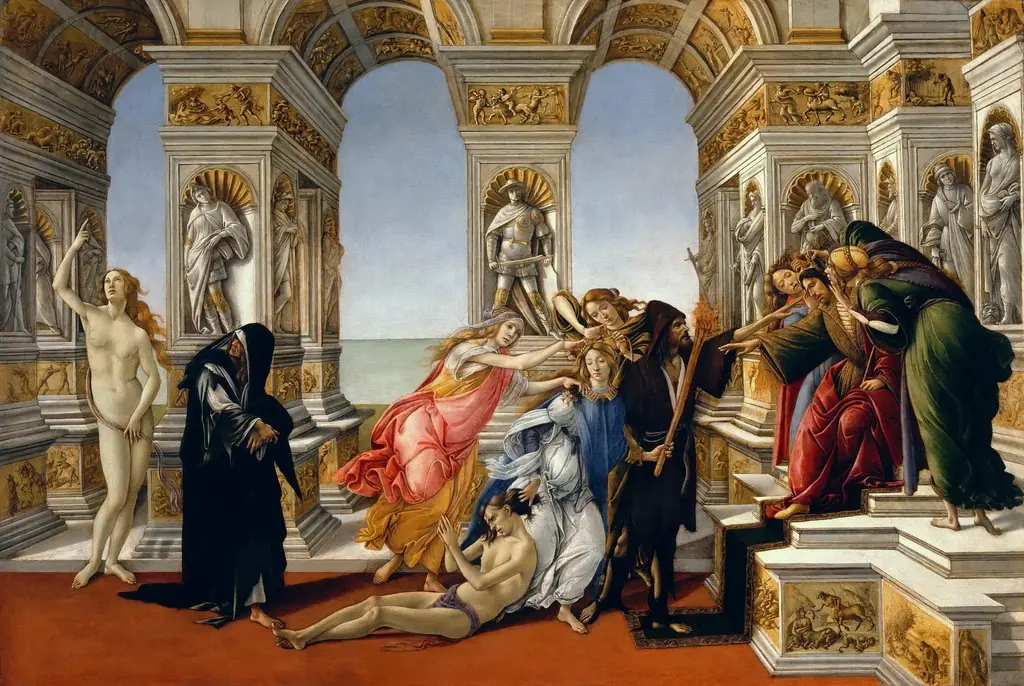 Calumny of Apelles
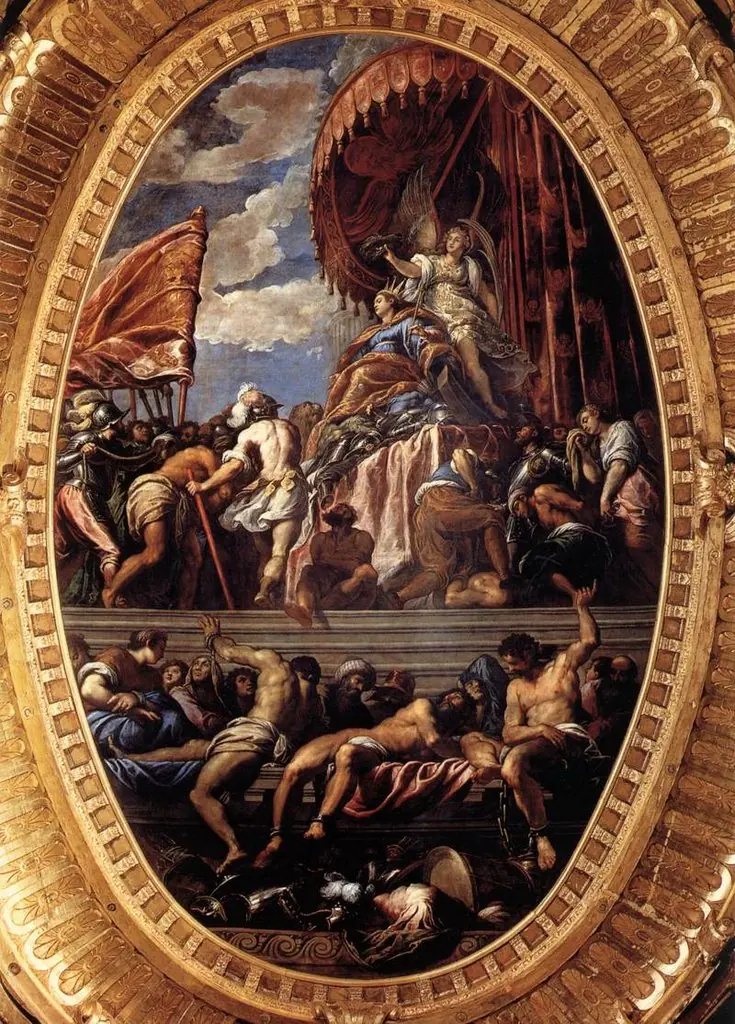 Venice Crowned by Victory
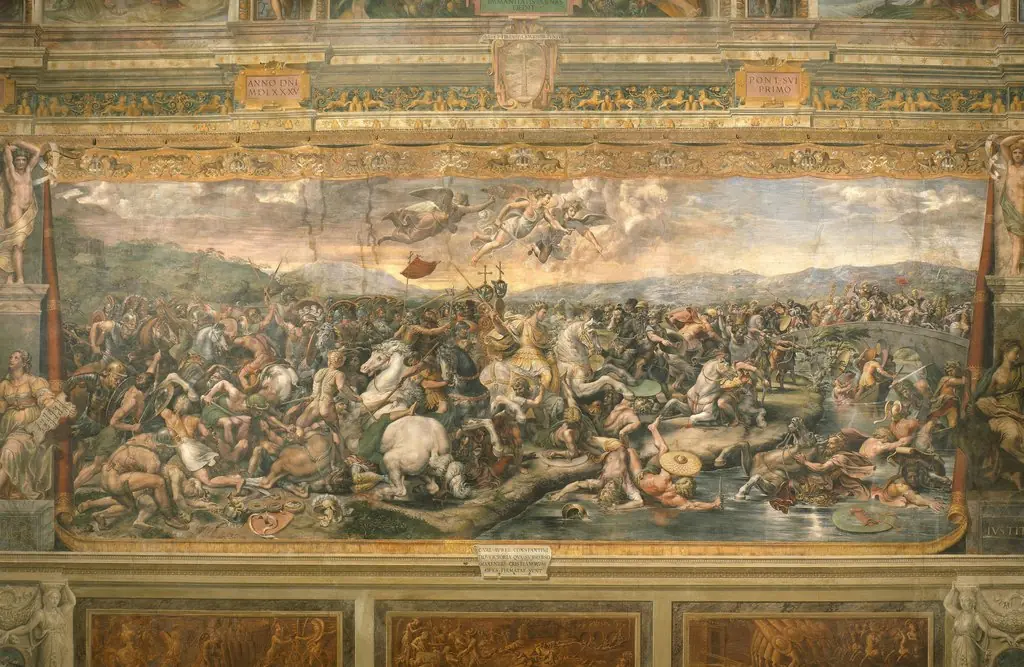 The Battle of the Milvian Bridge
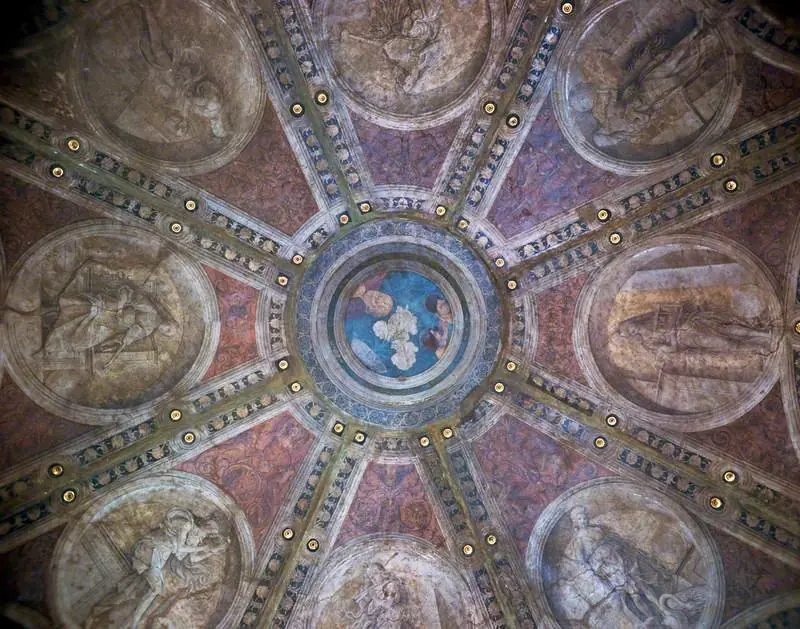 Ceiling from the Casa Maffi, Via Belvedere, Cremona (detail)
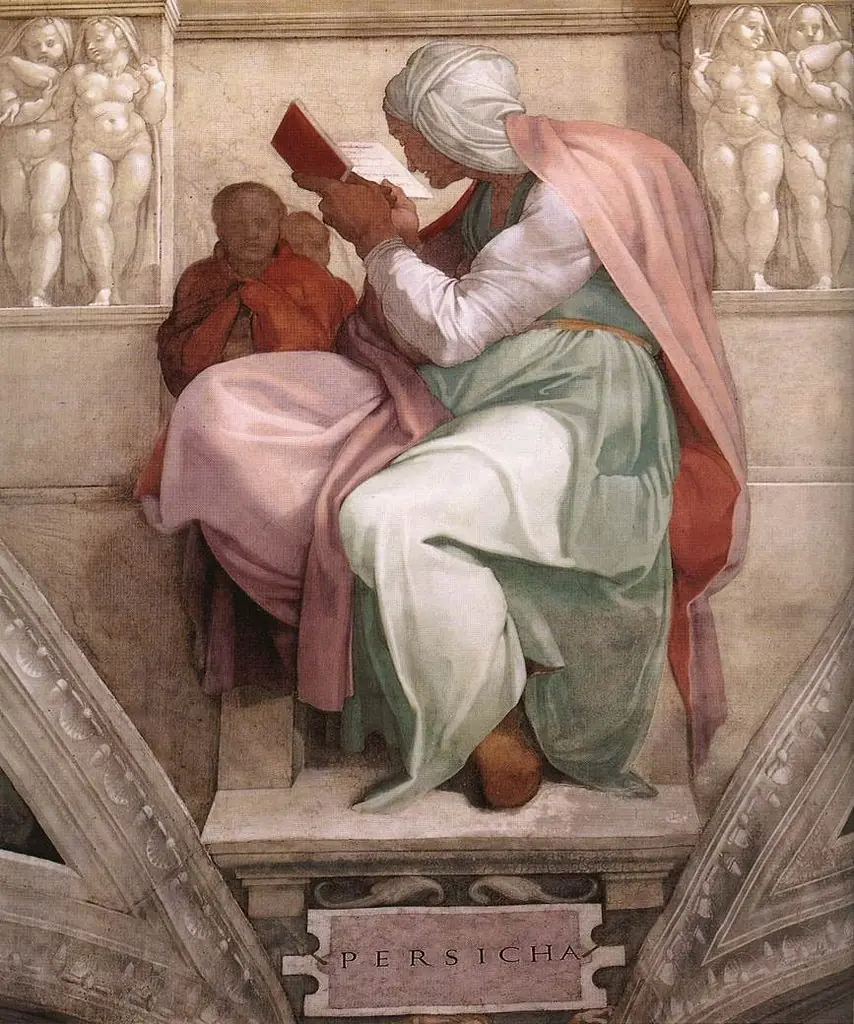 Sistine Chapel ceiling - Persian Sibyl
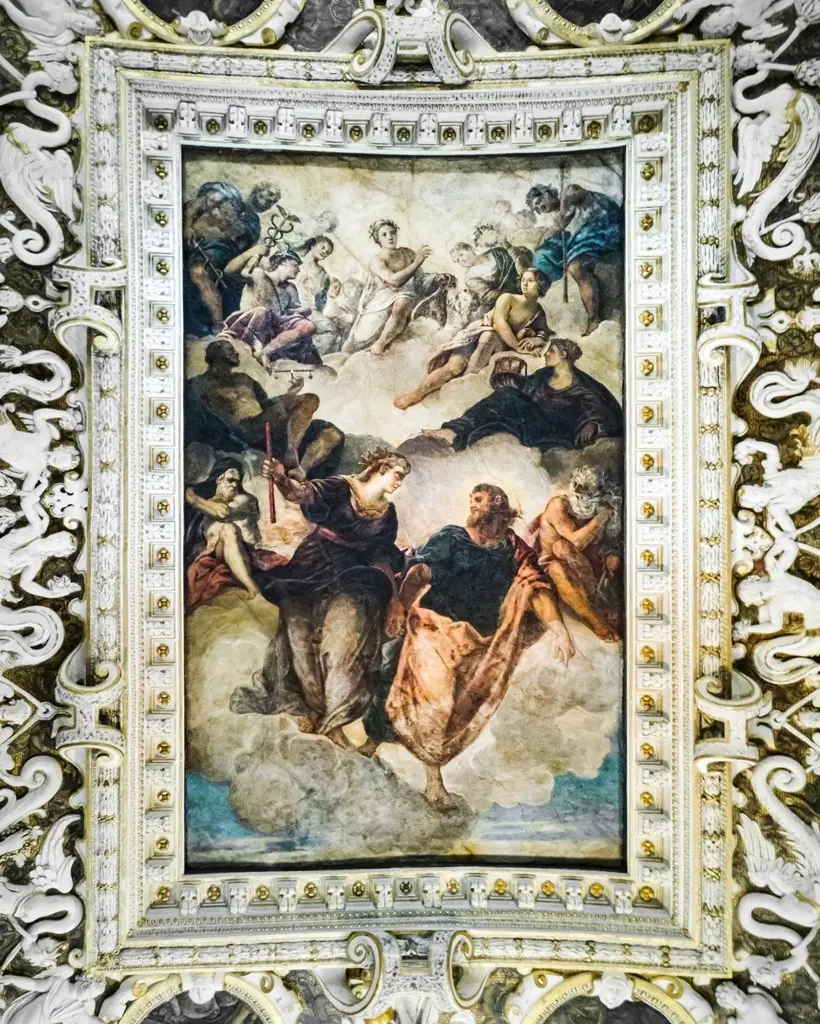 Jupiter hands over the dominion of the Adriatic to Venice
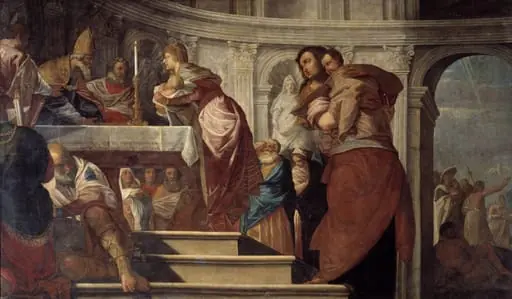 The Presentation of Christ in the Temple, and the Baptism of Christ
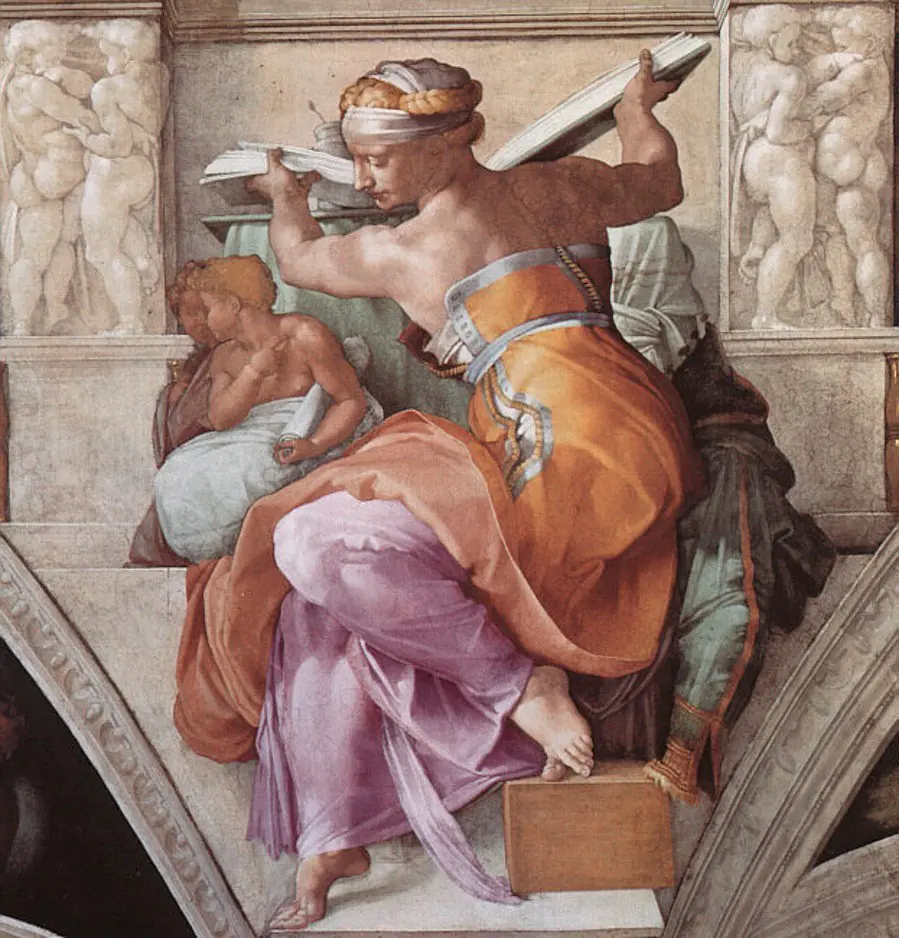 Libyan Sibyl
 Szene aus dem Leben des Hl. Vinzenz Ferrer: Die Mutter des Heiligen fragt den Bischof von Valencia nach dem Sinn der wunderbaren Zeichen, die die Geburt ihres Kindes ankündigen
 Apostles around the Sepulchre of the Virgin Mary