Artwork
Calumny of Apelles
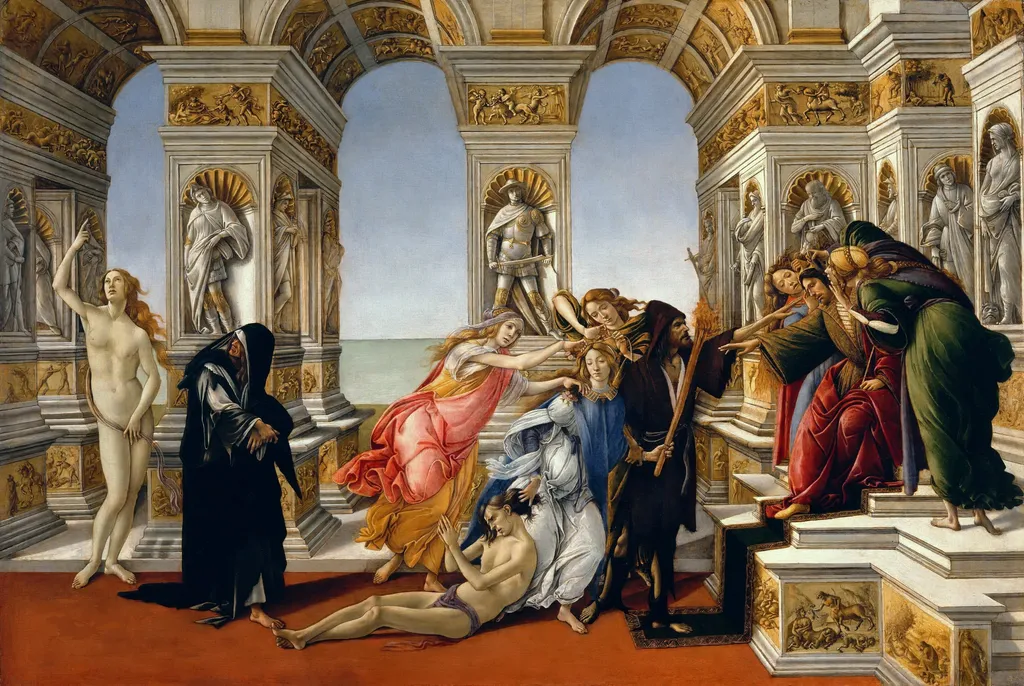
Calumny of Apelles is a tempera painting by the Early Renaissance artist Sandro Botticelli. It dates from 1499 and is held in the collection of the Uffizi Gallery.
About this work
The Calumny of Apelles is a panel painting by Sandro Botticelli. It's a work from the Italian Renaissance.
The painting is based on a description of a lost ancient work by Apelles. It was completed around 1494-95, which is a bit earlier than the listed date of 1497.
To learn more about the techniques used in this painting, look up the technique: tempera.
Overview
Sandro Botticelli’s tempera panel titled *Calumny of Apelles* dates to the mid‑1490s and is housed in the Uffizi Gallery in Florence. Measuring roughly 62 by 91 centimetres, the work presents a compact allegorical scene that references a lost painting described by the ancient writer Lucian.
Subject & Meaning
The composition visualises the narrative of Apelles’ alleged calumny, a story popularized in Renaissance Italy through Lucian’s account and subsequent Latin and Italian translations. Nine human figures, accompanied by painted statues, embody the stages of false accusation and its consequences, reflecting contemporary moral concerns about truth and slander.
Technique & Style
Executed in egg‑tempera on wood, the painting displays Botticelli’s characteristic linear clarity and delicate modelling of flesh. The limited scale allowed for fine detail, while the use of tempera yields a matte surface and luminous colour that accentuates the allegorical gestures of the figures.
Context
The theme was championed by Leon Battista Alberti in his 1435 treatise *De pictura*, which urged artists to revive classical subjects. Botticelli’s interest aligns with a broader Renaissance fascination with ekphrasis—the literary description of lost artworks—evident in several of his secular pieces, though this is his most direct attempt to reconstruct an ancient composition.
History & Provenance
Completed around 1494–95, the panel entered the collection of the Medici family before being transferred to the Uffizi, where it remains on public display. Its attribution to Botticelli has been consistently accepted since its first documentation in the late sixteenth century.
Own this work as a print
Artist & collection

Artist
Sandro Botticelli was a Florentine painter who loved the drama of stories—myths, saints, and ancient tales.

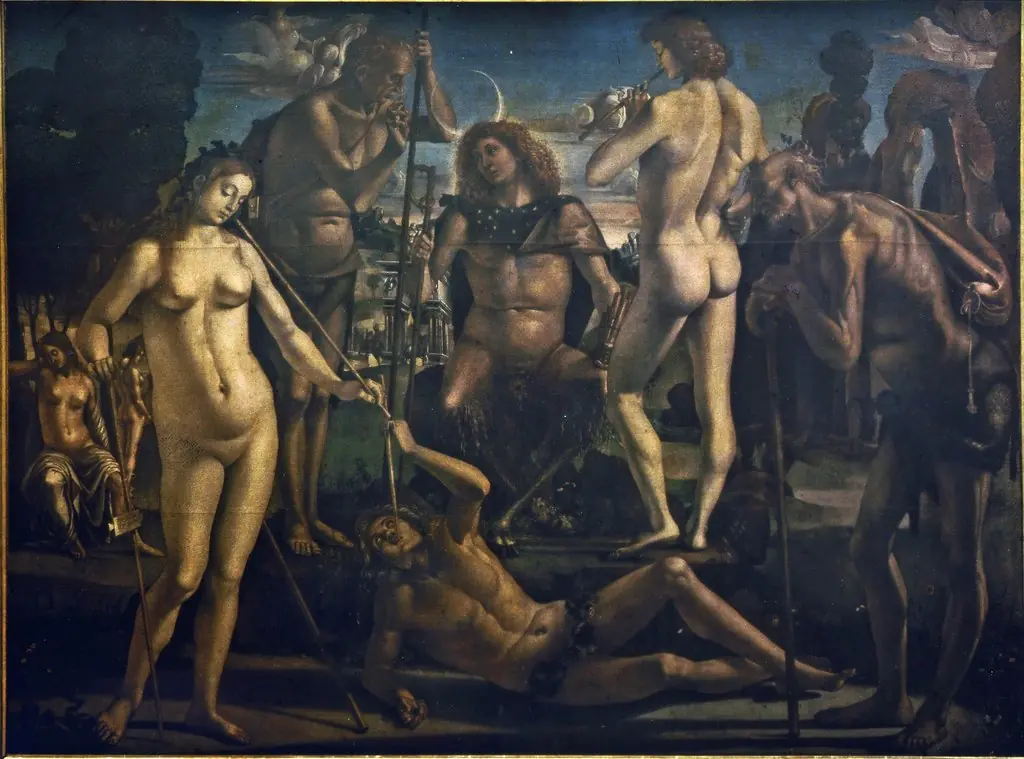 Education of Pan
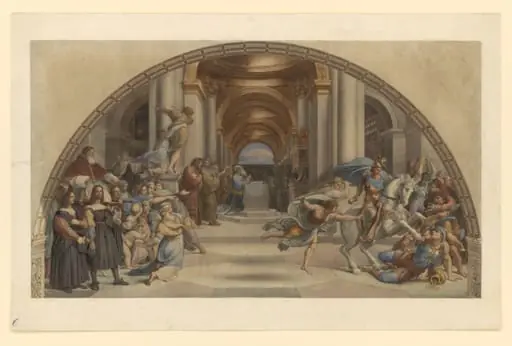 Copy after Raphael’s fresco representing the ‘Expulsion of Heliodorus from the Temple’ in the Stanza di Eliodoro (Vatican Palace, Rome, 1512-14), 1866.
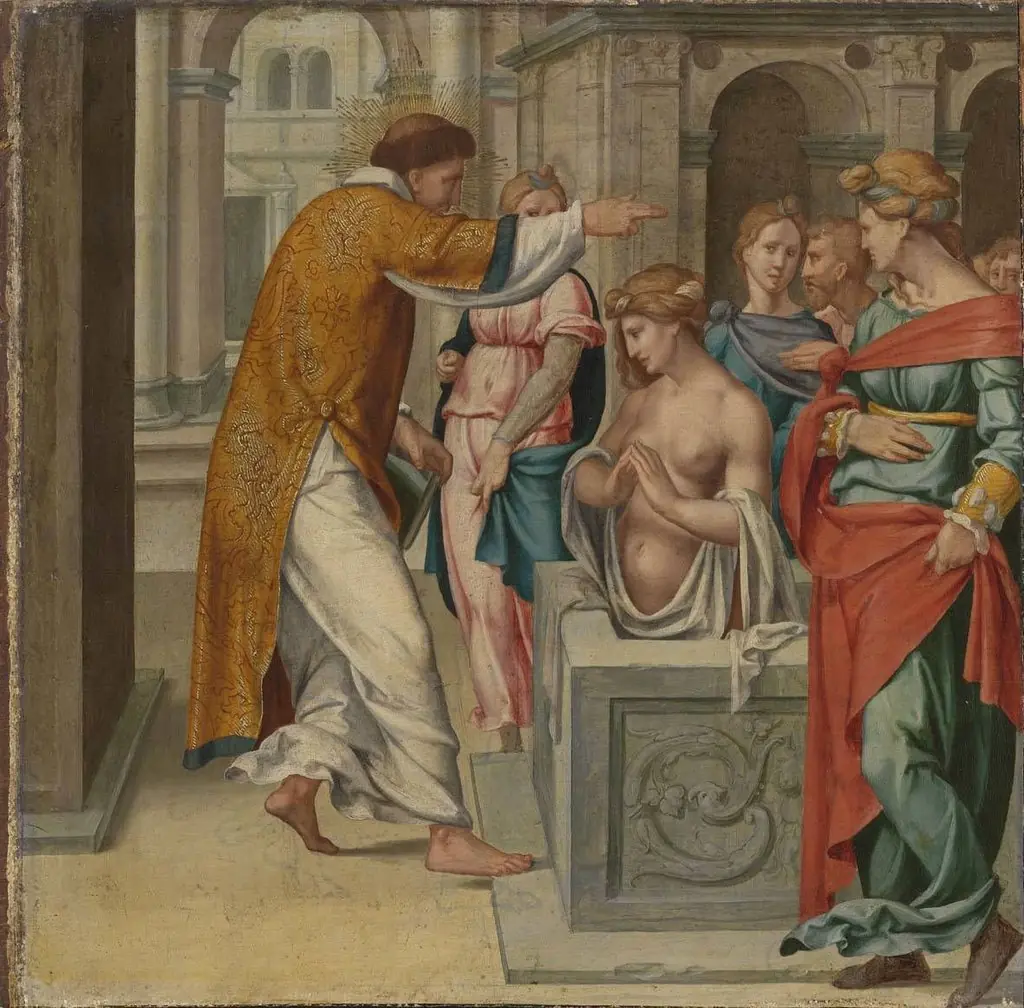 Cyriakus-Folge: Der hl. Cyriakus tauft Arthemia
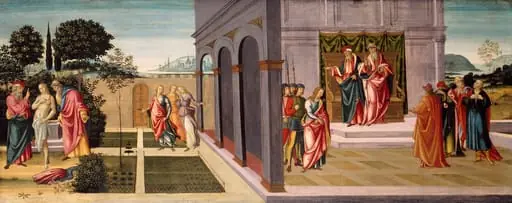 Susanna and the Elders in the Garden, and the Trial of Susanna before the Elders
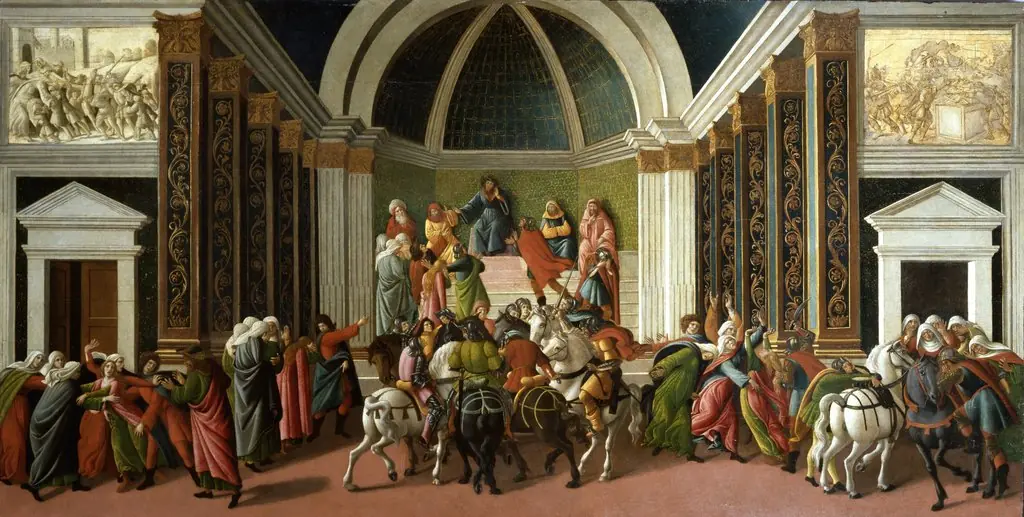 The Story of Virginia
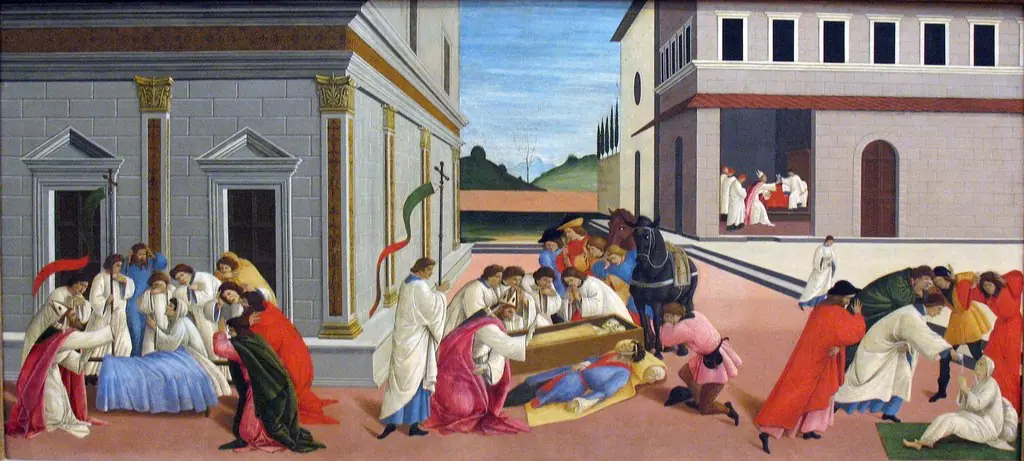
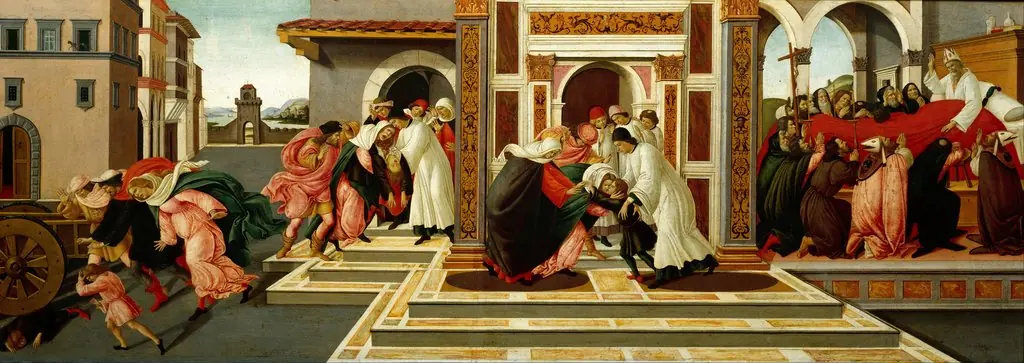 Last Miracle and the Death of Saint Zenobius
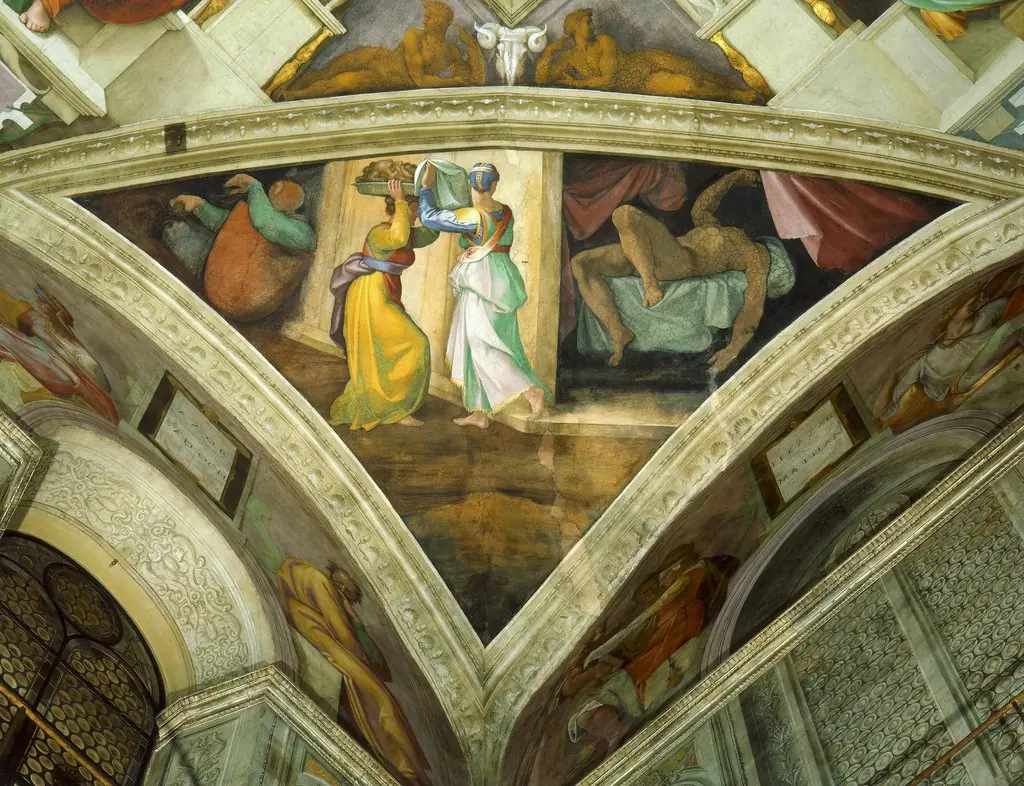 Judith and Holofernes
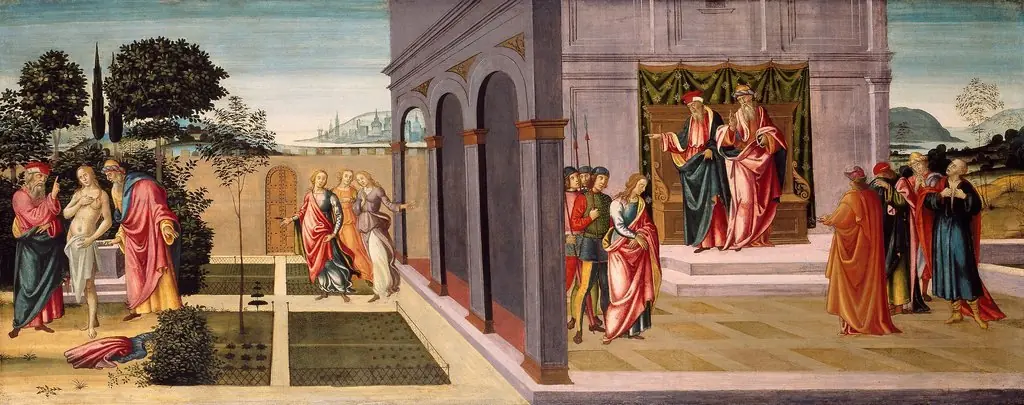 Susanna and the Elders in the Garden, and the Trial of Susanna before the Elders
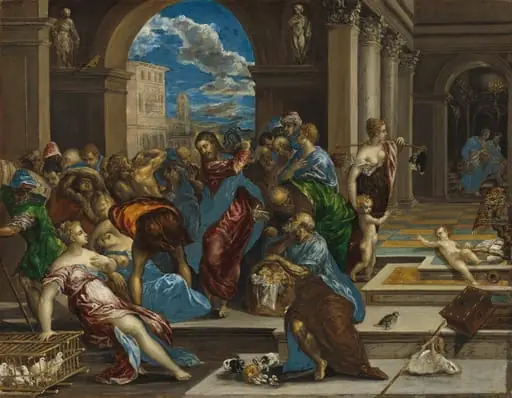 Christ Cleansing the Temple
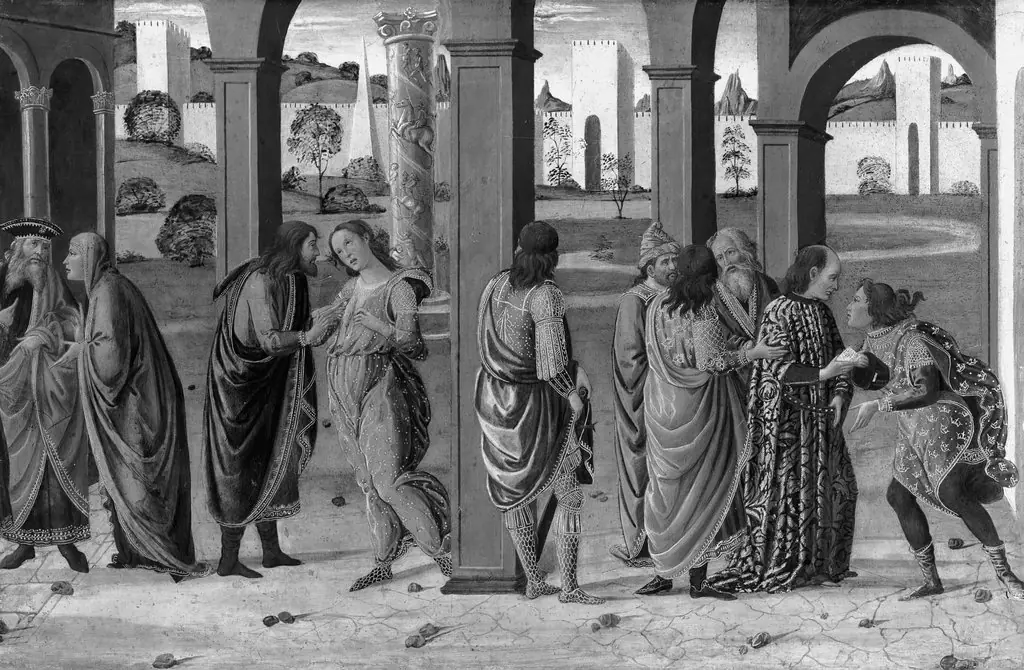 Julius Caesar before his assassination
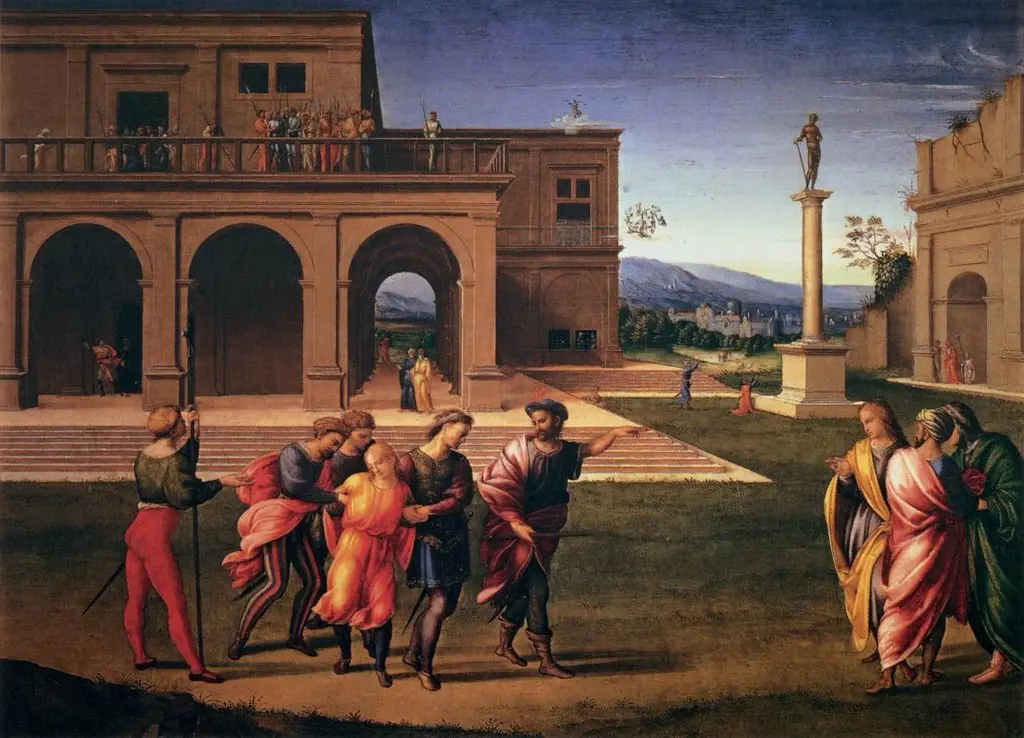 Joseph going to prison
 Primavera