Artwork
The Holy Family with Saint John the Baptist
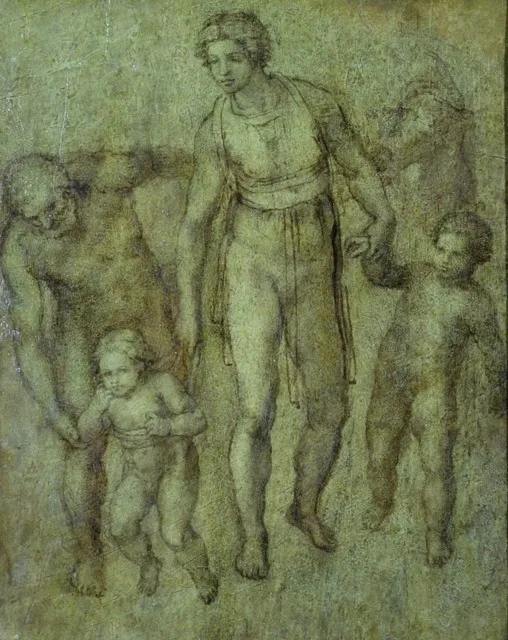
The Holy Family with Saint John the Baptist is an unspecified painting by the Mannerist artist Michelangelo. It dates from 1540 and is held in the collection of the Ashmolean Museum.
About this work
Overview
This piece, executed in a mannerist idiom, reflects his mature style—less concerned with idealized harmony than with expressive tension and emotional gravity.
Painted circa 1540, this work by Michelangelo presents a devotional scene of the Holy Family with the young John the Baptist. Though often associated with sculpture, Michelangelo also produced paintings that reveal his deep engagement with religious themes. This piece, executed in a mannerist idiom, reflects his mature style—less concerned with idealized harmony than with expressive tension and emotional gravity.
Subject & Meaning
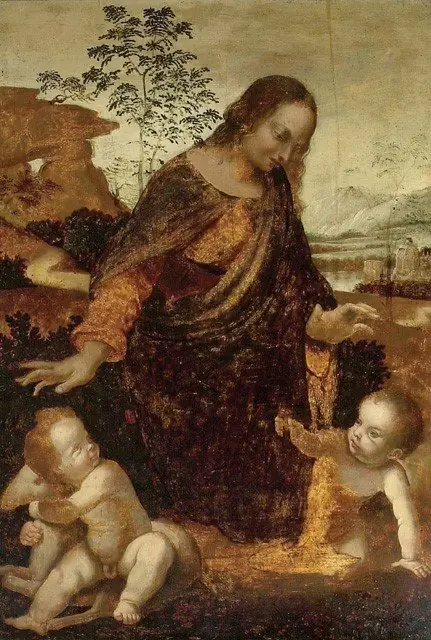
The composition centers on the Virgin Mary, holding the infant Christ by the hand, while the young John the Baptist observes nearby. Their intimate physical connection suggests spiritual kinship and foreshadows John’s future role as the precursor to Christ. The two shadowy, turned figures in the background may represent the world’s indifference or the unseen forces of divine destiny, adding a layer of contemplative ambiguity.
Technique & Style
Rendered with swift, confident strokes, the painting reveals a sketch-like quality, emphasizing gesture over finish. Michelangelo uses chiaroscuro to model forms subtly, with light falling gently on the figures’ faces and hands, heightening their emotional presence. The rough, unworked background contrasts with the refined modeling of the bodies, suggesting an unfinished study or a deliberate aesthetic choice to prioritize inner expression over polished detail.
History & Provenance
Created during Michelangelo’s later years in Rome, this work likely originated as a preparatory study or private devotional piece. It was not commissioned for public display, which may explain its intimate scale and unfinished appearance. Its survival reflects its value to collectors who recognized the artist’s hand in even his most spontaneous renderings, though its early ownership remains undocumented.
Context
In the 1540s, Michelangelo was increasingly drawn to introspective religious subjects amid the upheavals of the Reformation and Counter-Reformation. His style evolved away from High Renaissance balance toward a more personal, emotionally charged language. This painting aligns with contemporaneous works that prioritize spiritual intensity over classical decorum, reflecting both personal piety and the shifting religious climate of the era.
Legacy
Though not widely exhibited in its time, this work exemplifies Michelangelo’s ability to convey profound meaning through minimal means. Later artists studied his sketches and unfinished pieces for insights into his creative process. Its rawness and emotional directness influenced generations seeking authenticity over polish, cementing the value of the artist’s preparatory work as an end in itself.
Artist & collection

Artist
Michelangelo di Lodovico Buonarroti Simoni (6 March 1475 – 18 February 1564), known mononymously as Michelangelo, was an Italian sculptor, painter, architect, and poet of the High Renaissance.

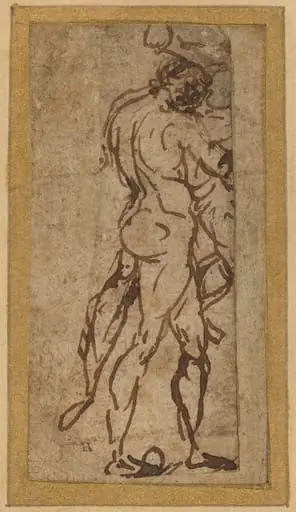
![Male Nude [recto], by Michelangelo](https://artifactworldgallery.com/img/michelangelo--male-nude-recto--8c3354d89884753a-w320.webp)
![Male Nude [verso], by Michelangelo](https://artifactworldgallery.com/img/michelangelo--male-nude-verso--d48a81b2ad2bdbb8-w320.webp)
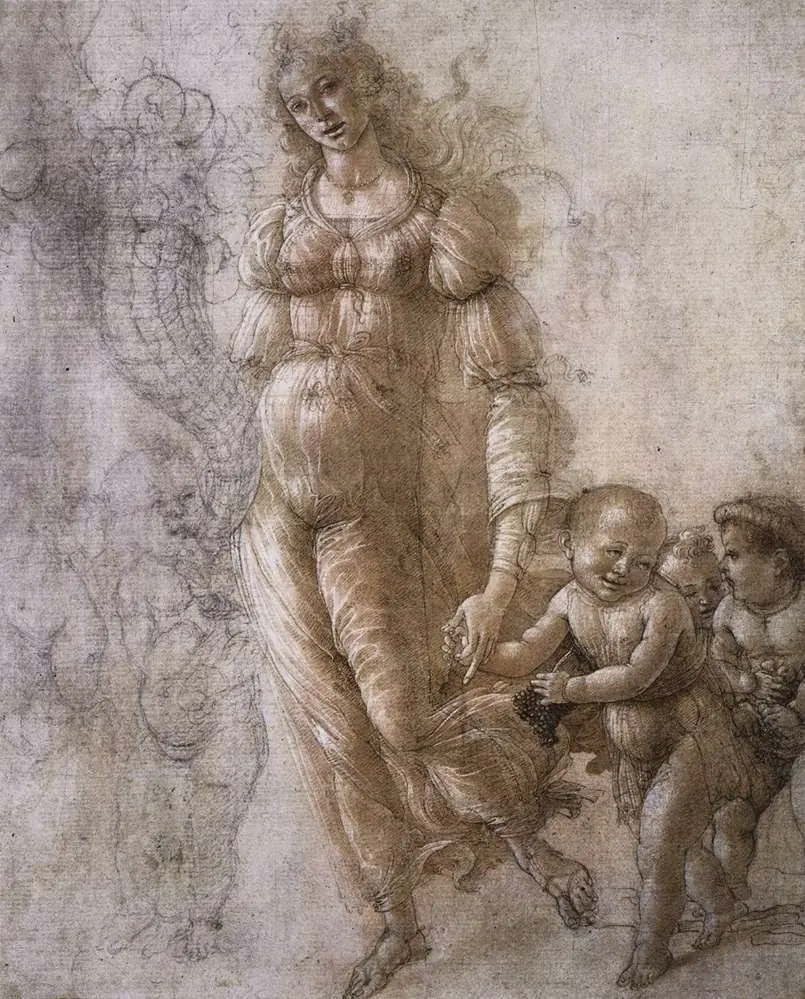 Allegory of Abundance
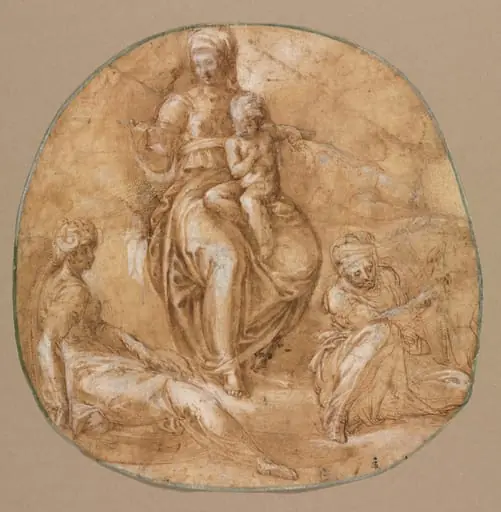 Virgin and Child with St. Catherine of Alexandria and Saint Anne (?)
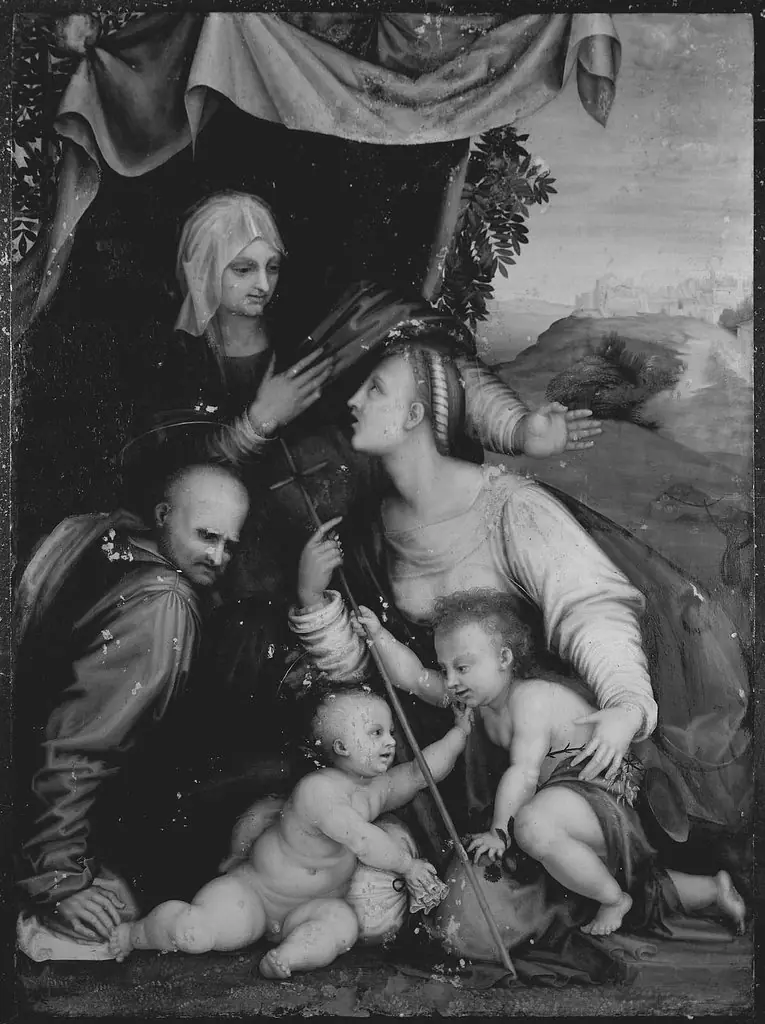 The Holy Family with St Anne and Young St John the Baptist
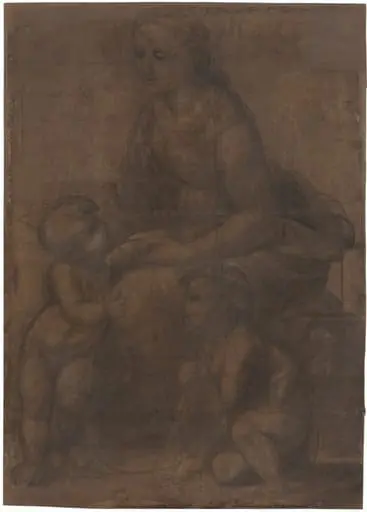 The Madonna and Child with Saint John the Baptist
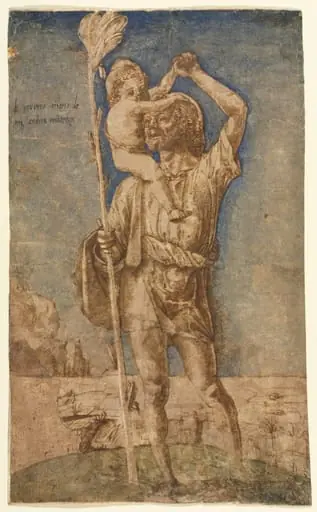 Saint Christopher
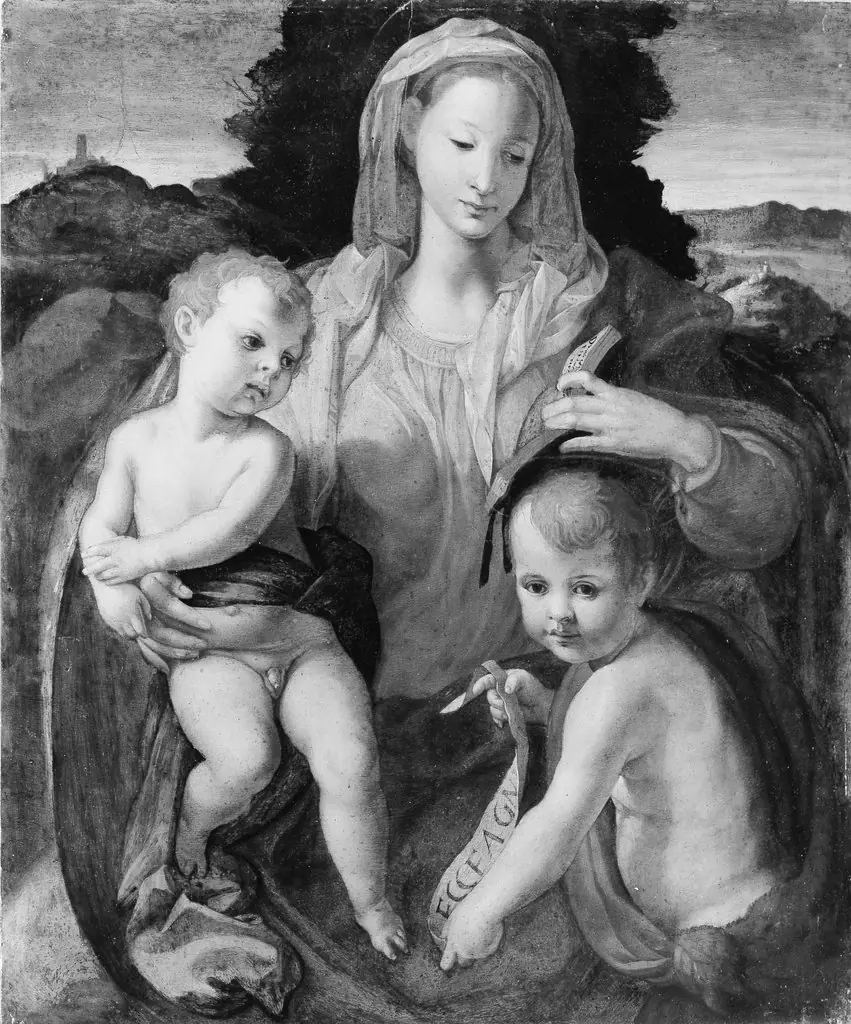 Madonna and Child with the Young Saint John the Baptist
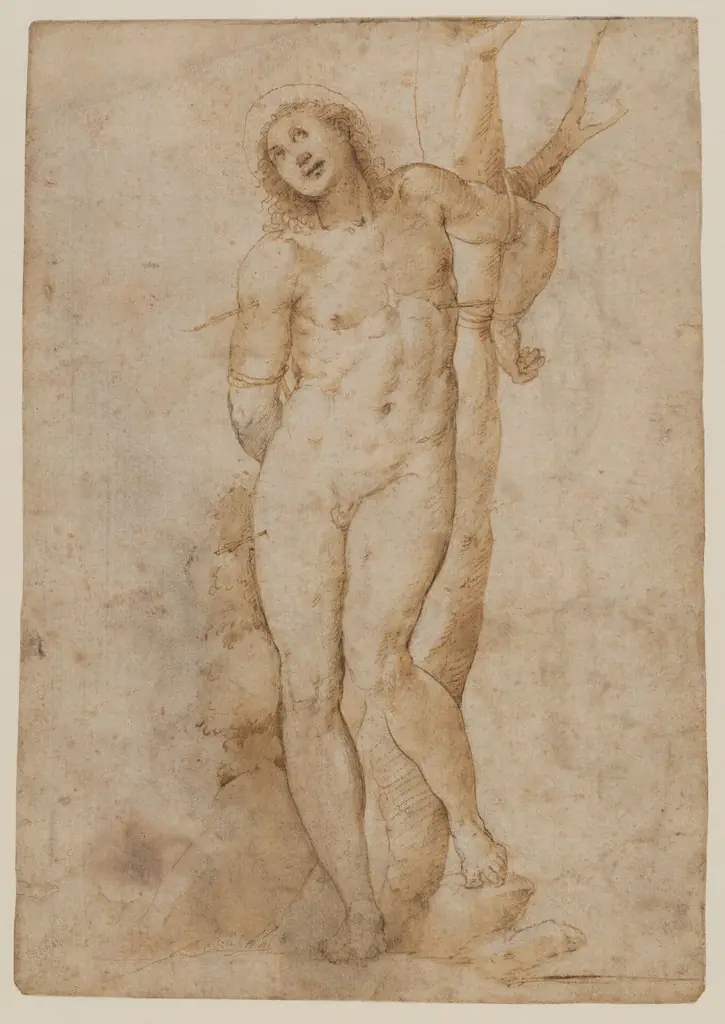 Drawing
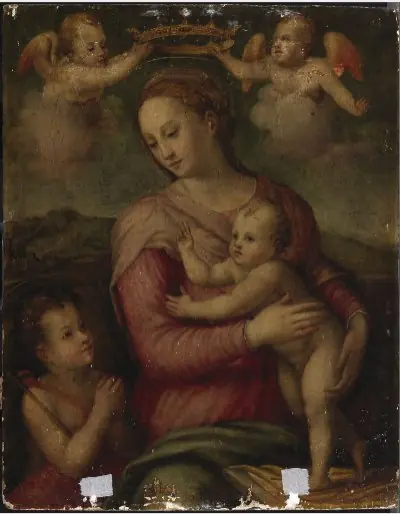 The Virgin and Child with Saint John the Baptist and Angels
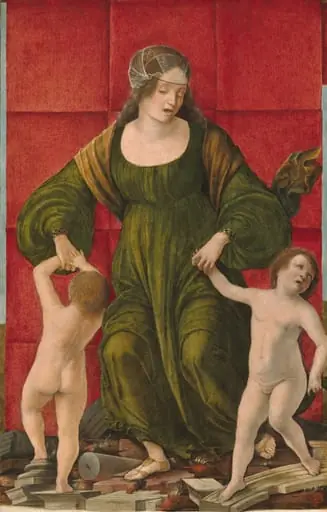 The Wife of Hasdrubal and Her Children
 The Virgin and Child with the young St John the Baptist
 The Virgin Crowned by an Angel
 Allegorical Figure of Charity