Artwork
Martyrdom of Saint Sebastian
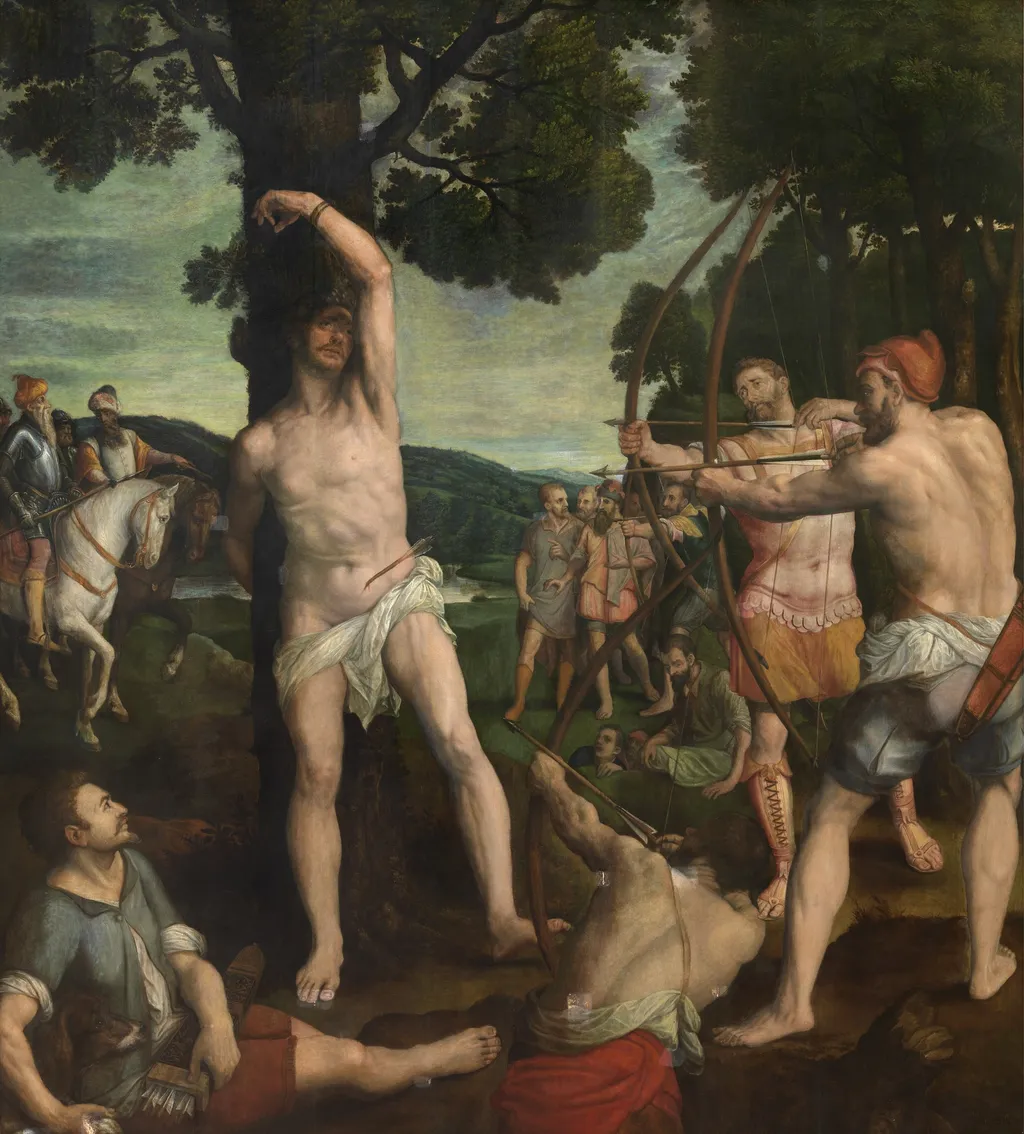
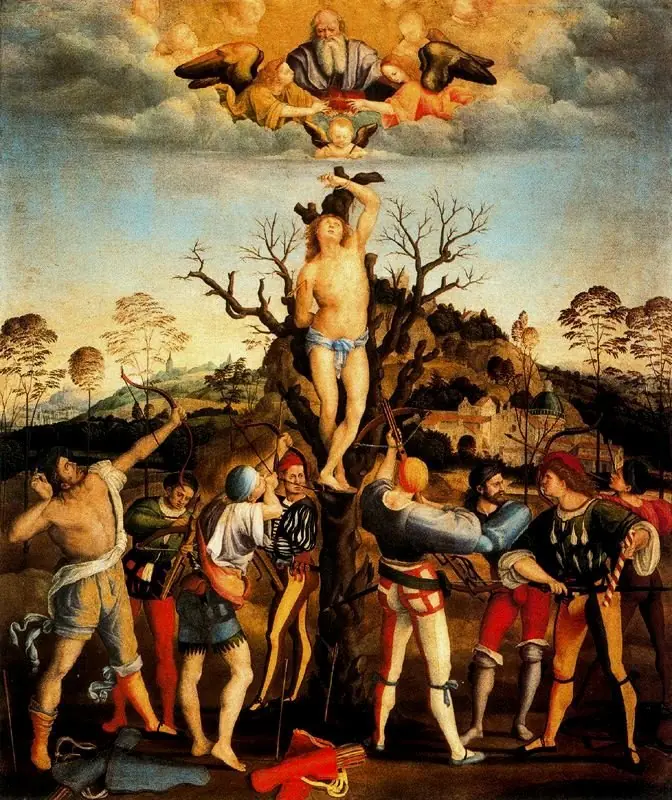
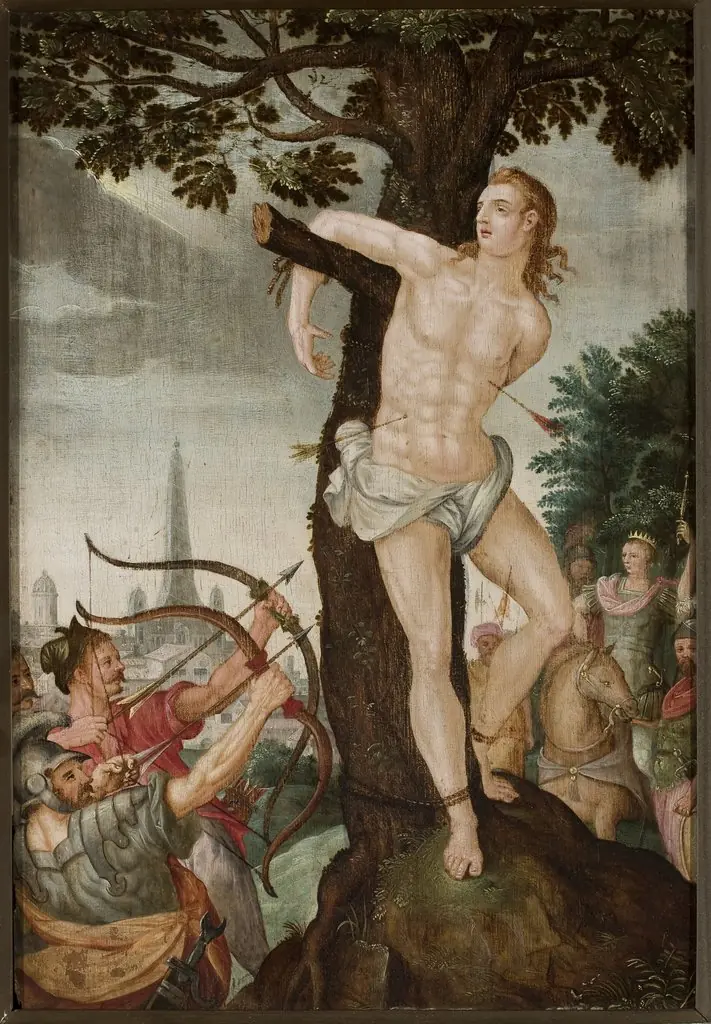
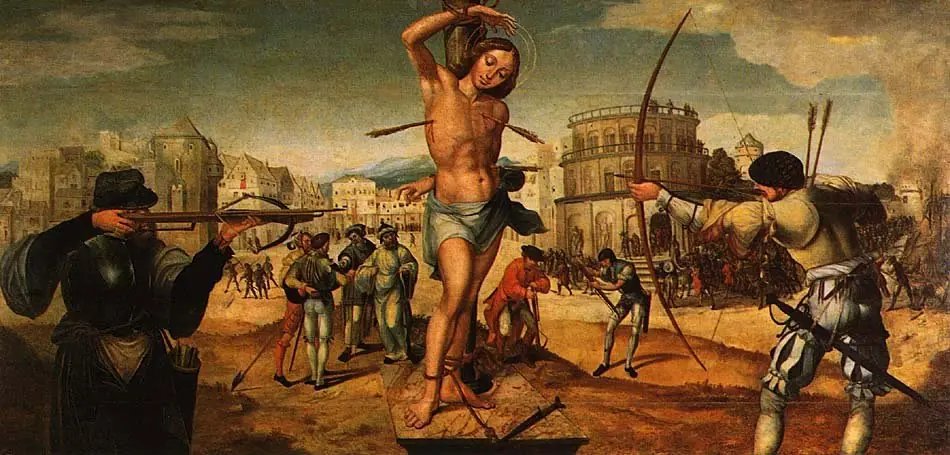
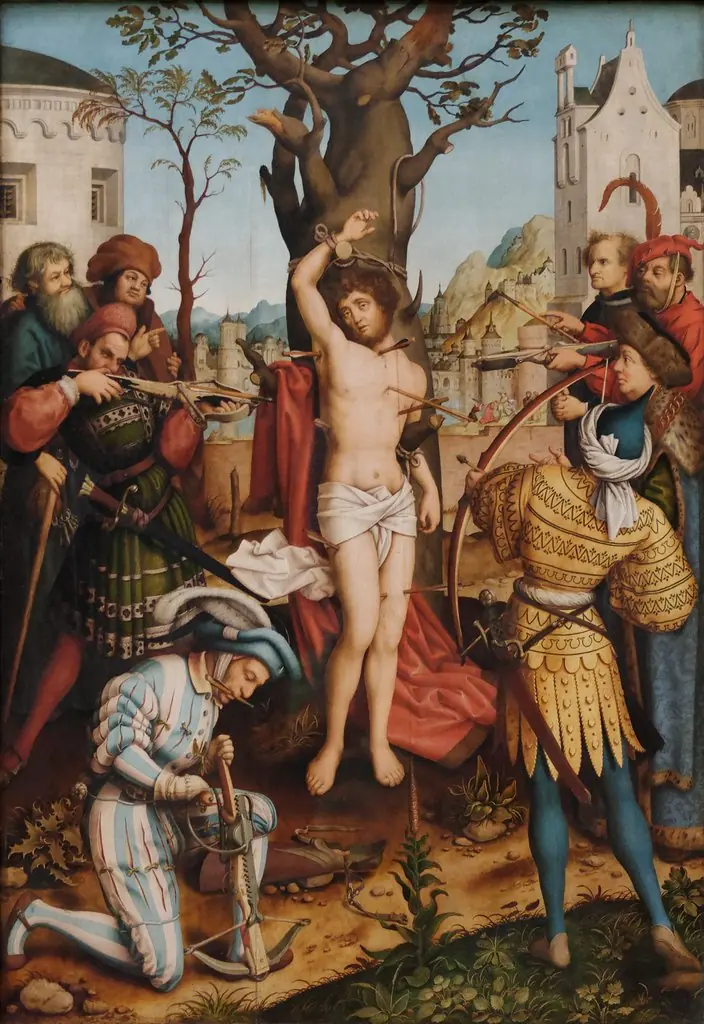
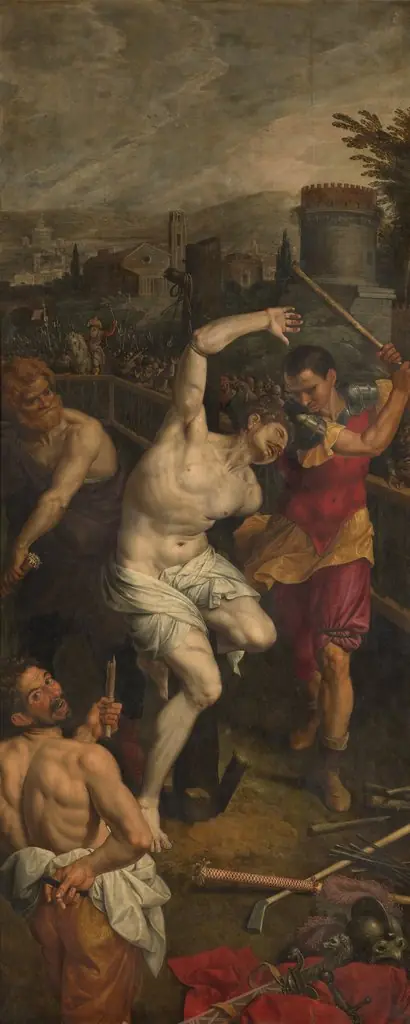
Martyrdom of Saint Sebastian is an oil painting by the Mannerist artist Michiel Coxie. It dates from 1575 and is held in the collection of the Onze-Lieve-Vrouwekathedraal.
About this work
Overview
Michiel Coxie the Elder completed this oil painting in 1575, reflecting his engagement with Mannerist aesthetics during the latter half of the 16th century.
Michiel Coxie the Elder completed this oil painting in 1575, reflecting his engagement with Mannerist aesthetics during the latter half of the 16th century. A Flemish artist known for diverse commissions—including tapestries, stained glass, and portraiture—Coxie served as court painter to Emperor Charles V and King Philip II of Spain. The work belongs to the Royal Museum of Fine Arts Antwerp’s collection, where it remains as a testament to his religious imagery and technical precision.
Subject & Meaning
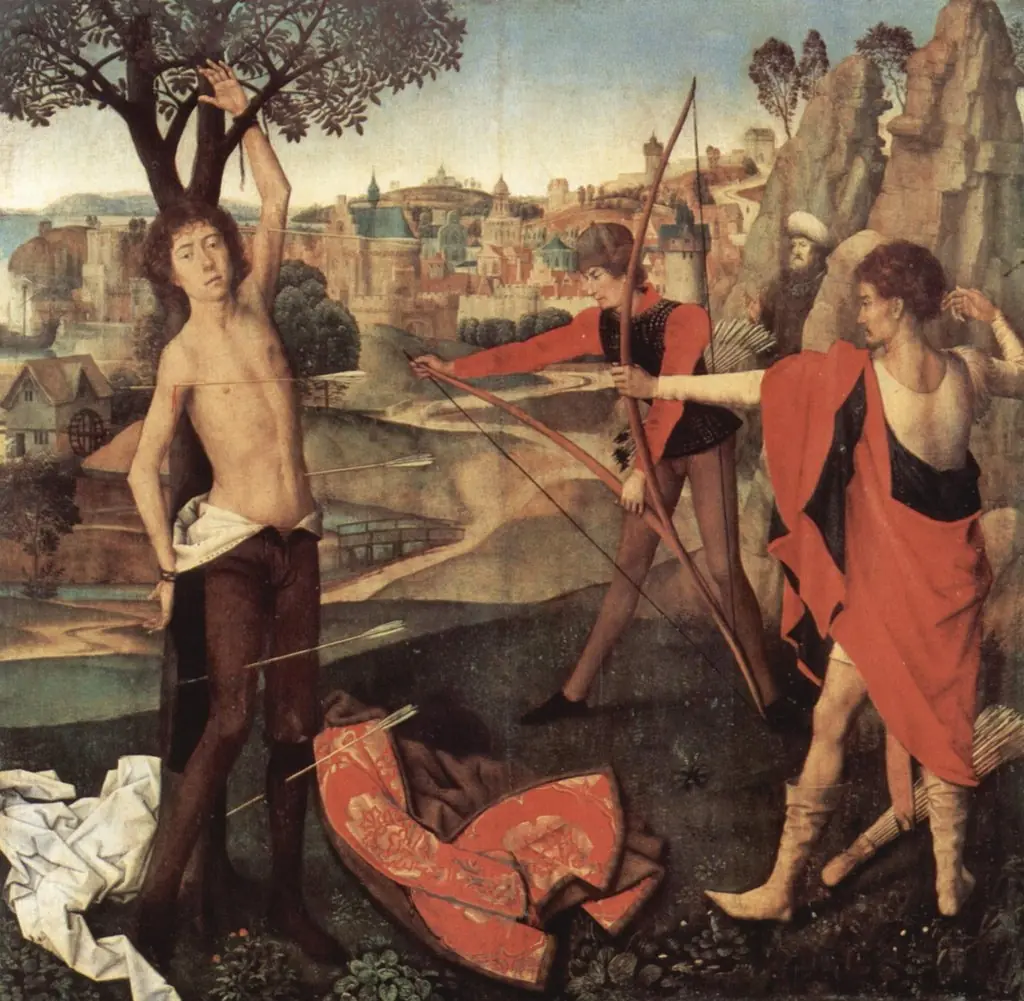
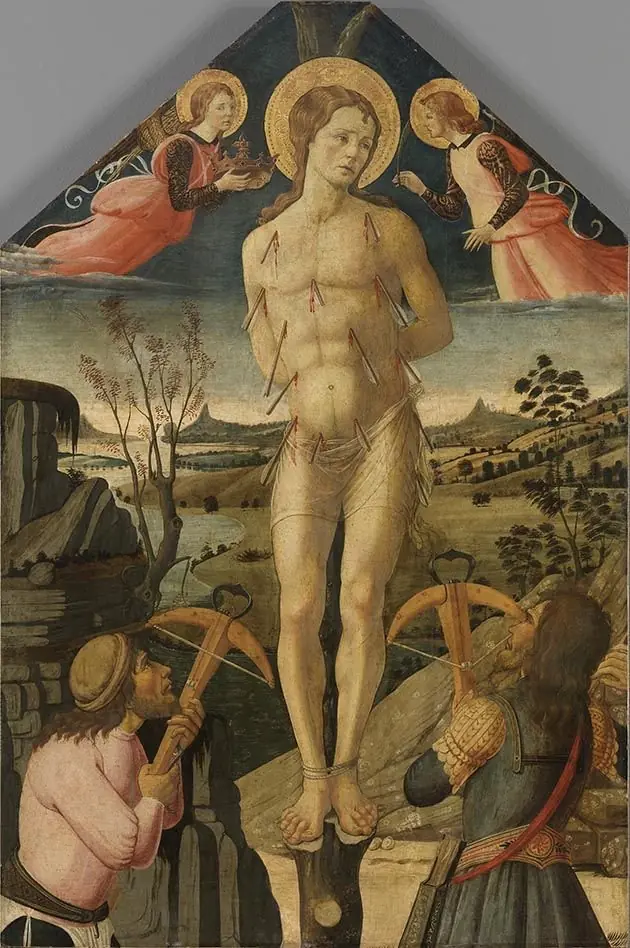
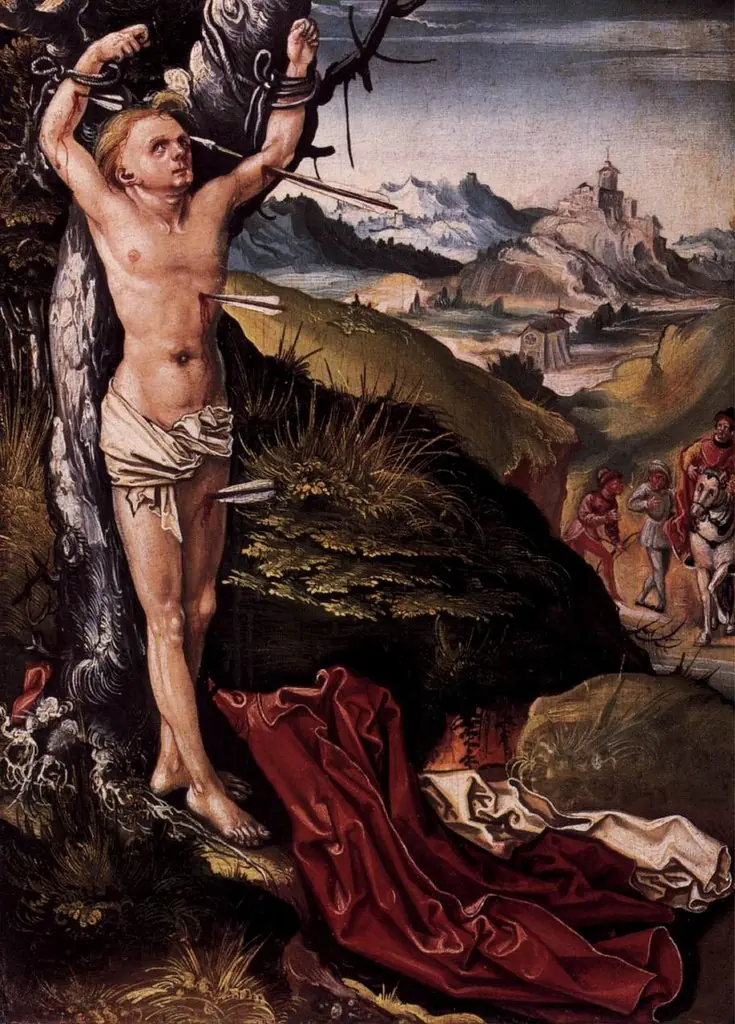
The painting illustrates the martyrdom of Saint Sebastian, a Roman soldier and early Christian convert traditionally executed by archers. Depicted bound to a tree, his body pierced by multiple arrows, the scene emphasizes endurance and divine sacrifice. Figures surrounding him—archers, mounted spectators, and fallen onlookers—frame the moment as both public spectacle and spiritual trial, reinforcing the saint’s role as a symbol of faith under persecution.
Technique & Style
Coxie employs oil paint to render elongated, stylized figures typical of Mannerism, with tense postures and exaggerated anatomy heightening emotional gravity. The palette is restrained, dominated by earthy greens, browns, and beiges, creating a somber, atmospheric tone. Compositionally, the scene is layered with spatial depth, balancing foreground action with distant figures, while avoiding overt theatricality in favor of quiet solemnity.
History & Provenance
Commissioned during Coxie’s tenure at the Spanish Habsburg court, the painting reflects the religious and political priorities of Philip II’s reign, which emphasized Counter-Reformation themes. It entered the Royal Museum of Fine Arts Antwerp’s collection in the 19th century, having likely remained in ecclesiastical or noble ownership in Flanders after its completion. Its survival through centuries of upheaval underscores its enduring institutional value.
Context
In mid-16th-century Flanders, religious imagery remained central to artistic production despite rising Protestant criticism. Coxie’s work bridges Northern European detail and Italian Mannerist forms, influenced by his time in Italy. This painting aligns with broader trends in Catholic art promoting martyrdom as a model of piety, responding to the Council of Trent’s call for emotionally resonant sacred narratives accessible to the faithful.
Legacy
Though less widely known than contemporaries like Bruegel, Coxie’s *Martyrdom of Saint Sebastian* exemplifies the synthesis of Flemish precision and Italianate composition that defined elite Northern Renaissance art. Its restrained drama and technical control influenced regional religious painting, preserving Mannerist ideals in the Low Countries beyond their Italian origins. The work remains a key reference for understanding the evolution of sacred imagery in Habsburg territories.
Own this work as a print
Artist & collection
Artist
Michiel Coxie the Elder, Michiel Coxcie the Elder or Michiel van Coxcie, Latinised name Coxius (1499 – 3 March 1592), was a Flemish painter of altarpieces and portraits, a draughtsman and a designer of stained-glass windows, tapestries and…