Artwork
The Death of the Virgin
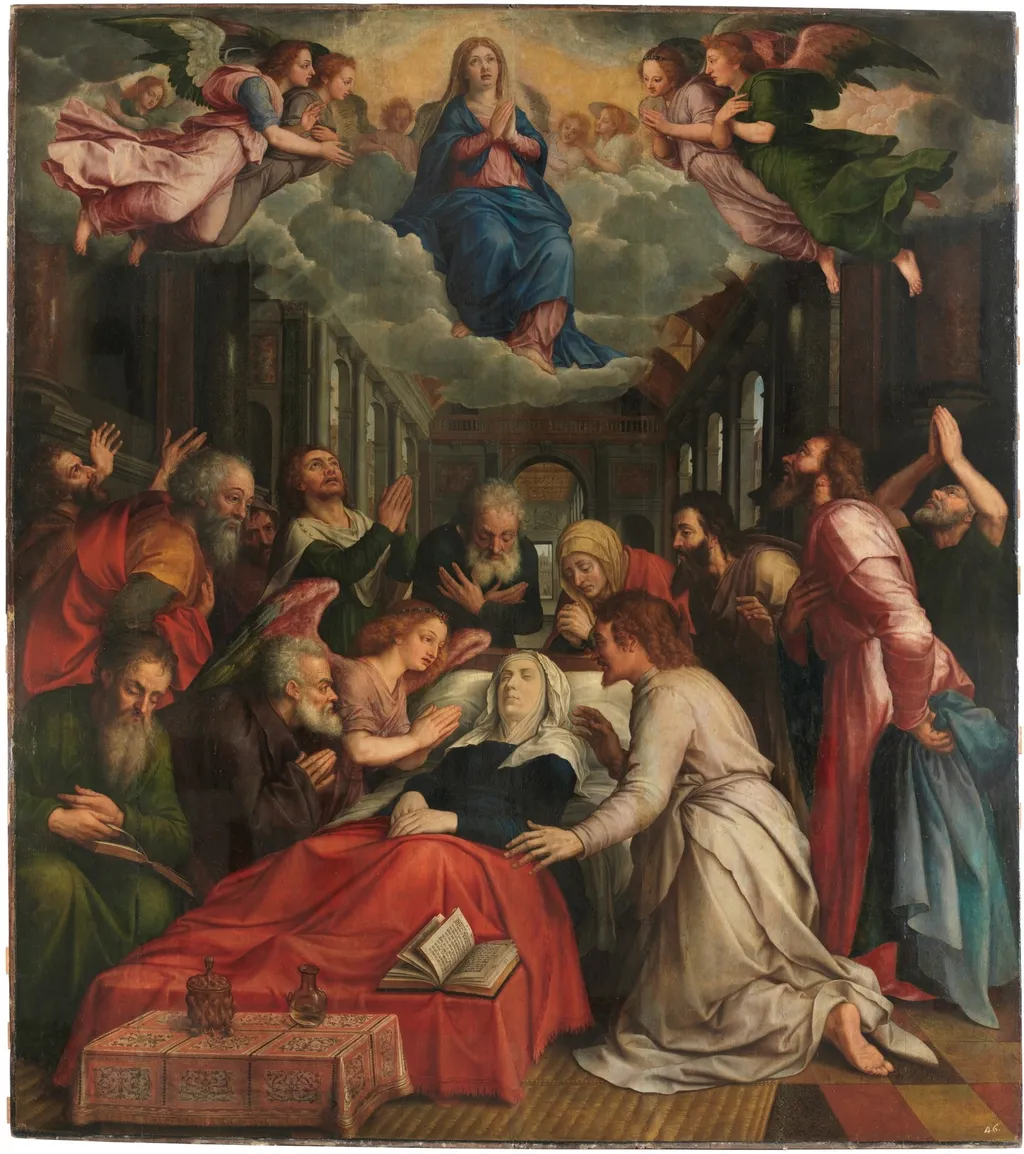
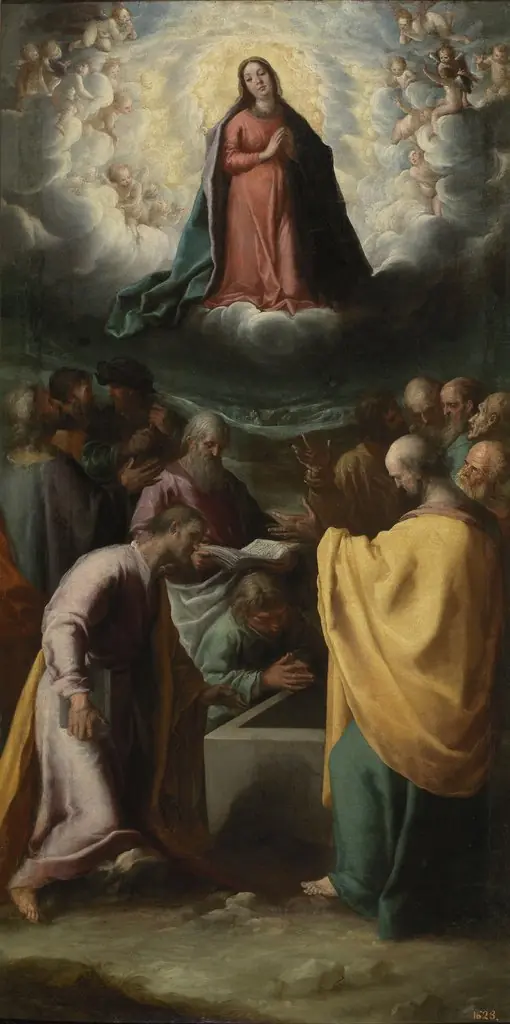
The Death of the Virgin is an oil painting by Michiel Coxie. It dates from 1550 and is held in the collection of the Museo del Prado.
About this work
Overview
Created circa 1550 by the Flemish painter Michiel Coxie the Elder, this oil on canvas depicts the final moments of the Virgin Mary. The work is part of the collection of the Museo del Prado in Madrid. Coxie, known for his altarpieces and stained‑glass designs, was active in the courts of Charles V and Philip II, earning a contemporary reputation as the “Flemish Raphael.”
Subject & Meaning
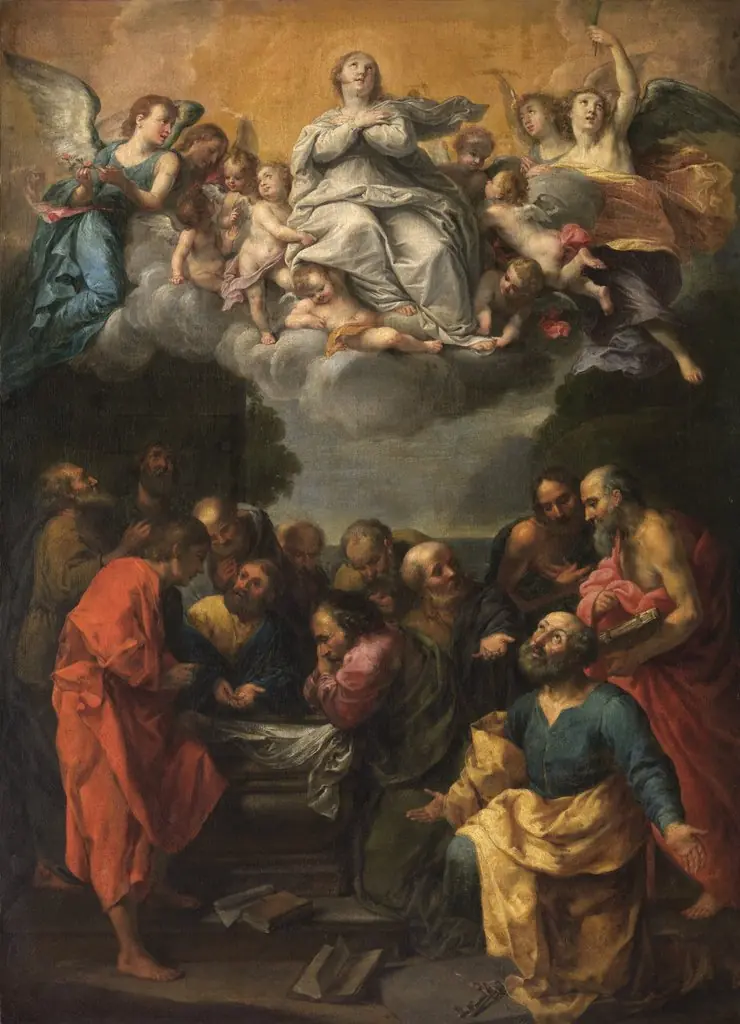
Above the group, a celestial woman in blue hovers amid clouds, attended by angels bearing symbolic objects.
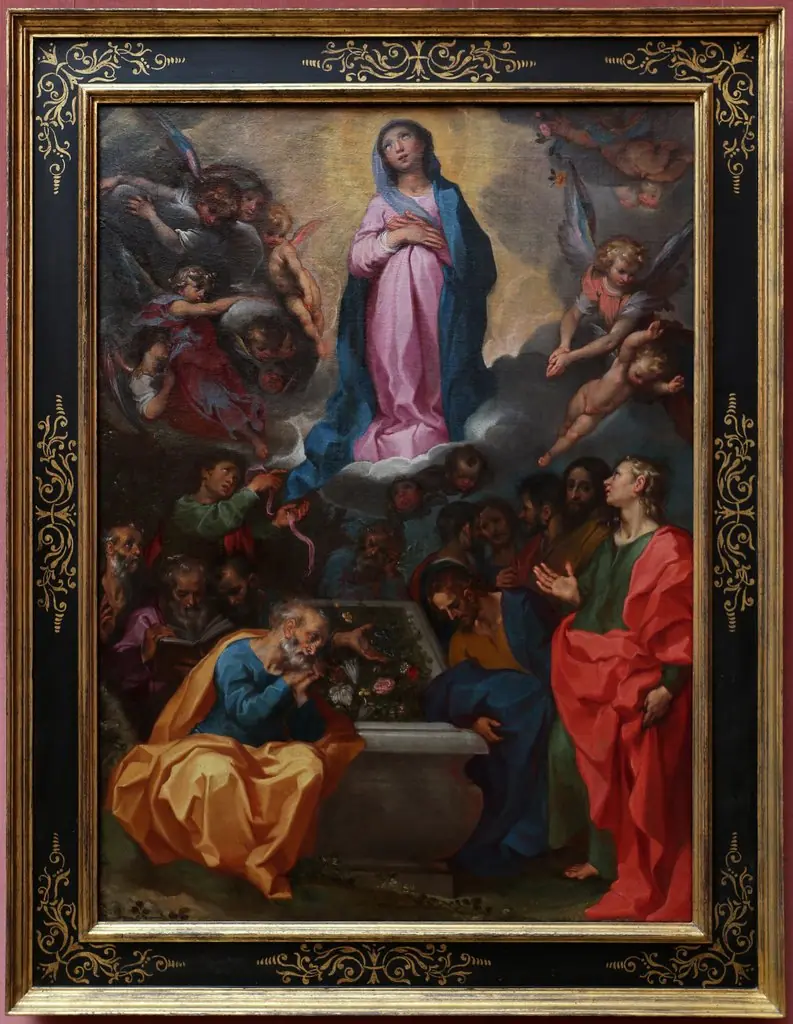
The composition centers on a serene figure of the Virgin lying on a richly draped red cloth, surrounded by mourners who kneel or stand with folded or raised hands. Above the group, a celestial woman in blue hovers amid clouds, attended by angels bearing symbolic objects. The scene emphasizes the transition from earthly sorrow to heavenly peace, focusing on the emotional gravity of the Virgin’s passing rather than narrative detail.
Technique & Style
Coxie employs a balanced palette of earthy reds, deep blues, and muted greens, highlighted with gold accents on the garments. The rendering shows careful modelling of flesh and drapery, while the use of light creates a subtle chiaroscuro that gives volume to the figures and a sense of depth to the interior space. The composition reflects a synthesis of Northern realism and Italianate classicism characteristic of Coxie’s oeuvre.
History & Provenance
The painting entered the Spanish royal collection in the 16th century, likely through the patronage of King Philip II, who favored Coxie’s work. It remained in the royal holdings until it was transferred to the Museo del Prado, where it has been on public display since the museum’s early acquisitions. Documentation records its attribution to Coxie without interruption.
Context
Executed during a period when Flemish artists were increasingly influenced by Italian Renaissance ideals, the work illustrates Coxie’s role as a cultural bridge. His position as court painter to both the Holy Roman Emperor and the Spanish monarch placed him at the intersection of Northern devotional traditions and the humanist aesthetics spreading across Europe, informing the painting’s blend of narrative clarity and refined elegance.
Own this work as a print
Artist & collection
Artist
Michiel Coxie the Elder, Michiel Coxcie the Elder or Michiel van Coxcie, Latinised name Coxius (1499 – 3 March 1592), was a Flemish painter of altarpieces and portraits, a draughtsman and a designer of stained-glass windows, tapestries and…