Artwork
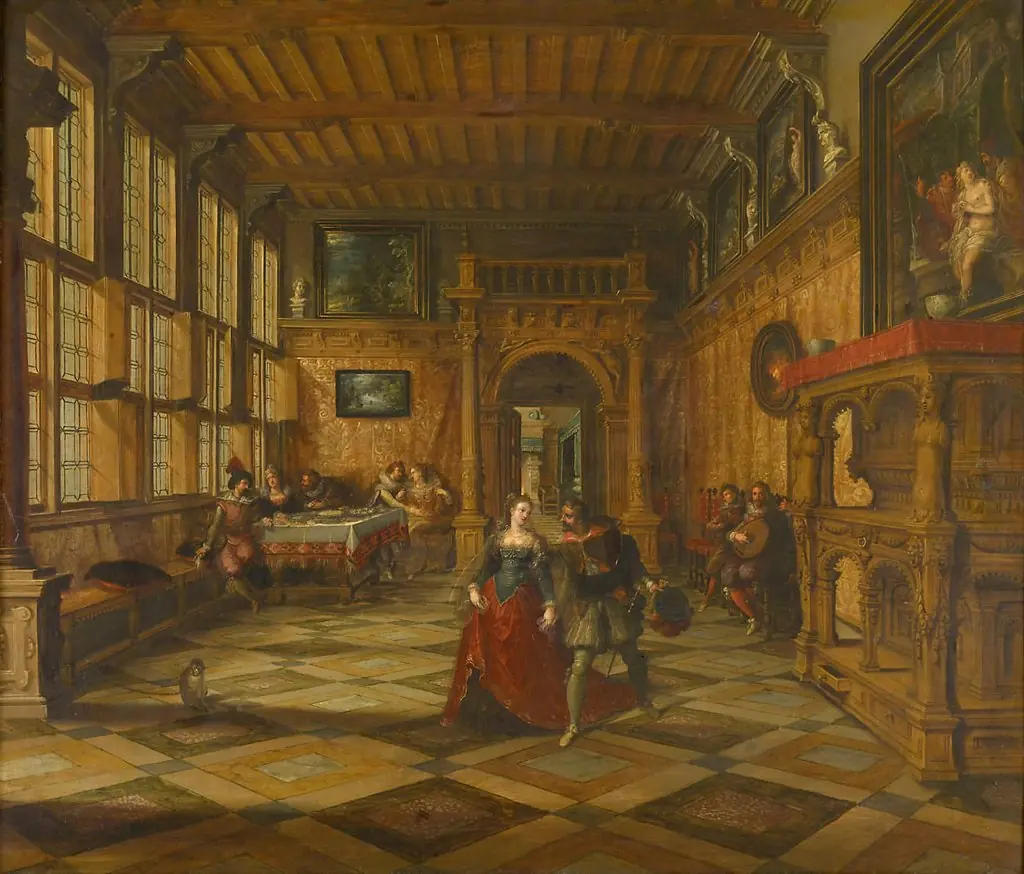
Interior de capelă
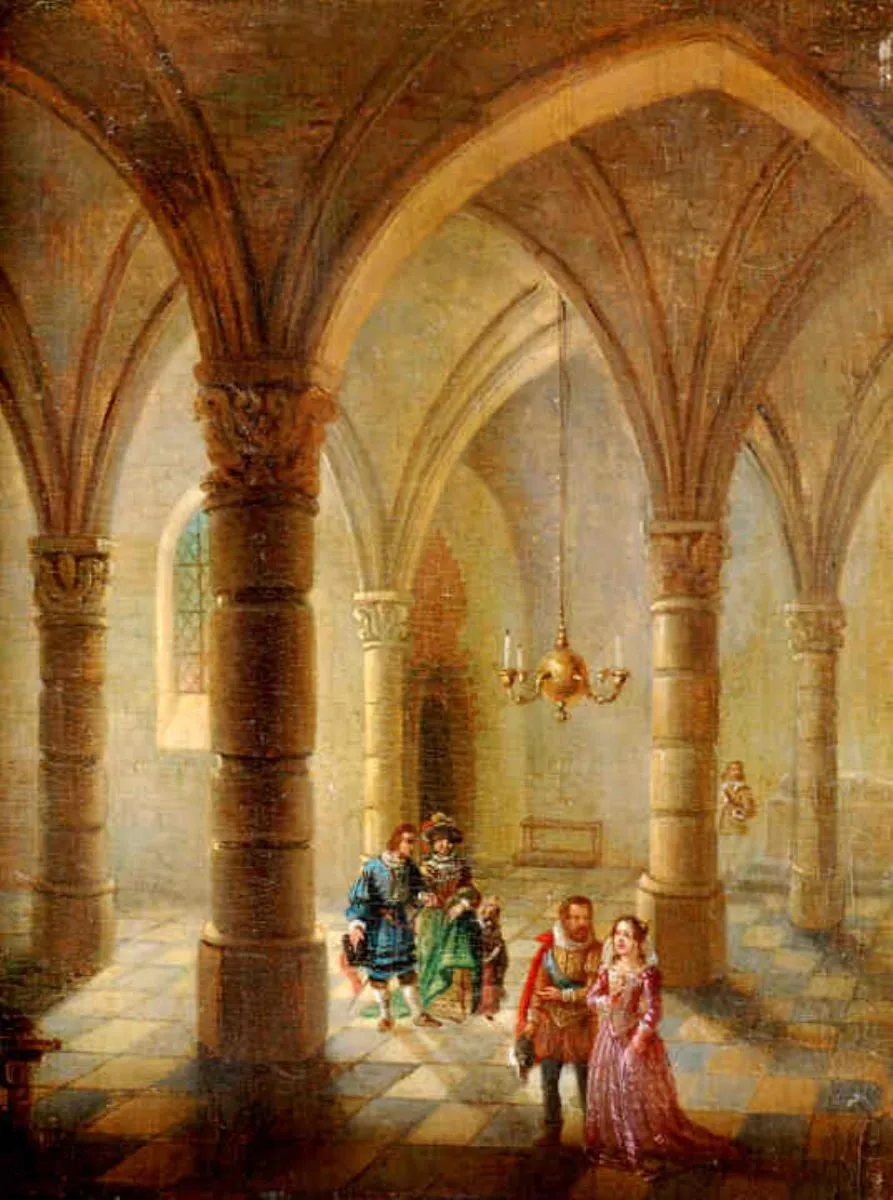
Interior de capelă is an unspecified painting by the Dutch Golden Age artist Frans van Mieris cel Tânăr. It dates from 1750 and is held in the collection of the Art museum of Craiova.
About this work
Overview
Interior de capelă, attributed to the Dutch painter Frans van Mieris the Younger, dates to around 1750 and is part of the collection of the Museum of Ethnography. The composition depicts a vaulted stone passage illuminated by a single candle, its architecture rendered in muted tones that emphasize the central figures.
Subject & Meaning
At the heart of the scene stand a man and a woman dressed in elaborate 16th‑century attire, their hands joined in a quiet gesture. Their placement amid the solemn arches suggests a moment of private communion, while the two robed figures approaching a candle‑lit table introduce a ritualistic or ceremonial undertone.
Technique & Style
The painting employs a pronounced chiaroscuro effect: strong contrasts between the illuminated faces and garments and the deep shadows that recede into the archways. The artist’s careful rendering of textures—polished stone, patterned tiles, and the sheen of silk—demonstrates the fine brushwork typical of Dutch genre painting in the mid‑18th century.
History & Provenance
Created circa 1750, the work entered the Museum of Ethnography’s holdings at an unspecified date, where it has been catalogued as part of the institution’s decorative arts collection. Its attribution to Frans van Mieris the Younger aligns it with the artist’s later output, characterized by intimate interior scenes.
Context
The composition reflects the 18th‑century fascination with historic costume and architectural nostalgia, drawing on earlier Dutch traditions of genre scenes set in imagined or idealized interiors. By portraying figures in period dress within a timeless stone setting, the painting bridges contemporary taste for antiquarian subjects with the artist’s own cultural milieu.
Artist & collection
Artist
Frans van Mieris cel Tânăr painted quiet, finely detailed scenes of daily life in the 1600s.

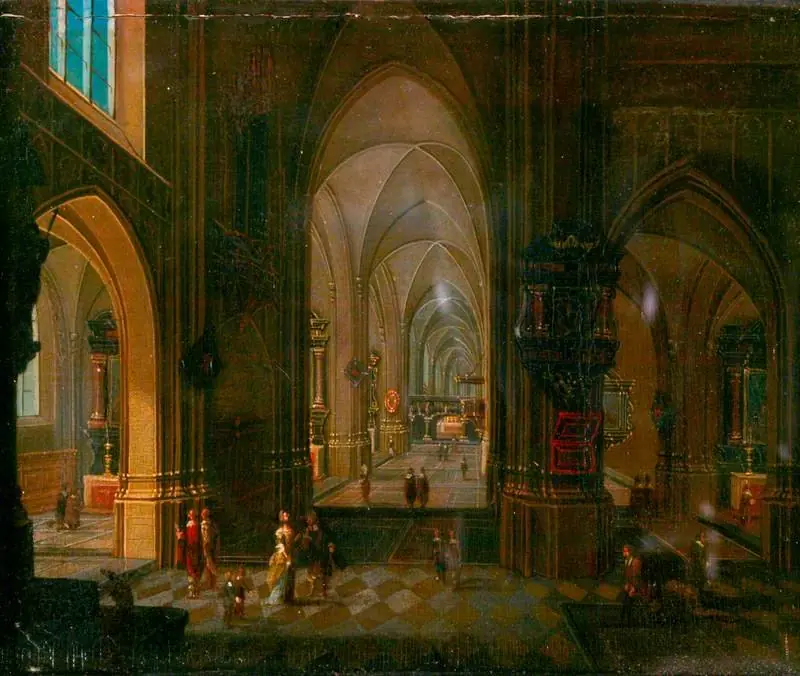 Interior of a Church
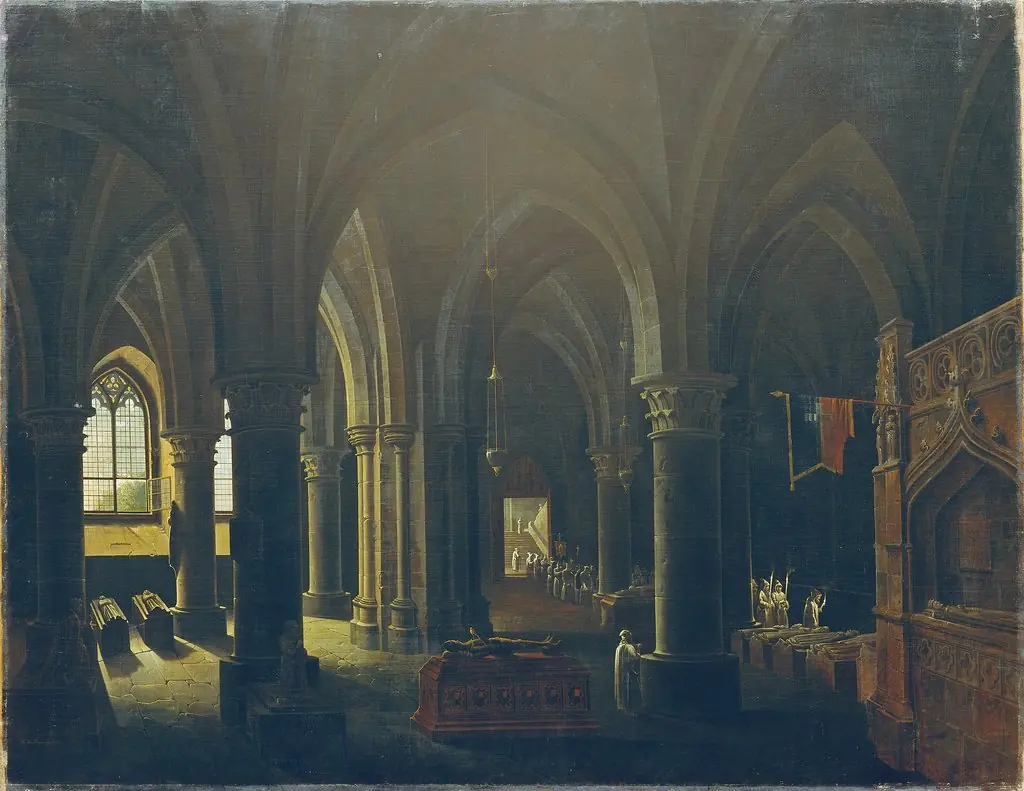 Gotisches Gruftgewölbe
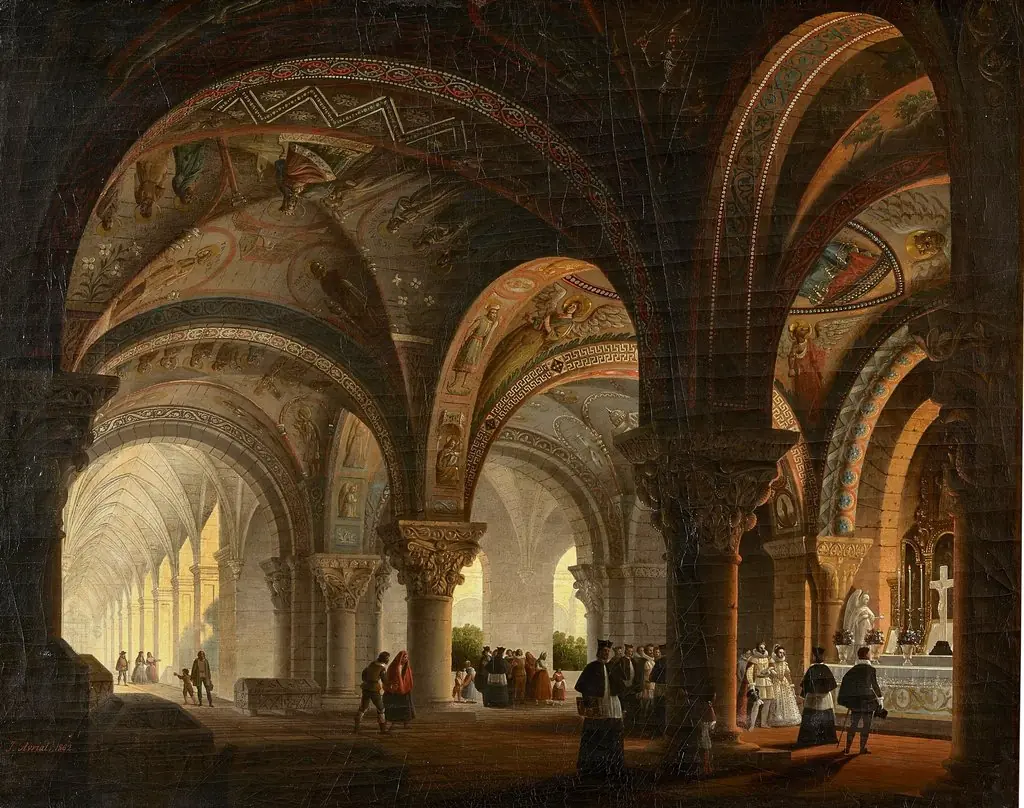 Panteón de los reyes de León
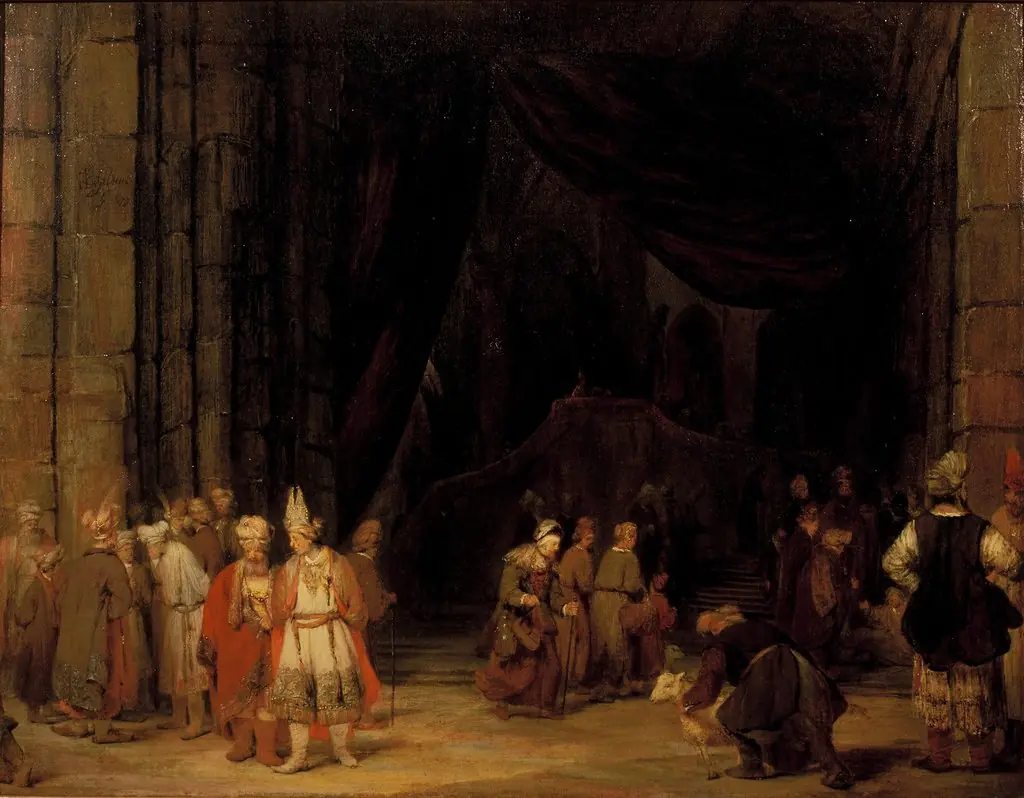 Courtyard of a temple
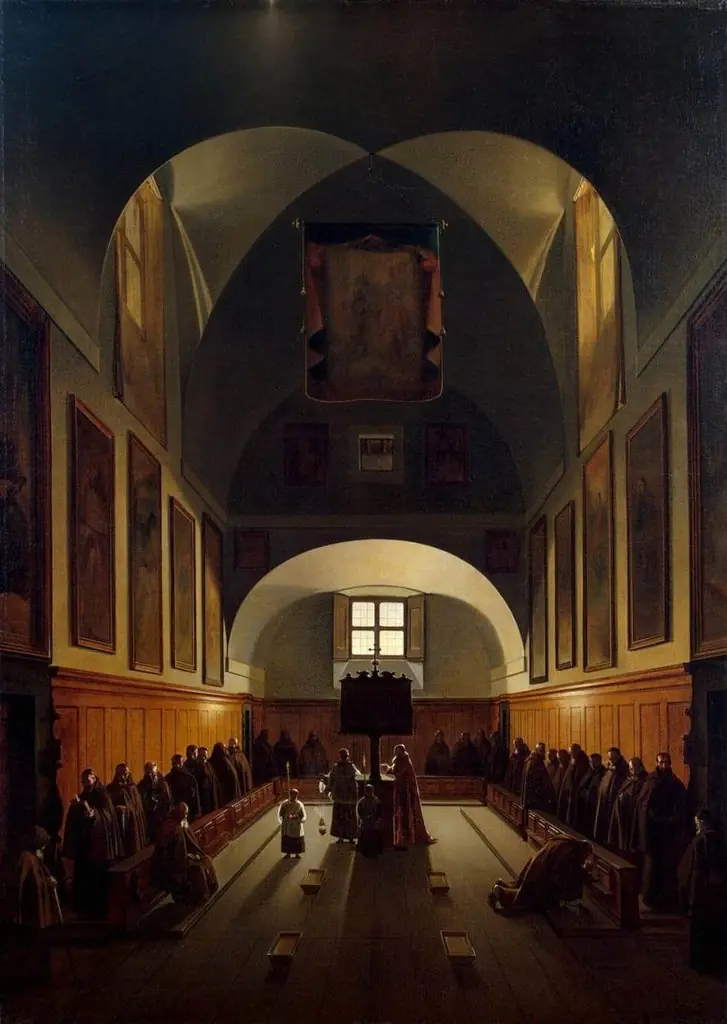 Interior of the Choir in the Capuchin Church on Piazza Barberini in Rome
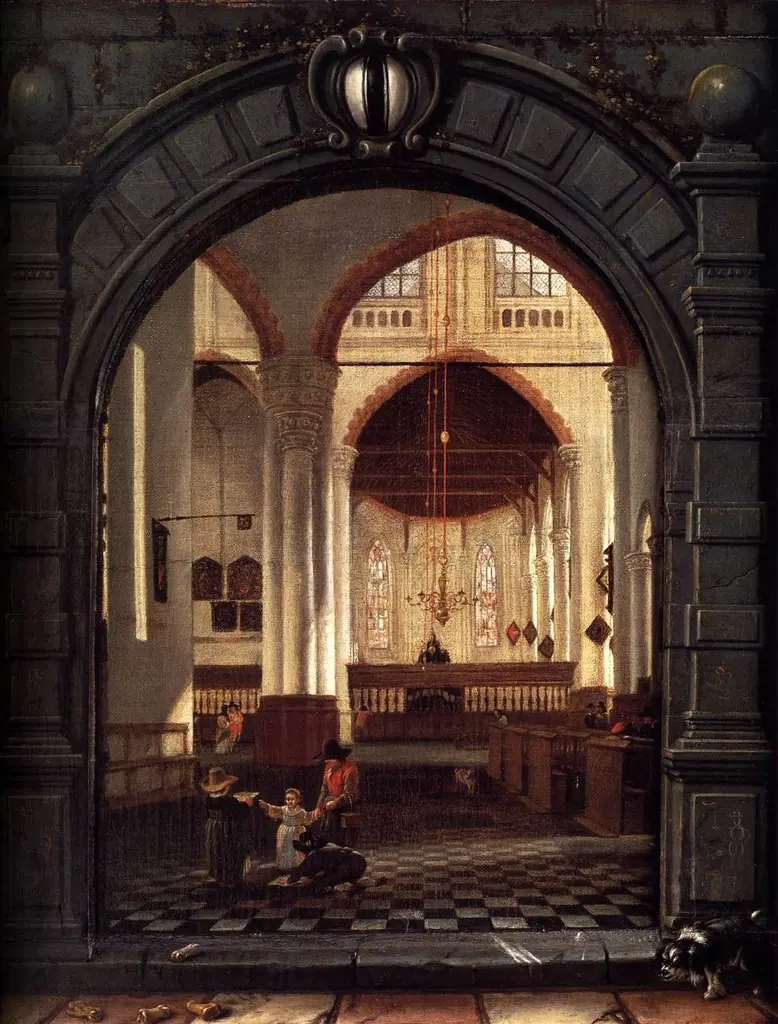 Interior of the Oude Kerk, Delft, Seen through a Stone Archway
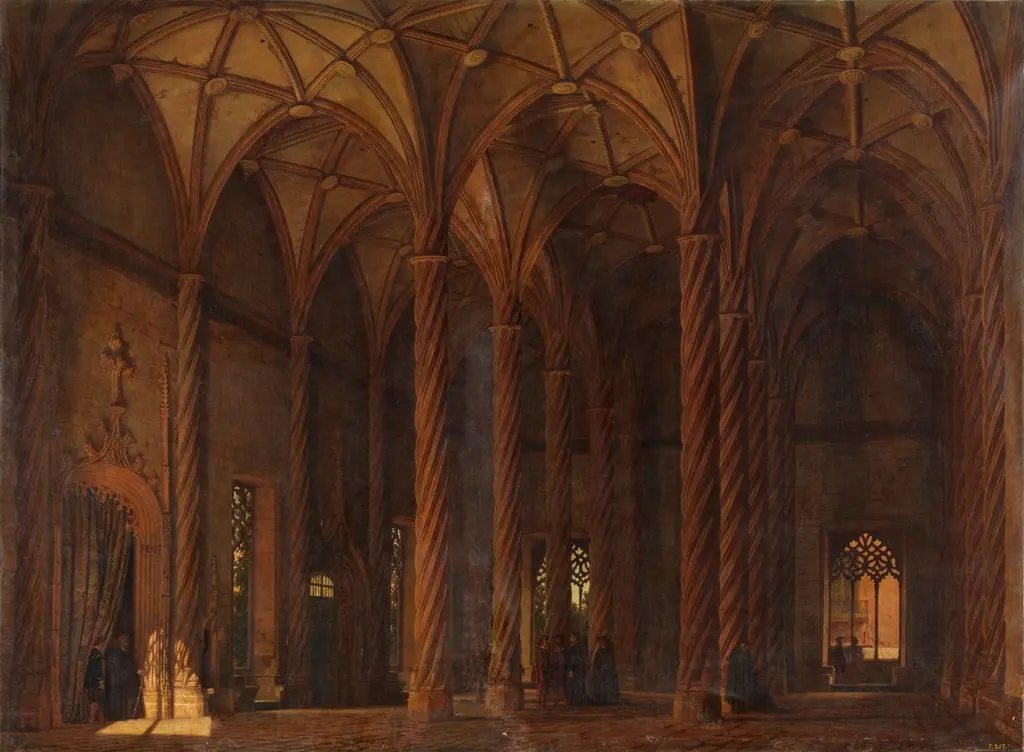 Vista de la Lonja de la Seda en Valencia
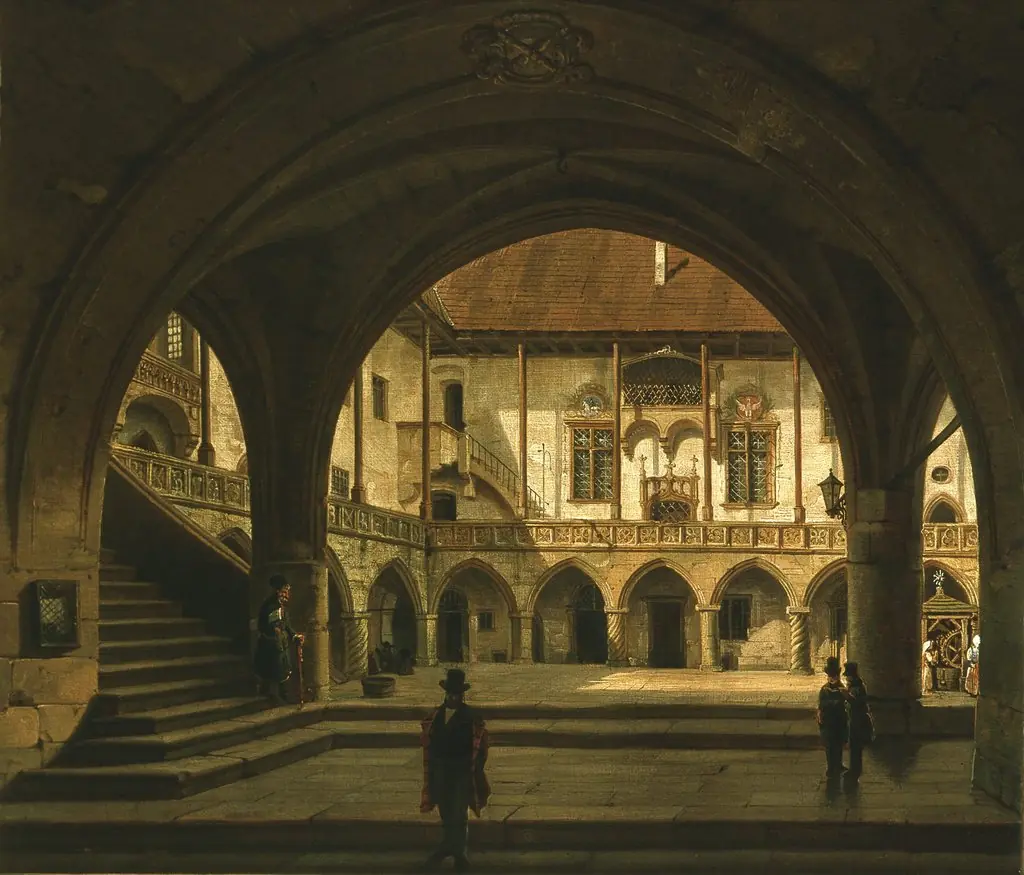 Courtyard of the Jagiellonian Library
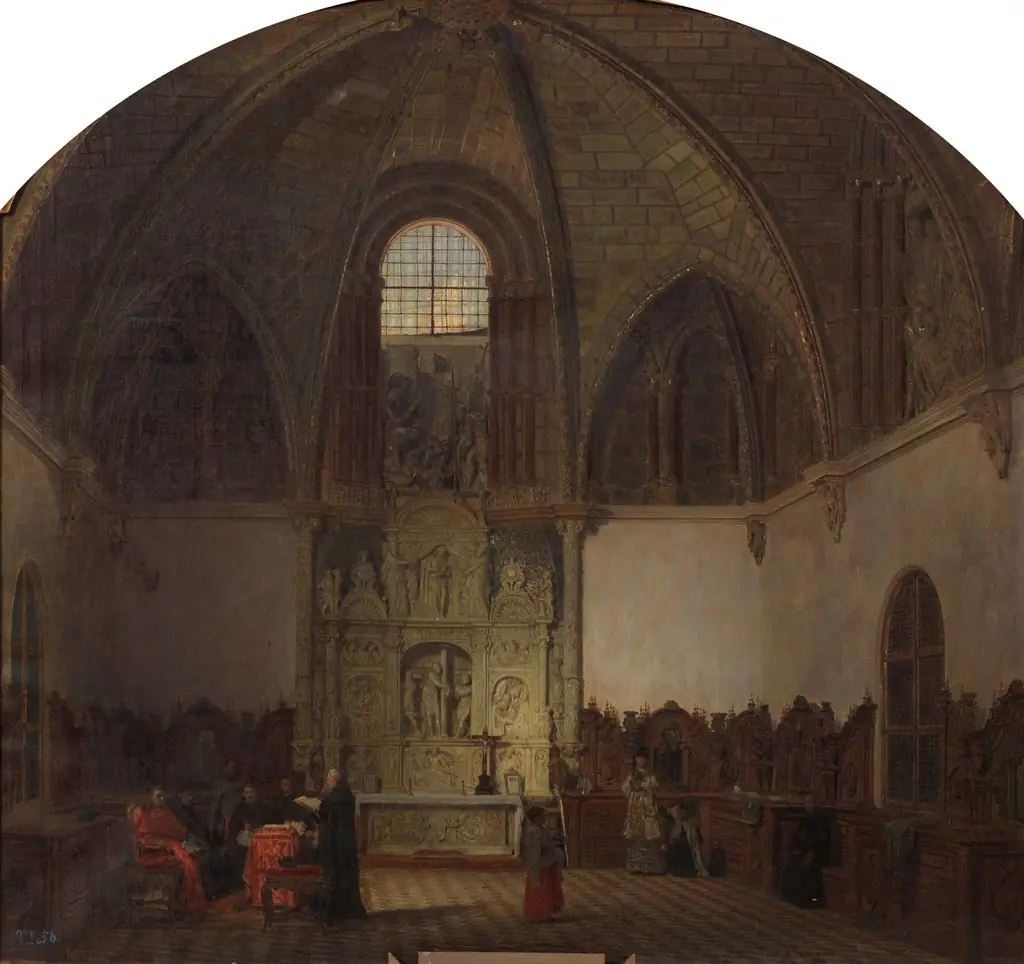 Interior de la capilla de San Bernardo donde se juramentaron los comuneros de Castilla (hoy sacristía mayor de la catedral de Ávila) en ocasión de celebrarse una conferencia por su obispo y cabildo
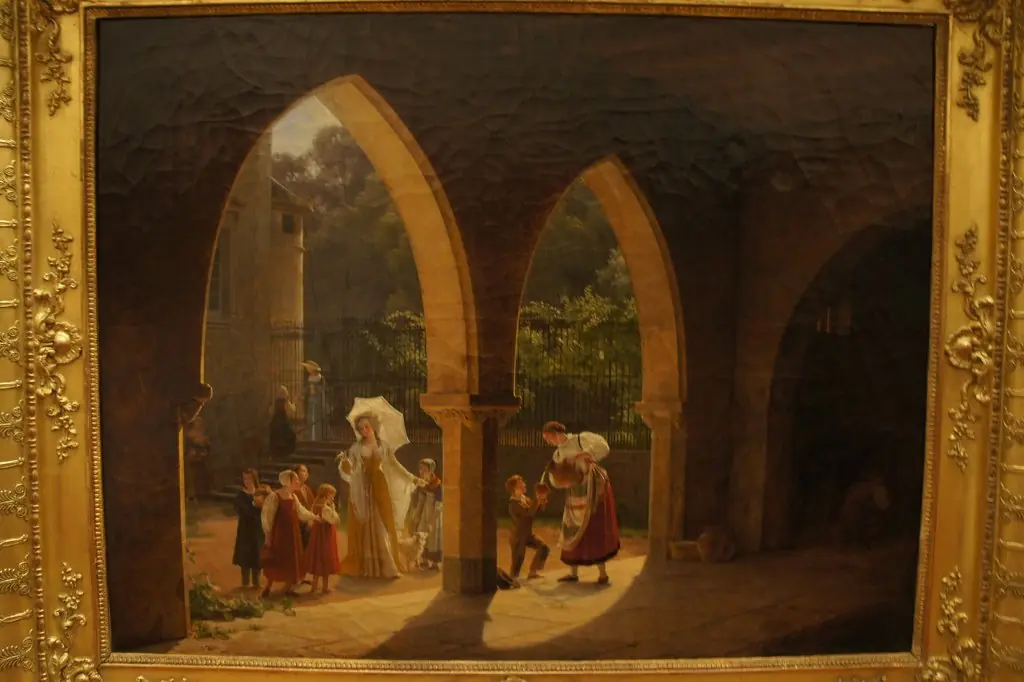 Madame Elisabeth de France assistant à la distribution du lait dans sa maison de Montreuil
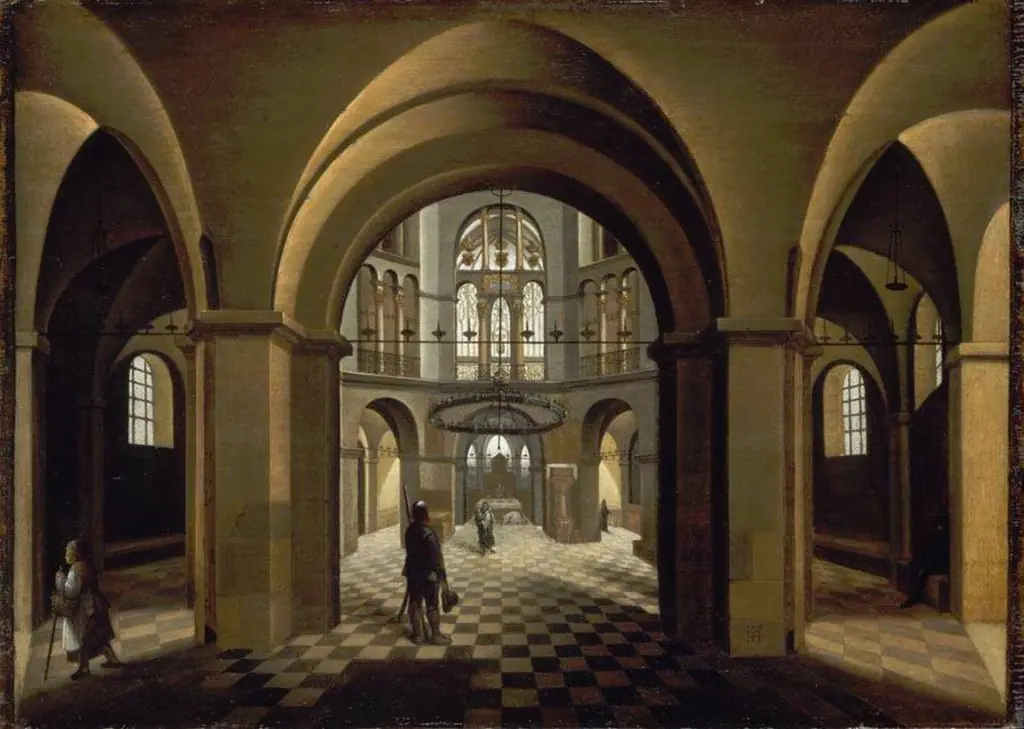 Interior of the Palatine Chapel in the Cathedral of Aachen
 Gesellschaftsszene