Artwork
Hyacinth-Shaped Brooch with Winged Snakes at Top and Winged Animals at Bottom
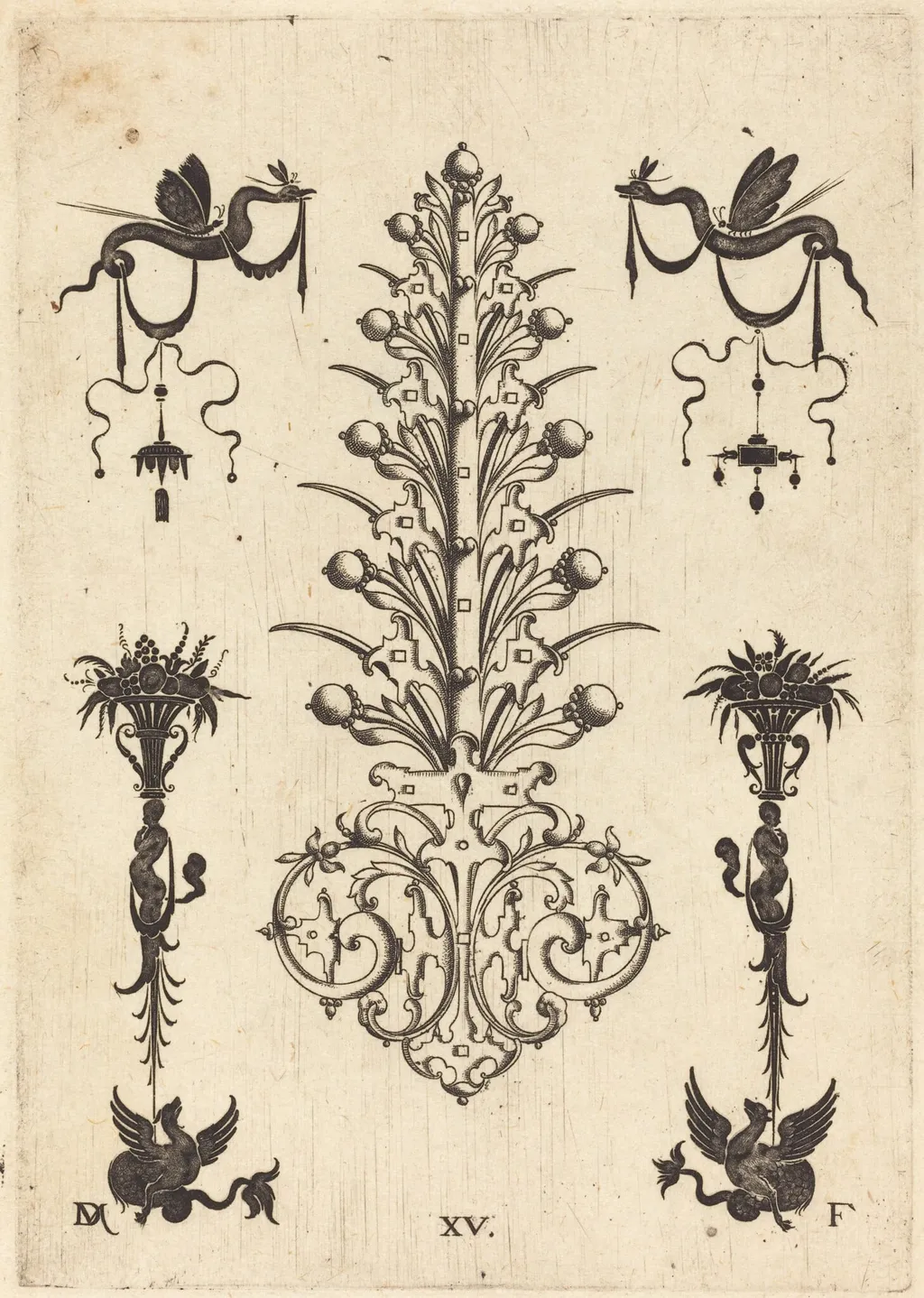
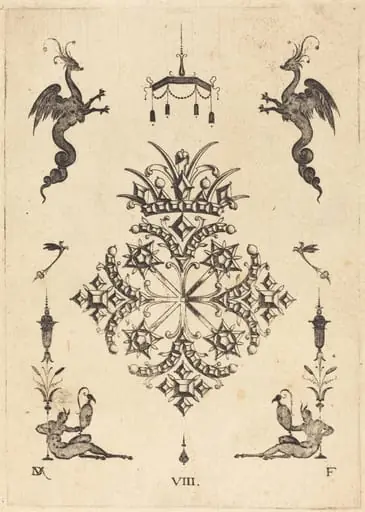
Hyacinth-Shaped Brooch with Winged Snakes at Top and Winged Animals at Bottom is an ink print by the Renaissance artist Daniel Mignot. It dates from 1596 and is held in the collection of the National Gallery of Art.
About this work
Overview
This engraving, dated 1596 and attributed to Daniel Mignot, depicts a jeweled brooch designed in the form of a hyacinth flower. Rendered with fine, precise lines, the composition includes ornamental elements extending above and below the floral core. The work functions as a detailed study of wearable adornment, emphasizing structural complexity and decorative intent rather than literal function.
Subject & Meaning
The inclusion of hanging loops and knotted ribbons reinforces its identity as a wearable object, bridging natural form with human ornamentation.
The brooch centers on a stylized hyacinth bloom with clustered fruits and layered petals, surrounded by symbolic creatures: winged serpents above and winged beasts below. These figures may reference classical or alchemical motifs, suggesting themes of transformation or protection. The inclusion of hanging loops and knotted ribbons reinforces its identity as a wearable object, bridging natural form with human ornamentation.
Technique & Style
Executed in engraving, the piece relies on fine incised lines and dense cross-hatching to model volume and texture. The artist uses controlled, meticulous strokes to render the flower’s petals, the scales of the snakes, and the fur of the animals with equal precision. Shading is achieved through layering rather than tone, characteristic of Northern Renaissance printmaking traditions focused on detail and clarity.
History & Provenance
Created in 1596, the engraving likely served as a design template for jewelers or as a specimen in a collector’s cabinet of decorative arts. No documented ownership history exists prior to modern archival records. Its survival suggests it was valued as a study in craftsmanship rather than as a finished object, reflecting the period’s interest in documenting ornamental forms.
Context
In late 16th-century Europe, engraved designs of jewelry were circulated among artisans and patrons as visual references. This piece aligns with a broader trend of naturalistic ornamentation, where flora and fauna were combined with mythological creatures to convey status and erudition. Such prints often appeared in pattern books, aiding the transmission of stylistic ideas across regions.
Legacy
Though not widely reproduced or exhibited, the engraving remains a rare example of a specific type of decorative arts documentation from the period. It contributes to the understanding of how jewelry design was conceptualized and shared before mass production. Its survival offers insight into the intersection of botany, symbolism, and craftsmanship in Renaissance visual culture.
Artist & collection


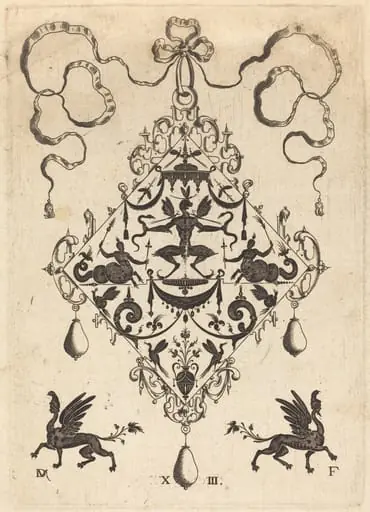 Large Pendant, Winged Fantasy Creature Holding Two Snakes
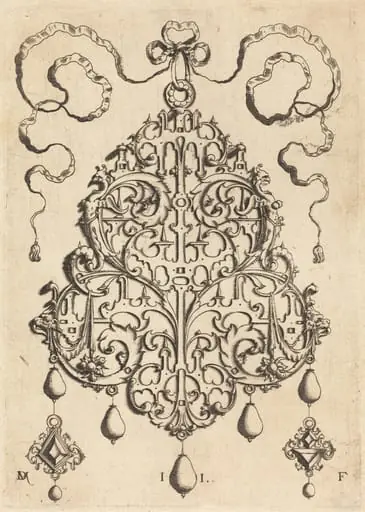 Large Strapwork Pendant with Two Hangers as Earrings at Left and Right
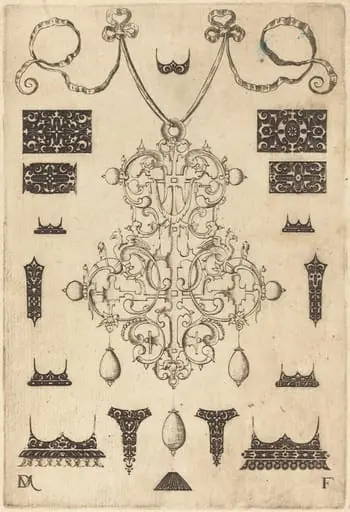 Large Pendant with Three Drops Below, Surrounded by Fifteen Different Studs
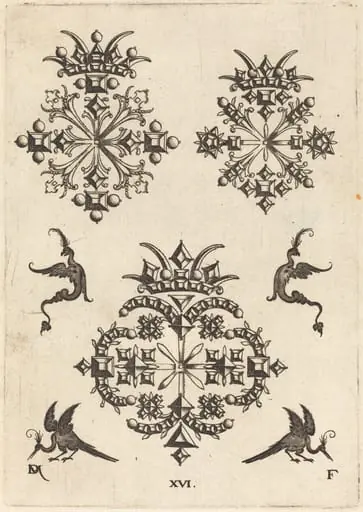 Three Brooches with Fantasy Birds at Left, Right, and Bottom
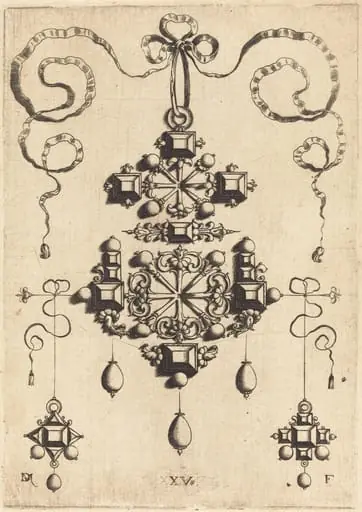 Pendant with Two Double Crosses, Surrounded by Four Diamond-Shaped Stones, Five Table-Stones, and Thirteen Pearls
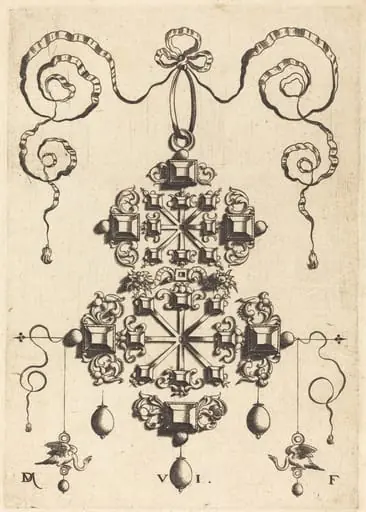 Large Pendant with Two Double Crosses, Surrounded by Six Large and Sixteen Small Table-Stones
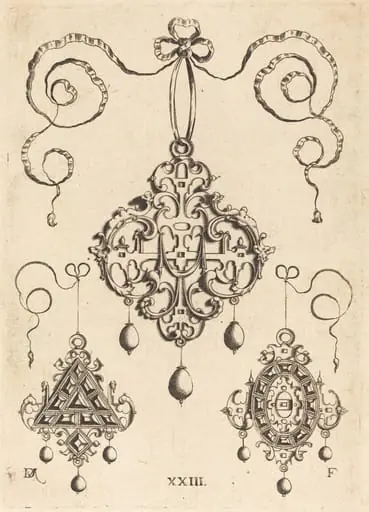 Three Strapwork Pendants, The Lower Ones Triangular and Oval
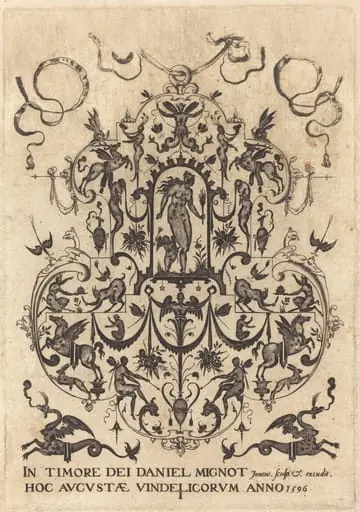 Title Page: Large Pendant, Venus and Amor at Centre
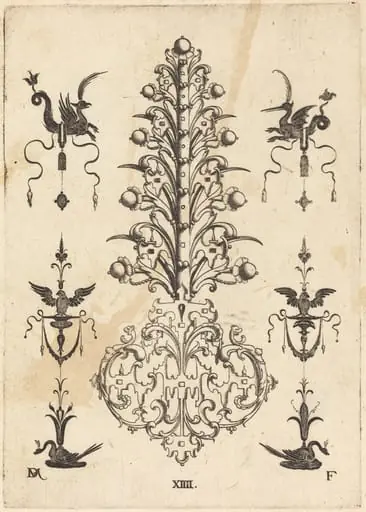 Hyacinth-Shaped Brooch with Winged Animals at Top and Crouching Swans at Bottom
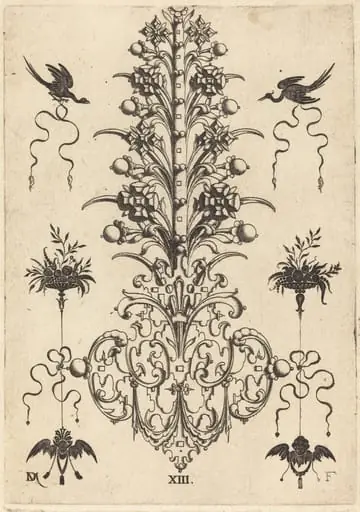 Hyacinth-Shaped Brooch with Birds at Top and Devil's- and Angel's-Head at Bottom
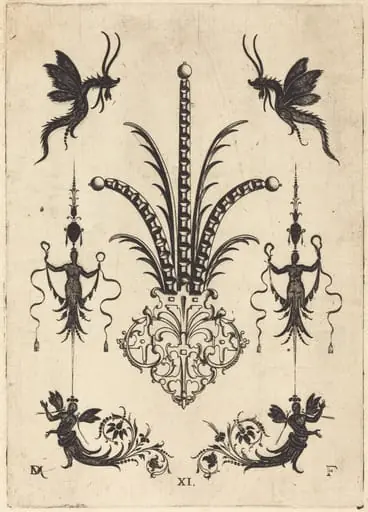 Brooch with Table-Stones, Winged Animals at Top, and Winged Human Beings at Bottom
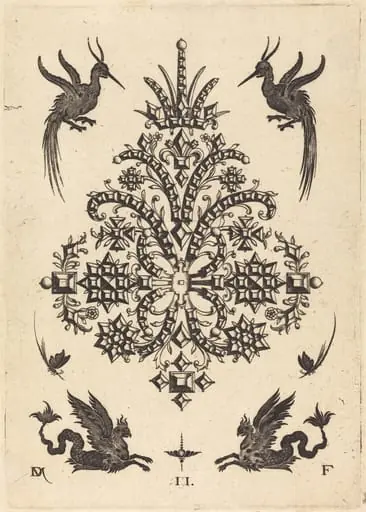 Brooch with Tablestones and Winged Griffins Above and at Bottom
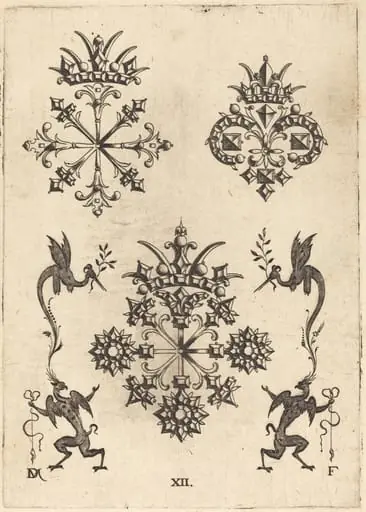 Three Brooches with Winged Snakes at Left and Right and Winged Griffins at Bottom
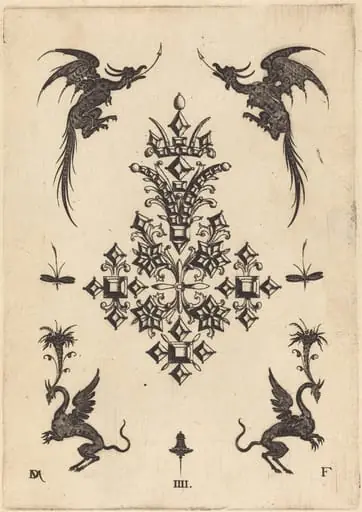 Brooch with Table-Stones, Winged Dragons at Top, and Griffins at Bottom
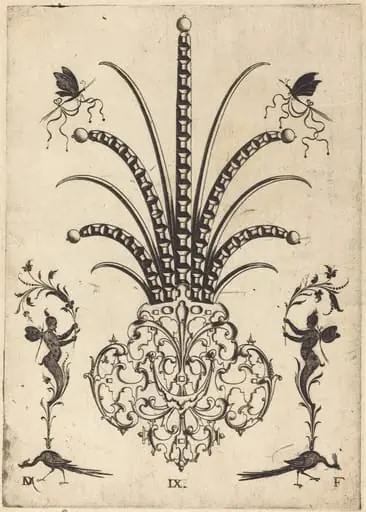 Brooch with Table-Stones, Butterflies at Top, and Peacocks and Hermes at Bottom
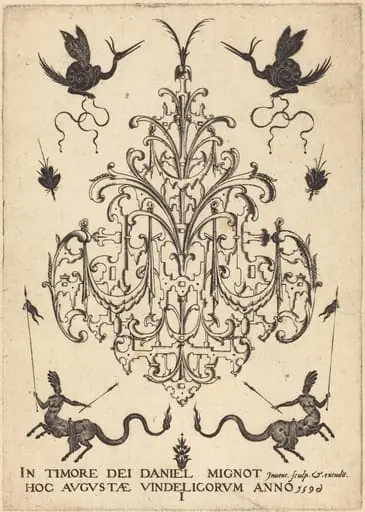 Title-Page: Brooch, Snail-like Animals Above, Centaurs with Banners at Bottom
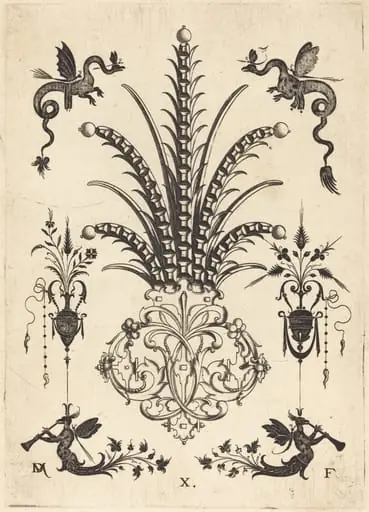 Brooch with Table-Stones, Dragons at Top, andWinged Monsters Blowing Horns at Bottom
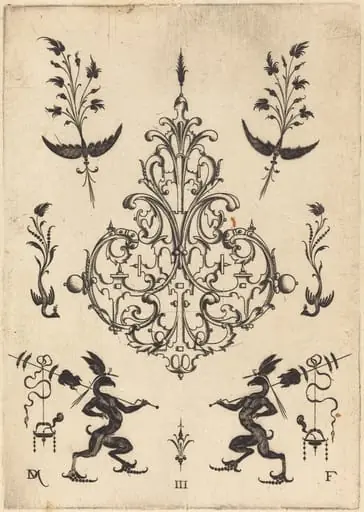 Brooch with Sprigs at Top and Griffins with Trophies at Bottom
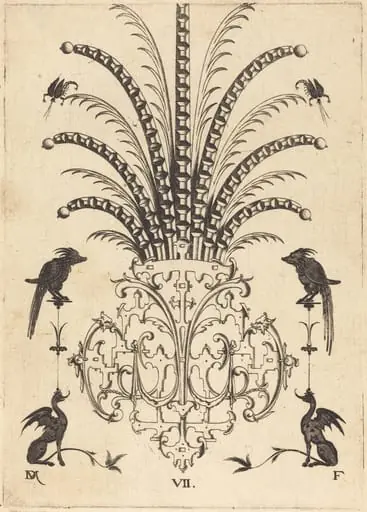 Brooch with Table-Stones, Flying Scorpions at Top, and Dogs at Bottom
 Brooch with Fantasy Animals at Top and Fauns with Vases at Bottom