Artwork
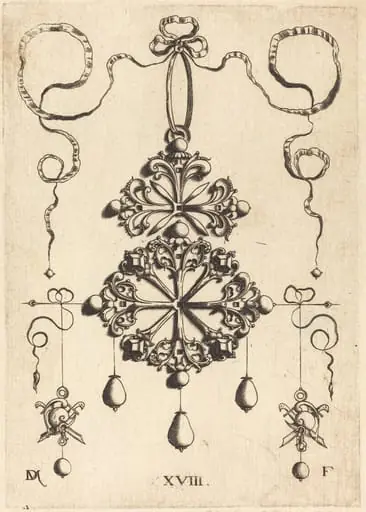
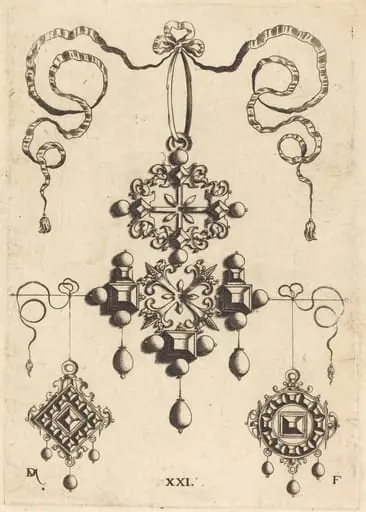
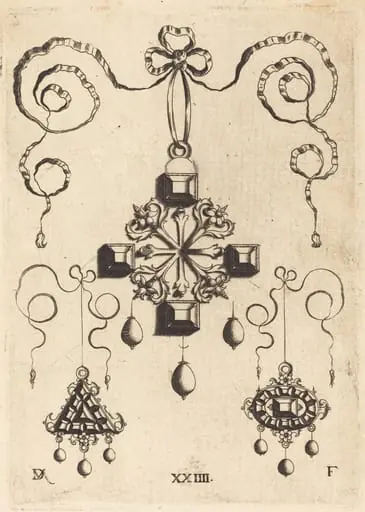
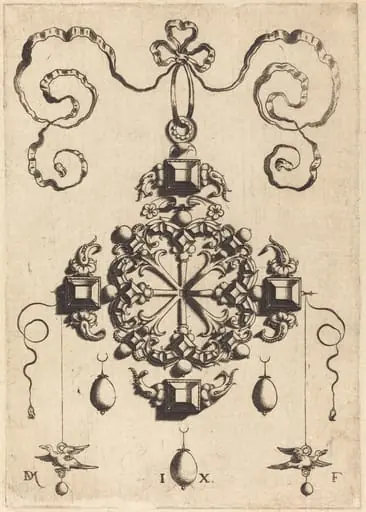
Pendant with Two Double Crosses, Surrounded by Four Diamond-Shaped Stones, Five Table-Stones, and Thirteen Pearls
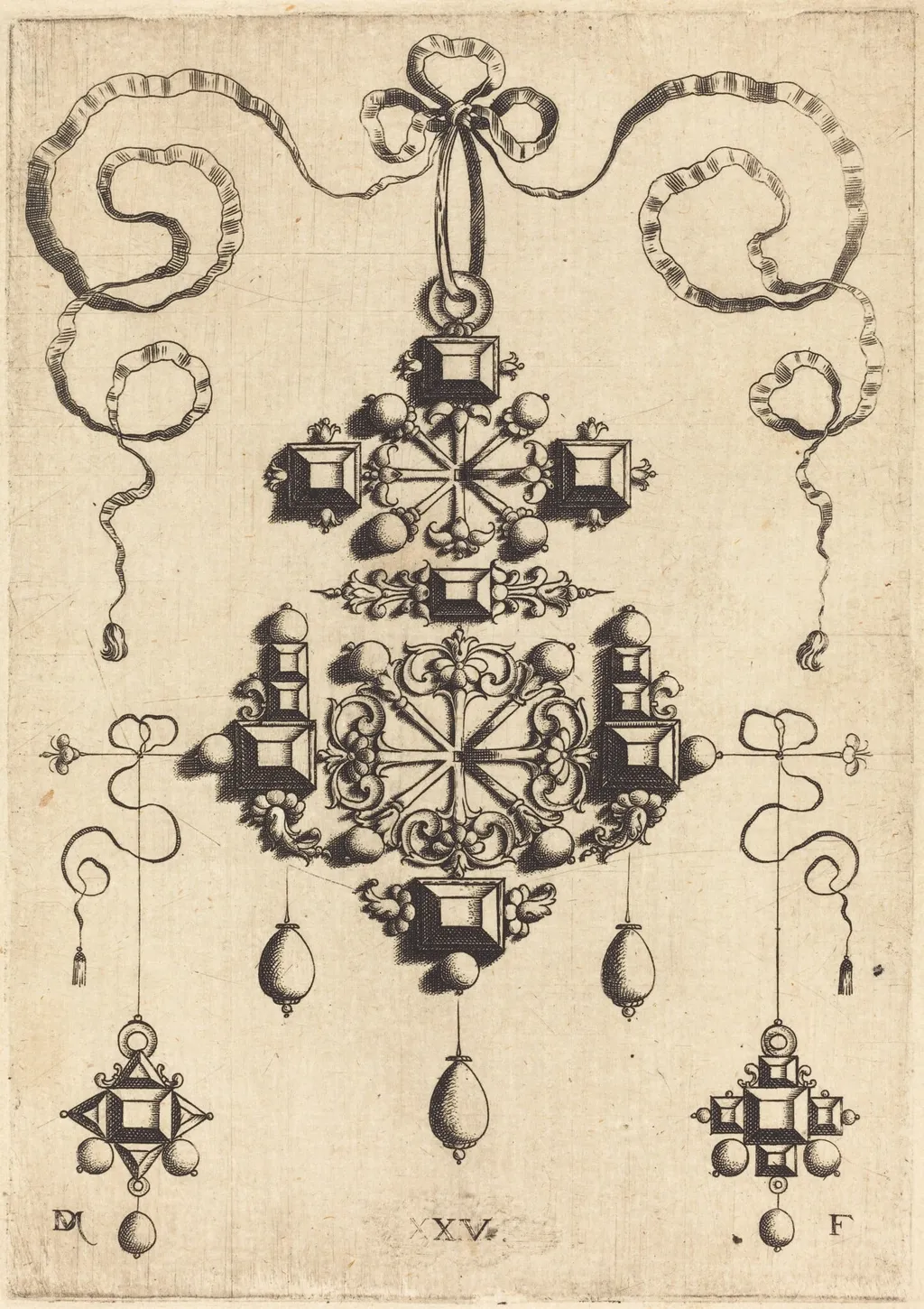
Pendant with Two Double Crosses, Surrounded by Four Diamond-Shaped Stones, Five Table-Stones, and Thirteen Pearls is an ink print by the Renaissance artist Daniel Mignot. It dates from 1584 and is held in the collection of the National Gallery of Art.
About this work
Overview
The composition is framed by ornate, swirling rope patterns and terminating in tassels, reflecting the elaborate aesthetic of late Renaissance adornment.
This 1584 engraving by Daniel Mignot depicts a detailed jewelry design featuring two interlaced double crosses at its center. Surrounding the crosses are four diamond-shaped elements, five rectangular table-stones, and thirteen pearls suspended from delicate loops. The composition is framed by ornate, swirling rope patterns and terminating in tassels, reflecting the elaborate aesthetic of late Renaissance adornment.
Subject & Meaning
The dual double crosses suggest a Christian symbolic framework, possibly referencing the cross of Saint Andrew or the Templar cross, common in ecclesiastical and noble contexts. The arrangement of gemstones and pearls conveys wealth and status, while the symmetrical balance implies order and divine harmony—values central to Renaissance thought and elite personal adornment.
Technique & Style
Mignot employed fine, controlled lines to model the surfaces of stones and pearls, creating subtle gradations of light and shadow that suggest volume. The engraving’s precision reflects the technical mastery of metalplate printing, where incised lines hold ink to produce crisp, repeatable images. The style aligns with contemporary jewelry design manuals, prioritizing clarity and decorative detail over naturalism.
History & Provenance
Created in 1584, the engraving likely served as a workshop pattern for jewelers or a presentation piece for patrons. Mignot, active in France during the late 16th century, produced similar designs for aristocratic commissions. While the original pendant was never confirmed to have been made, the print survives as evidence of the collaborative process between designers and craftsmen of the period.
Context
In late 16th-century Europe, engraved jewelry designs circulated among artisans as templates for custom commissions. This piece reflects the fusion of religious symbolism and secular luxury favored by the French court and wealthy merchant class. Such drawings were often compiled into pattern books, bridging artistic invention and artisanal execution in a pre-industrial economy.
Legacy
Mignot’s engraving contributes to a broader corpus of Renaissance jewelry designs that document evolving tastes in personal ornamentation. Though not widely known today, such works remain valuable for understanding the intersection of art, craft, and social identity in early modern Europe, offering insight into how beauty was conceptualized and reproduced before mass production.
Artist & collection


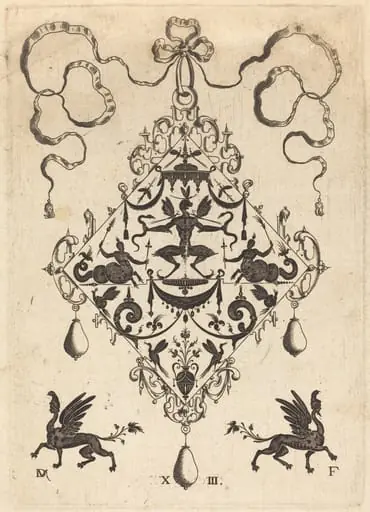 Large Pendant, Winged Fantasy Creature Holding Two Snakes
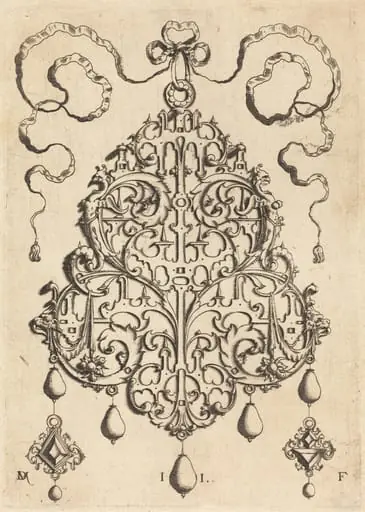 Large Strapwork Pendant with Two Hangers as Earrings at Left and Right
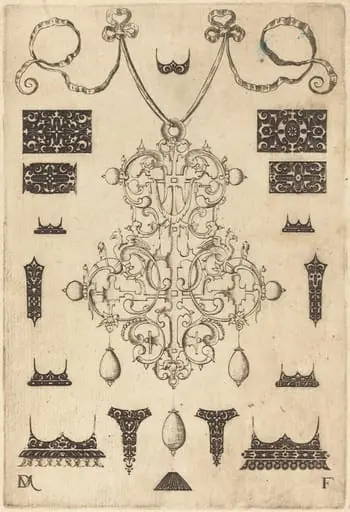 Large Pendant with Three Drops Below, Surrounded by Fifteen Different Studs
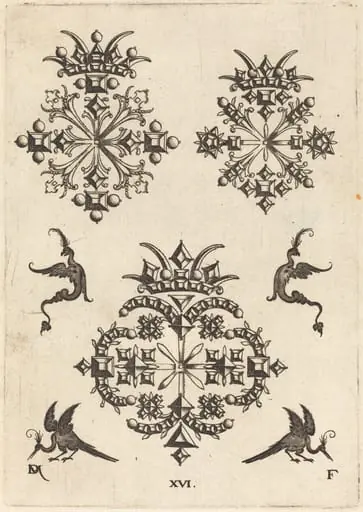 Three Brooches with Fantasy Birds at Left, Right, and Bottom
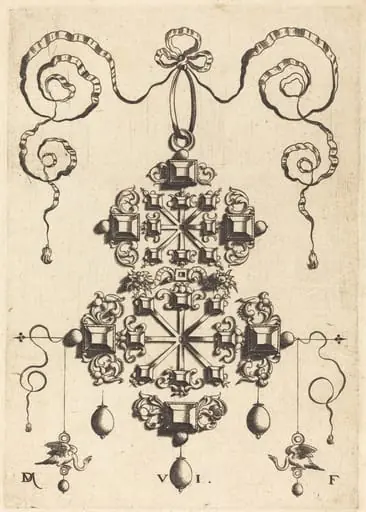 Large Pendant with Two Double Crosses, Surrounded by Six Large and Sixteen Small Table-Stones
 Hyacinth-Shaped Brooch with Winged Snakes at Top and Winged Animals at Bottom
 Three Strapwork Pendants, The Lower Ones Triangular and Oval
 Title Page: Large Pendant, Venus and Amor at Centre