Artwork
Three Strapwork Pendants, The Lower Ones Triangular and Oval
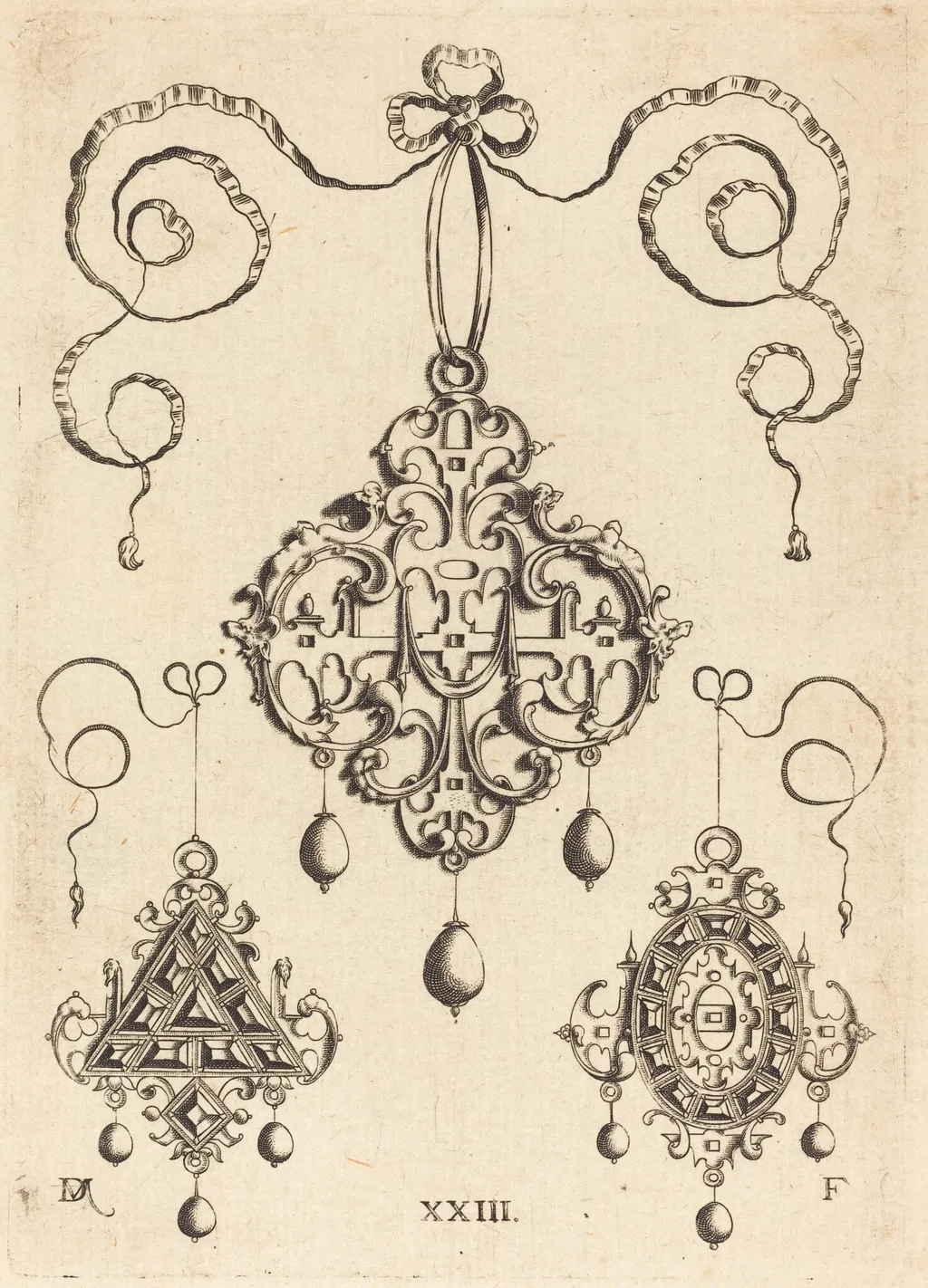
Three Strapwork Pendants, The Lower Ones Triangular and Oval is an ink print by the Renaissance artist Daniel Mignot. It dates from 1584 and is held in the collection of the National Gallery of Art.
About this work
Overview
Created in 1584 by Daniel Mignot, this engraving depicts three decorative chandelier designs, each rendered in fine black ink lines.
Created in 1584 by Daniel Mignot, this engraving depicts three decorative chandelier designs, each rendered in fine black ink lines. The central form is circular, while the lower two take triangular and oval shapes. The composition emphasizes intricate strapwork patterns and suspended elements, suggesting their function as templates for metalwork artisans crafting lighting fixtures in late Renaissance Europe.
Subject & Meaning
The three pendants represent variations of ornamental chandeliers intended for elite interiors. Their elaborate scrollwork and dangling chains reflect a design language tied to luxury and status, common in aristocratic and ecclesiastical spaces. The geometric contrast between the round, triangular, and oval forms indicates an exploration of balance and symmetry in functional art, prioritizing aesthetic harmony over structural innovation.
Technique & Style
Mignot employed precise engraving to render delicate details—chains, candle sockets, and swirling metal bands—with consistent line weight and clarity. The technique allowed for fine repetition of patterns, essential for replicating complex metalwork. The absence of shading or texture emphasizes contour and form, aligning with the practical needs of craftsmen translating two-dimensional plans into three-dimensional objects.
History & Provenance
The engraving originates from a period when printed design books circulated among metalworkers and architects across Europe. Though no specific early ownership record is documented, its survival suggests it was part of a broader corpus of workshop references. Mignot’s work was likely reproduced or adapted by artisans in France or the Low Countries, where strapwork ornamentation remained popular into the early 17th century.
Context
In the late 16th century, printed pattern books served as vital tools for artisans lacking formal training in design. Strapwork—interlaced bands resembling leather or metal—was a hallmark of Mannerist decoration, appearing in architecture, metalwork, and book illustration. Mignot’s pendants reflect this trend, bridging the gap between printed imagery and the material culture of domestic and ceremonial lighting.
Legacy
This engraving contributes to a documented tradition of design transmission through print, influencing how ornamental forms were standardized and disseminated. While Mignot’s individual output was modest, such works collectively shaped the visual vocabulary of metalcraft in early modern Europe, preserving stylistic conventions that persisted beyond the Renaissance into Baroque decorative practices.
Artist & collection


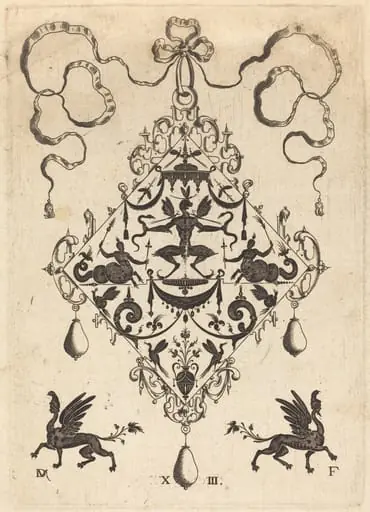 Large Pendant, Winged Fantasy Creature Holding Two Snakes
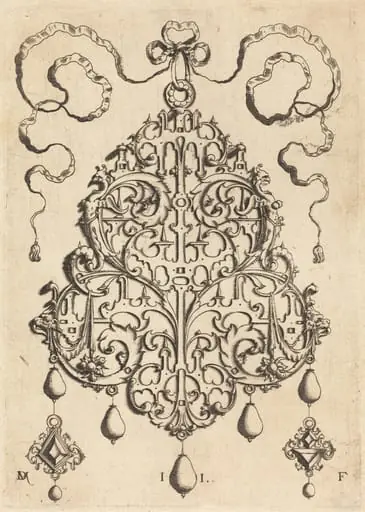 Large Strapwork Pendant with Two Hangers as Earrings at Left and Right
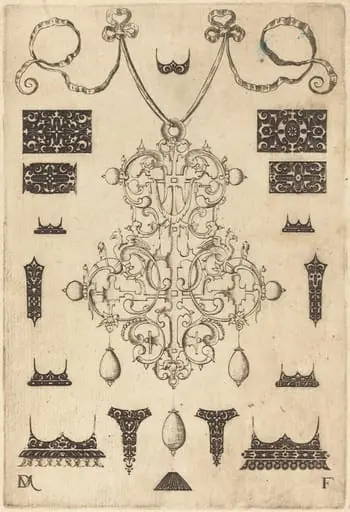 Large Pendant with Three Drops Below, Surrounded by Fifteen Different Studs
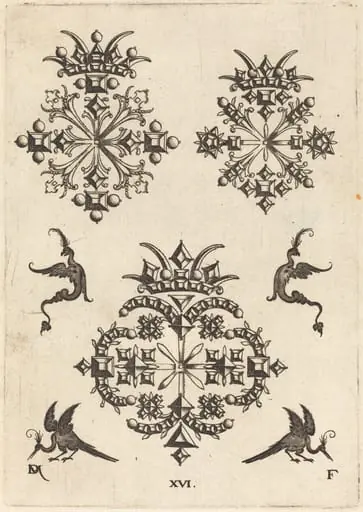 Three Brooches with Fantasy Birds at Left, Right, and Bottom
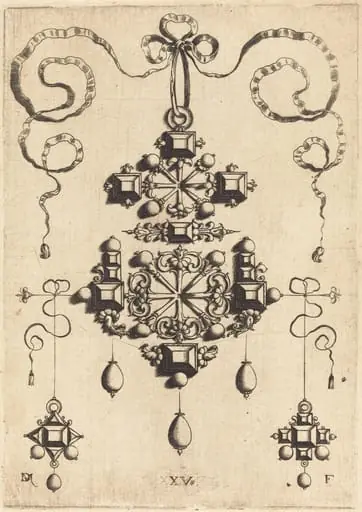 Pendant with Two Double Crosses, Surrounded by Four Diamond-Shaped Stones, Five Table-Stones, and Thirteen Pearls
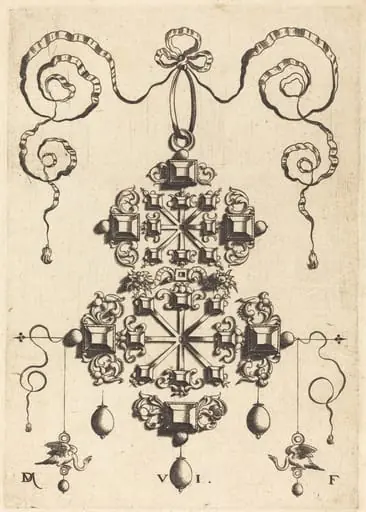 Large Pendant with Two Double Crosses, Surrounded by Six Large and Sixteen Small Table-Stones
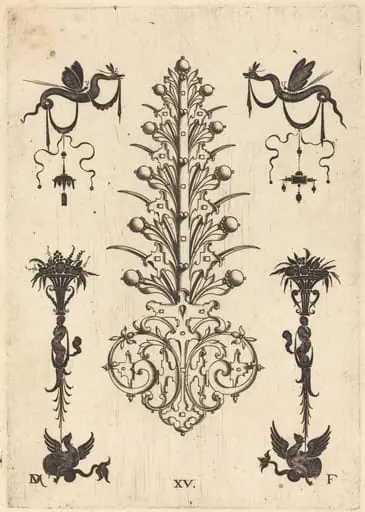 Hyacinth-Shaped Brooch with Winged Snakes at Top and Winged Animals at Bottom
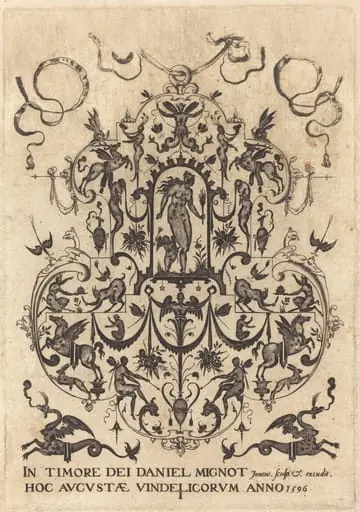 Title Page: Large Pendant, Venus and Amor at Centre
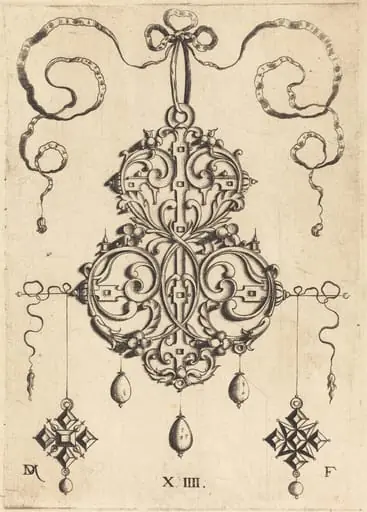 Strapwork Pendant with Three Drops and Two Cross-Shaped Pendants as Earrings at Left and Right
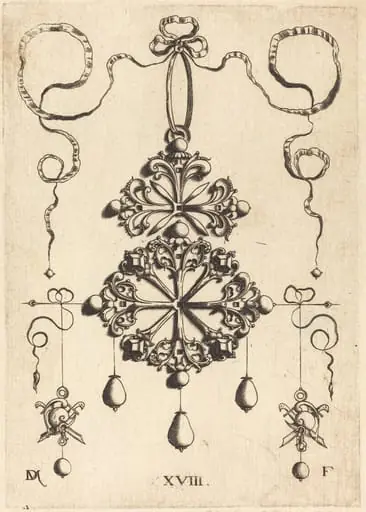 Pendant with Two Double Crosses
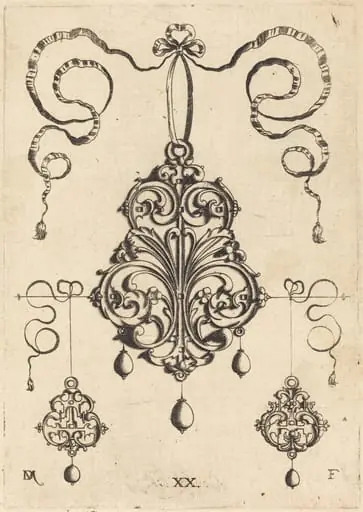 One Large and Two Smaller Strapwork Pendants
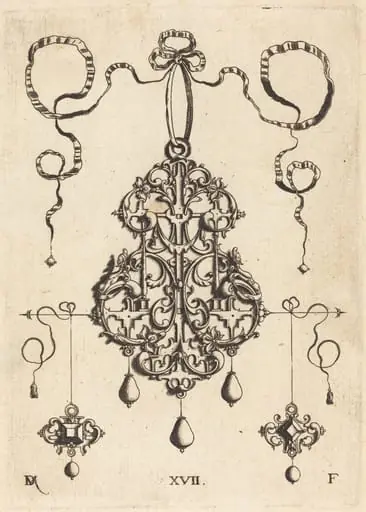 Strapwork Pendant with Two Square Tablestonesas Earrings at Left and Right
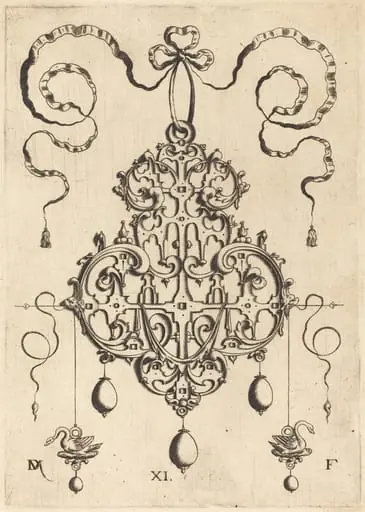 Strapwork Pendant with Two Swans as Earrings at Left and Right
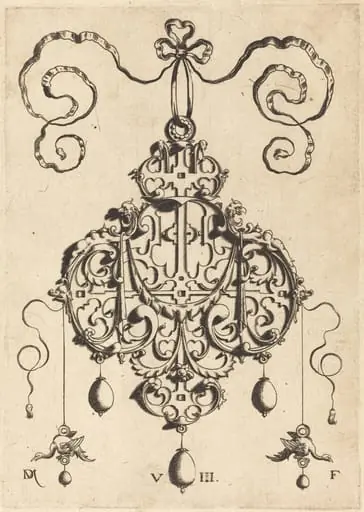 Strapwork Pendant with Two Eagles as Earringsat Left and Right
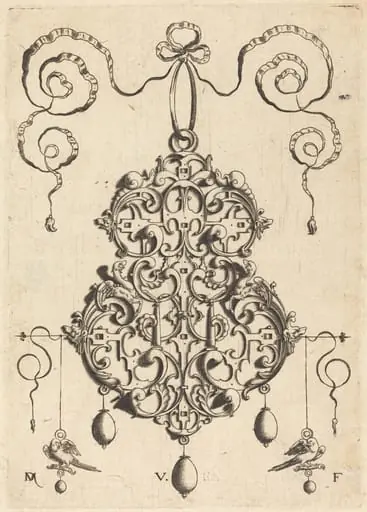 Strapwork Pendant with Two Birds as Earrings at Left and Right
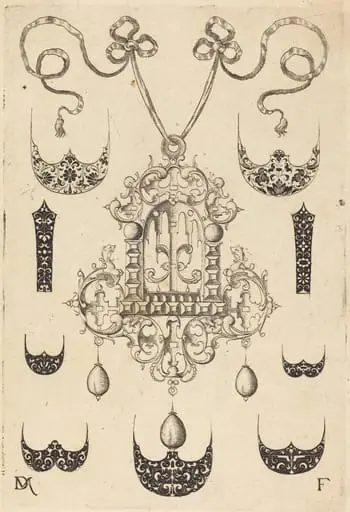 Pendant Surrounded by Seven Shields and Two Ornamental Bands
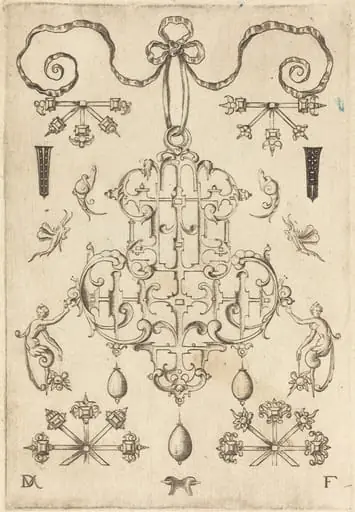 Large Pendant with Three Drops Below
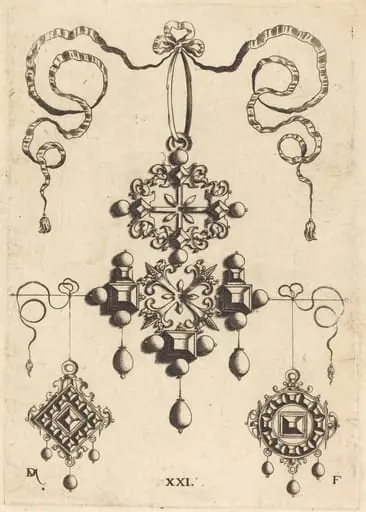 Pendant with Wheel at Centre, Surrounded by Four Table-Stones