Artwork
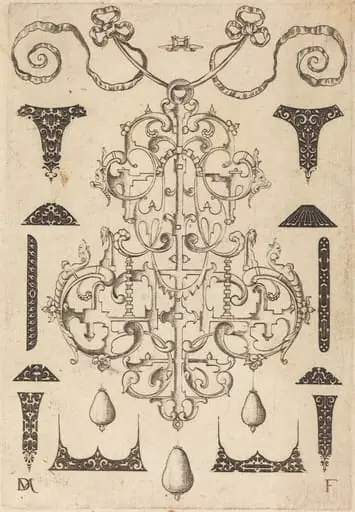
Large Strapwork Pendant with Two Hangers as Earrings at Left and Right
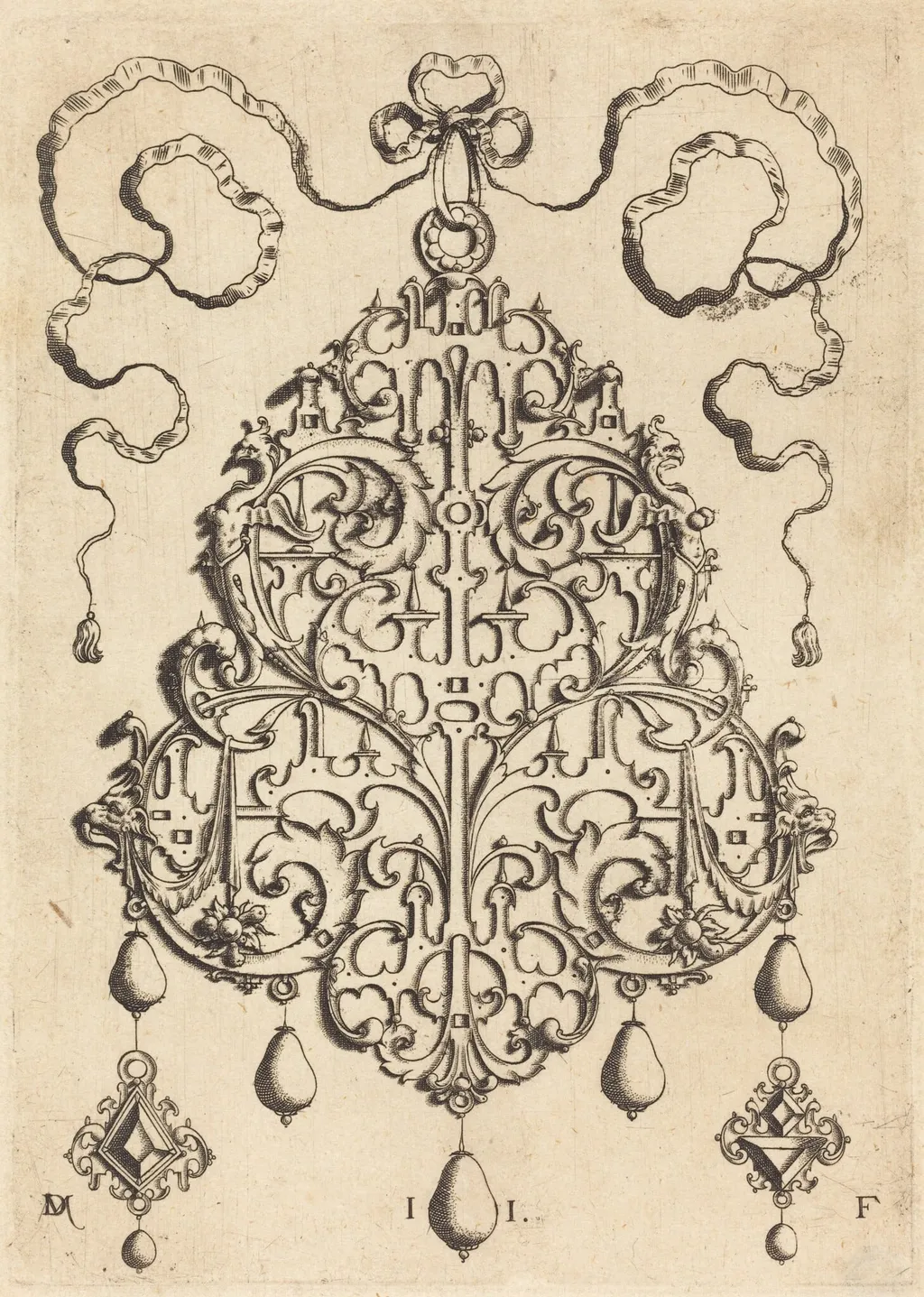
Large Strapwork Pendant with Two Hangers as Earrings at Left and Right is an ink print by the Renaissance artist Daniel Mignot. It dates from 1584 and is held in the collection of the National Gallery of Art.
About this work
Overview
Rendered in fine linear detail, the composition centers on an elaborate strapwork form—interlaced curves and geometric loops—crowned by a stylized arch.
Created in 1584 by Daniel Mignot, this engraving depicts a lavish pendant necklace with two matching earrings. Rendered in fine linear detail, the composition centers on an elaborate strapwork form—interlaced curves and geometric loops—crowned by a stylized arch. The pendant is flanked by teardrop-shaped earrings, each terminating in a small loop. The work functions as a design study, likely intended for jewelers or patrons seeking ornamental inspiration.
Subject & Meaning
The pendant and earrings reflect Renaissance ideals of symmetry and refined ornamentation. The strapwork motif, popular in decorative arts, suggests a connection to architectural and metalwork traditions. The inclusion of earrings implies the design was conceived for full-body adornment, not merely display. Its precision and balance convey an emphasis on harmony, aligning with contemporary tastes for elegant, wearable luxury.
Technique & Style
Mignot employed fine engraving lines and stippling to model form and texture, creating subtle gradations of light and shadow. The intricate patterns are rendered with meticulous control, using cross-hatching and delicate dots to suggest depth without color. The style is characteristic of Northern European goldsmithing manuals of the period, where clarity and reproducibility were prioritized over expressive flair.
History & Provenance
The print originates from a period when engraved design books circulated among artisans and nobility across Europe. Mignot’s work likely appeared in a pattern collection used by goldsmiths to replicate fashionable jewelry. No documented ownership before the modern era is known, but its survival suggests it was preserved as a reference rather than a standalone artwork.
Context
In late 16th-century Europe, engraved plates served as vital tools for disseminating design trends. Jewelers relied on such prints to adapt motifs for clients, blending classical elements with contemporary tastes. Mignot’s pendant reflects the fusion of Mannerist complexity and functional elegance favored in courtly adornment, particularly in France and the Low Countries.
Legacy
Though not widely known today, this engraving exemplifies the role of print in shaping material culture. It preserves a moment when jewelry design was systematized through reproduction, influencing craftsmanship beyond individual artisans. Its survival offers insight into how aesthetic ideals were standardized and transmitted before industrial manufacturing.
Artist & collection


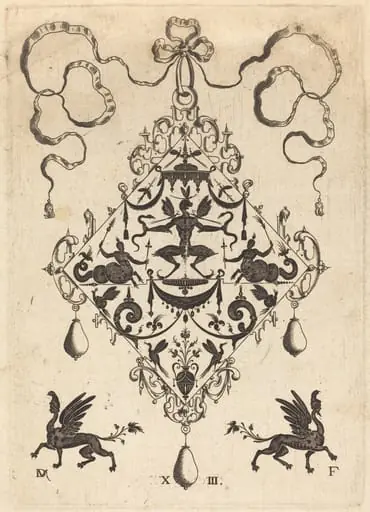 Large Pendant, Winged Fantasy Creature Holding Two Snakes
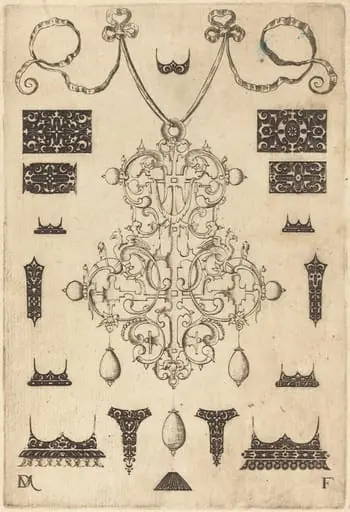 Large Pendant with Three Drops Below, Surrounded by Fifteen Different Studs
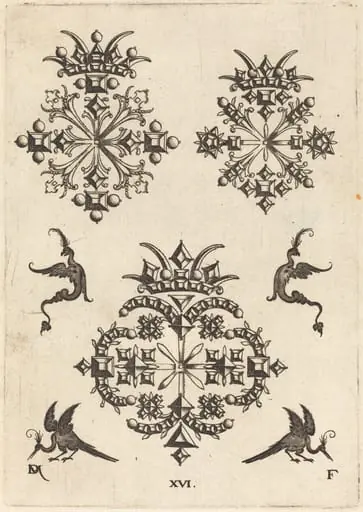 Three Brooches with Fantasy Birds at Left, Right, and Bottom
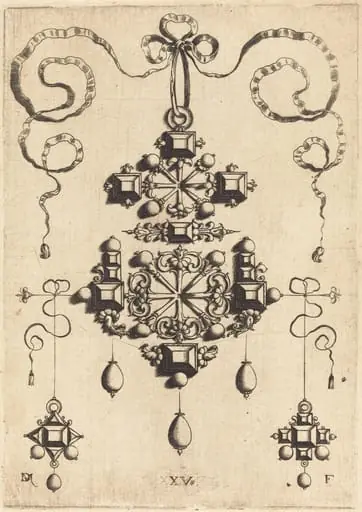 Pendant with Two Double Crosses, Surrounded by Four Diamond-Shaped Stones, Five Table-Stones, and Thirteen Pearls
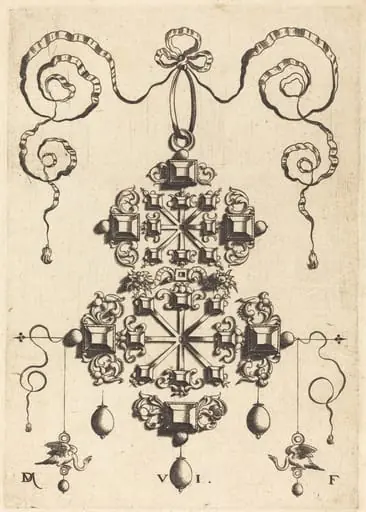 Large Pendant with Two Double Crosses, Surrounded by Six Large and Sixteen Small Table-Stones
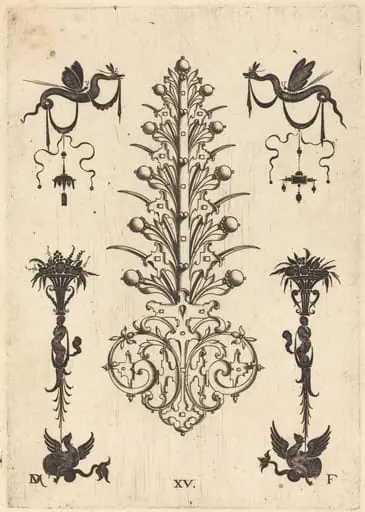 Hyacinth-Shaped Brooch with Winged Snakes at Top and Winged Animals at Bottom
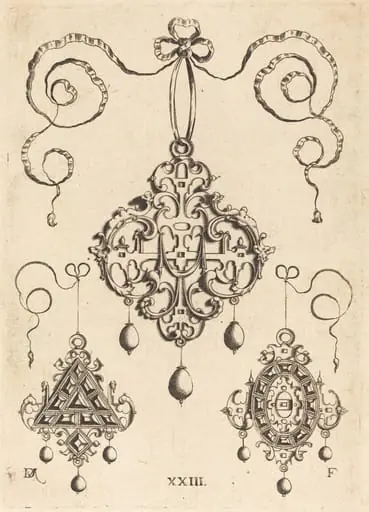 Three Strapwork Pendants, The Lower Ones Triangular and Oval
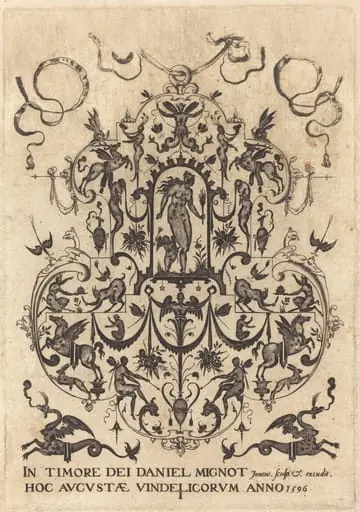 Title Page: Large Pendant, Venus and Amor at Centre
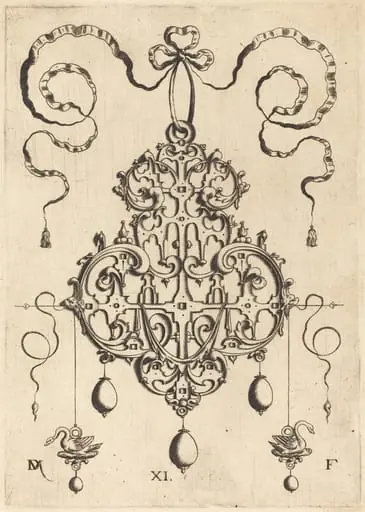 Strapwork Pendant with Two Swans as Earrings at Left and Right
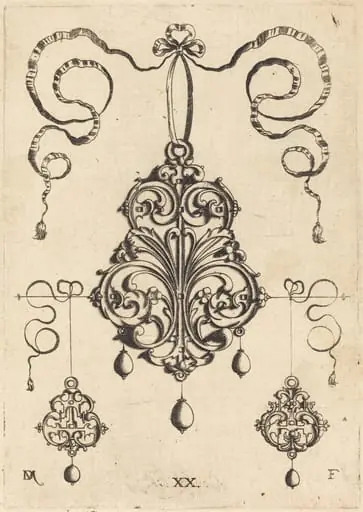 One Large and Two Smaller Strapwork Pendants
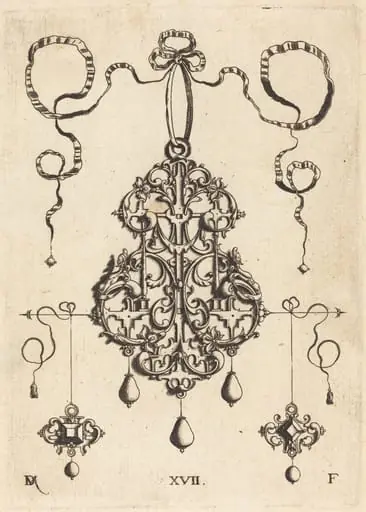 Strapwork Pendant with Two Square Tablestonesas Earrings at Left and Right
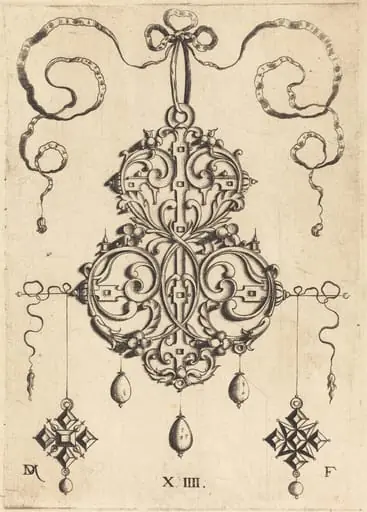 Strapwork Pendant with Three Drops and Two Cross-Shaped Pendants as Earrings at Left and Right
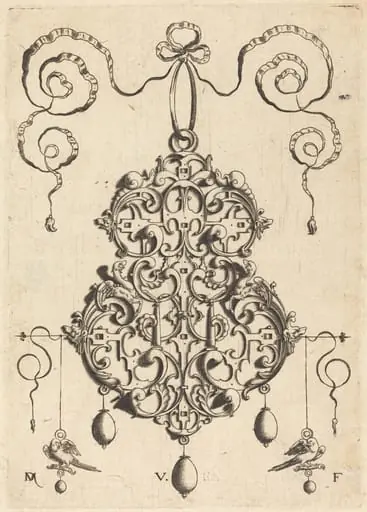 Strapwork Pendant with Two Birds as Earrings at Left and Right
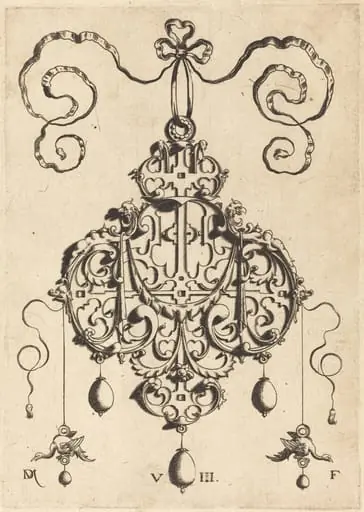 Strapwork Pendant with Two Eagles as Earringsat Left and Right
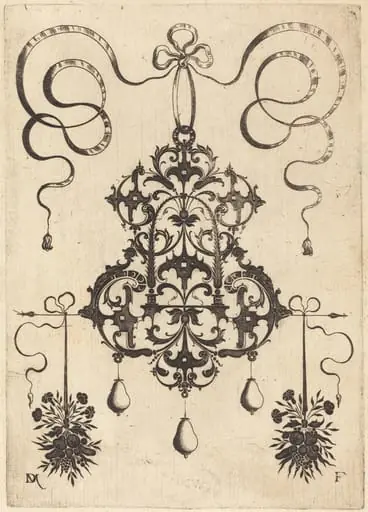 Large Pendant, Lower Left and Right Two Bunches of Grass, Flowers, and Fruit
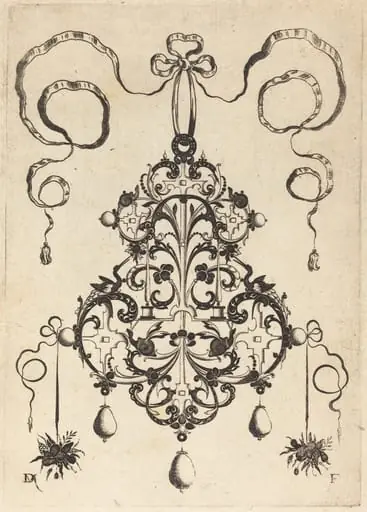 Large Pendant, Lower Left and Right Two Bunches of Grass and Fruit
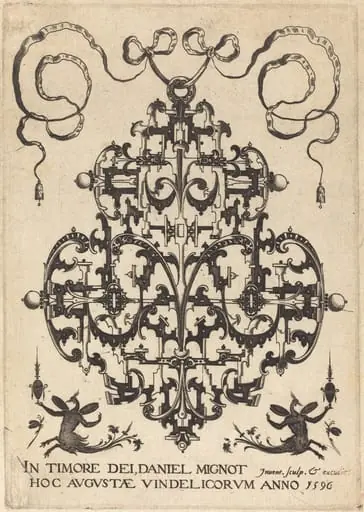 Title Page: Large Pendant, Two Winged Imaginary Figures at Bottom
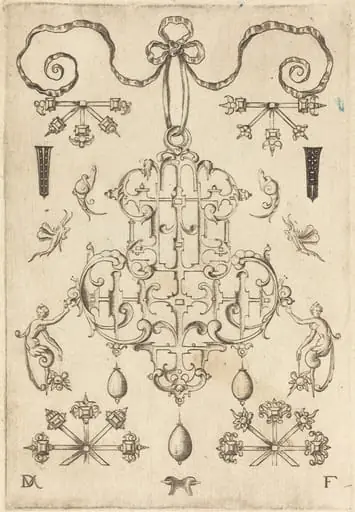 Large Pendant with Three Drops Below
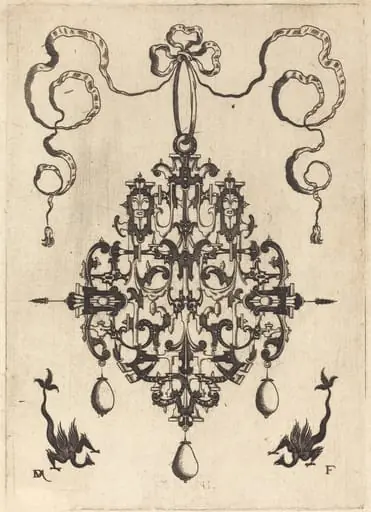 Large Pendant, Two Fantasy Creatures with Long Tails at Bottom
 Large Pendant, Surrounded by Twelve Small Studs