Artwork
Pendant with Two Double Crosses
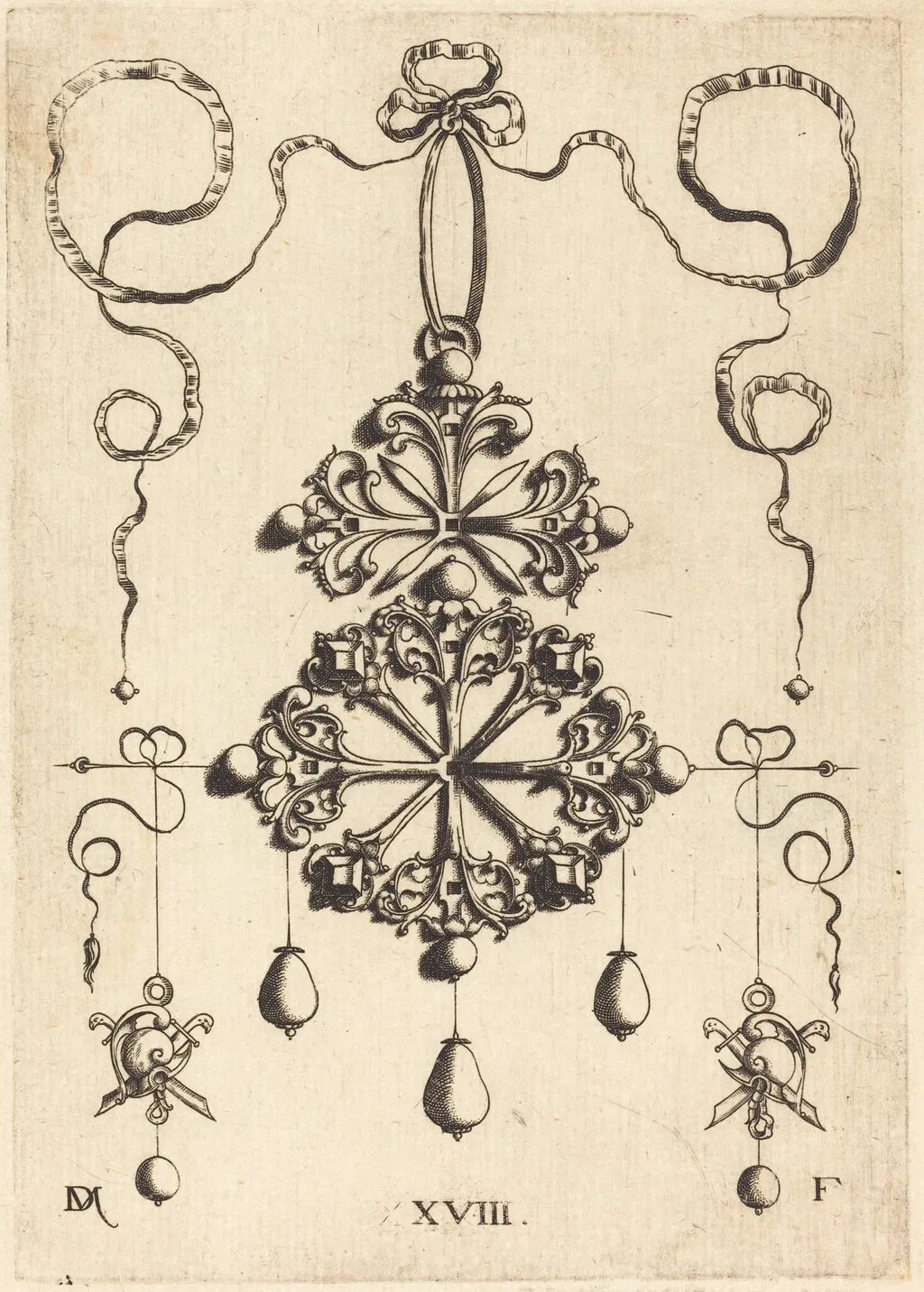
Pendant with Two Double Crosses is an ink print by the Renaissance artist Daniel Mignot. It dates from 1584 and is held in the collection of the National Gallery of Art.
About this work
Overview
Created in 1584 by Daniel Mignot, this engraving takes the form of a pendant design featuring two mirrored double crosses.
Created in 1584 by Daniel Mignot, this engraving takes the form of a pendant design featuring two mirrored double crosses. Executed with precision on a metal plate, the work was intended for reproduction through printmaking. Its compact format suggests it may have served as a model for jewelry or devotional objects, blending symbolic imagery with technical craftsmanship typical of late 16th-century French engraving.
Subject & Meaning
The paired double crosses—each with two horizontal arms at top and bottom—depart from the traditional Latin cross form. Their symmetry and repetition imply a deliberate emphasis on balance or duality, possibly referencing theological or esoteric themes. The absence of additional iconography leaves their meaning open, yet their structured repetition suggests a ritual or heraldic function rather than narrative storytelling.
Technique & Style
Mignot employed fine, controlled lines carved into a metal plate to achieve sharp, clean contours. Subtle tonal shifts near the edges indicate careful hatching to suggest depth and volume. The engraving’s clarity and uniformity reflect mastery of the burin tool, with no visible smudging or irregularity, pointing to a highly skilled hand and deliberate compositional restraint.
History & Provenance
No documented ownership history exists for the original plate or early impressions. The work survives only through printed examples, likely produced in limited numbers for private or ecclesiastical use. Mignot’s known output is sparse, and this piece remains one of the few securely attributed engravings from his career, offering a rare glimpse into his artistic focus.
Context
In late 16th-century France, engraved pendants and devotional prints circulated among elite and religious circles as objects of personal devotion or status. Mignot’s work aligns with a broader trend of geometric, symbolic designs used in metalwork and print, where clarity and repetition conveyed spiritual order amid religious turmoil.
Legacy
Though not widely reproduced or studied, this engraving exemplifies the quiet precision of French Mannerist printmaking. Its survival underscores the role of small-scale engravings in transmitting visual motifs across media, influencing later designs in religious jewelry and emblematic art without direct lineage to major artistic movements.
Artist & collection


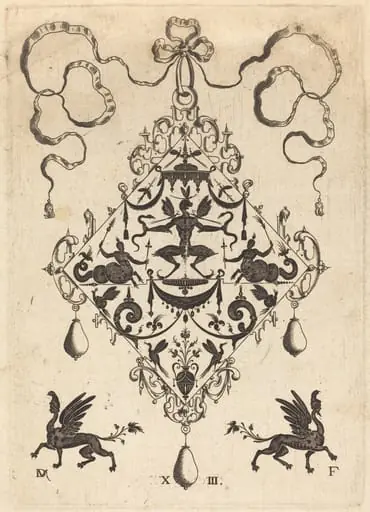 Large Pendant, Winged Fantasy Creature Holding Two Snakes
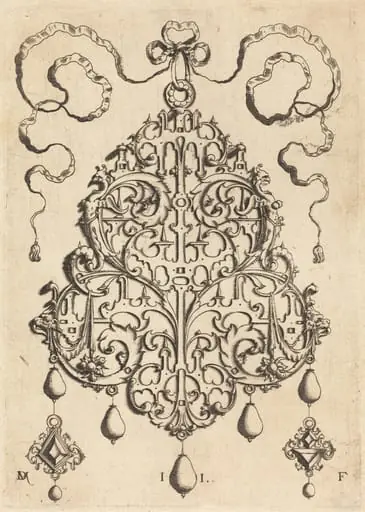 Large Strapwork Pendant with Two Hangers as Earrings at Left and Right
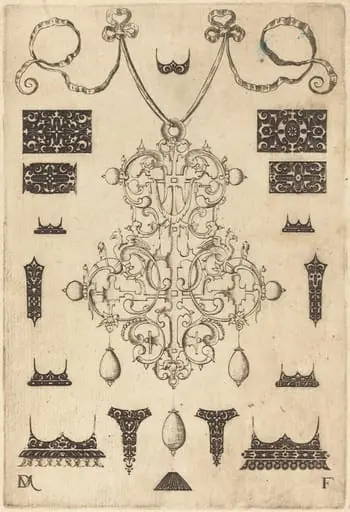 Large Pendant with Three Drops Below, Surrounded by Fifteen Different Studs
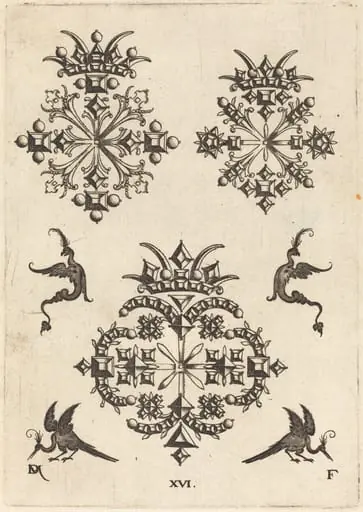 Three Brooches with Fantasy Birds at Left, Right, and Bottom
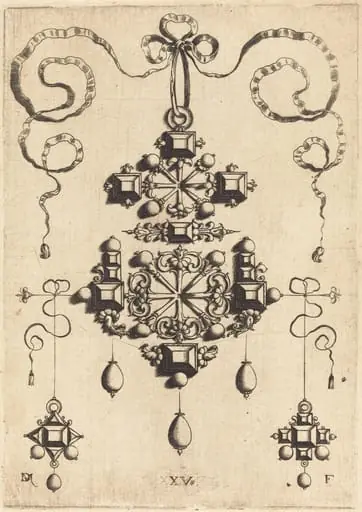 Pendant with Two Double Crosses, Surrounded by Four Diamond-Shaped Stones, Five Table-Stones, and Thirteen Pearls
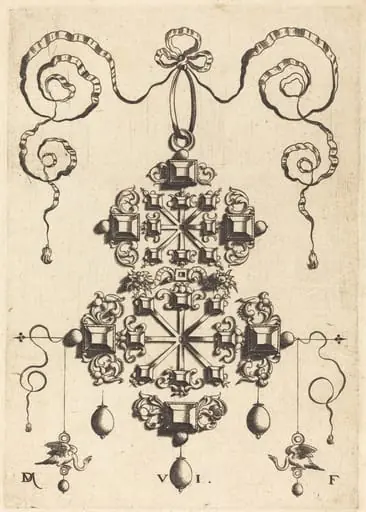 Large Pendant with Two Double Crosses, Surrounded by Six Large and Sixteen Small Table-Stones
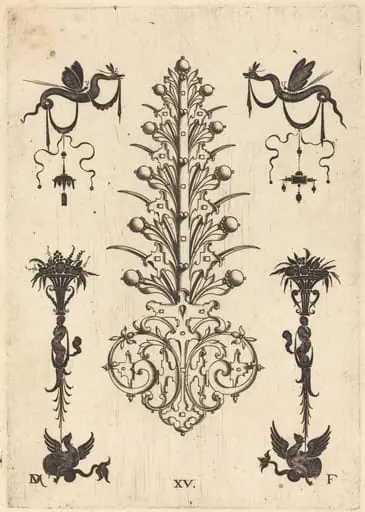 Hyacinth-Shaped Brooch with Winged Snakes at Top and Winged Animals at Bottom
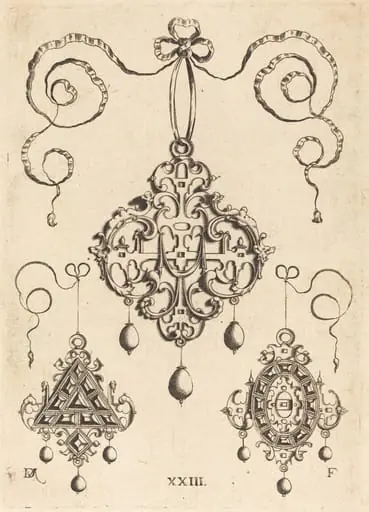 Three Strapwork Pendants, The Lower Ones Triangular and Oval
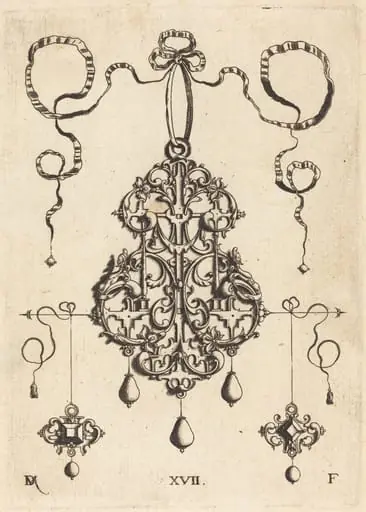 Strapwork Pendant with Two Square Tablestonesas Earrings at Left and Right
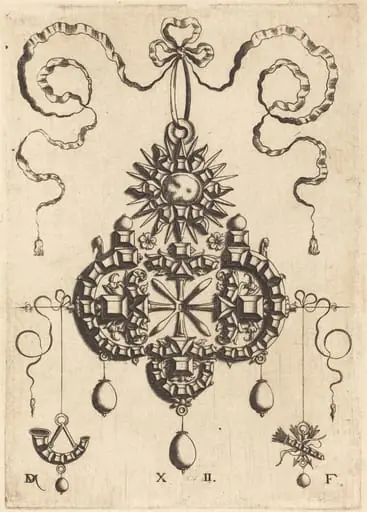 Large Pendant
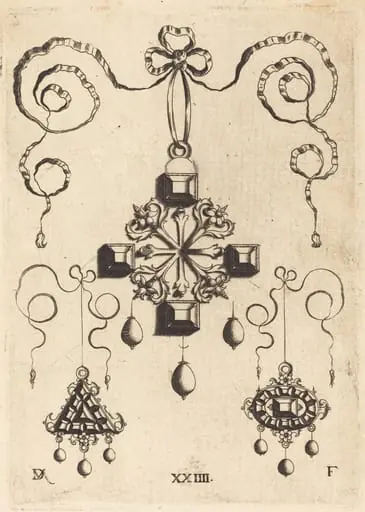 Pendant with Double Cross at Centre, Surrounded by Four Large Table-Stones
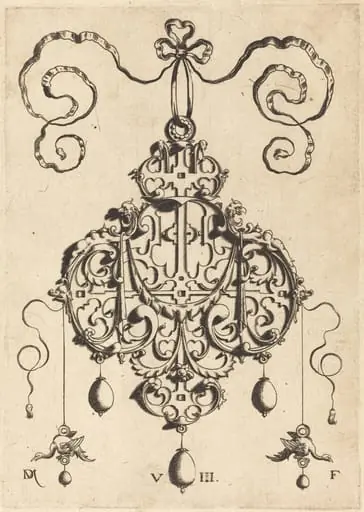 Strapwork Pendant with Two Eagles as Earringsat Left and Right
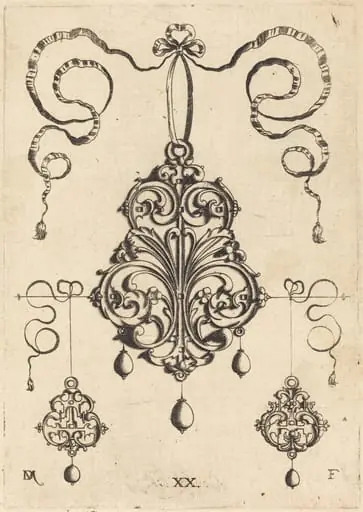 One Large and Two Smaller Strapwork Pendants
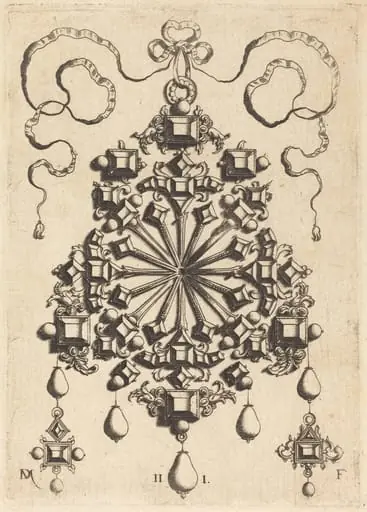 Large Pendant with Star at Centre
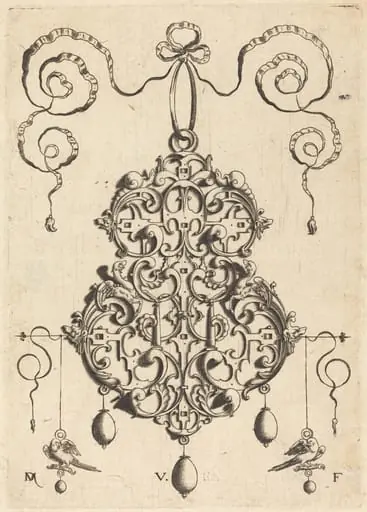 Strapwork Pendant with Two Birds as Earrings at Left and Right
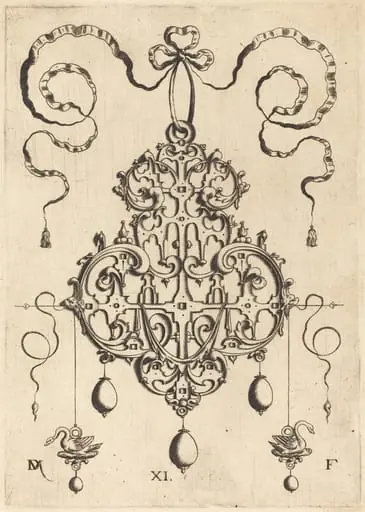 Strapwork Pendant with Two Swans as Earrings at Left and Right
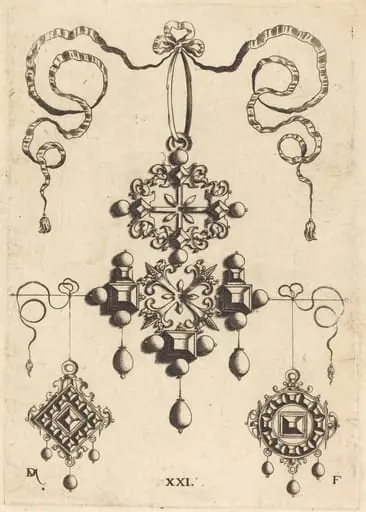 Pendant with Wheel at Centre, Surrounded by Four Table-Stones