Artwork
Portrait of Paul Sérusier
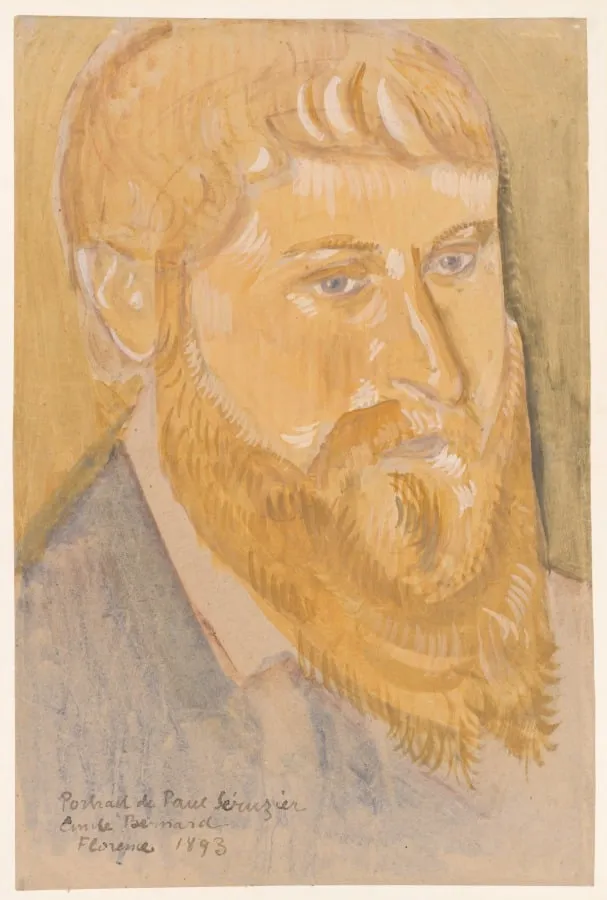
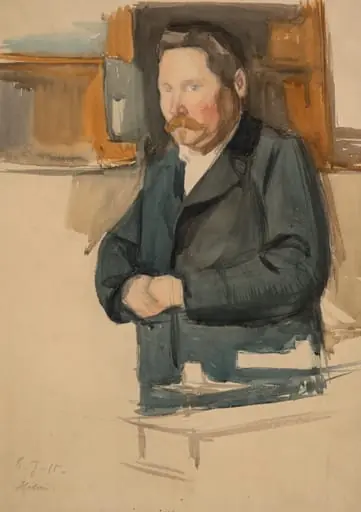
Portrait of Paul Sérusier is a drawing by the Impressionist artist Émile Bernard. It dates from 1893 and is held in the collection of the Cleveland Museum of Art.
About this work
They traveled to Italy together to study old paintings, and swapped portraits as souvenirs.
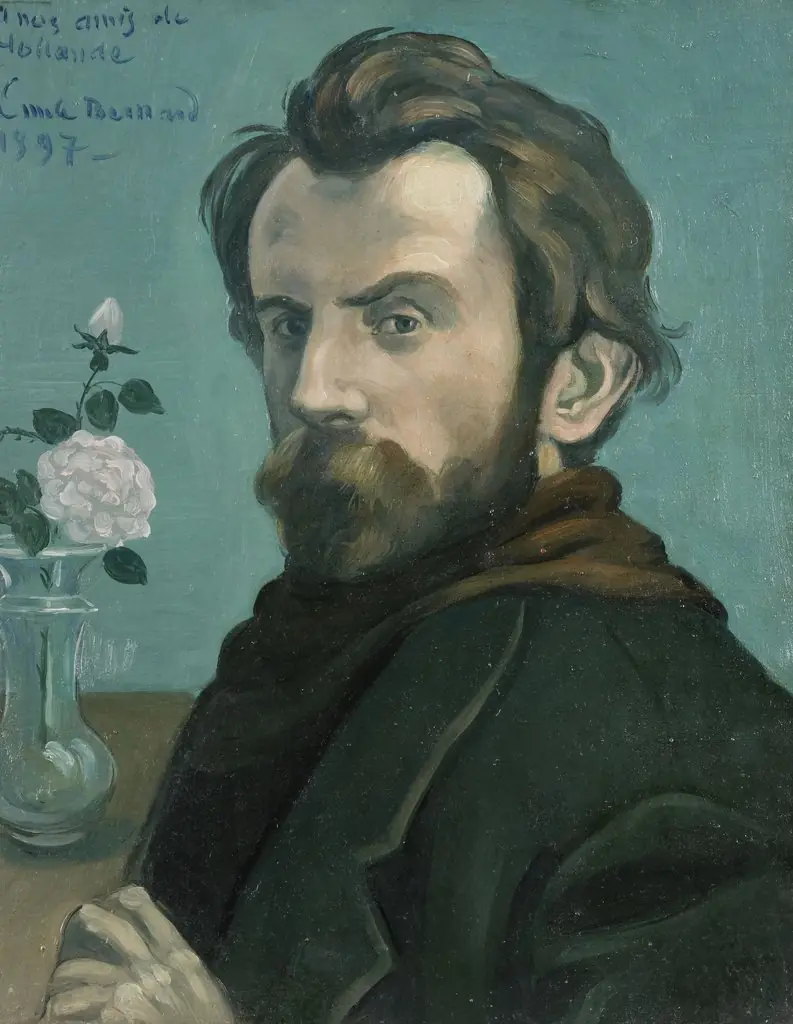
A man in a dark suit sits stiffly, hands folded, staring straight at you. Behind him, a scribbled note says the picture was made in Italy in 1893.
This is Paul Sérusier, a fellow painter and friend of the artist. They traveled to Italy together to study old paintings, and swapped portraits as souvenirs. The note in the background feels like a postcard—proof they were there.
If you like this quiet, direct style, look up the technique called *sfumato*.
Overview
This drawing by Émile Bernard depicts Paul Sérusier, a fellow artist and close associate, in a restrained, frontal pose. Executed during a shared trip to Italy in 1893, the work functions as both a personal memento and a record of artistic exchange. Bernard inscribed the date and location directly onto the surface, anchoring the image in a specific moment of travel and mutual observation between two painters.
Subject & Meaning
Sérusier is shown seated rigidly, hands folded, gazing directly at the viewer. His formal attire and still posture convey a sense of solemnity, reflecting the gravity with which both artists approached their study of Renaissance art. The portrait was not merely a likeness but a token exchanged between peers, signifying shared intellectual pursuits and the personal bonds formed during their journey through Italy’s artistic heritage.
Technique & Style
Bernard employed a linear, unadorned draftsmanship, avoiding shading or atmospheric effects. The figure is defined by clear contours against a plain background, with the handwritten note in the upper corner acting as both caption and compositional element. This directness aligns with Bernard’s broader interest in simplifying form and emphasizing clarity over illusion, distancing the work from academic conventions of the time.
History & Provenance
The drawing originated from a reciprocal exchange between Bernard and Sérusier during their 1893 trip to Florence, where they studied early Renaissance masters. Such portrait swaps were customary among artists of the Nabis group, serving as both souvenirs and affirmations of artistic kinship. The work remained within private collections, eventually entering a public institution through documented acquisition.
Context
In the early 1890s, Bernard and Sérusier were central figures in the Nabis movement, seeking to move beyond Impressionism through symbolic form and flat color. Their Italian journey was part of a broader revival of interest in pre-Renaissance and early Renaissance techniques. This portrait reflects their shared desire to reconnect with structured composition and spiritual gravity in art, away from the transient effects of light favored by their predecessors.
Legacy
The drawing stands as a quiet testament to the personal and professional networks among post-Impressionist artists. While not widely exhibited, it exemplifies how artistic exchange operated beyond formal exhibitions—through private gestures, travel, and the circulation of small works. Its simplicity continues to inform discussions on the role of portraiture in avant-garde circles of the late 19th century.
Artist & collection
Artist
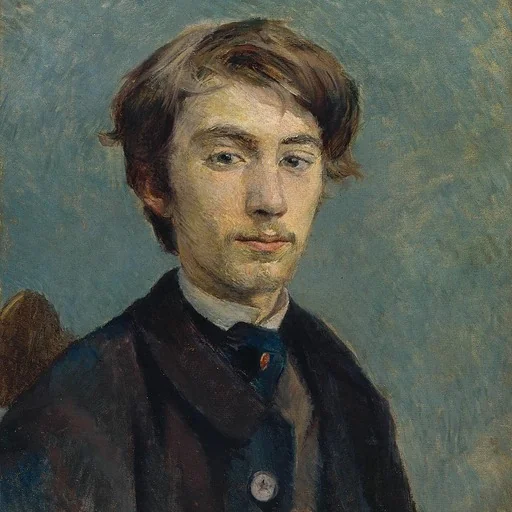
Émile Henri Bernard (French pronunciation: ; 28 April 1868 – 16 April 1941) was a French Post-Impressionist painter and writer, who had artistic friendships with Vincent van Gogh, Paul Gauguin and Eugène Boch, and at a later time, Paul…