Artwork
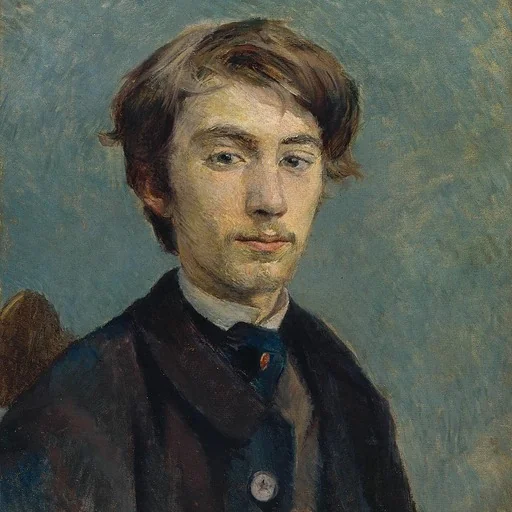
Self-portrait
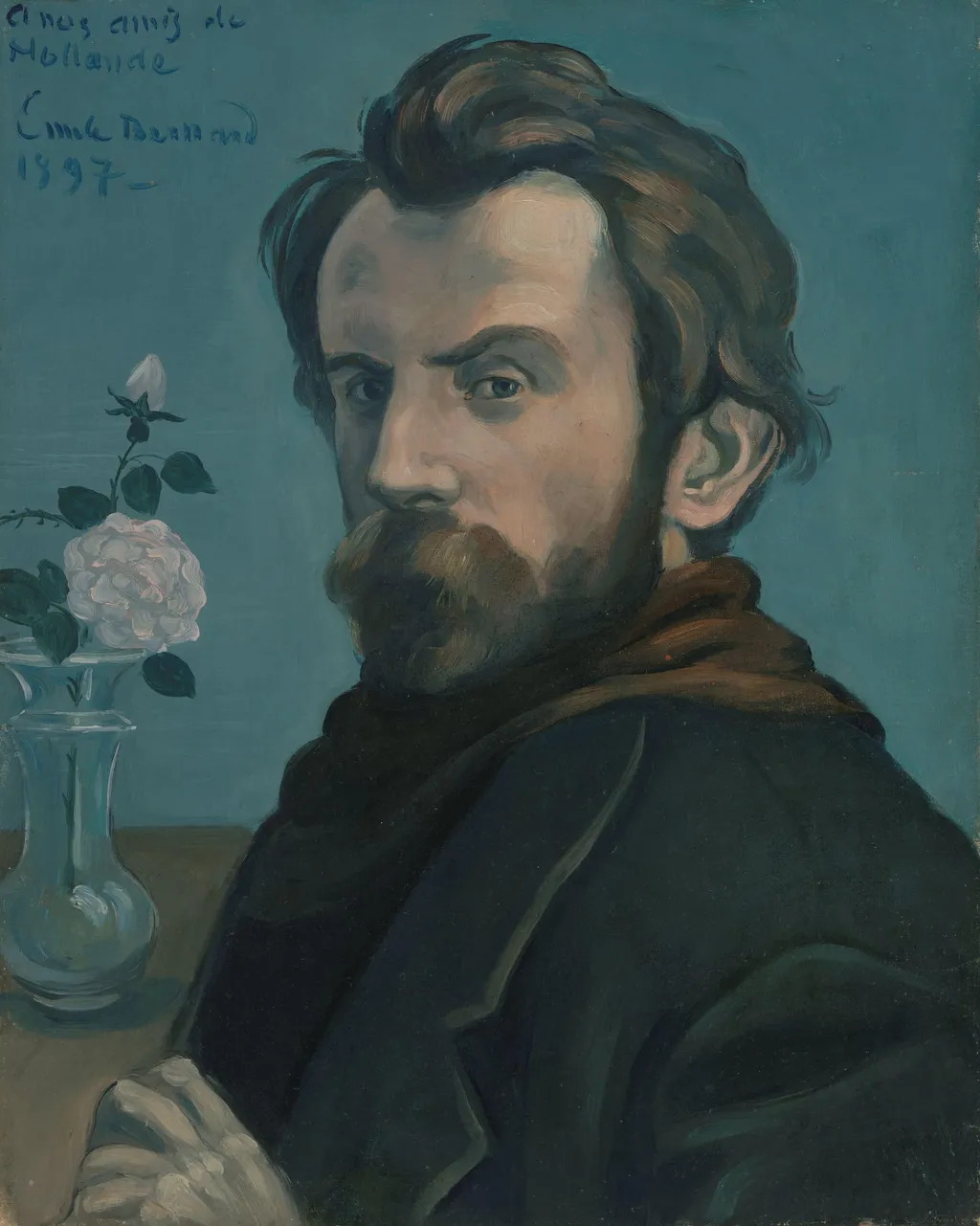
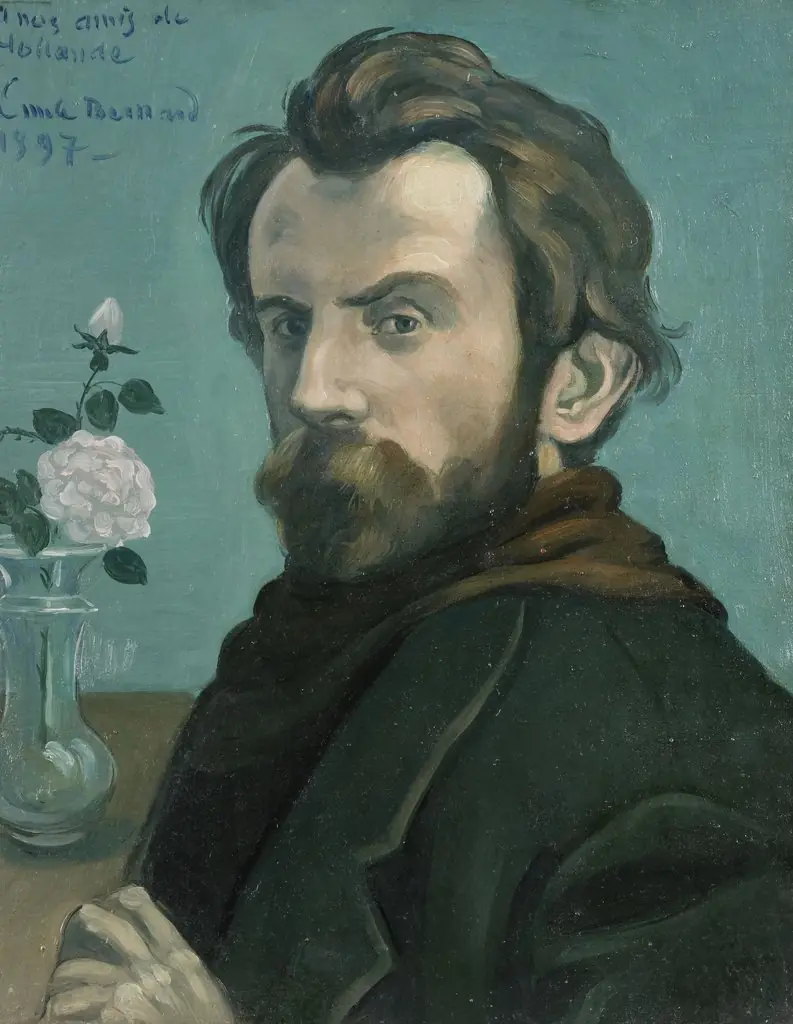
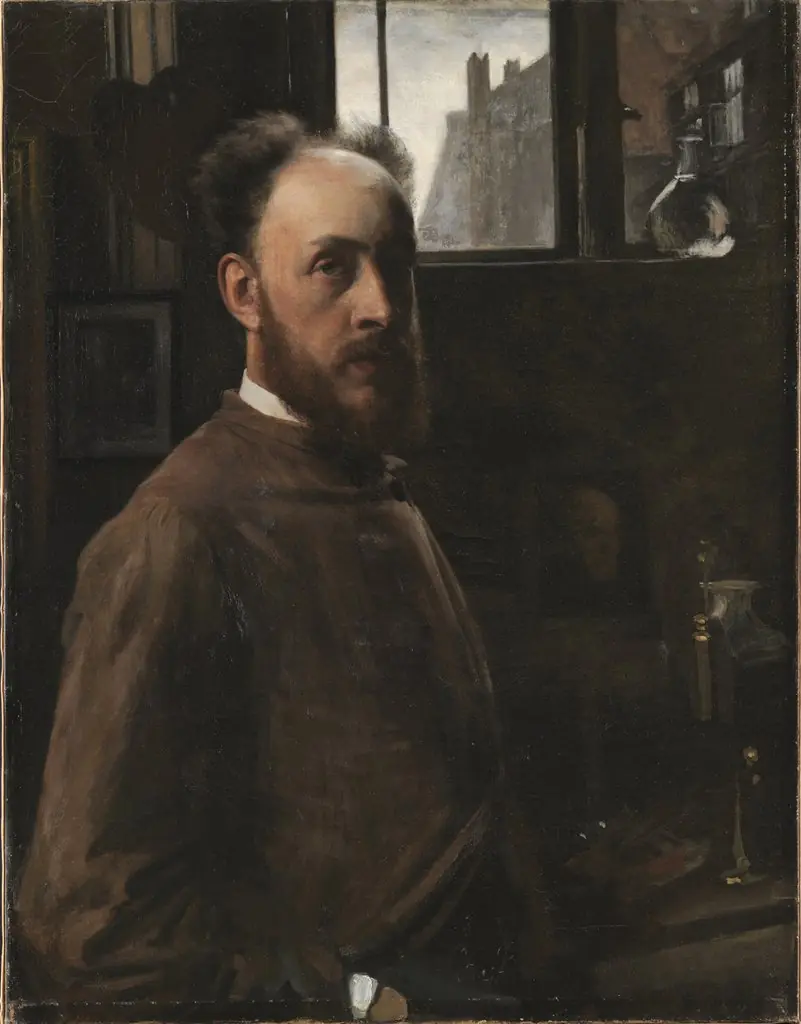
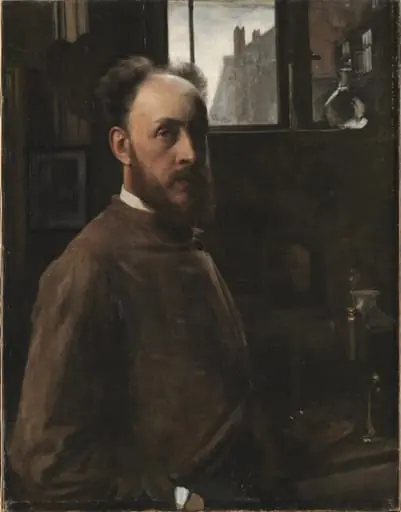
Self-portrait is an unspecified painting by the Post-Impressionist artist Émile Bernard. It dates from 1897 and is held in the collection of the Rijksmuseum.
About this work
Overview
Émile Bernard painted this self-portrait in 1887 as a personal gift to the Bonger family in Holland, close associates of Vincent van Gogh. The work reflects his engagement with the Nabis, a group of post-Impressionist artists seeking to move beyond naturalism. Bernard inscribed the painting 'À nos amis de Hollande,' signaling its intimate purpose and cultural connection to Dutch artistic circles.
Subject & Meaning
The portrait depicts Bernard as a young man, gazing directly at the viewer with a composed, unadorned expression. His dark coat and crimson scarf create a stark, symbolic contrast, emphasizing presence over narrative. The image is not a record of physical likeness but a deliberate assertion of identity within a shared artistic community, offered as a token of solidarity among peers.
Technique & Style
Bernard employed Synthetism, reducing form to flat planes bounded by bold outlines, rejecting traditional modeling and chiaroscuro. Color is limited and intentional—deep shadows, a vivid scarf, and muted skin tones—each area treated as a unified field. Brushwork is deliberate and restrained, avoiding impasto or texture to prioritize symbolic clarity over optical realism.
History & Provenance
The painting was given to Andries Bonger, brother of Jo Bonger, Vincent van Gogh’s sister-in-law, who later preserved many of van Gogh’s works. It remained in the Bonger family until its acquisition by a public collection. Its survival as a personal gift, rather than a commercial piece, underscores its role in the intimate networks of late 19th-century avant-garde artists.
Context
This work reflects a broader shift toward expressive abstraction and the idea that art could convey inner states through structure and color alone.
Created during Bernard’s formative years in Paris, the portrait aligns with broader efforts by Nabis artists to synthesize emotion, symbolism, and simplified form. Influenced by Gauguin and Japanese prints, Bernard sought to strip painting of academic conventions. This work reflects a broader shift toward expressive abstraction and the idea that art could convey inner states through structure and color alone.
Legacy
Though less known than his contemporaries, Bernard’s self-portrait exemplifies a pivotal moment in modern art’s turn away from realism. Its directness and formal discipline influenced later Symbolist and Expressionist approaches. The painting endures as a quiet testament to the personal and ideological bonds among artists redefining the purpose of representation at the century’s end.
Own this work as a print
Artist & collection
Artist
Émile Henri Bernard (French pronunciation: ; 28 April 1868 – 16 April 1941) was a French Post-Impressionist painter and writer, who had artistic friendships with Vincent van Gogh, Paul Gauguin and Eugène Boch, and at a later time, Paul…