Artwork
Portrait of Haji Mohammad Beyk Abri
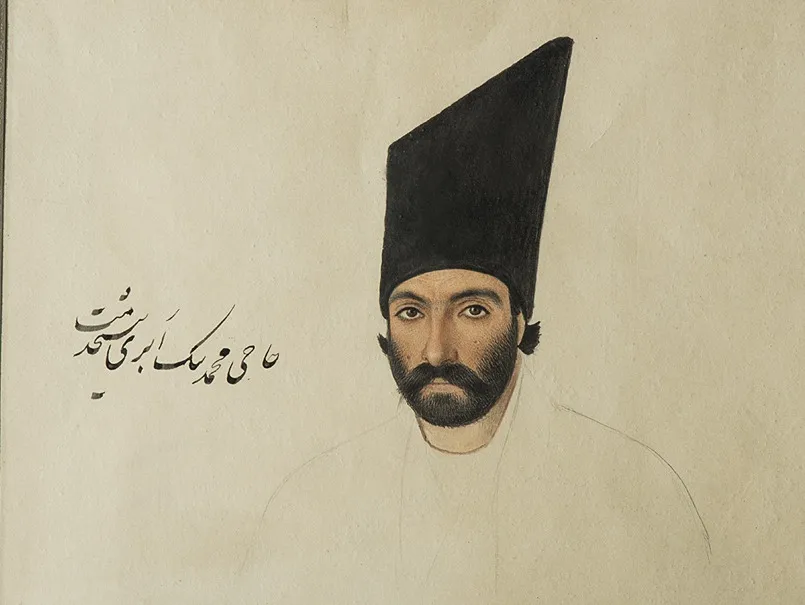
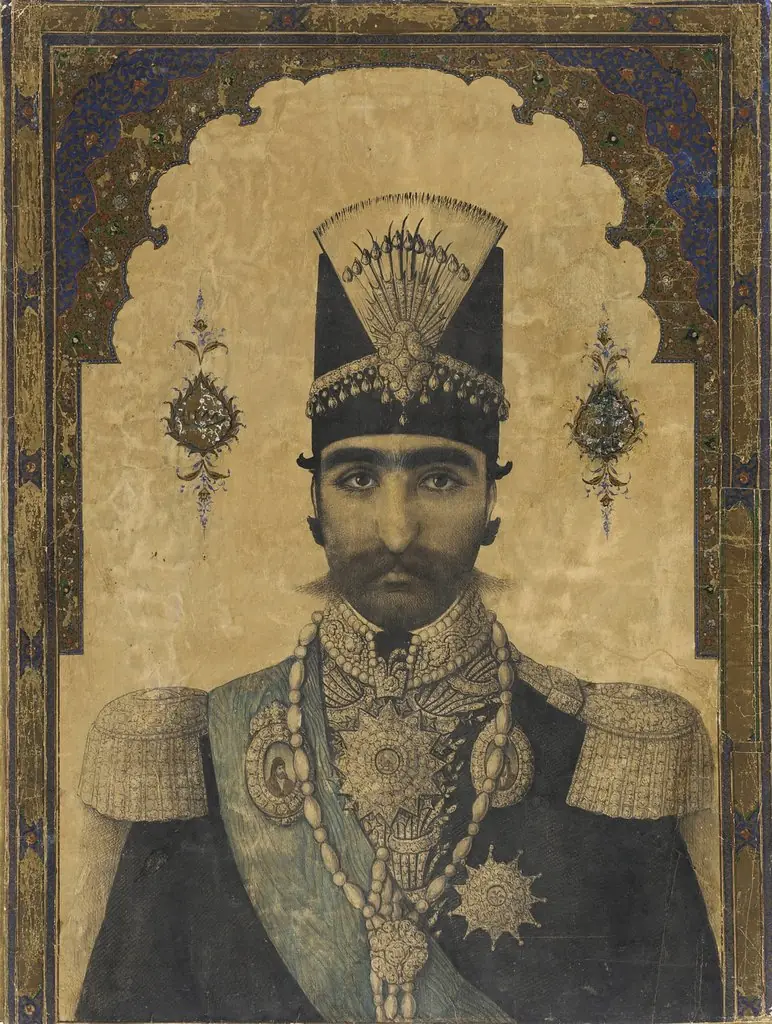
Portrait of Haji Mohammad Beyk Abri is a watercolor painting by Mirza Abolhassan Khan Ghaffari. It dates from 1850 and is held in the collection of the Museum of the Islamic Era. Painted around 1850, this watercolor portrait depicts Haji Mohammad Beyk Abri, a figure of likely regional prominence.
About this work
Overview
Painted around 1850, this watercolor portrait depicts Haji Mohammad Beyk Abri, a figure of likely regional prominence.
Painted around 1850, this watercolor portrait depicts Haji Mohammad Beyk Abri, a figure of likely regional prominence. Created by Mirza Abolhassan Khan Ghaffari Kashani, known as Sani al-Mulk, the work reflects the artist’s refined approach to portraiture during the Qajar period. Executed in delicate watercolor on paper, it is now part of the National Museum of Iran’s collection, representing a quiet but precise moment in 19th-century Iranian visual culture.
Subject & Meaning
The subject, Haji Mohammad Beyk Abri, is portrayed with solemn dignity, his direct gaze engaging the viewer without ornamentation. His attire—a white robe and an unusually tall, pointed black hat—suggests status or religious affiliation, possibly linked to pilgrimage or local leadership. The absence of symbolic props or elaborate settings focuses attention on his presence, emphasizing personal identity over social spectacle.
Technique & Style
Sani al-Mulk employed transparent watercolor washes to model the face and fabric with subtle gradations, avoiding heavy outlines. The light beige background enhances the figure’s form without distraction. The hat’s sharp contours and the beard’s fine strokes reveal careful brushwork, while the script to the left, likely Persian, may denote the subject’s name or a poetic inscription, reinforcing the painting’s function as both likeness and record.
History & Provenance
Sani al-Mulk, trained under Mihr 'Ali and later serving as court painter to Mohammad Shah Qajar, produced this work before his travels to Europe. The portrait’s survival in the National Museum of Iran suggests it remained within Iran’s cultural sphere, possibly commissioned by the sitter’s family or a local patron. Its preservation reflects early institutional interest in documenting Qajar-era portraiture.
Context
In mid-19th century Iran, portraiture evolved as a blend of indigenous traditions and emerging European influences. While court painters still favored symbolic representation, this work leans toward naturalism, capturing individual features with restrained realism. The use of watercolor, a medium common in manuscript illustration, signals a transition toward standalone portraits as objects of personal and cultural significance.
Legacy
This portrait stands as an example of how Qajar artists adapted traditional techniques to convey individual identity. Sani al-Mulk’s later exposure to European art did not erase his foundational style; instead, his earlier works like this one reveal a quiet confidence in local aesthetics. It remains a reference point for understanding the evolution of Iranian portraiture beyond royal iconography.
Artist & collection
Artist
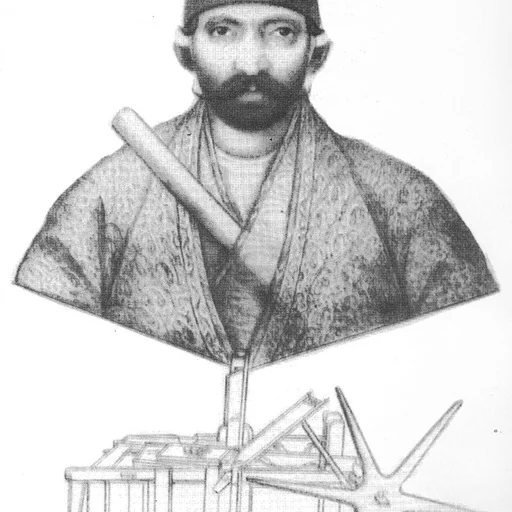
Mirza Abolhassan Khan Ghaffari
Mirza Abu'l-Hasan Khan Ghaffari Kashani (Persian: میرزا ابوالحسن خان غفاری کاشانی; 1814–1866) was an Iranian painter, miniature and lacquer artist, and book illustrator.

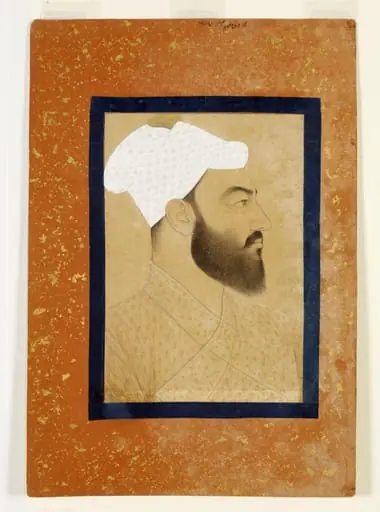 Bahadur Shah I
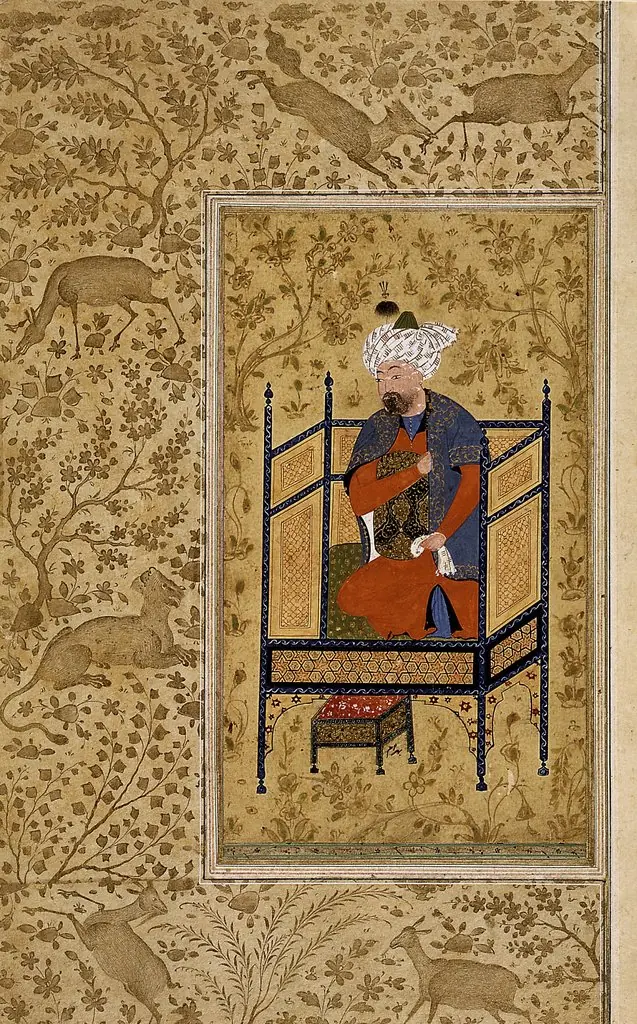 Album Page with Illustrated Margins
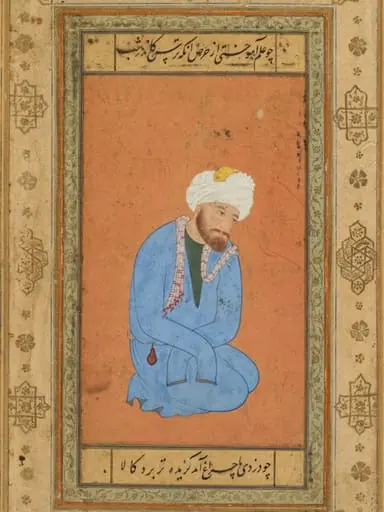 Portrait of a kneeling holy man, from the Prince Salim Album
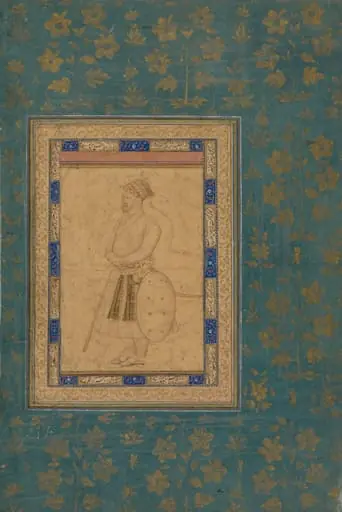 Portrait of an Unidentified Noble from Shah Jahan's Court
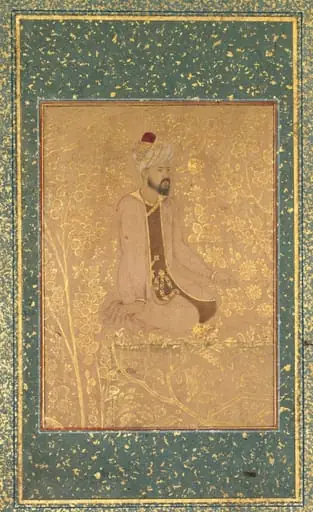 Seated Scholar, Border Fragment from the Teheran/Berlin album
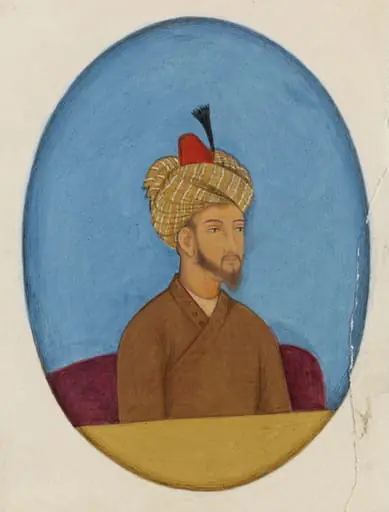 Emperor Babur
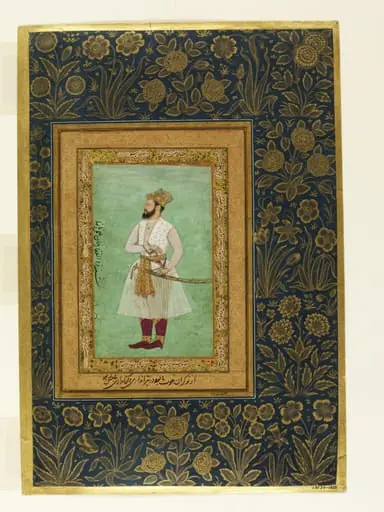 Zu'lfiqar Khan
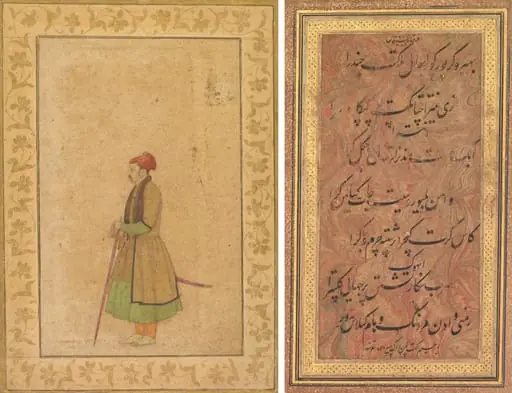 Portrait of Raja Ram Singh of Amber (r. 1667-1688) with a Deccan Sword (recto); Calligraphy (verso)
 Early Portrait of Nasr al-Din Shah (reigned 1848-1896)