Artwork
Early Portrait of Nasr al-Din Shah (reigned 1848-1896)
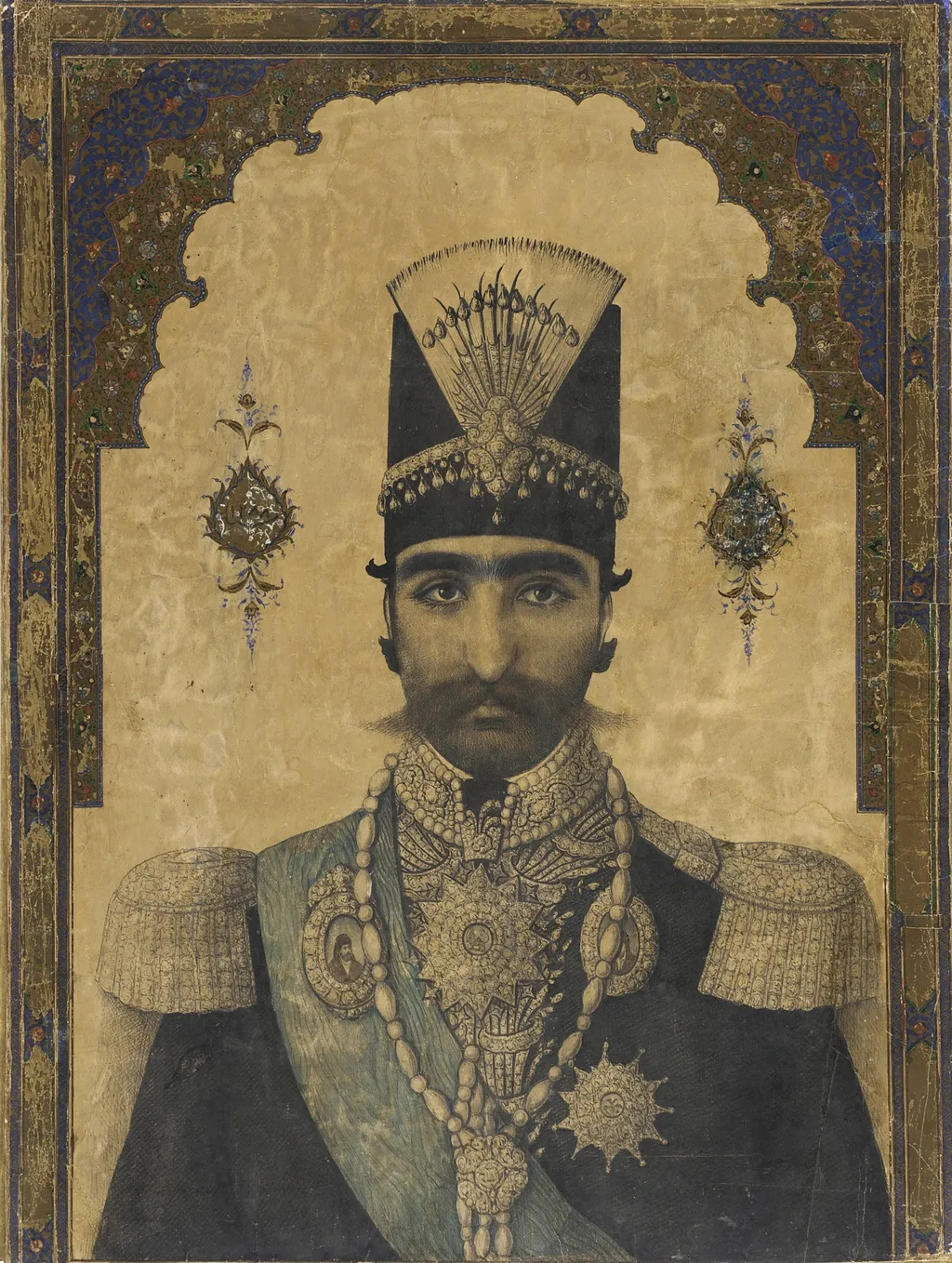
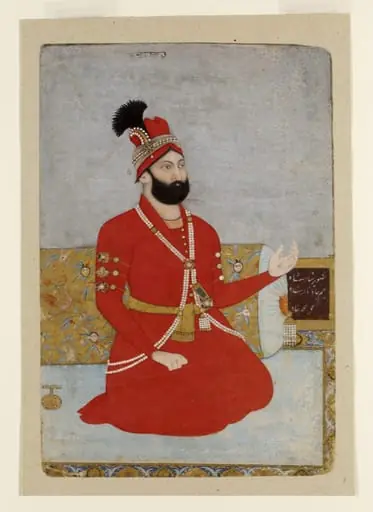
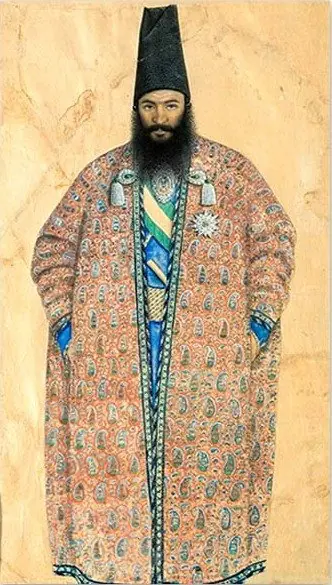
Early Portrait of Nasr al-Din Shah (reigned 1848-1896) is an unspecified painting by Unknown. It dates from 1850 and is held in the collection of the Los Angeles County Museum of Art. This oil painting depicts Nasr al-Din Shah, ruler of Qajar Iran from 1848 to 1896, in formal court attire.
About this work
Overview
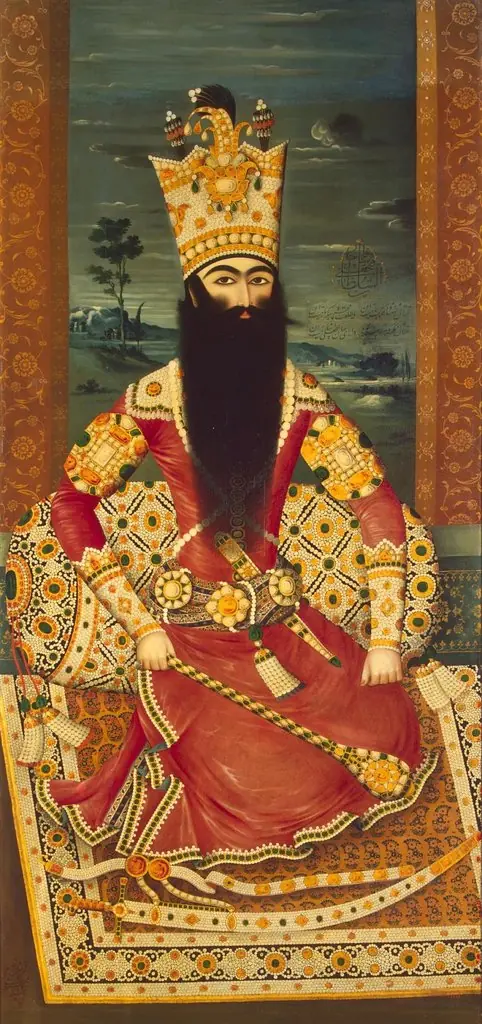
This oil painting depicts Nasr al-Din Shah, ruler of Qajar Iran from 1848 to 1896, in formal court attire. Rendered with meticulous detail, the portrait emphasizes regal bearing through precise rendering of fabric, jewelry, and headwear. The subject faces the viewer directly, expression composed and unsmiling, against a softly illuminated background that frames him without distraction.
Subject & Meaning
The portrait serves as a visual assertion of authority, aligning the shah with traditional symbols of Persian monarchy. The tall hat, jeweled necklace, and embroidered sash are not merely ornamental but signify rank and divine sanction. His direct gaze conveys vigilance and sovereignty, reinforcing the expectation of obedience and respect from subjects and foreign observers alike.
Technique & Style
The artist employs fine brushwork to capture the texture of silk, the gleam of gemstones, and the sheen of metallic thread in the uniform.
The artist employs fine brushwork to capture the texture of silk, the gleam of gemstones, and the sheen of metallic thread in the uniform. Layers of pigment create depth in the fabric folds, while subtle highlights suggest light falling across the surface. The background’s muted tones and faint decorative borders focus attention on the figure, reflecting a blend of European portraiture conventions with Persian decorative traditions.
History & Provenance
Commissioned during the shah’s reign, the painting likely originated in a royal atelier in Tehran, where artists trained in both indigenous and Western techniques produced official imagery. It may have been displayed in palaces or gifted to foreign dignitaries as a representation of Qajar power. Its survival suggests it was preserved within royal or state collections, avoiding the dispersal common to other court artworks.
Context
In mid-19th century Iran, portraiture became an increasingly important tool for state image-making, influenced by European diplomatic practices and photographic technology. While traditional Persian miniatures emphasized symbolism over realism, this painting reflects a shift toward lifelike representation to project modernity and legitimacy on the international stage.
Legacy
The portrait stands as a documented example of how Qajar rulers adapted visual culture to assert continuity and control. It informs contemporary understanding of how Persian monarchy negotiated tradition and modernity during a period of colonial pressure and internal reform. The work remains a reference for studies on identity, power, and representation in 19th-century Islamic courts.
Artist & collection

 Domestic Scene
 Giacomo and Cardinal Marco, investing Andrea, Abbot of San Zeno, with his Benefice
 The Nymph of Fontainebleau
 Portrait of a Woman
 Madonna and Child with Saints in the Enclosed Garden
 Venus and Minerva
 Family Group of Four on Sofa
 Wall painting from Room H of the Villa of P. Fannius Synistor at Boscoreale