Artwork
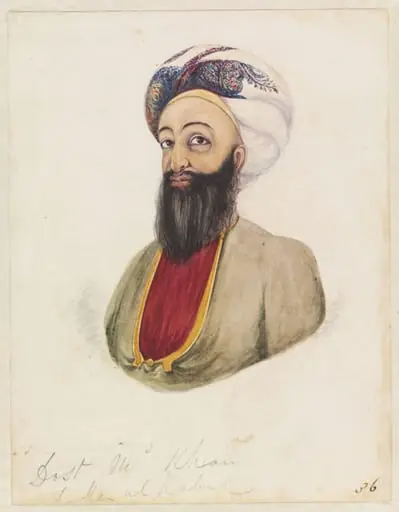
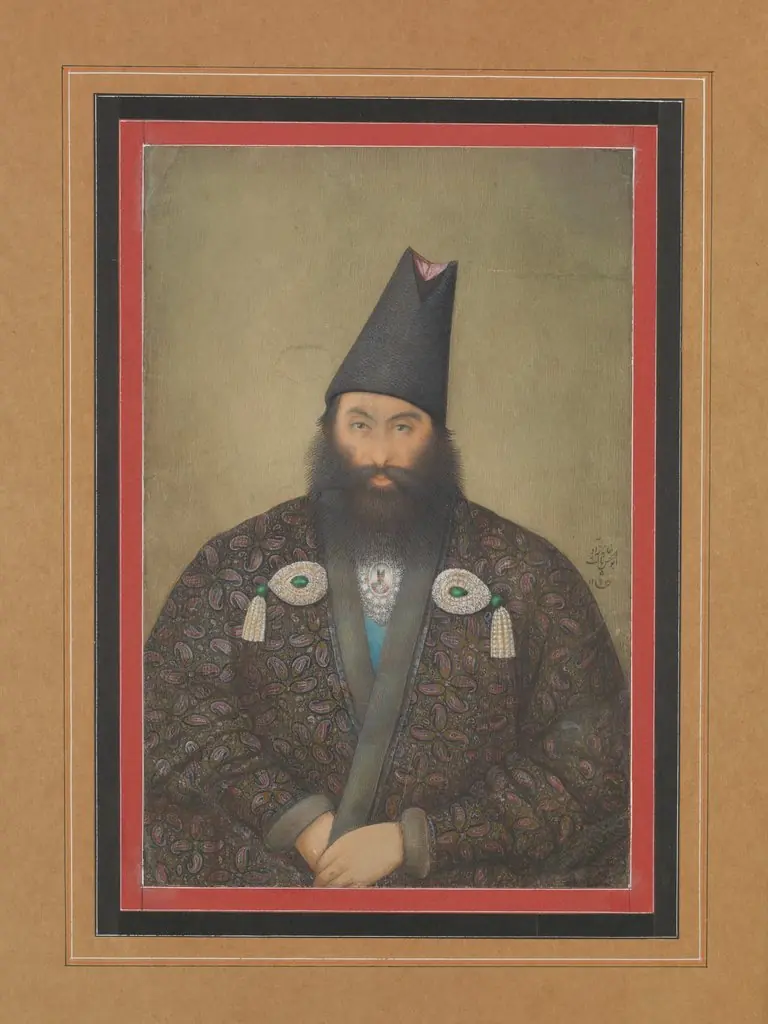
Portrait of Nawab (Vice-Regent) Khusraw Khan
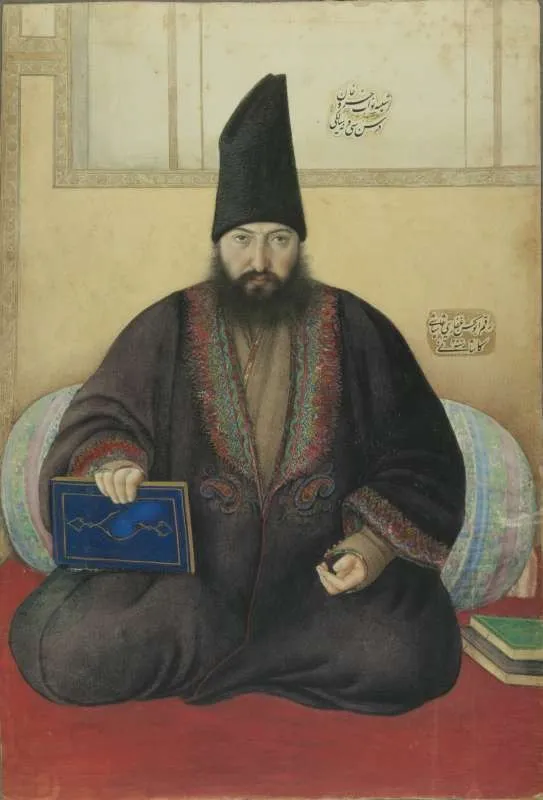
Portrait of Nawab (Vice-Regent) Khusraw Khan is an unspecified painting by the Patna School of Painting artist Mirza Abolhassan Khan Ghaffari. It dates from 1852 and is held in the collection of the Israel Museum.
About this work
Overview
Portrait of Nawab Khusraw Khan is an 1852 painting by Mirza Abu'l-Hasan Khan Ghaffari Kashani (Sani al-Mulk), depicting a dignitary in a blend of traditional Persian and European artistic influences.
Subject & Meaning
The subject, Nawab Khusraw Khan, is portrayed in formal attire, indicating his high status. The composition conveys an air of intellectualism through the prominently displayed books.
Technique & Style
The painting showcases Sani al-Mulk's training in Persian miniature and lacquer techniques, combined with European stylistic elements acquired during his European studies.
History & Provenance
Created as a company painting in 1852, the work reflects the artist's dual background as both a former Chief Court Painter in Persia and a student of European art.
Context
This portrait exemplifies the artistic crossroads of 19th-century Persia, where traditional practices intersected with Western influences among elite artists.
Legacy
While specific legacy details of this portrait are not highlighted, it contributes to the broader understanding of Sani al-Mulk's oeuvre and the evolution of Persian art during this transitional period.
Artist & collection
Artist
Mirza Abolhassan Khan Ghaffari
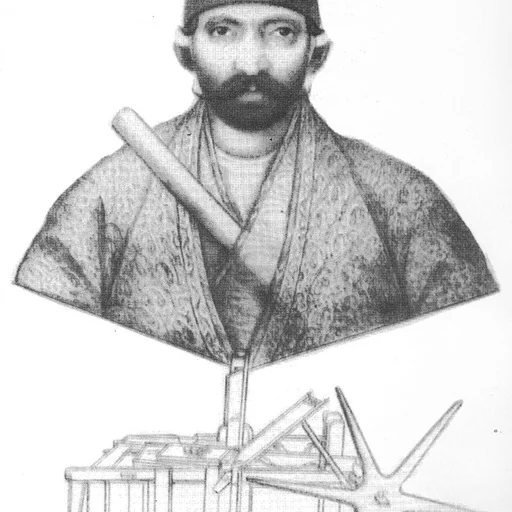
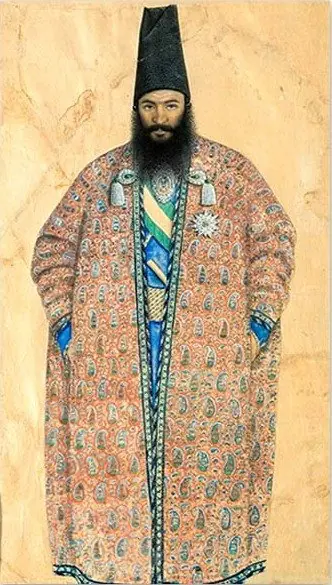
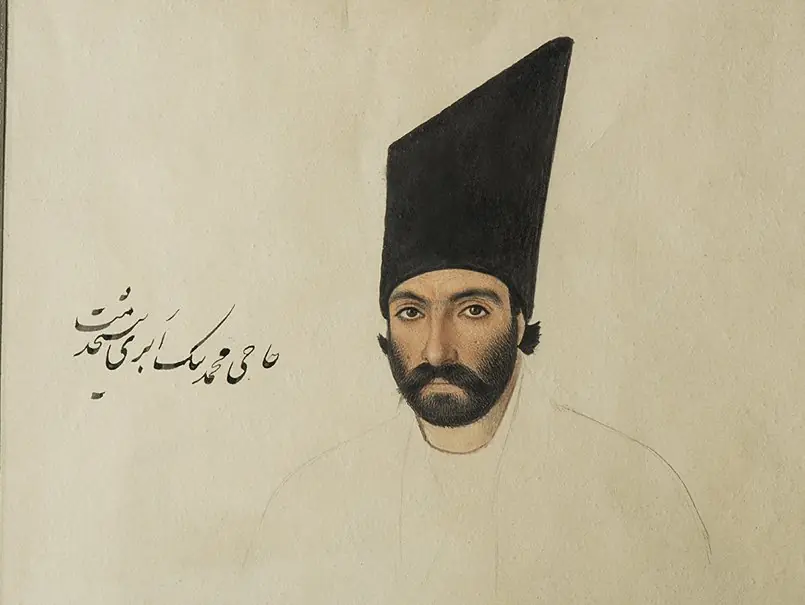
Mirza Abu'l-Hasan Khan Ghaffari Kashani (Persian: میرزا ابوالحسن خان غفاری کاشانی; 1814–1866) was an Iranian painter, miniature and lacquer artist, and book illustrator.

![An Armenian[?], by Anonymous Greek artist](https://artifactworldgallery.com/img/anonymous-greek-artist--an-armenian--8a9ee8f2d8733d94-w320.webp)