Artwork
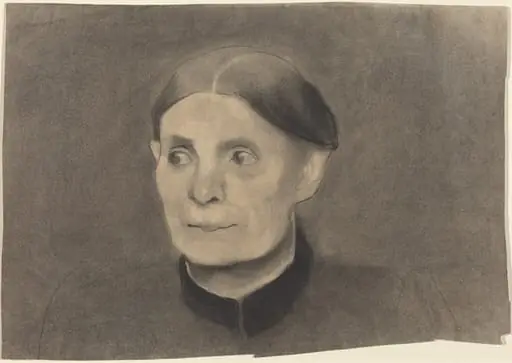
Old Woman
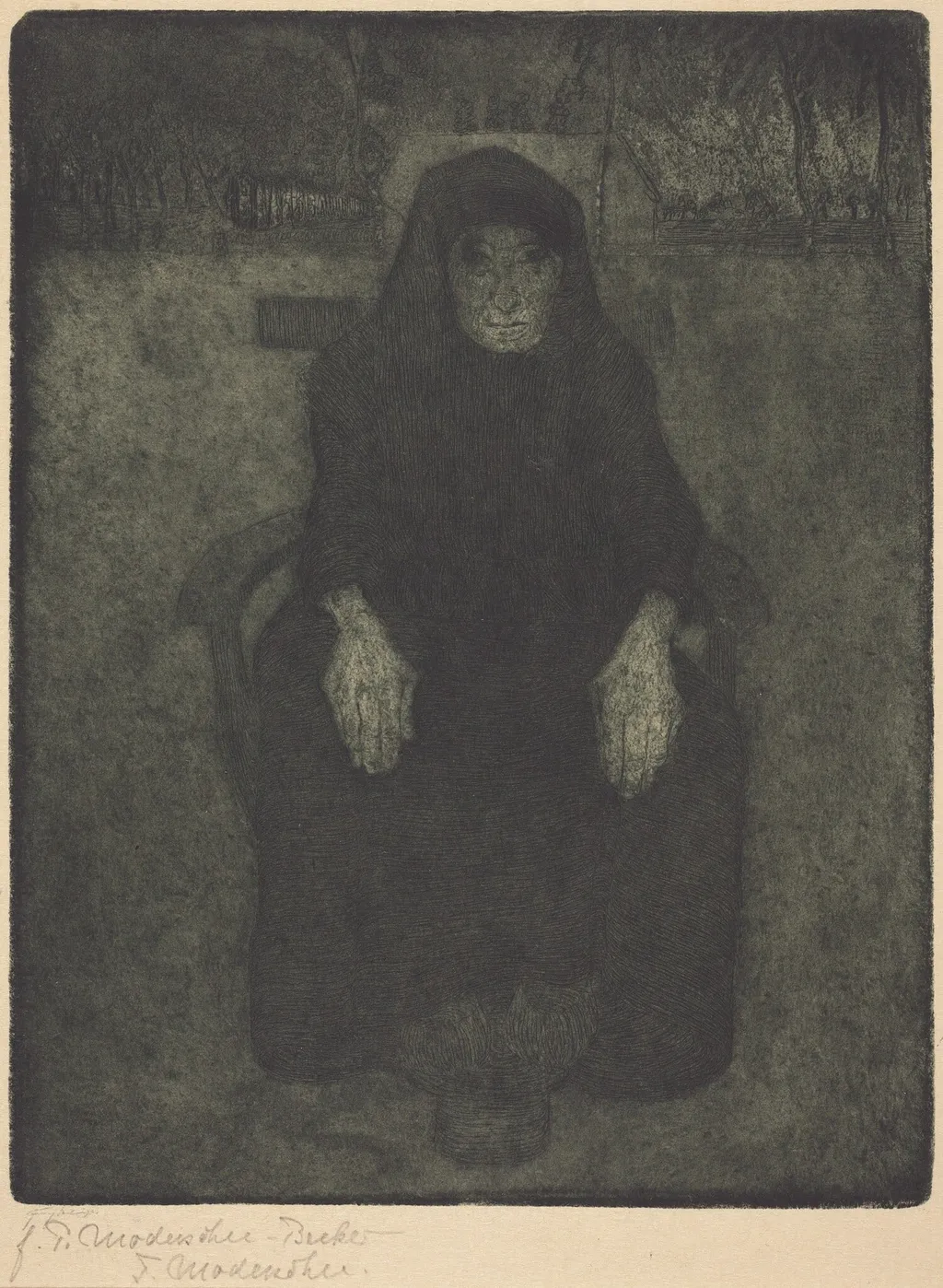
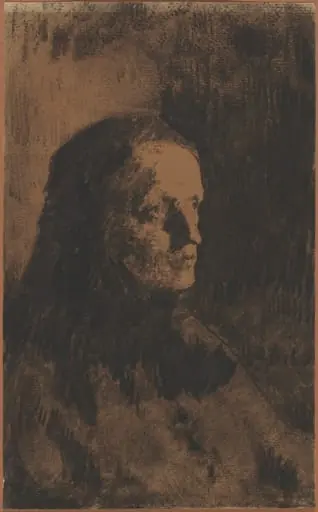
Old Woman is an ink print by the Impressionist artist Paula Modersohn-Becker. It is held in the collection of the National Gallery of Art.
About this work
Overview
The image presents a solitary elderly figure with quiet dignity, consistent with her broader interest in ordinary, often marginalized subjects.
Paula Modersohn-Becker produced the print *Old Woman* in 1919 using etching and aquatint, techniques that allowed her to capture subtle tonal variations and textured surfaces. Though primarily known for her paintings, this work reflects her engagement with printmaking during the final years of her life. The image presents a solitary elderly figure with quiet dignity, consistent with her broader interest in ordinary, often marginalized subjects.
Subject & Meaning
The subject is an aging woman seated in stillness, dressed in dark clothing with a headscarf, her hands folded in her lap. Her downward gaze and deeply lined face convey introspection rather than narrative. Modersohn-Becker avoids sentimentality, presenting the figure with unembellished honesty. The work suggests a meditation on time, solitude, and the quiet resilience of everyday life, themes central to her artistic vision.
Technique & Style
Using etching and aquatint, Modersohn-Becker built the image through layered acid-bitten lines and tonal washes, achieving a range of grays and browns that model form without sharp outlines. The texture of the fabric, the wrinkles of skin, and the softness of the background emerge through controlled incisions and ink density. Her style merges observational precision with expressive restraint, aligning with early Expressionist tendencies that prioritized emotional truth over idealization.
History & Provenance
Created in 1919, shortly before her death in November of that year, *Old Woman* belongs to the final phase of Modersohn-Becker’s career. She produced hundreds of works in her short life, many of which were overlooked during her lifetime. The print entered public awareness gradually, as her reputation grew posthumously. A museum dedicated to her work opened in Worpswede in 1927, the first of its kind for a female artist in Germany.
Context
Modersohn-Becker worked within the orbit of the Worpswede artists’ colony but developed a distinctive voice separate from its romanticized rural themes. Influenced by French Post-Impressionism and early modernism, she turned her focus to peasants, children, and the elderly—subjects often excluded from high art. Her prints, like this one, reflect a broader European shift toward introspective, psychologically grounded imagery in the early 20th century.
Legacy
Though she died at 31, Modersohn-Becker’s work laid groundwork for later Expressionist and figurative traditions. *Old Woman* exemplifies her commitment to portraying human dignity without embellishment. Her prints, once overshadowed by her paintings, are now recognized for their technical innovation and emotional depth. She remains a pivotal figure in the history of women artists in modern Germany.
Artist & collection

Artist
Paula Modersohn-Becker (8 February 1876 – 20 November 1907) was a German Expressionist painter and draftswoman of the late 19th and early 20th centuries.

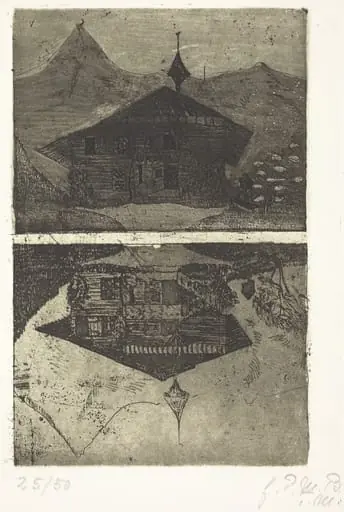
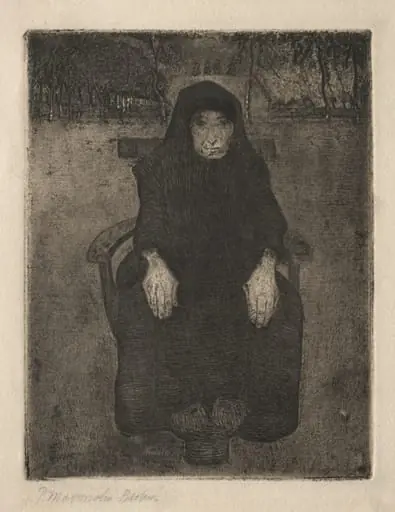 Seated Old Woman
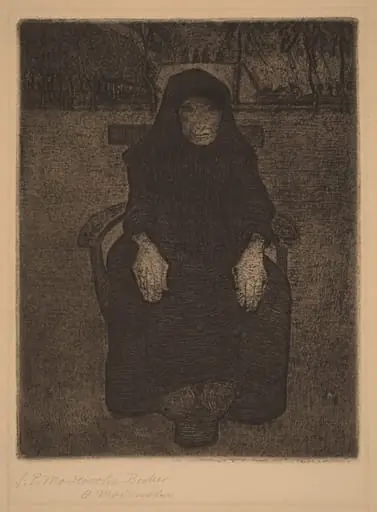 Seated Old Woman
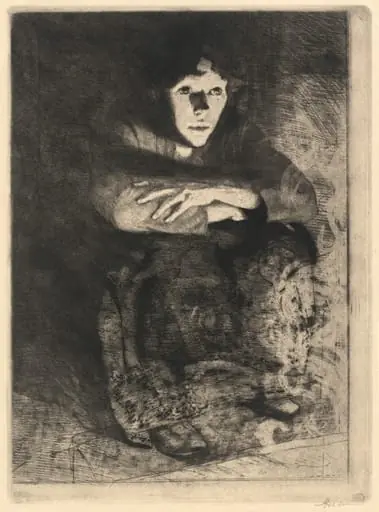 In the Embers (Dans les cendres)
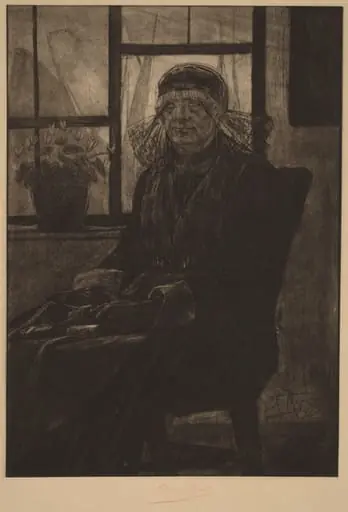 Lace appraiser (L'Experte en Dentelles)
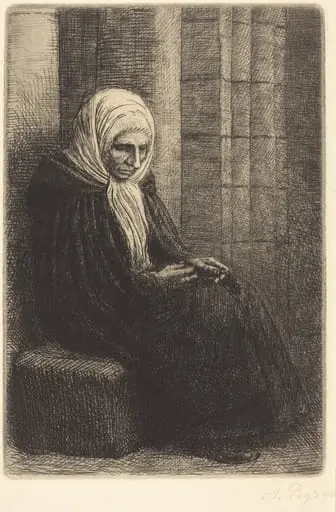 Woman Seated against a Wall, Child with His Head in Her Lap (Femme assis, muraille au fond, enfant la tete dans son giron)
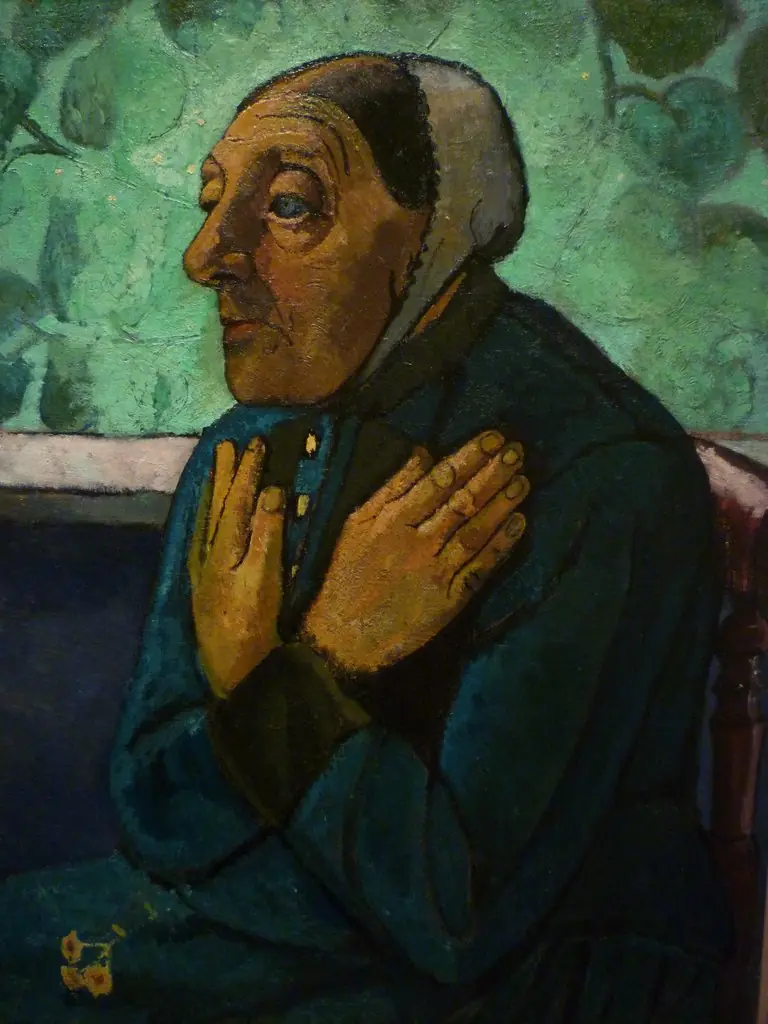
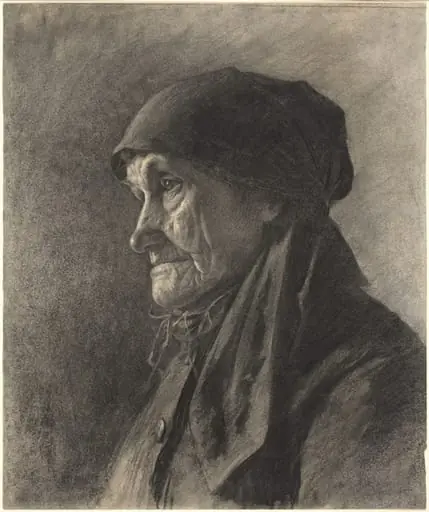 An Elderly Peasant Woman
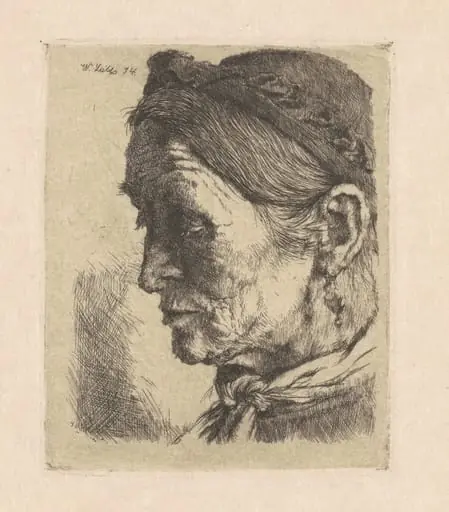 Peasant Woman with Closed Eyes
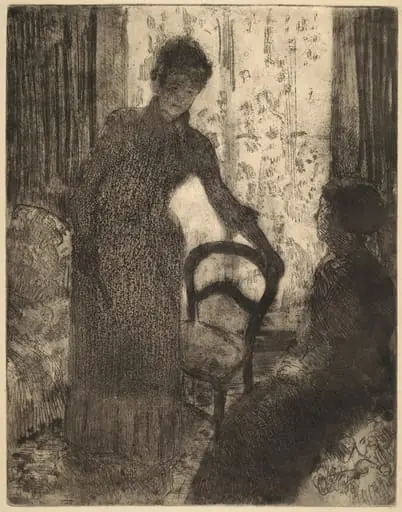 The Visitor
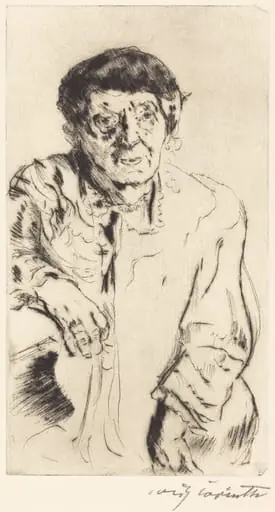 Schwiegermutter (Mother-in-Law)
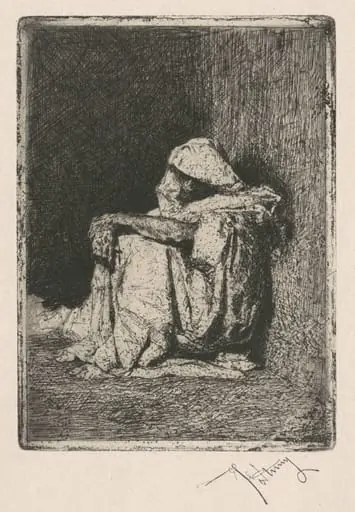 Arabe assis (Seated Arab)
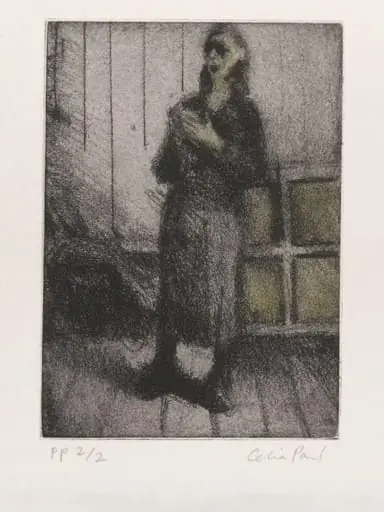 In the Studio
 Head of an Old Woman