Artwork
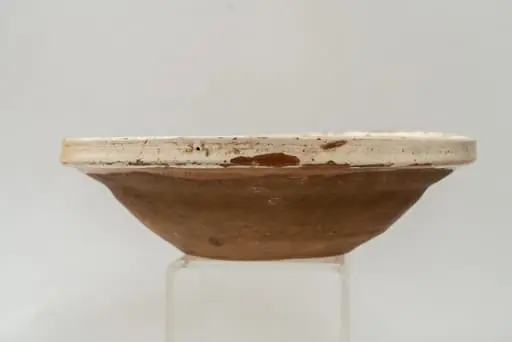
farfurie adâncă, acoperită pe suprafaț interioară cu un strat de angobă albă peste care este pictat cu pensula decorul format din simboluri comuniste (secera și ciocanul, trei stele, patru drapele) de culoare galben ocru și maro-deschis, dispuse pe buza farfuriei. Pe centrul farfuriei există o inscripție pictată cu pensula, cu culoare maro-deschis, parțial lizibilă, conținând data pictării piesei, 13 a III a 1961 și persoana care a executat-o (Monda Ioana). Pe buza farfuriei sunt pictate inițialele P.M.P. Și R.P.R. Suprafața ornamentată a farfuriei este acoperită cu un strat de smalț transparent. Cromatica: alb, galben-ocru, maro-deschis.
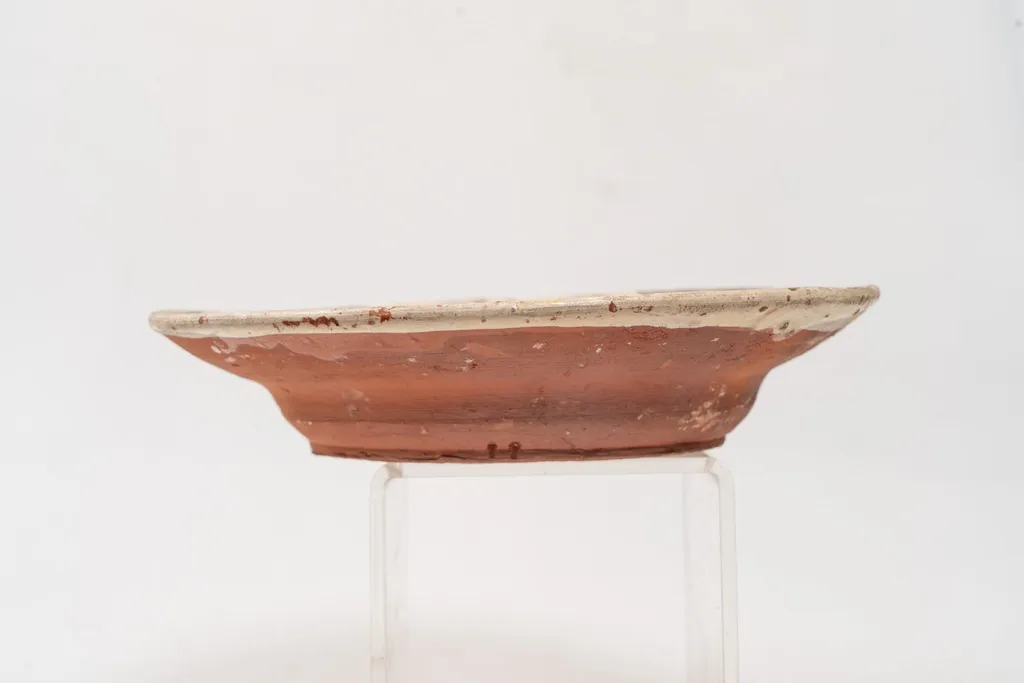
farfurie adâncă, acoperită pe suprafaț interioară cu un strat de angobă albă peste care este pictat cu pensula decorul format din simboluri comuniste (secera și ciocanul, trei stele, patru drapele) de culoare galben ocru și maro-deschis, dispuse pe buza farfuriei. Pe centrul farfuriei există o inscripție pictată cu pensula, cu culoare maro-deschis, parțial lizibilă, conținând data pictării piesei, 13 a III a 1961 și persoana care a executat-o (Monda Ioana). Pe buza farfuriei sunt pictate inițialele P.M.P. Și R.P.R. Suprafața ornamentată a farfuriei este acoperită cu un strat de smalț transparent. Cromatica: alb, galben-ocru, maro-deschis. is a print by Monda Ioana. It dates from 1961 and is held in the collection of the Ethnographical Museum of Transylvania. A deep ceramic plate, crafted in 1961, features a white slip interior and a glazed exterior.
About this work
The rim has a thin band of yellowish-brown paint with symbols—a sickle, a hammer, three stars, and four flags.
This is a simple, round plate with a faded reddish-brown rim and a white inside. The rim has a thin band of yellowish-brown paint with symbols—a sickle, a hammer, three stars, and four flags. The center shows a smudged date and some letters, barely readable.
The symbols look like communist ones, painted in 1961 by someone named Monda Ioana. The plate’s edges also have the letters *P.M.P.* and *R.P.R.*, which were abbreviations for political groups at the time.
Check out Monda Ioana to see more of her work.
Overview
A deep ceramic plate, crafted in 1961, features a white slip interior and a glazed exterior. Decorative elements are hand-painted in ochre yellow and light brown, confined to the rim and central inscription. The piece is coated in transparent glaze, preserving the pigments while softening their contrast. It bears the maker’s signature and date, along with political initials, indicating its function as a utilitarian object infused with ideological messaging.
Subject & Meaning
The rim displays symbols associated with communist iconography: a sickle and hammer, three stars, and four flags. These motifs, rendered in muted tones, reflect state-sanctioned visual language of the era. The initials P.M.P. and R.P.R. correspond to Romanian political entities of the time, anchoring the object to institutional authority. The central inscription, though faded, identifies the artist and date, suggesting personal participation in state-driven cultural production.
Technique & Style
The decoration was applied freehand with a brush over a white slip base, then sealed with clear glaze. Colors are limited to white, ochre, and light brown, creating a restrained palette. The execution is unpolished, with uneven lines and smudged lettering, indicating handcrafted, possibly mass-produced, workshop conditions. The composition is radial, with symbols arranged along the rim and text centered, following conventional ceramic design practices of the period.
History & Provenance
Created on March 13, 1961, by Monda Ioana, the plate was likely produced in a state-affiliated ceramics studio. Its survival and eventual acquisition by the Museum of Ethnography suggest it was preserved as an artifact of everyday life under socialism. The presence of the artist’s name implies individual attribution within a system that typically suppressed personal expression, making this object a rare record of individual agency in institutional contexts.
Context
In early 1960s Romania, state ideology permeated domestic objects, transforming ceramics into vehicles of political messaging. The use of standardized symbols on household items reinforced loyalty through repetition in daily life. This plate reflects a broader trend where art and craft were mobilized to normalize socialist values, blurring the line between utility and propaganda in the material culture of the time.
Legacy
As a documented artifact from a specific time and maker, the plate offers insight into how political ideology was embedded in ordinary objects. Its modest materials and hand-painted imperfections contrast with official propaganda imagery, revealing the human scale behind state symbolism. Today, it serves as a quiet witness to the intersection of personal craft and collective ideology in communist-era Romania.
Artist & collection
Artist
Monda Ioana made this decorated ceramic plate in 1961, painting communist symbols—hammer and sickle, three stars, four flags—in yellow-ochre and light brown on a white slip-covered surface.
Museum
Ethnographical Museum of Transylvania
Continue through works from the same source collection.
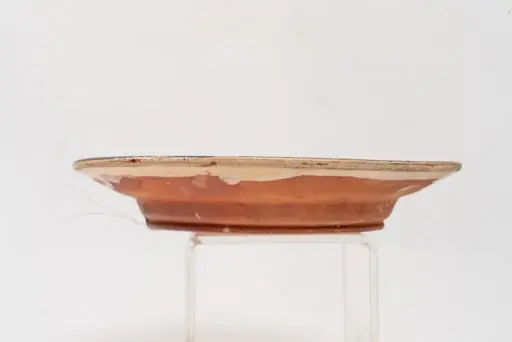 Farfurie semi-adâncă, angobată pe suprafața interioară cu un strat de humă albă peste care este pictat cu cornul și cu pensula decorul format din motive florale stilizate și din motive geometrice: registrul central de pe fundul farfuriei conține o tulpină și frunze formate din linii punctate, cu trei flori cu petale de culoare galben-ocru și mijlocul verde. Registrul marginal de pe buza farfuriei este decorat cu trei flori cu câte trei petale (cea centrală de culoare galben-ocru iar cele două laterale verzi), cu tulpini lungi ondulate ușor, cu elemente vegetale de culoare maro și câte două frunze verzi. Deasupra buchetului de flori, pe buza farfuriei, este marcat anul fabricării piesei, 1961. Bordura interioară a farfuriei este marcată cu o linie circulară subțire iar muchia buzei cu o dungă de culoare maro. Suprafața ornamentată a farfuriei este acoperită cu un strat de smalț transparent. Cromatica: alb, verde-închis, maro-închis, galben-ocru.
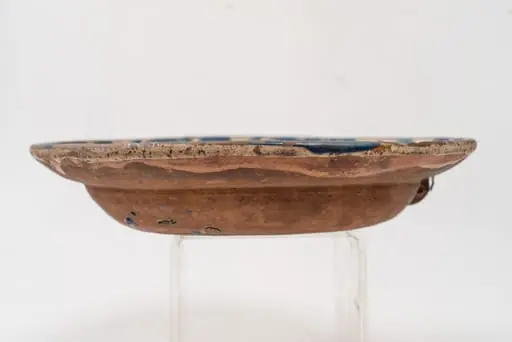 Farfurie adâncă, cu buza evazată și muchia ușor ridicată. Farfuria este angobată pe fața interioară cu un strat de humă albă, peste care este pictat cu cornul și cu pensula decorul monocromatic, format din motive florale și fitomorfe stilizate (tulpină cu cinci flori, din care patru sunt lalele, și frunze, reprezentate pe centrul farfuriei și un șir continuu format din elemente vegetale, ce decorează buza acesteia). Muchia buzei este marcată cu o dungă de culoare albastră. La baza tulpinii cu flori apare pictat cu pensula anul fabricării piesei: 1785. Cromatica: alb, albastru. Farfuria este acoperită pe fața decorată cu un strat de smalț transparent.
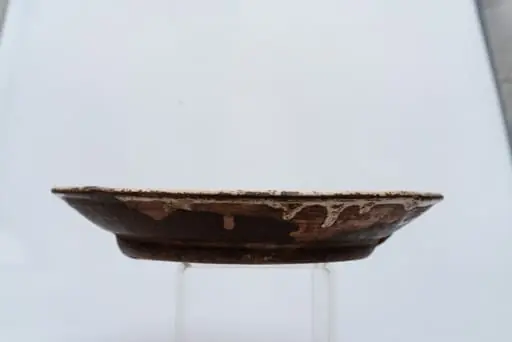 Farfurie semi-adâncă, cu buza lată evazată; este acoperită pe suprafața interioară cu un strat de angobă albă, peste care este pictat cu cornul și cu pensula decorul format din motive florale și geometrice, realizate cu contur din linii fine maro: central pe fundul farfuriei, încadrat într-un cerc dublu albastru, este pictat un buchet format dintr-o floare centrală maro, o floare galbenă cu petale lungi, doi boboci galbeni și frunze verzi. Registrul decorativ marginal, încadrat între două cercuri duble albastre, se compune din trei boboci galbeni de lalea cu frunze verzi, între care se găsește câte un mic motiv format din linii hașurate intersectat de culoare maro. Suprafața ornamentată a farfuriei este acoperită cu un strat de smalț transparent. Cromatica: alb, galben, verde, maro, albastru.
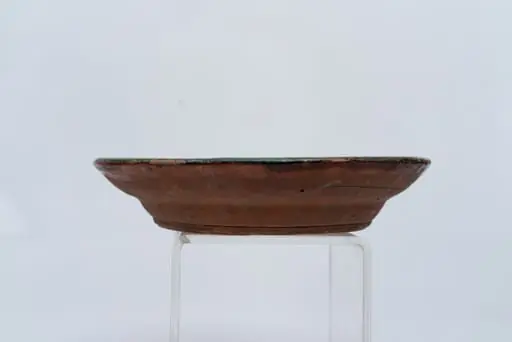 Farfurie adâncă, cu buză evazată; este angobată pe fața interioară cu un strat de angobă maro, peste care este pictat cu cornul, pensula și cu gaița decorul format din motive geometrice: central pe fundul farfuriei este pictată o linie spiralată rotundă de culoare albă; bordura interioară a farfuriei este decorată cu linii circulare concentrice de culoare albă trase cu gaița și cu puncte verzi, iar buza farfuriei cu o linie ondulată circulară și puncte groase de culoare albă. Muchia buzei este marcată cu o dungă verde. Suprafața ornamentată a farfuriei este acoperită cu un strat de smalț transparent. Cromatica: maro, alb, verde.
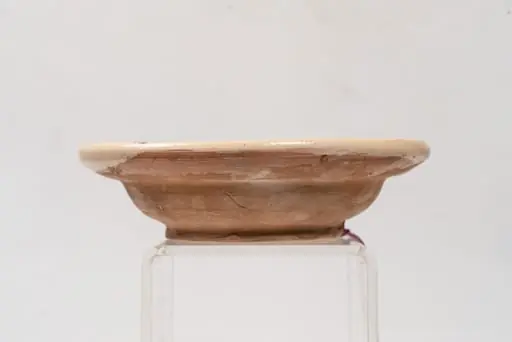 Farfurie adâncă, angobată pe fața interioară și pe suprafața exterioară a buzei cu un strat de humă albă. Este decorată prin pictare cu pensula și cu cornul cu motive florale, fitomorfe și geometrice: două flori de culoare maro-deschis cu frunze verzi, dispuse pe buza farfuriei diametral opus și separate de câte trei motive formate din puncte maro, și o floare centrală de culoare maro-deschis cu frunze verzi, înscrisă într-un cerc maro închis - pe fundul farfuriei. Cromatica: alb, verde, maro-deschis, maro-închis. Suprafața ornamentată a farfuriei este acoperită cu un strat de smalț transparent.
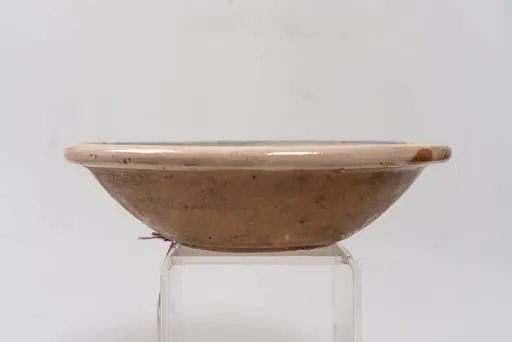 Farfurie adâncă, cu corp larg, ușor concav și buza îngustă, rotunjită; este acoperită pe suprafața interioară cu un strat de angobă albă. Decorul este realizat prin pictare cu pensula și conține două flori albastre, cu centrul marcat printr-un punct maro, cu tulpină maro și frunze verzi, plasate central pe fundul farfuriei. Buza este decorată cu trei linii circulare albastre, iar partea inferioară a peretelui farfuriei cu trei linii circulare în relief. Farfuria este acoperită pe întreaga suprafață cu un strat de smalț transparent. Cromatica: alb, albastru, maro, verde.
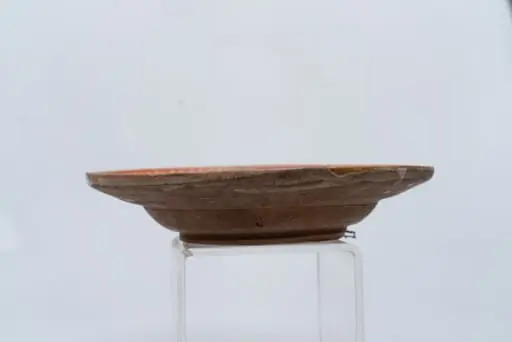 Farfurie adâncă, cu buza evazată și muchia buzei ușor ridicată. Piesa este angobată pe fața interioară cu un strat de angobă albă, peste care este pictat cu pensula și cu cornul decorul format din motive florale stilizate și geometrice: central pe fundul farfuriei sunt pictate cinci flori cu petale mici rotunde, cu contur de culoare siena arsă și mijlocul umplut cu linii hașurate intersectat, de culoare verde. Un romb central, umplut cu linii hașurate intersectat și puncte mici de culoare verde completează decorul din acest registru. Registrul decorativ marginal de pe buza farfuriei, înscris între două linii circulare de culoare siena arsă, este format dintr-o linie circulară buclată de culoare verde, în buclele căreia sunt pictate câte trei puncte maro. Marginea buzei este marcată cu o dungă de culoare siena arsă peste care este pictată o linie ondulată mărunt, albă. Suprafața ornamentată a farfuriei este acoperită cu un strat de smalț transparent. Cromatica: alb, siena arsă, verde, maro.
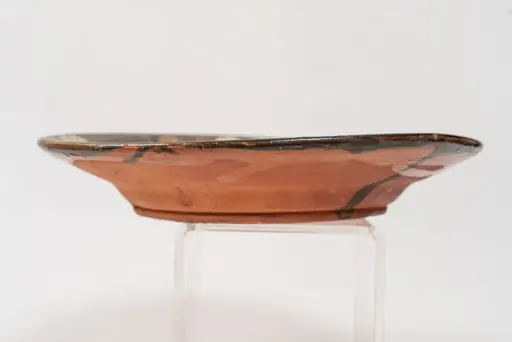 Farfurie semi-adâncă, acoperită pe suprafața interioară cu un strat de angobă de culoare verde închis-maro, peste care este pictat cu pensula și cu cornul decorul format din motive florale stilizate și motive geometrice: registrul decorativ central, încadrat într-un cerc de culoare maro închis, conține o tulpină cu frunze de culoare roșu-cărămiziu și trei flori formate din câte trei puncte albe cu mijloc marcat printr-un punct roșu. În stânga acestei tulpini cu flori este marcat cu culoare roșie anul fabricării piesei, 1961, iar în dreapta ei inițialele meșterului "P.Ș". Buza farfuriei este decorată cu patru flori cu patru petale albe și mijloc roșu, cu tulpină și elemente vegetale de culoare maro și cu câte două frunze de culoare roșie. Între aceste flori se găsesc intercalate patru motive geometrice formate din linii mici paralele de culoare maro închis. Bordura interioară a farfuriei este marcată cu o linie circulară subțire iar muchia buzei cu o dungă de culoare maro. Suprafața ornamentată a farfuriei este acoperită cu un strat de smalț transparent. Cromatica: verde închis-maro, alb, roșu-cărămiziu, maro-închis.
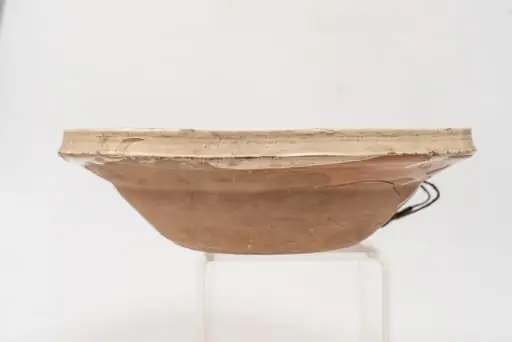 Farfurie adâncă de tip castron, cu corp tronconic, buză evazată și muchia buzei verticală. Piesa este acoperită pe fața interioară și pe exteriorul buzei cu un strat de angobă albă peste care este pictat cu pensula și cu cornul decorul format din motive florale și fitomorfe stilizate: zona centrală a farfuriei este decorată cu o floare cu petale alungite de culoare albastră, mijloc marcat printr-un punct maro, frunze verzi și elemente vegetale de culoare maro-închis. Buza este decorată cu cinci flori de culoare maro cu frunze, aproximativ identice, înscrise între două linii circulare de culoare maro. Suprafața ornamentată a farfuriei este acoperită cu un strat de smalț transparent. Cromatica: alb, maro, verde, albastru, maro-închis.
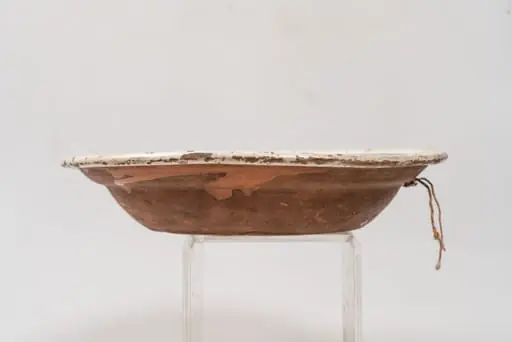 Farfurie adâncă, cu buza răsfrântă și muchia buzei rotunjită; piesa este angobată pe fața interioară cu un strat de humă albă, peste care este pictat cu cornul decorul format din motive geometrice: central pe fundul farfuriei este reprezentată o floare geometrizată cu șase petale și puncte albastre, înscrisă într-un cerc care este, la rândul său, înscris într-un motiv sub formă de rozetă albastră. Buza farfuriei poartă un decor format din grupuri de linii hașurate intersectate, de culoare albastră și roșu cărămiziu, înscrise între două linii circulare de culoare albastră. Cromatica: alb, albastru, roșu cărămiziu. Fața ornamentată a farfuriei este acoperită cu un strat de smalț transparent.
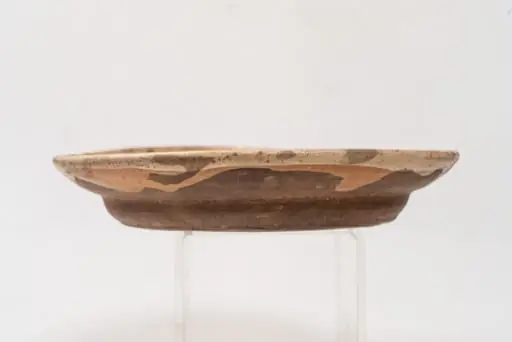 Farfurie semi-adâncă, cu fund larg, buză evazată și muchia buzei ușor ridicată. Piesa este angobată pe fața interioară cu un strat de humă albă, peste care este realizat prin sgrafitare și prin pictare cu pensula decorul format din motive vegetale stilizate: o tulpină cu frunze și elemente vegetale de culoare verde și maro, regăsite pe fundul farfuriei. Buza acesteia este decorată cu un șir de linii ovale sgrafitate, umplute cu culoare (verde și maro). Suprafața ornamentată este acoperită cu un strat de smalț transparent. Cromatica: alb, maro, verde.
 Farfurie mare, adâncă, cu muchia buzei ușor concavă spre interior. Piesa este modelată la roata olarului, angobată pe fața interioară cu humă albă. Decorul este realizat prin pictare cu pensula și constă în motive decorative avimorfe (pasăre - în zona centrală, pe fundul farfuriei), geometrice (linii sub formă de cercuri concentrice și puncte) și vegetale stilizate (flori și frunze - în zona centrală și pe buza farfuriei). Cromatica decorului: alb, verde, albastru, siena arsă.