Artwork
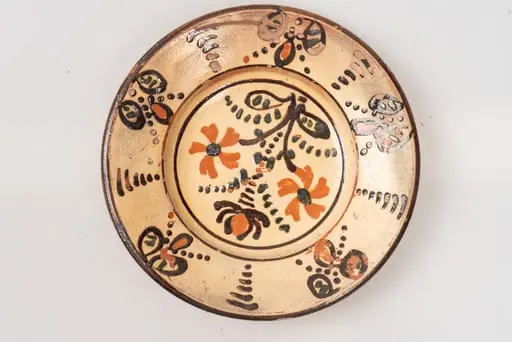
Farfurie semi-adâncă, angobată pe suprafața interioară cu un strat de humă albă peste care este pictat cu cornul și cu pensula decorul format din motive florale stilizate și din motive geometrice: registrul central de pe fundul farfuriei conține o tulpină și frunze formate din linii punctate, cu trei flori cu petale de culoare galben-ocru și mijlocul verde. Registrul marginal de pe buza farfuriei este decorat cu trei flori cu câte trei petale (cea centrală de culoare galben-ocru iar cele două laterale verzi), cu tulpini lungi ondulate ușor, cu elemente vegetale de culoare maro și câte două frunze verzi. Deasupra buchetului de flori, pe buza farfuriei, este marcat anul fabricării piesei, 1961. Bordura interioară a farfuriei este marcată cu o linie circulară subțire iar muchia buzei cu o dungă de culoare maro. Suprafața ornamentată a farfuriei este acoperită cu un strat de smalț transparent. Cromatica: alb, verde-închis, maro-închis, galben-ocru.
Farfurie semi-adâncă, angobată pe suprafața interioară cu un strat de humă albă peste care este pictat cu cornul și cu pensula decorul format din motive florale stilizate și din motive geometrice: registrul central de pe fundul farfuriei conține o tulpină și frunze formate din linii punctate, cu trei flori cu petale de culoare galben-ocru și mijlocul verde. Registrul marginal de pe buza farfuriei este decorat cu trei flori cu câte trei petale (cea centrală de culoare galben-ocru iar cele două laterale verzi), cu tulpini lungi ondulate ușor, cu elemente vegetale de culoare maro și câte două frunze verzi. Deasupra buchetului de flori, pe buza farfuriei, este marcat anul fabricării piesei, 1961. Bordura interioară a farfuriei este marcată cu o linie circulară subțire iar muchia buzei cu o dungă de culoare maro. Suprafața ornamentată a farfuriei este acoperită cu un strat de smalț transparent. Cromatica: alb, verde-închis, maro-închis, galben-ocru. is a photography by Gănău Ștefan. It dates from 1961 and is held in the collection of the Ethnographical Museum of Transylvania.
About this work
Up close, you’d see tiny painted designs on the inside rim and bottom—tiny dots forming leaves, yellowish flowers, and wavy lines.
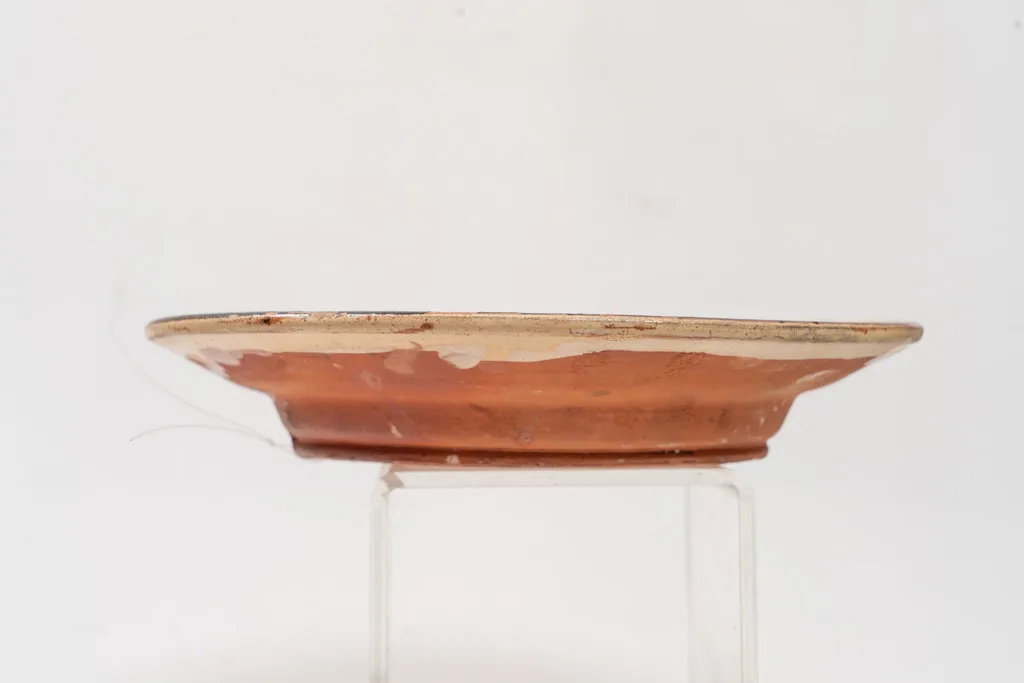
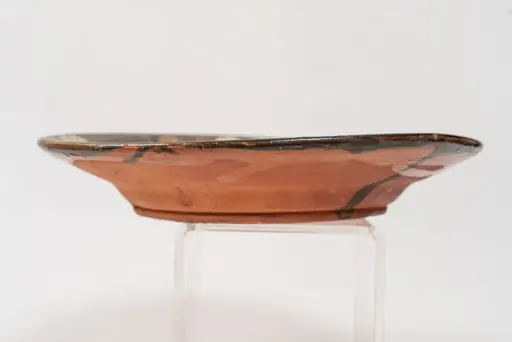
This is a simple, round clay plate with a faded reddish-brown inside and a light rim. The surface looks worn, with some chipped edges and a slightly uneven glaze. The background is plain white, so the plate stands out clearly.
Up close, you’d see tiny painted designs on the inside rim and bottom—tiny dots forming leaves, yellowish flowers, and wavy lines. The artist marked the year 1961 on the edge in paint. The colors are muted: greens, yellows, and browns.
If you like this kind of handmade pottery, check out Museum of Ethnography for more pieces like it.
Overview
A shallow ceramic plate crafted in 1961 by Gănău Ștefan, this piece belongs to the collection of the Museum of Ethnography. Made from hand-formed clay, it features a lightly glazed interior and a muted, earth-toned palette. The surface shows subtle wear, with minor chipping along the rim and an uneven glaze that enhances its handmade character. A single date, 1961, is inscribed near the edge, anchoring it to a specific moment in time.
Subject & Meaning
The decoration centers on stylized botanical forms: a central stem with dotted-line leaves and three flowers, each with ochre petals and green centers. Around the rim, three additional blooms appear, alternating in ochre and green, supported by slender, undulating stems. These motifs draw from rural floral traditions, suggesting an appreciation for natural cycles rather than symbolic narrative. The absence of figural elements reinforces a focus on organic rhythm and quiet repetition.
Technique & Style
The plate’s interior is coated with a white slip, providing a neutral ground for hand-painted designs applied with a fine brush and a pointed tool. Floral and geometric patterns are rendered in thin, deliberate lines—dots suggest foliage, while curved strokes define stems. A narrow circular border separates the central and marginal zones, and the outer lip bears a thin brown band. The entire surface is sealed with a clear glaze, preserving the pigments while allowing the clay’s texture to remain visible.
History & Provenance
Created in 1961 by Gănău Ștefan, the piece entered the Museum of Ethnography’s collection as part of a broader effort to document regional ceramic practices. Its modest scale and unadorned form suggest utilitarian origins, possibly made for domestic use before being preserved as an example of mid-century Romanian folk-inspired craftsmanship. No earlier ownership records exist, but its inclusion in the museum signals recognition of its cultural value.
Context
This plate reflects a postwar Romanian interest in reviving and reinterpreting rural craft traditions within a modern aesthetic. While not tied to a specific regional style, its motifs echo common village pottery patterns from Transylvania and Moldavia. The muted colors and restrained composition align with broader mid-century efforts to simplify decorative arts, distancing them from ornate historical precedents while honoring local material and method.
Legacy
Though not widely reproduced or publicly celebrated, the plate remains a quiet testament to individual artisan practice in a period of state-led cultural standardization. Its preservation in the Museum of Ethnography ensures its role as a reference point for studying how folk motifs were adapted in mid-20th-century studio ceramics. It stands as an example of craftsmanship that valued subtlety over spectacle.
Artist & collection
Artist
Museum
Ethnographical Museum of Transylvania
Continue through works from the same source collection.
 Farfurie semi-adâncă, acoperită pe suprafața interioară cu un strat de angobă de culoare verde închis-maro, peste care este pictat cu pensula și cu cornul decorul format din motive florale stilizate și motive geometrice: registrul decorativ central, încadrat într-un cerc de culoare maro închis, conține o tulpină cu frunze de culoare roșu-cărămiziu și trei flori formate din câte trei puncte albe cu mijloc marcat printr-un punct roșu. În stânga acestei tulpini cu flori este marcat cu culoare roșie anul fabricării piesei, 1961, iar în dreapta ei inițialele meșterului "P.Ș". Buza farfuriei este decorată cu patru flori cu patru petale albe și mijloc roșu, cu tulpină și elemente vegetale de culoare maro și cu câte două frunze de culoare roșie. Între aceste flori se găsesc intercalate patru motive geometrice formate din linii mici paralele de culoare maro închis. Bordura interioară a farfuriei este marcată cu o linie circulară subțire iar muchia buzei cu o dungă de culoare maro. Suprafața ornamentată a farfuriei este acoperită cu un strat de smalț transparent. Cromatica: verde închis-maro, alb, roșu-cărămiziu, maro-închis.
 Farfurie de formă semi-adâncă, acoperită pe suprafața interioară cu un strat de angobă albă, peste care este pictat cu cornul și cu pensula decorul format din motive geometrice și florale stilizate: central pe fundul farfuriei, înscris într-un cerc maro, este pictată o tulpină de culoare maro, cu frunze și elemente vegetale de culoare verde închis și trei flori, două de culoare siena arsă, iar cea centrală cu petale maro. Buza farfuriei este decorată cu mici motive vegetale geometrizate cu contur maro, formate din câte două frunze cu două linii verzi în interior și un boboc de culoare galben ocru, completate cu linii punctate; între aceste motive se găsesc intercalate motive formate din linii mici paralele și descrescătoare ca mărime. Bordura interioară a farfuriei este marcată cu o linie circulară subțire iar muchia buzei cu o dungă de culoare maro. Suprafața ornamentată a farfuriei este acoperită cu un strat de smalț transparent. Cromatica: siena arsă, verde-închis, maro.
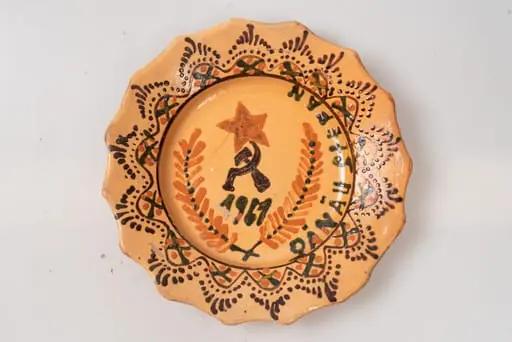 Farfurie de formă aplatizată, cu marginea buzei ondulată (formând mici colți rotunjiți), acoperită pe suprafața interioară cu un strat de angobă de culoare galben ocru, peste care a fost pictat cu pensula și cu cornul decorul format din motive geometrice: buza farfuriei este decorată cu o linie ondulată de culoare maro, dispusă circular, ale cărei onduleuri conțin motive formate din linii în formă de X de culoare verde închis și puncte de culoare siena arsă; o linie ondulată punctată și motive formate din linii mici paralele crescătoare și descrescătoare de culoare maro, completează decorul din această zonă. Registrul central de pe fundul farfuriei conține simboluri comuniste: două spice de grâu, secera și ciocanul, steaua, precum și anul fabricării piesei (1961) și autorul lucrării (Pănău Ștefan). Suprafața ornamentată a farfuriei este acoperită cu un strat de smalț transparent. Cromatica: galben ocru, siena arsă, maro, verde- închis.
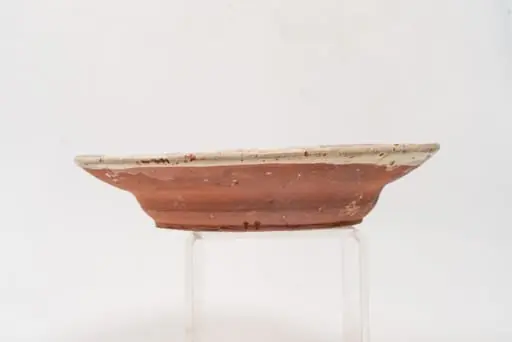 farfurie adâncă, acoperită pe suprafaț interioară cu un strat de angobă albă peste care este pictat cu pensula decorul format din simboluri comuniste (secera și ciocanul, trei stele, patru drapele) de culoare galben ocru și maro-deschis, dispuse pe buza farfuriei. Pe centrul farfuriei există o inscripție pictată cu pensula, cu culoare maro-deschis, parțial lizibilă, conținând data pictării piesei, 13 a III a 1961 și persoana care a executat-o (Monda Ioana). Pe buza farfuriei sunt pictate inițialele P.M.P. Și R.P.R. Suprafața ornamentată a farfuriei este acoperită cu un strat de smalț transparent. Cromatica: alb, galben-ocru, maro-deschis.
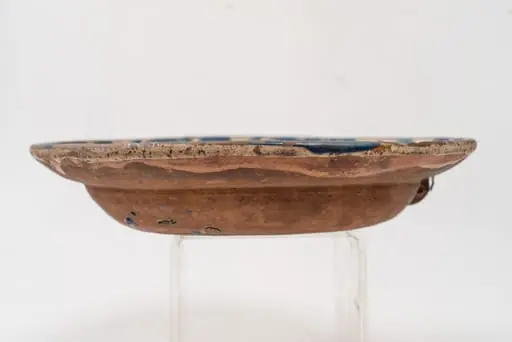 Farfurie adâncă, cu buza evazată și muchia ușor ridicată. Farfuria este angobată pe fața interioară cu un strat de humă albă, peste care este pictat cu cornul și cu pensula decorul monocromatic, format din motive florale și fitomorfe stilizate (tulpină cu cinci flori, din care patru sunt lalele, și frunze, reprezentate pe centrul farfuriei și un șir continuu format din elemente vegetale, ce decorează buza acesteia). Muchia buzei este marcată cu o dungă de culoare albastră. La baza tulpinii cu flori apare pictat cu pensula anul fabricării piesei: 1785. Cromatica: alb, albastru. Farfuria este acoperită pe fața decorată cu un strat de smalț transparent.
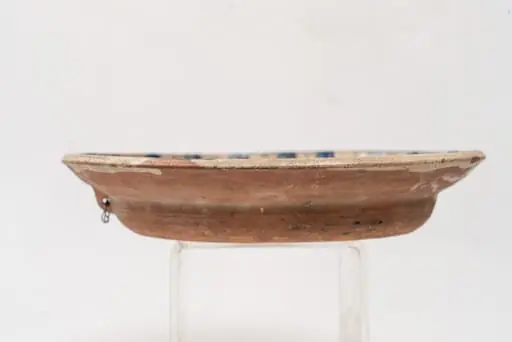 Farfurie de formă semi-adâncă, cu fund larg și buză răsfrântă; este angobată pe fața interioară cu un strat de humă albă, peste care este pictat cu cornul și cu pensula decorul monocromatic, format din motive florale și fitomorfe stilizate și din motive geometrice: registrul central de pe fundul farfuriei conține o linie spiralată ce are pe exterior, de o parte și de alta, câte un semicerc dublu decorat cu linii mici albastre și două motive vegetale. Buza este decorată cu un șir continuu de frunze duble între linii punctate. Muchia buzei este marcată cu o linie de culoare albastră iar bordura interioară a farfuriei cu două linii subțiri circulare. Cromatica: alb, albastru. Farfuria este acoperită pe fața ornamentată cu un strat de smalț transparent.
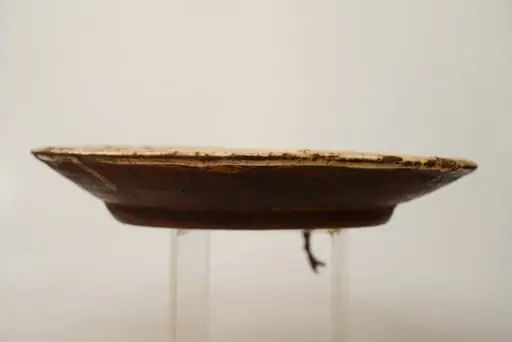 Farfurie semi-adâncă, cu buza dreaptă evazată; suprafața interioară este acoperită cu un strat de angobă albă, peste care este pictat cu cornul și cu pensula decorul format din motive florale și geometrice, dispuse astfel: registrul decorativ de pe fundul farfuriei conține, încadrat într-un cerc format dintr-o linie albastră dublă, un buchet desenat cu contur subțire maro, format dintr-o floare centrală de culoare maro, doi boboci galbeni la bază, o floare cu petale alungite, în partea superioară a buchetului și din frunze verzi. Registrul decorativ marginal de pe buza farfuriei, marcat de două linii circulare albastre, conține trei flori de lalea de culoare galbenă cu două frunze verzi, separate de câte un motiv format din șase linii maro subțiri, hașurate intersectat. Suprafața ornamentată a farfuriei este acoperită cu un strat de smalț transparent. Cromatica: alb, galben, verde, maro.
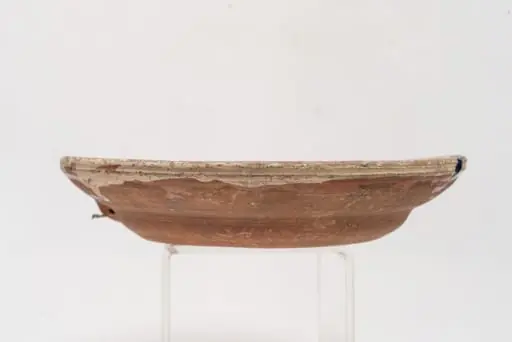 Farfurie semi-adâncă cu fund larg și buză evazată; este angobată pe suprafața interioară cu un strat de humă albă, peste care este pictat cu cornul și cu pensula decorul format din motive geometrice și vegetale stilizate: fundul farfuriei conține patru flori de lalea (sau crin) albastre, cu mijlocul format din linii hașurate intersectat, așezate în formă de cruce pe exteriorul unui cerc dublu maro, pictat central și care conține un motiv floral stilizat. Între cele patru lalele se găsește intercalat câte un motiv vegetal stilizat (grup de frunze sau pomișori), motiv regăsit și pe buza farfuriei, într-un registru continuu, împreună cu un șir de semicercuri galbene cu contur albastru. Bordura interioară a farfuriei este marcată cu două linii circulare subțiri și o linie circulară ondulată între ele, de culoare maro, iar muchia buzei de o dungă albastră. Suprafața ornamentată a farfuriei este acoperită cu un strat de smalț transparent. Cromatica: alb, albastru, galben, maro.
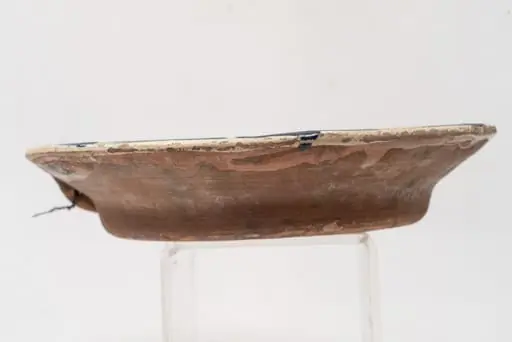 Farfurie de formă semi-adâncă, cu fund larg și buză evazată; este angobată pe fața interioară cu un strat de humă albă, peste care este pictat cu pensula și cu cornul decorul format din motive florale stilizate și din motive geometrice: registrul central de pe fundul farfuriei conține o linie spiralată de culoare maro pe exteriorul căreia sunt pictate opt flori de lalea cu petale în culorile albastru, galben, maro. Buza este decorată cu un șir de linii drepte de culoare verde și albastră. Muchia buzei este marcată cu o dungă albastră și o linie circulară maro, subțire iar bordura interioară a farfuriei este decorată cu trei linii circulare de culoare maro. Cromatica: alb, albastru, verde, galben, maro. Farfuria este acoperită pe fața ornamentată cu un strat de smalț transparent.
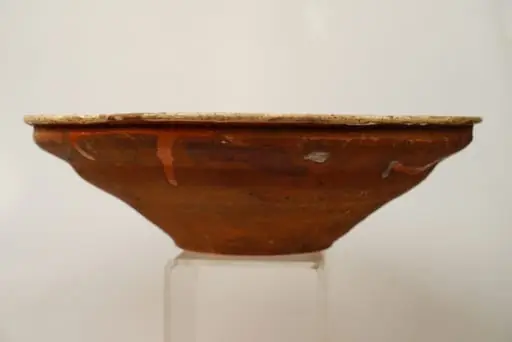 Farfurie adâncă de tip castron, cu corp tronconic și buză verticală îngustă, cu muchia buzei răsfrântă; este acoperită pe suprafața interioară cu un strat de angobă albă peste care este pictat cu cornul decorul monocromatic format din motive geometrice și florale, dispuse pe întreaga suprafață a farfuriei: tulpină cu trei flori (cea centrală de crin, cele două laterale de lalea), dispuse central pe fundul farfuriei; cinci flori cu petale rotunde și centrul format din linii hașurate intersectat; linii circulare simple, ondulate, sub formă de zigzag; spirale mici; motive formate din linii paralele crescătoare și descrescătoare dispuse sub formă de triunghi; grupuri de linii hașurate intersectat. Suprafața ornamentată a farfuriei este acoperită cu un strat de smalț transparent. Cromatica: alb, albastru.