Artwork
Reclining Figure
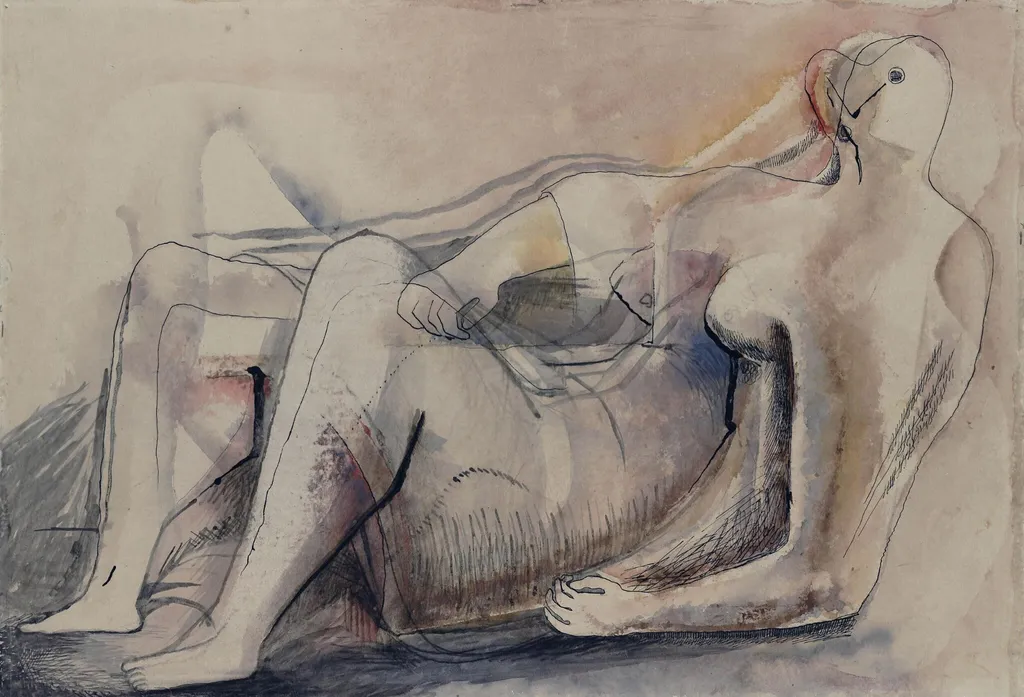
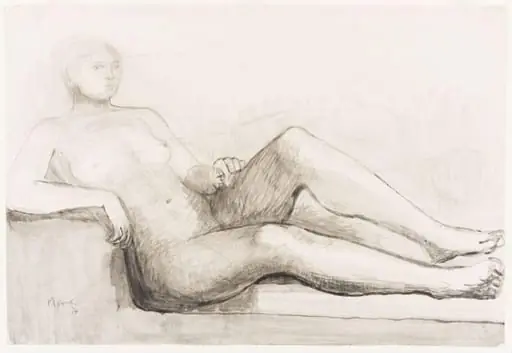
Reclining Figure is a watercolor work on paper by Henry Spencer Moore. It dates from 1933 and is held in the collection of the Victoria and Albert Museum.
About this work
Overview
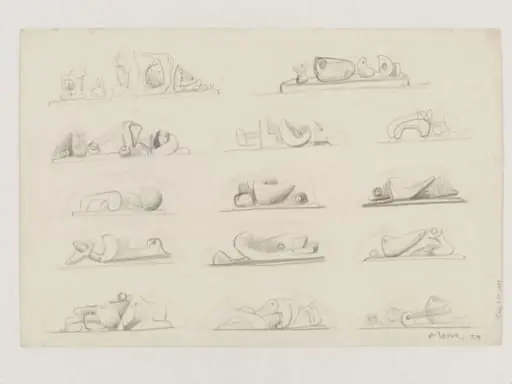
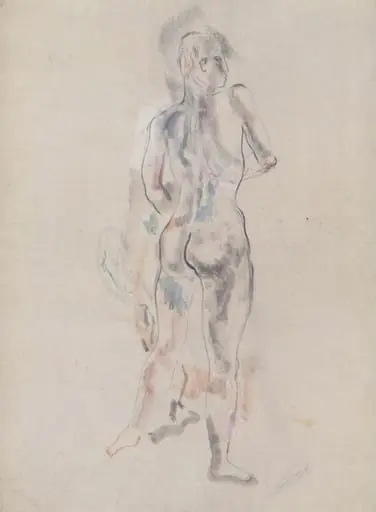
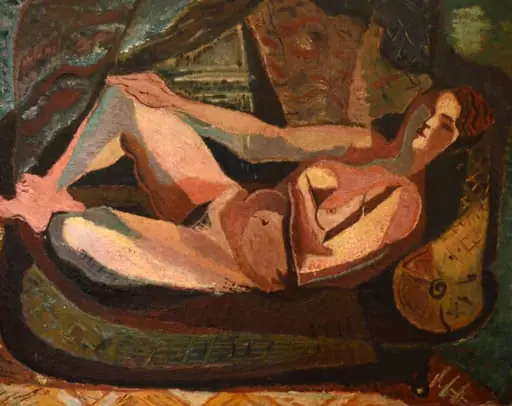
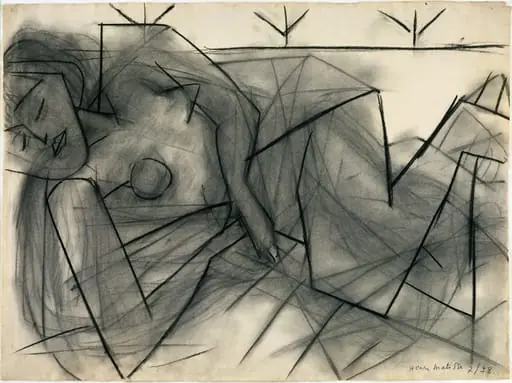
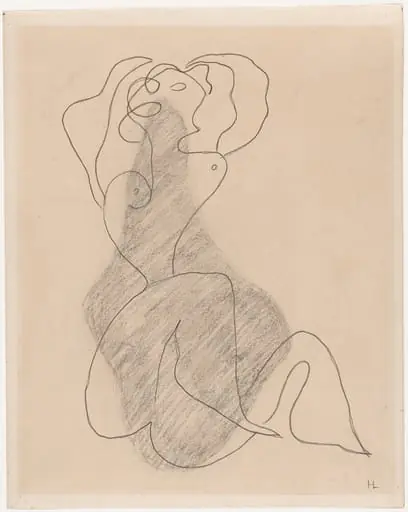
Created around 1933, this watercolour by Henry Spencer Moore depicts a reclining figure rendered in a highly simplified manner. The work is part of the Victoria and Albert Museum’s collection and exemplifies Moore’s early exploration of abstracted human forms through minimal line and tonal suggestion.
Subject & Meaning
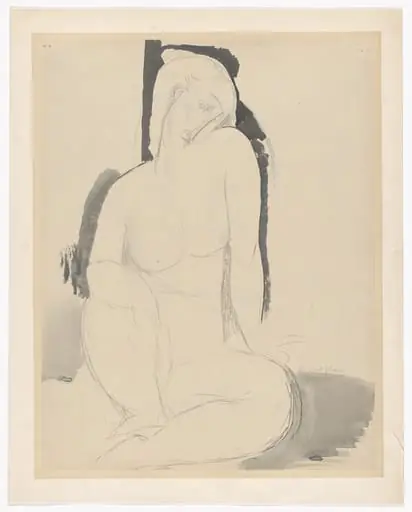
The composition presents a solitary figure lying on its side, stripped of facial features, hair, or detailed anatomy. By reducing the body to a smooth, rounded silhouette, Moore emphasizes the universal qualities of mass and posture, inviting viewers to contemplate the essence of the human shape rather than its individual identity.
Technique & Style
Executed in watercolour, the piece relies on loose, gestural strokes that outline the figure’s contour. Subtle washes create faint shadows, hinting at volume without defining precise edges. The overall effect is one of immediacy, as if the drawing captures a fleeting concept rather than a polished finished work.
History & Provenance
The drawing dates to the early 1930s, a period when Moore was developing his signature abstract language. It entered the Victoria and Albert Museum’s holdings through acquisition (or donation) and remains on display as part of the museum’s representation of 20th‑century British art.
Context
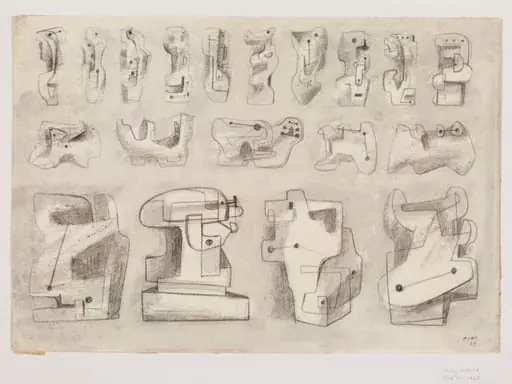
During the 1930s, Moore’s practice shifted toward simplified, monolithic forms that would later manifest in his large‑scale sculptures. This watercolour reflects that transitional phase, bridging his earlier figurative sketches with the more monumental, stone and bronze works for which he later became known.
Artist & collection
Artist
Henry Spencer Moore filled sketchbooks with long, flowing lines and blocky volumes to plan his sculptures.