Artwork
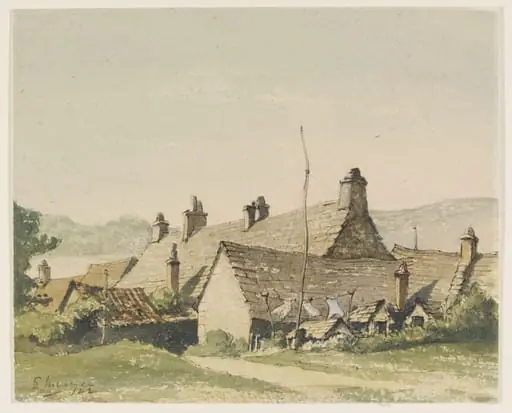
Swan Cottages, Ro-Wen, Conway Valley, Caernarvonshire
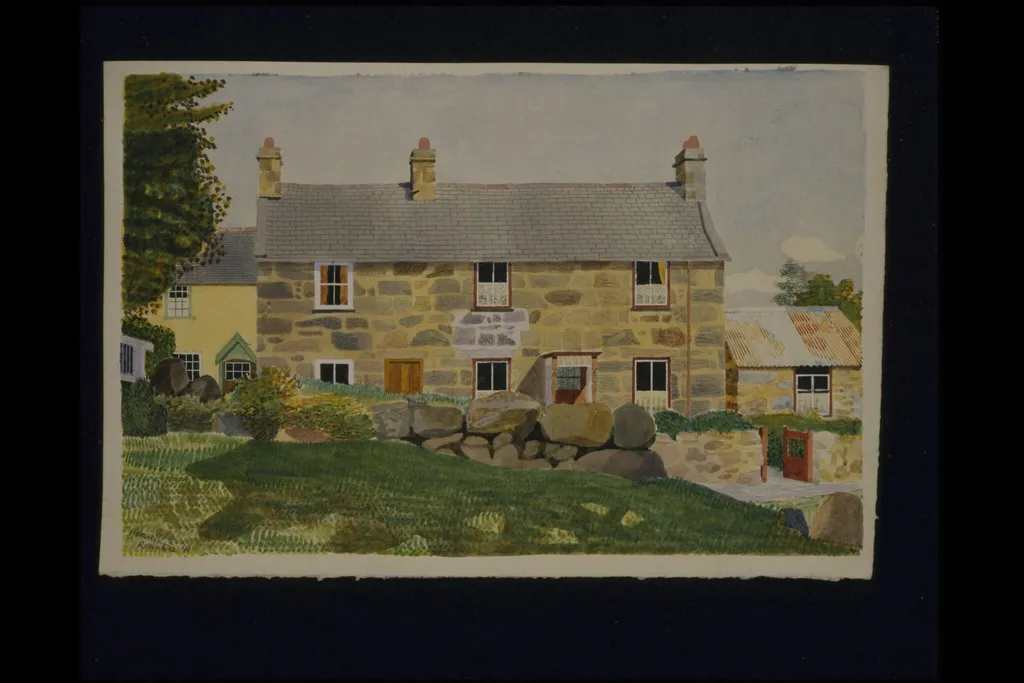
Swan Cottages, Ro-Wen, Conway Valley, Caernarvonshire is a watercolor work on paper by Rowntree. It dates from 1941 and is held in the collection of the Victoria and Albert Museum.
About this work
Overview
The project, overseen by Sir Kenneth Clark, sought to document landscapes and vernacular architecture at risk from wartime destruction and social change.
Created in 1941, this watercolour by Rowntree is part of the *Recording Britain* initiative, a wartime effort to preserve visual records of the British countryside. The work captures a modest rural dwelling in Caernarvonshire, rendered with quiet precision. The project, overseen by Sir Kenneth Clark, sought to document landscapes and vernacular architecture at risk from wartime destruction and social change. Over 1,500 works were produced by nearly 100 artists, forming a significant archive of regional character during a period of national upheaval.
Subject & Meaning
The painting portrays a single stone cottage with a sloped roof and three small windows, flanked by a dry-stone wall and a red post box. A second, smaller structure lies behind, suggesting a working farmstead. The scene emphasizes ordinary, unadorned rural life — a deliberate focus of the *Recording Britain* project. The presence of the post box and the well-worn wall implies daily continuity amid wartime uncertainty, turning the mundane into a quiet testament to endurance.
Technique & Style
Rowntree employed soft, transparent watercolour washes to convey subtle shifts in light and texture. The rough stone walls are suggested through layered tones rather than detailed brushwork, while the grass and foliage are rendered with loose, damp strokes. The warm, diffused lighting enhances the sense of stillness. There is no dramatic contrast or emotional flourish; instead, the composition relies on restraint, allowing the architecture and landscape to speak for themselves through quiet observation.
History & Provenance
The work entered the *Recording Britain* collection during its active years (1939–1942), likely acquired directly from the artist. It was later transferred to the Victoria and Albert Museum, where it remains part of the permanent archive. The collection was assembled with the explicit aim of safeguarding visual records of threatened rural scenes, making this piece not merely an artwork but a historical document of place and material culture during wartime Britain.
Context
During the Second World War, Britain faced widespread disruption to its rural communities — from air raids to the decline of traditional farming. The *Recording Britain* project responded to this by commissioning artists to record vernacular architecture, village greens, and isolated homesteads before they vanished. Rowntree’s depiction of Ro-Wen reflects this mission: a deliberate focus on the quiet, enduring structures of everyday life, preserved as cultural anchors in uncertain times.
Legacy
The *Recording Britain* collection endures as a vital resource for historians and artists studying mid-20th-century rural Britain. Rowntree’s watercolour contributes to a broader visual record that prioritizes authenticity over idealization. Its quiet realism has influenced later documentary practices in art and heritage preservation, offering a model for how art can serve as a neutral, attentive witness to cultural change.
Artist & collection

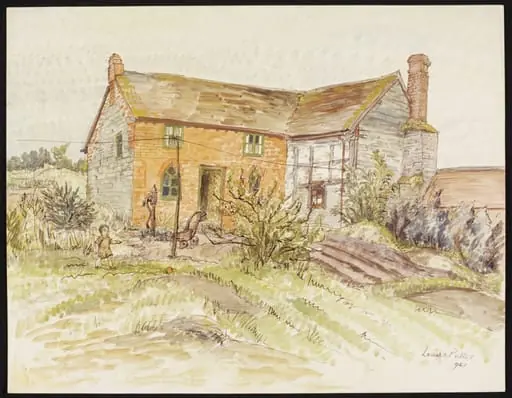 Cottages near Hopton
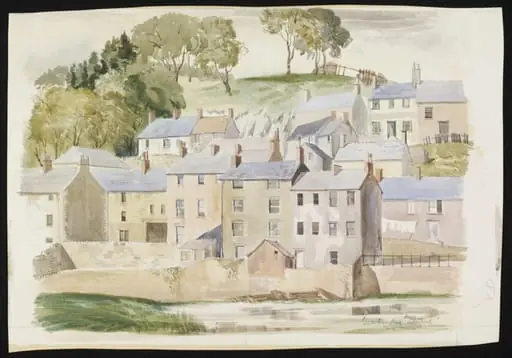 "Scarthin Nick" Cromford
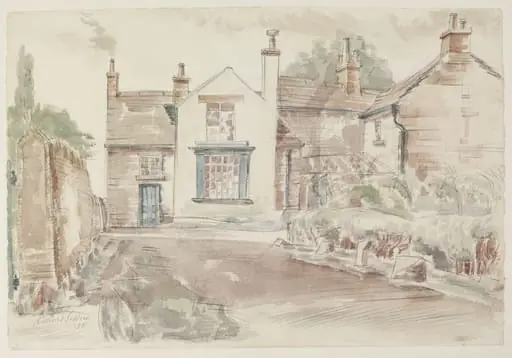 Cottages at Norton, No.1
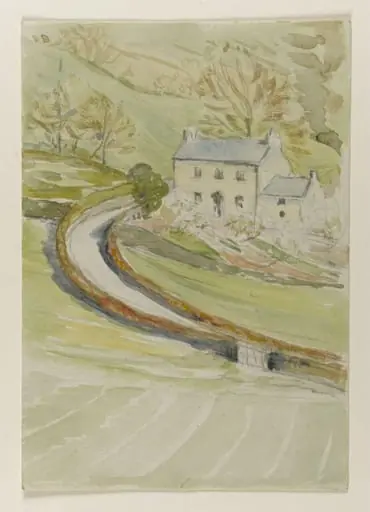 House in a steep-sided valley with a winding road
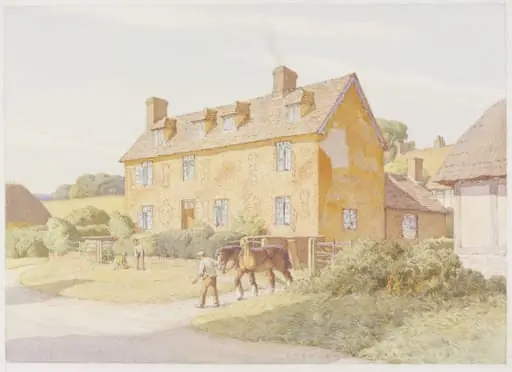 A 15th century cottage at Nether Wynchenden
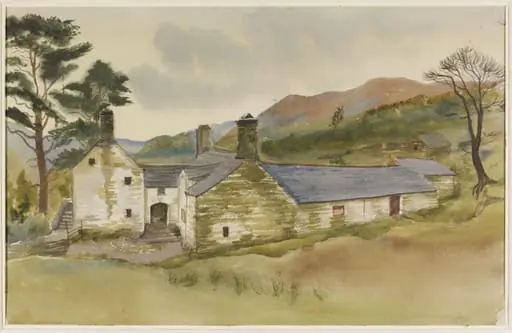 Ddu-Allt, Tan-y-Bwlch, Merionethshire
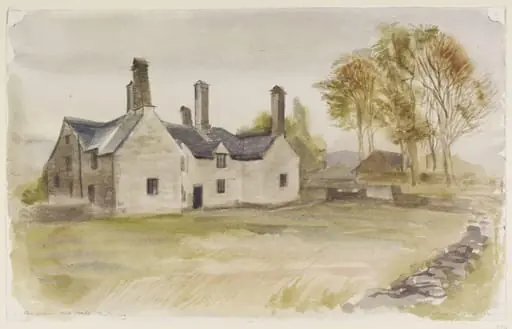 Pengwern Old Hall, Festiniog, Merionethshire
 House and Factory at Burleigh near Brimscombe
 The Guildhall, Totnes
 Penrice Village, Gower, Glamorganshire
 Bridge End Farm, Derwent Village
 Cottages, Corfe