Artwork
Bridge End Farm, Derwent Village
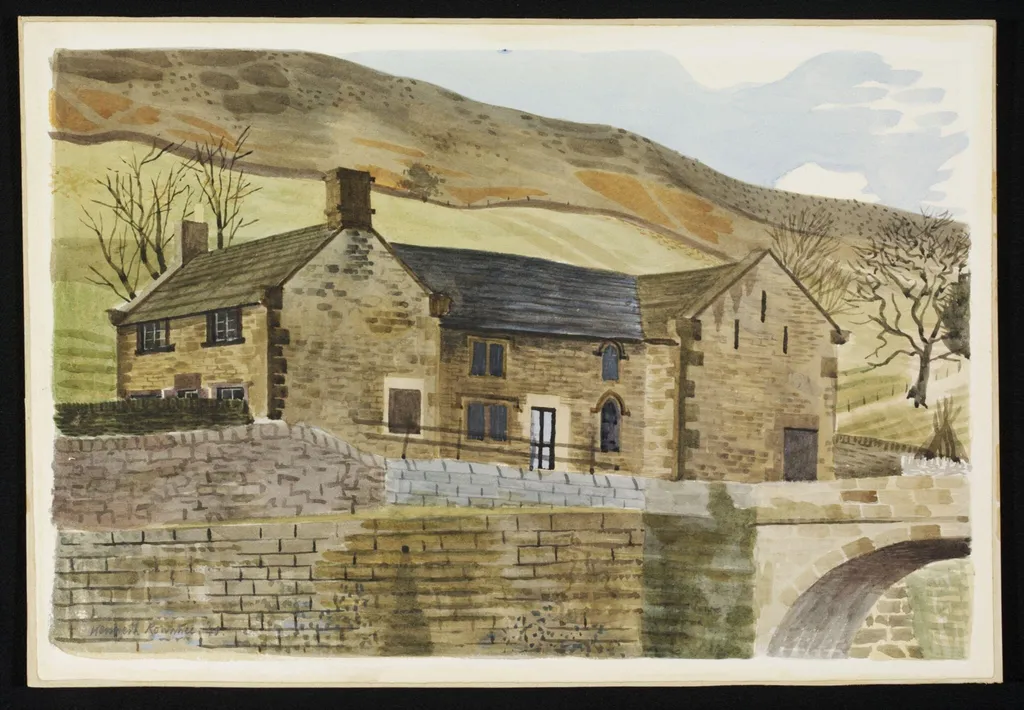
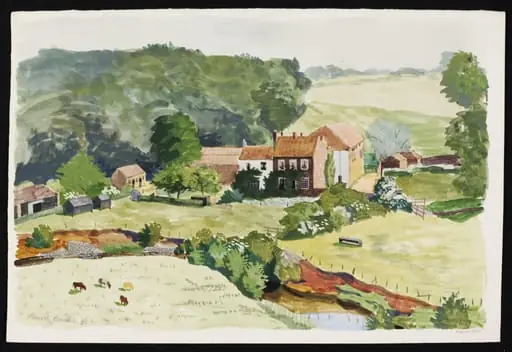
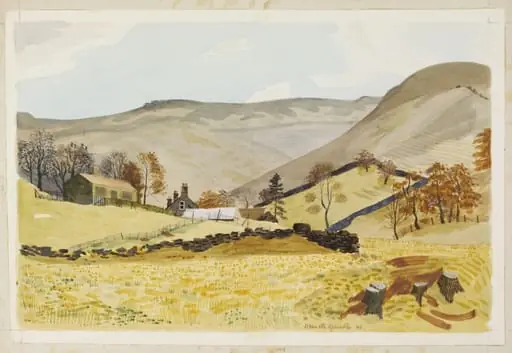
Bridge End Farm, Derwent Village is a watercolor work on paper by the Social Realist artist Rowntree. It dates from 1940 and is held in the collection of the Victoria and Albert Museum.
About this work
Overview
Created as part of the 'Recording Britain' initiative, the work belongs to a larger effort to preserve visual records of landscapes at risk during wartime.
Painted in 1940, this watercolour by Rowntree captures Bridge End Farm in Derwent Village, a quiet rural scene in northern England. Created as part of the 'Recording Britain' initiative, the work belongs to a larger effort to preserve visual records of landscapes at risk during wartime. The piece is held in the Victoria and Albert Museum’s collection, where it contributes to a archive of over 1,500 works documenting the nation’s architectural and natural heritage.
Subject & Meaning
The painting portrays two stone farmhouses with dark wooden roofs, flanked by a dry-stone wall and a modest bridge leading to a narrow path. Bare trees and rolling hills frame the composition, suggesting seasonal transition and isolation. The absence of human figures and the stillness of the scene evoke a sense of quiet endurance, reflecting the project’s aim to honor ordinary rural life as a symbol of national continuity amid wartime uncertainty.
Technique & Style
Rowntree employed delicate watercolour washes to render soft gradients of green, brown, and gray, capturing the muted tones of the English countryside. The brushwork is restrained, emphasizing form over detail—windows and doors are suggested rather than precisely defined. The transparent layers of pigment allow the paper’s texture to show through, enhancing the sense of atmospheric depth and quiet realism characteristic of the 'Recording Britain' aesthetic.
History & Provenance
Commissioned during World War II, this work was produced under the 'Recording Britain' project, initiated by Sir Kenneth Clark and funded by the Pilgrim Trust. Between 1940 and 1943, 97 artists documented threatened rural sites across England. Rowntree’s painting entered the Victoria and Albert Museum’s collection as part of this official archive, preserved for its historical and cultural value rather than artistic novelty.
Context
The 'Recording Britain' initiative emerged as a cultural response to the threat of war-related destruction and rapid modernization. Artists were sent to record vernacular architecture and landscapes deemed vulnerable or vanishing. Bridge End Farm, like many subjects chosen, represented a pre-industrial rural ideal—simple, enduring, and rooted in place—offering a visual counterpoint to the upheavals of the era.
Legacy
The painting endures as part of a significant wartime documentary effort, now valued for its historical testimony rather than artistic innovation. It contributes to ongoing scholarly interest in how art was used to define national identity during crisis. Today, it remains accessible at the Victoria and Albert Museum, where it invites reflection on the fragility of place and memory.
Artist & collection

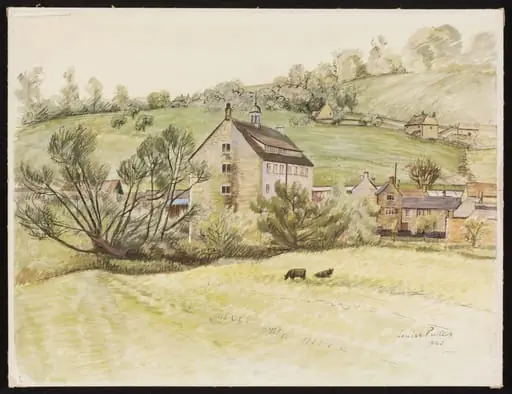 Brimscombe Factory, Nr. Stroud
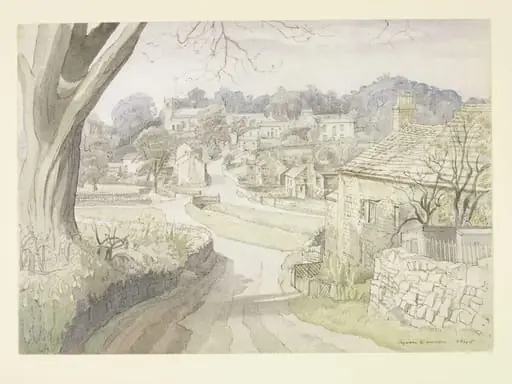 Downham Village, near Clitheroe, Lancashire
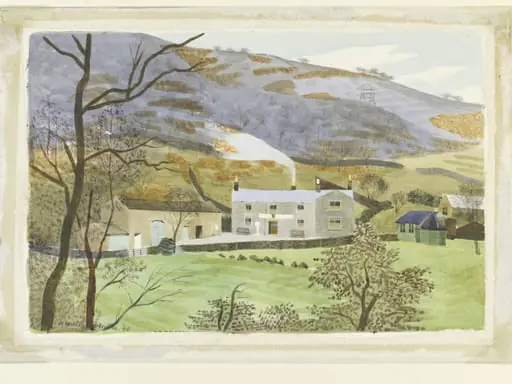 The Ladybower Inn, Ashopton
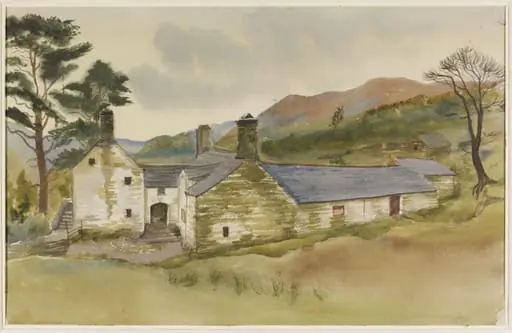 Ddu-Allt, Tan-y-Bwlch, Merionethshire
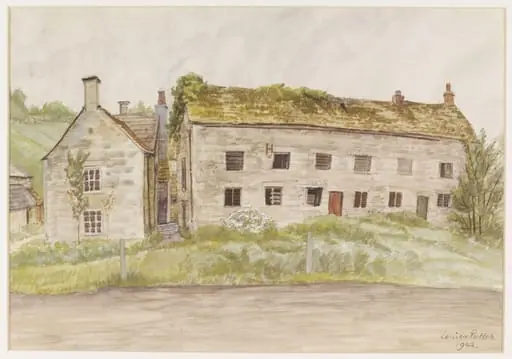 House and Factory at Burleigh near Brimscombe
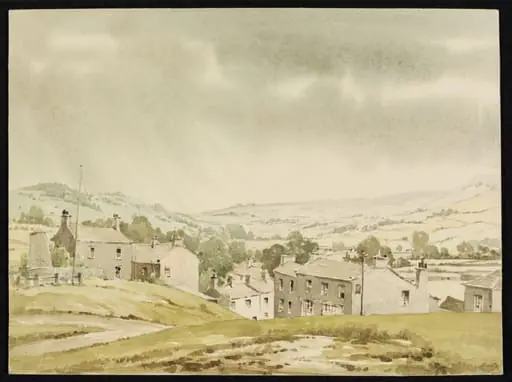 Reeth, near Richmond
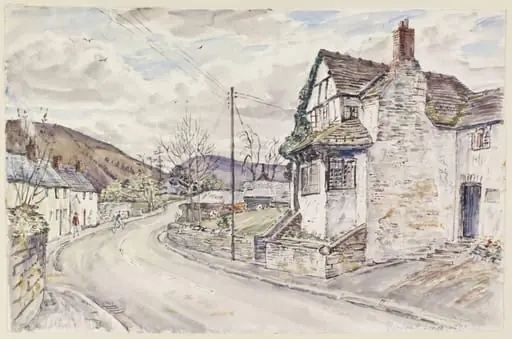 The Old Parsonage, New Radnor
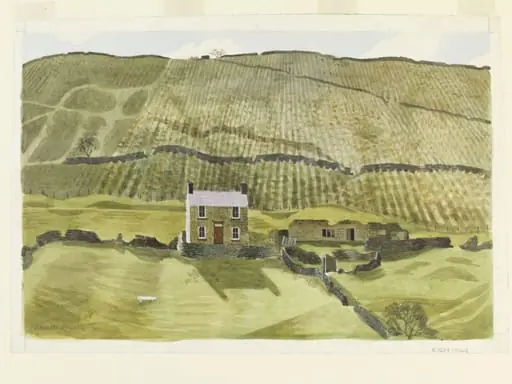 Underbank Farm, Woodlands, Ashdale, Derbyshire
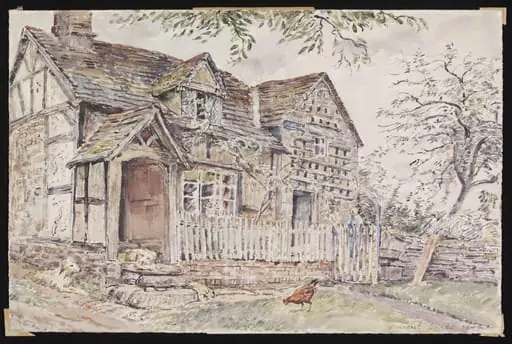 Pigeon House and Post Office, Mansel Lacy
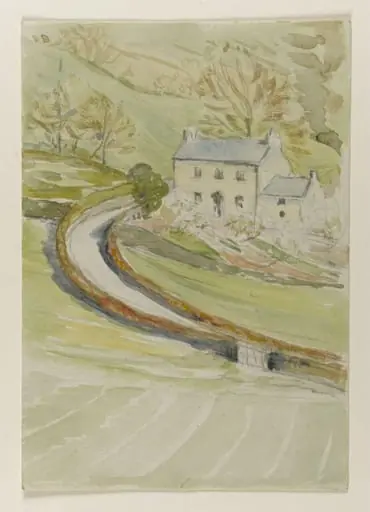 House in a steep-sided valley with a winding road
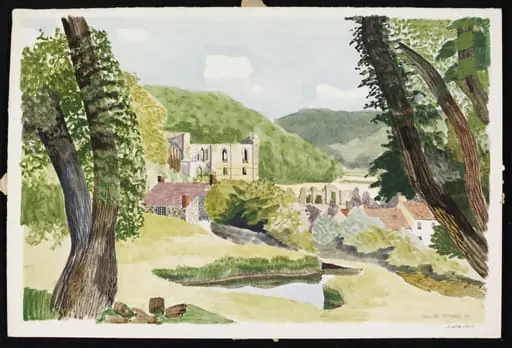 Distant view of Rievaulx Abbey
 Grainfoot Farm, Derwentdale