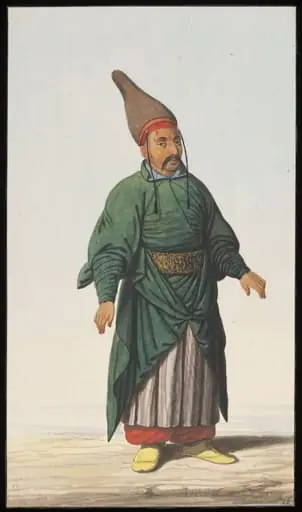
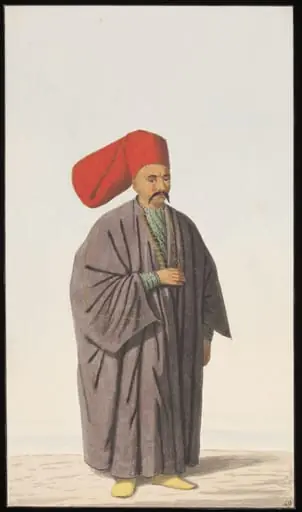
Artwork
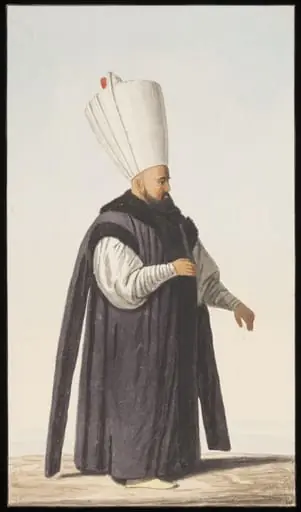
A Turkish official
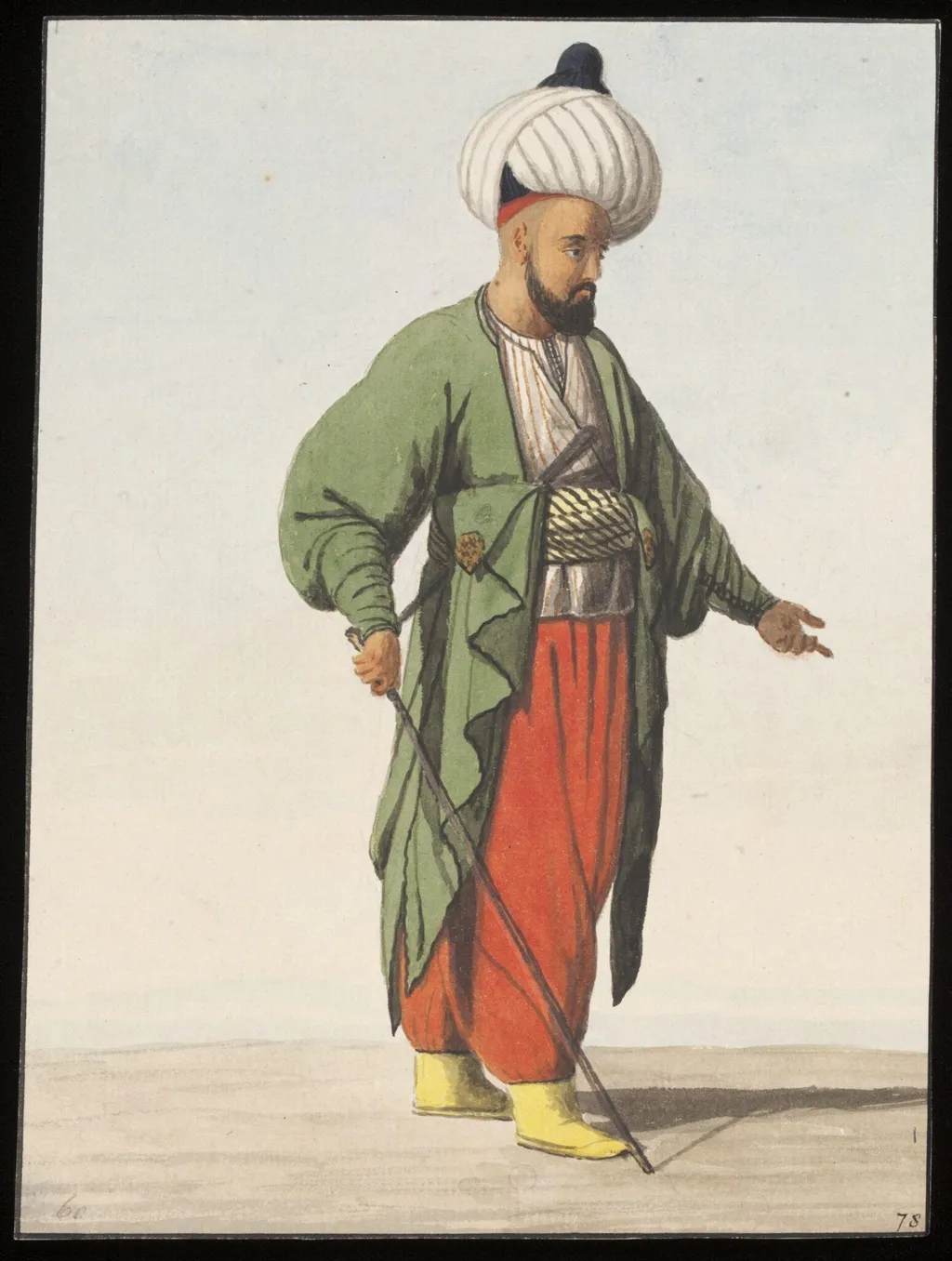
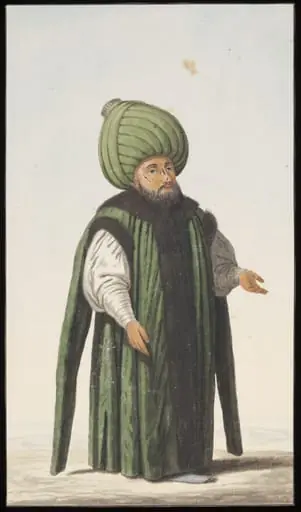
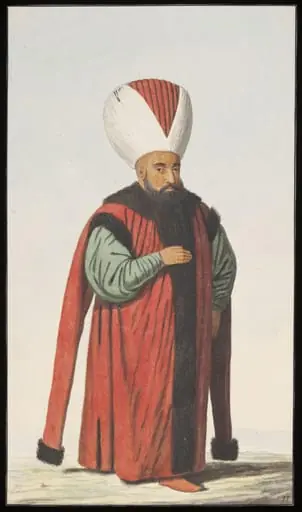
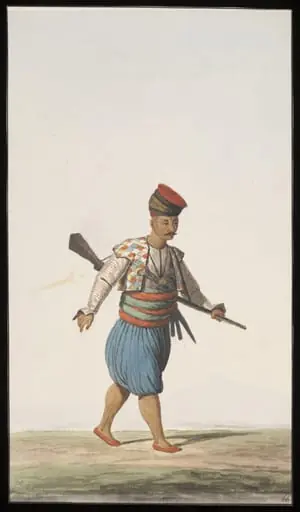
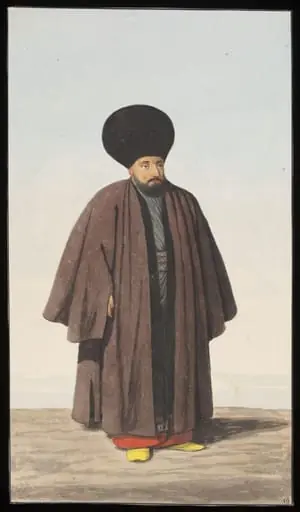
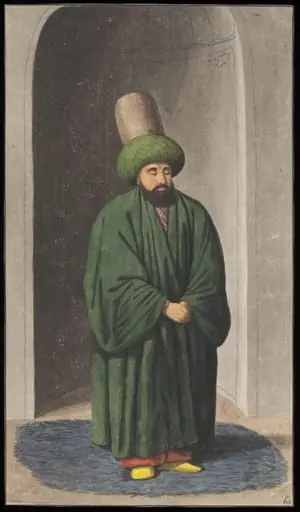
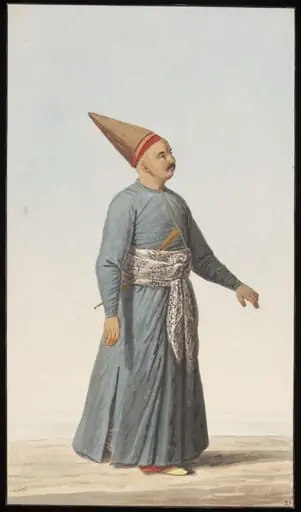
A Turkish official is a watercolor work on paper by the Orientalist artist Anonymous Greek artist. It dates from 1809 and is held in the collection of the Victoria and Albert Museum.
About this work
Overview
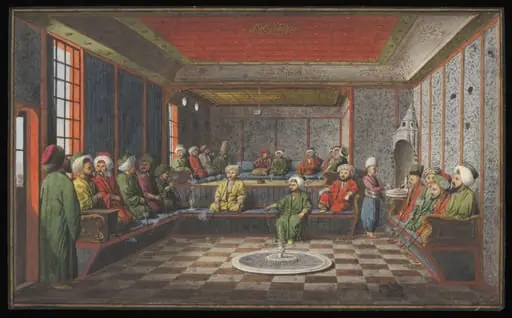
This watercolour, part of a larger series, was commissioned by diplomat Stratford Canning, later Viscount Stratford de Redcliffe (1786–1880). While serving as first secretary to Robert Adair’s mission in Istanbul in 1808, Canning arranged extensive visits to Ottoman institutions, architecture, and customs, prompting the creation of these visual records.
Subject & Meaning
The work depicts a Turkish official, illustrating Canning’s interest in documenting the personnel and ceremonial aspects of Ottoman governance. By portraying such figures, the series offers insight into the administrative hierarchy and cultural attire of early‑19th‑century Turkey.
Technique & Style
Executed in watercolour, the image blends the vivid, dense pigments characteristic of Ottoman miniature practice with European conventions of linear perspective and spatial depth. The anonymous artist’s approach reflects a hybrid aesthetic, merging local body‑colour techniques with Western representational norms.
History & Provenance
The artist’s identity remains unknown, though Turkish scholars suggest a connection to the workshop of Konstantin Kapidagli.
The artist’s identity remains unknown, though Turkish scholars suggest a connection to the workshop of Konstantin Kapidagli. In 1810, the young architect Charles Cockerell met the same Greek painter in Istanbul, later copying his architectural views, which now reside in the British Museum. The original series passed to Canning’s daughter Charlotte and was acquired by the Victoria and Albert Museum in 1895.
Context
Canning’s commission coincided with a period of heightened European diplomatic engagement with the Ottoman Empire. By employing a local artist, he secured authentic visual documentation that complemented the era’s growing interest in Oriental studies and comparative architecture.
Artist & collection

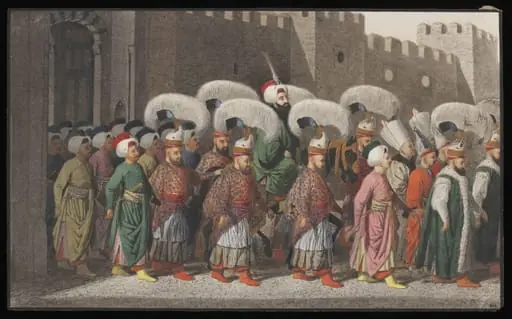
![A Pasha travelling with his escort[?], by Anonymous Greek artist](https://artifactworldgallery.com/img/anonymous-greek-artist--a-pasha-travelling-with-his-escort--01de32b8fcf30843-w320.webp)
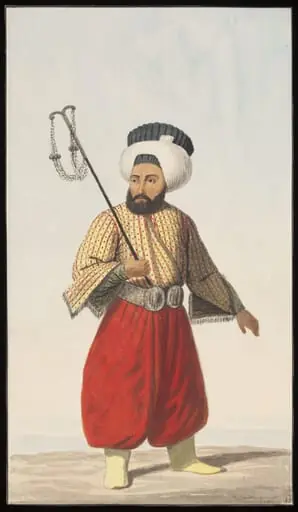
![A Dervish[?], by Anonymous Greek artist](https://artifactworldgallery.com/img/anonymous-greek-artist--a-dervish--3c8916f5a95abb6a-w320.webp)