Artwork
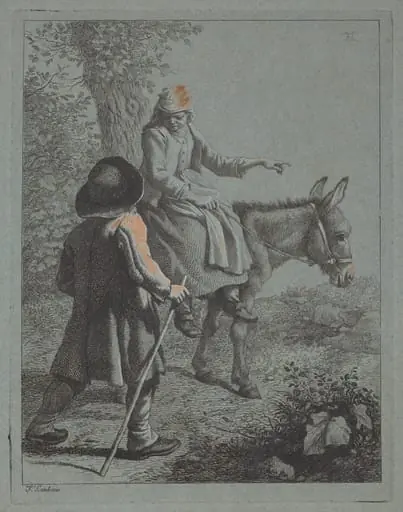
A Catholic Priest riding a Donkey
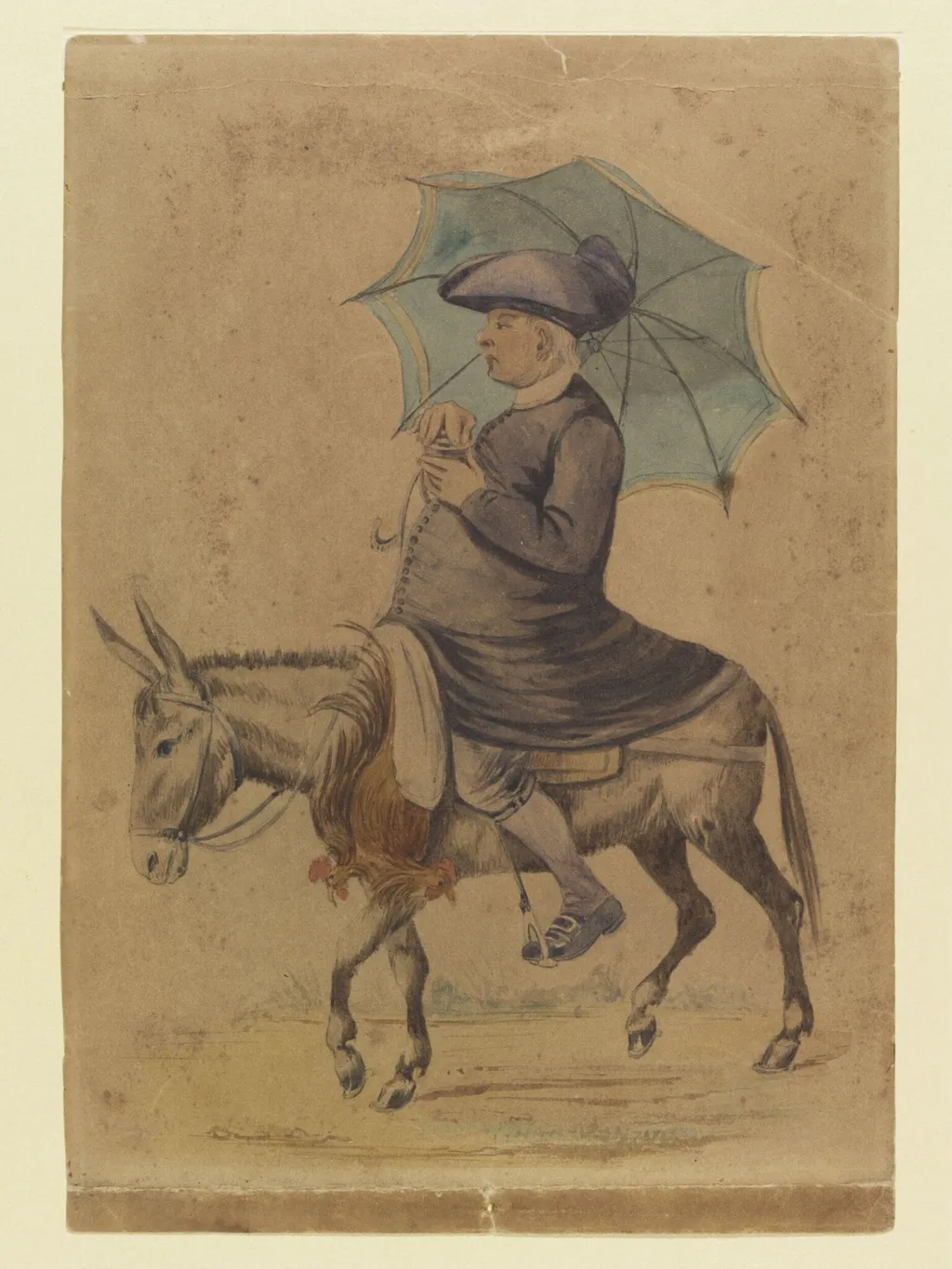
A Catholic Priest riding a Donkey is a watercolor work on paper by the Impressionist artist H. H. Morant. It dates from 1852 and is held in the collection of the Victoria and Albert Museum. Created in 1852 by H.
About this work
Overview
Created in 1852 by H. H. Morant, this watercolour depicts a Catholic priest seated on a donkey, traveling through a quiet, unadorned landscape. The work is executed in delicate washes, characteristic of 19th-century British watercolour practice. It resides in the collection of the Victoria and Albert Museum, where it is preserved as an example of observational genre painting from the period.
Subject & Meaning
There is no overt religious symbolism; the focus lies in the quiet dignity of daily life rather than ceremonial grandeur.
The scene portrays a humble ecclesiastical figure engaged in ordinary travel, suggesting themes of modesty and service. The priest’s attire—dark robe, white collar, and wide-brimmed hat—indicates his clerical role, while the donkey and bundled sack imply practical, unassuming movement. There is no overt religious symbolism; the focus lies in the quiet dignity of daily life rather than ceremonial grandeur.
Technique & Style
Morant employed transparent watercolour washes to render subtle tonal variations in fabric, animal fur, and terrain. Details such as the texture of the donkey’s mane, the folds of the robe, and the handle of the umbrella are rendered with precision, yet the overall effect remains soft and atmospheric. The light brown background lacks narrative elements, directing attention to the figures and their quiet interaction.
History & Provenance
The painting was completed in 1852 and entered the Victoria and Albert Museum’s collection at some point thereafter. Its provenance prior to museum acquisition is not publicly documented. As a work by H. H. Morant—a lesser-known artist of the period—it survives as a rare example of domestic genre scenes rendered in watercolour during the mid-Victorian era.
Context
In mid-19th-century Britain, watercolour was widely used for topographical and genre subjects, often by amateur and professional artists alike. While religious imagery was common in oil painting, depictions of clergy in mundane settings were rarer. Morant’s work reflects a growing interest in everyday life, aligning with broader trends in social observation rather than religious iconography.
Legacy
The painting does not belong to a major artistic movement, nor did it influence contemporaries significantly. Its value lies in its quiet documentation of a specific moment in Victorian life. As a preserved example of modest watercolour practice, it contributes to the understanding of non-elite visual culture in 19th-century Britain.
Artist & collection
Artist
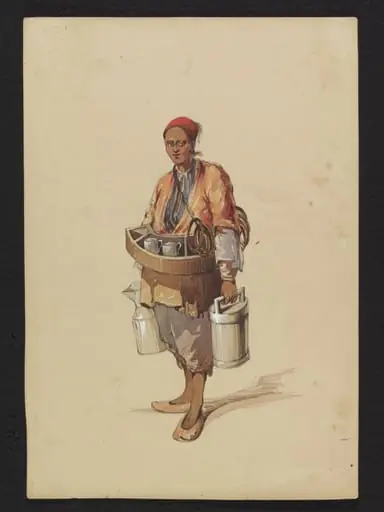
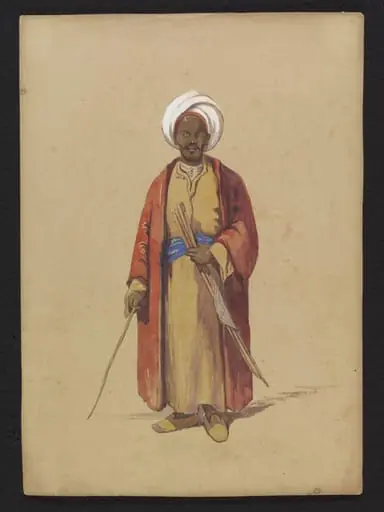
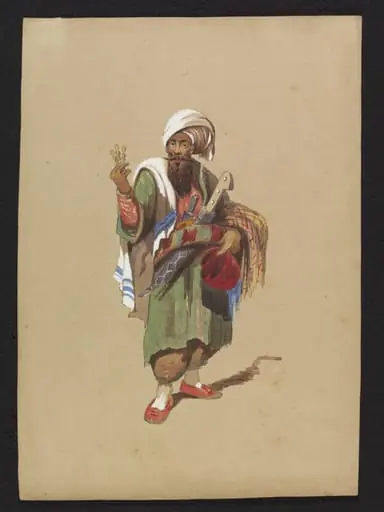
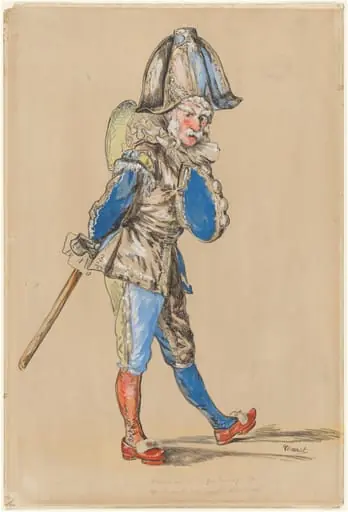
British artist H. H. Morant painted everyday street scenes in watercolor during the mid-1800s. His small, precise works capture vendors and passersby in Cairo and Nubia—like *A Sherbert Seller* (1852–54) and *A Nubian…

![Haji Sh. El Arishi [?], by Godfrey Thomas Vigne](https://artifactworldgallery.com/img/godfrey-thomas-vigne--haji-sh-el-arishi--4954cf53752ca3e0-w320.webp)