Artwork
Lady and Gentlemen Riding in a Park
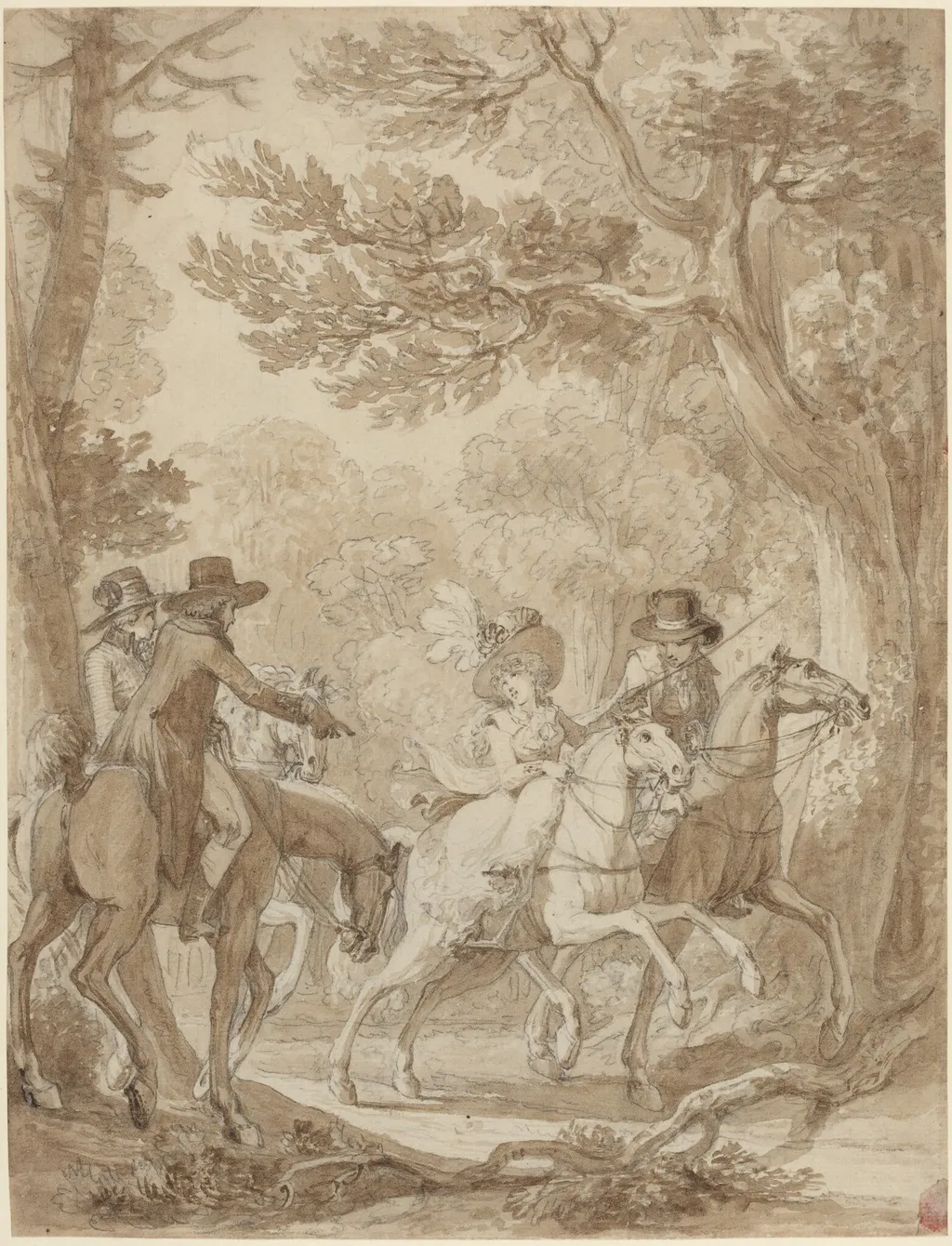
Lady and Gentlemen Riding in a Park is an ink drawing by the Baroque artist Jean-Michel the Younger Moreau. It dates from 1778 and is held in the collection of the National Gallery of Art.
About this work
Overview
Executed on laid paper, the work combines brown ink, pen touches, and graphite, presenting four figures on horseback amid a loosely rendered woodland.
Created in 1778 by the French draftsman Jean‑Michel Moreau the Younger, this drawing depicts a lively equestrian scene set within a park landscape. Executed on laid paper, the work combines brown ink, pen touches, and graphite, presenting four figures on horseback amid a loosely rendered woodland. The composition captures a moment of leisurely riding, emphasizing both the figures’ attire and the surrounding foliage.
Subject & Meaning
The scene shows a woman positioned centrally, holding a fan, accompanied by three male riders. All participants wear broad‑brimmed hats and flowing coats typical of late‑18th‑century fashion. Their varied gestures—some guiding reins, others gesturing—suggest a casual outing rather than a formal procession, reflecting the social practice of park riding as a genteel pastime among the upper classes.
Technique & Style
Moreau employs a combination of brown ink and graphite, layering darker strokes to model shadows and lighter, sketchy lines for foliage. The rapid, energetic marks convey motion, particularly in the horses, which are rendered in differing poses—some in stride, others at rest. Cross‑hatching appears in select areas to build tonal depth, while the overall approach resembles a preparatory study rather than a finished illustration.
History & Provenance
The drawing is attributed to Moreau the Younger, an artist known for his detailed studies of contemporary life. Produced in the late eighteenth century, it reflects the period’s interest in documenting leisure activities. The work’s provenance traces through private collections before entering a museum holding, where it is catalogued as a representative example of French genre drawing from the pre‑revolutionary era.
Artist & collection

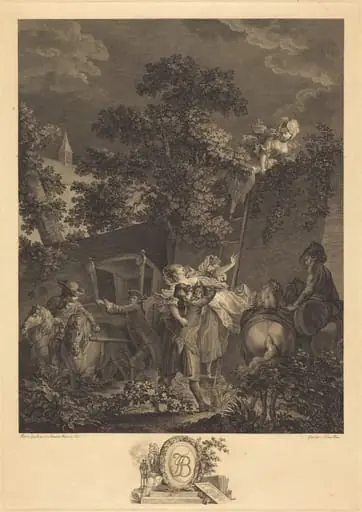 L'enlevement nocturne
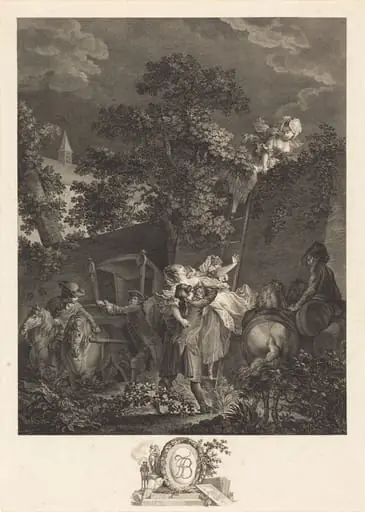 L'enlevement nocturne
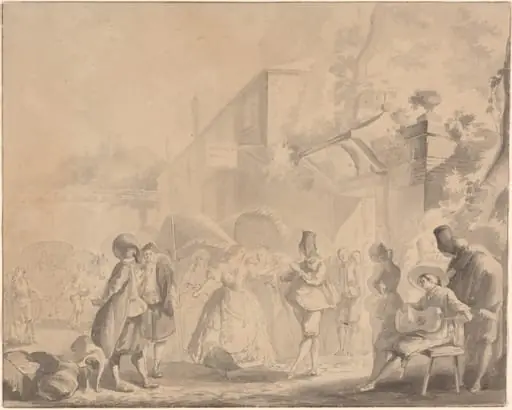 Dance in a Village Square
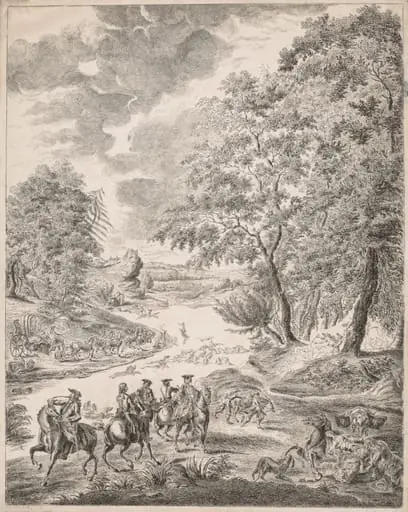 The Deer Hunt
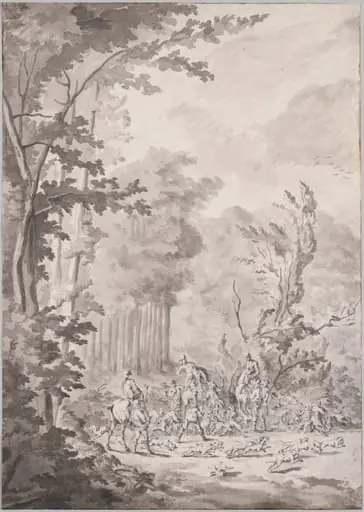 A Hunting Party at Marly
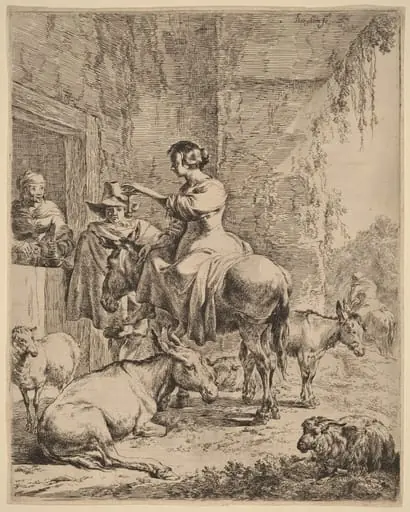 The Rest before the Inn
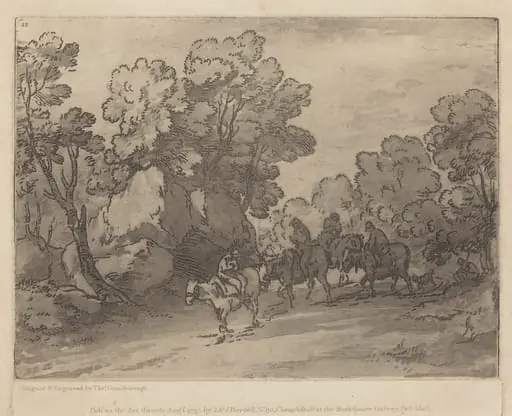 Wooded Landscape with Riders
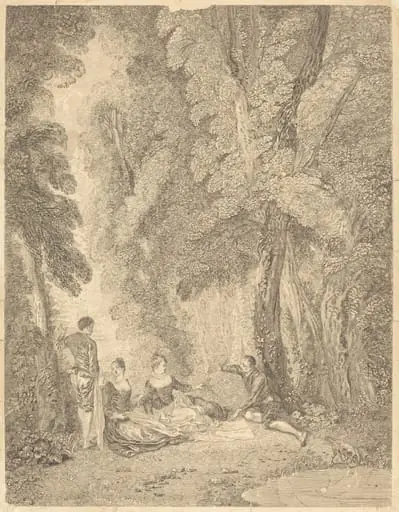 La colation
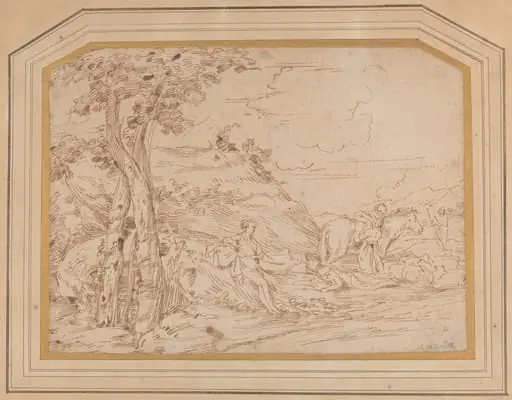 A Wooded Landscape with a Shepherd and His Family
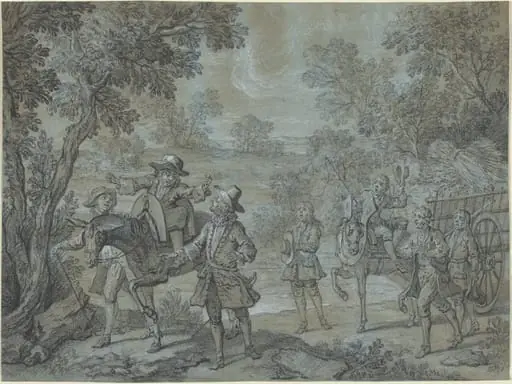 Ragotin declame des vers; des paysans croient qu'il preche
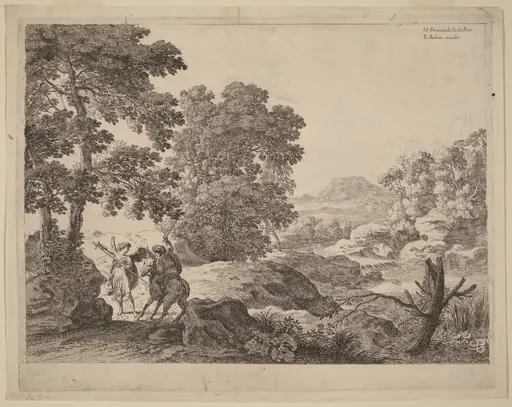 Balaam and the Ass
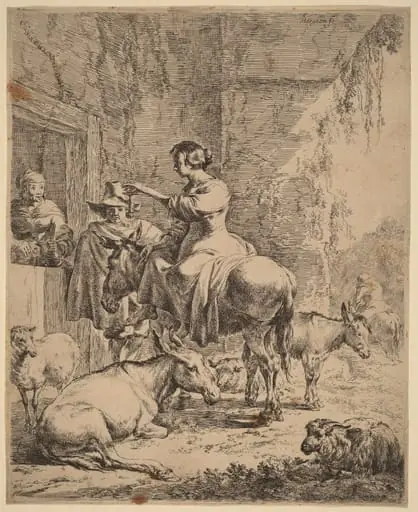 The Rest before the Inn