Artwork
Ragotin declame des vers; des paysans croient qu'il preche
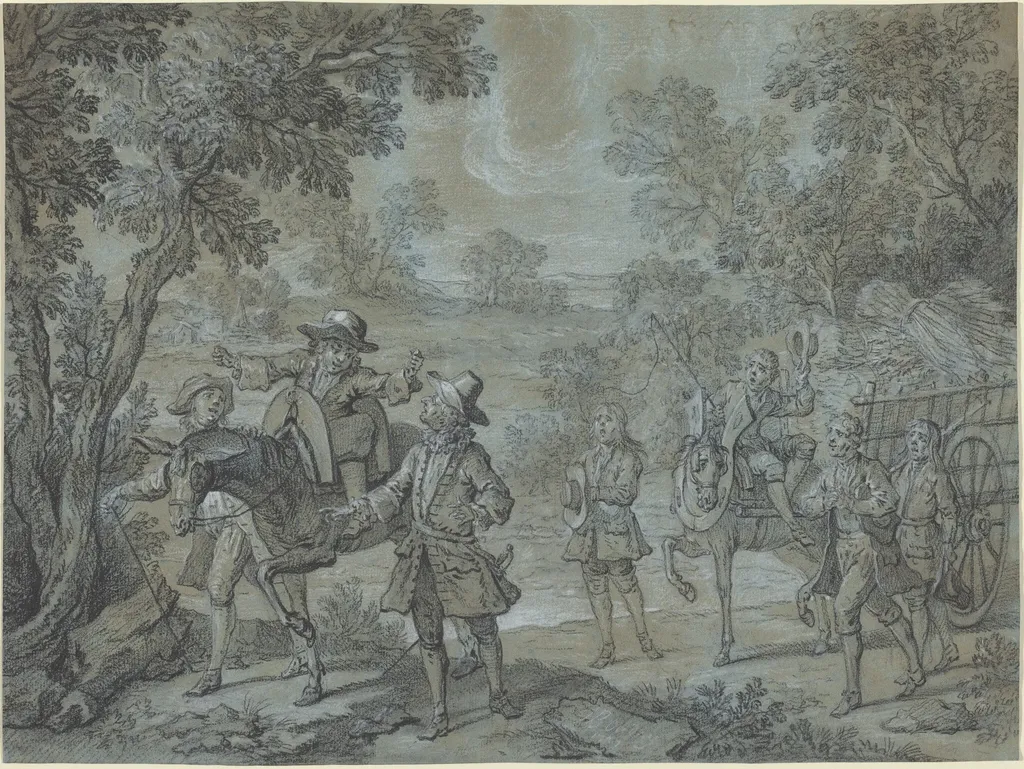
Ragotin declame des vers; des paysans croient qu'il preche is a chalk drawing by the Baroque artist Jean-Baptiste Oudry. It dates from 1737 and is held in the collection of the National Gallery of Art.
About this work
Overview
Executed in black and white chalk on blue laid paper, it demonstrates Oudry’s mastery of graphic media beyond his better-known animal paintings.
Created in 1737 by Jean-Baptiste Oudry, this drawing captures a moment of theatrical performance in a rural setting. Executed in black and white chalk on blue laid paper, it demonstrates Oudry’s mastery of graphic media beyond his better-known animal paintings. The work belongs to a series of observational sketches that reveal his interest in human behavior and social performance, often set against quiet natural backdrops.
Subject & Meaning
The scene portrays Ragotin, a traveling performer, reciting poetry from a tree stump while a group of peasants listens with rapt attention. Their postures—hands clasped, hats held—suggest a blend of curiosity and reverence, as if mistaking his recitation for a sermon. The painting subtly critiques the gap between learned culture and rural perception, framing art as a spectacle that can be misread as sacred ritual.
Technique & Style
Oudry employed black chalk for bold contours and shading, enhanced with white chalk to highlight folds of fabric, facial expressions, and the texture of skin. The blue paper grounds the composition with a cool tonal base, allowing the chalk to pop with contrast. His lines are fluid yet precise, capturing movement and gesture with economy. The style reflects a blend of observational realism and theatrical staging, typical of 18th-century French draftsmanship.
History & Provenance
The drawing was made during Oudry’s most productive period, when he was commissioned for tapestry designs and engravings. It likely originated as a preparatory study or independent sketch, not tied to a larger commission. Its survival suggests it was valued by contemporaries for its wit and technical finesse. The work entered public collections in the 19th century, where it remains as an example of Oudry’s lesser-known but significant graphic output.
Context
In early 18th-century France, traveling performers like Ragotin were common in rural areas, offering entertainment to communities with limited access to formal culture. Oudry’s interest in such figures aligns with broader Enlightenment-era fascination with social types and everyday life. While Baroque drama influenced his composition, his approach is more intimate and psychologically nuanced, reflecting the emerging taste for genre scenes over grand historical narratives.
Legacy
Though Oudry is primarily remembered for his animal paintings, this drawing illustrates his broader engagement with human subjects and social observation. It influenced later artists interested in rural life and performance, contributing to the development of French genre drawing. Its preservation in major collections underscores its role as a quiet but insightful document of 18th-century cultural exchange between town and countryside.
Artist & collection

Artist
Jean-Baptiste Oudry was a French Rococo painter, engraver, and tapestry designer. He is particularly well known for his naturalistic pictures of animals and his hunt pieces depicting game. His son, Jacques-Charles Oudry, was also a painter.

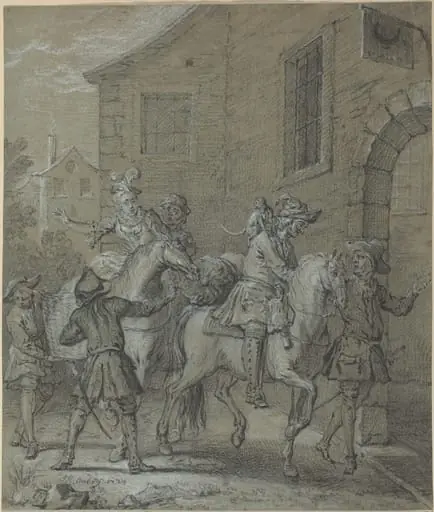 L'Arrivee de l'Operateur dans l'hotellerie
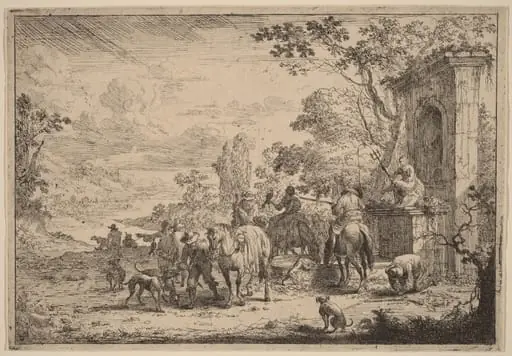 Huntsmen Resting
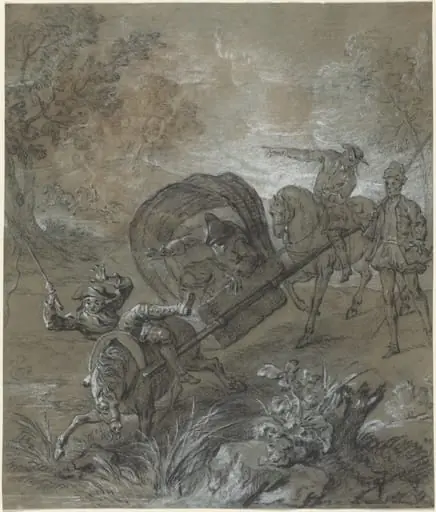 La Rancune en brancard, abattu dans le bourbier
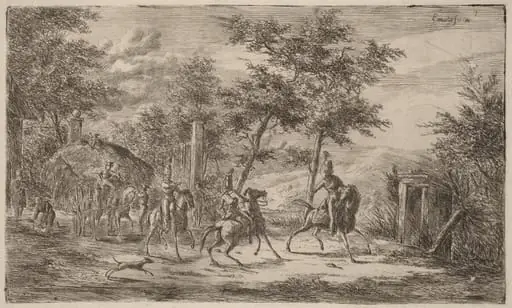 Cavalry and Hay Wagon
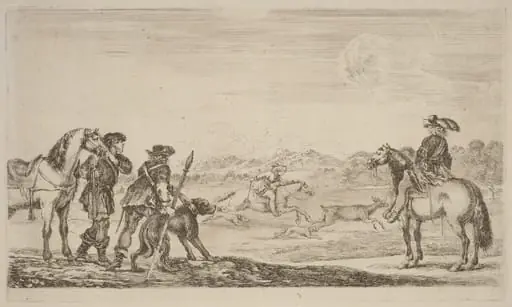 Small Deer Chased by a Cavalier
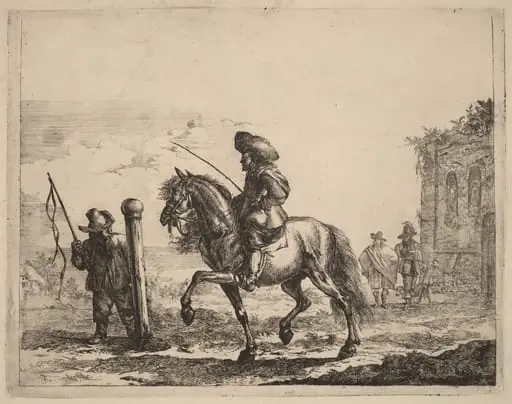 Riding School
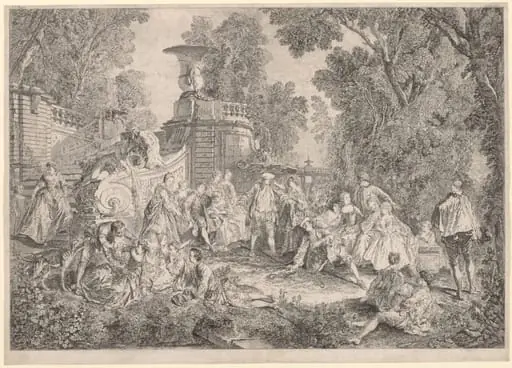 The Game of Blind Man's Bluff
![Entry of Marie de Medici into Amsterdam [plate 2 of 6], by Pieter Nolpe](https://artifactworldgallery.com/img/pieter-nolpe--entry-of-marie-de-medici-into-amsterdam-plate-2-of-6--6a77731f69c675c9-w320.webp) Entry of Marie de Medici into Amsterdam [plate 2 of 6]
Entry of Marie de Medici into Amsterdam [plate 2 of 6]![Entry of Marie de Medici into Amsterdam [plate 4 of 6], by Pieter Nolpe](https://artifactworldgallery.com/img/pieter-nolpe--entry-of-marie-de-medici-into-amsterdam-plate-4-of-6--689cdf6e84d84946-w320.webp) Entry of Marie de Medici into Amsterdam [plate 4 of 6]
Entry of Marie de Medici into Amsterdam [plate 4 of 6] Shepherd with Goats (Les chèvres)
![Entry of Marie de Medici into Amsterdam [plate 6 of 6], by Pieter Nolpe](https://artifactworldgallery.com/img/pieter-nolpe--entry-of-marie-de-medici-into-amsterdam-plate-6-of-6--5a770af49b94e5e3-w320.webp) Entry of Marie de Medici into Amsterdam [plate 6 of 6]
Entry of Marie de Medici into Amsterdam [plate 6 of 6] Alexander in the Studio of Apelles