Artwork
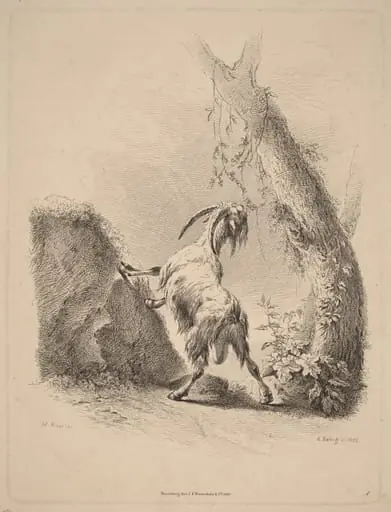
The Little Goat (La capretta)
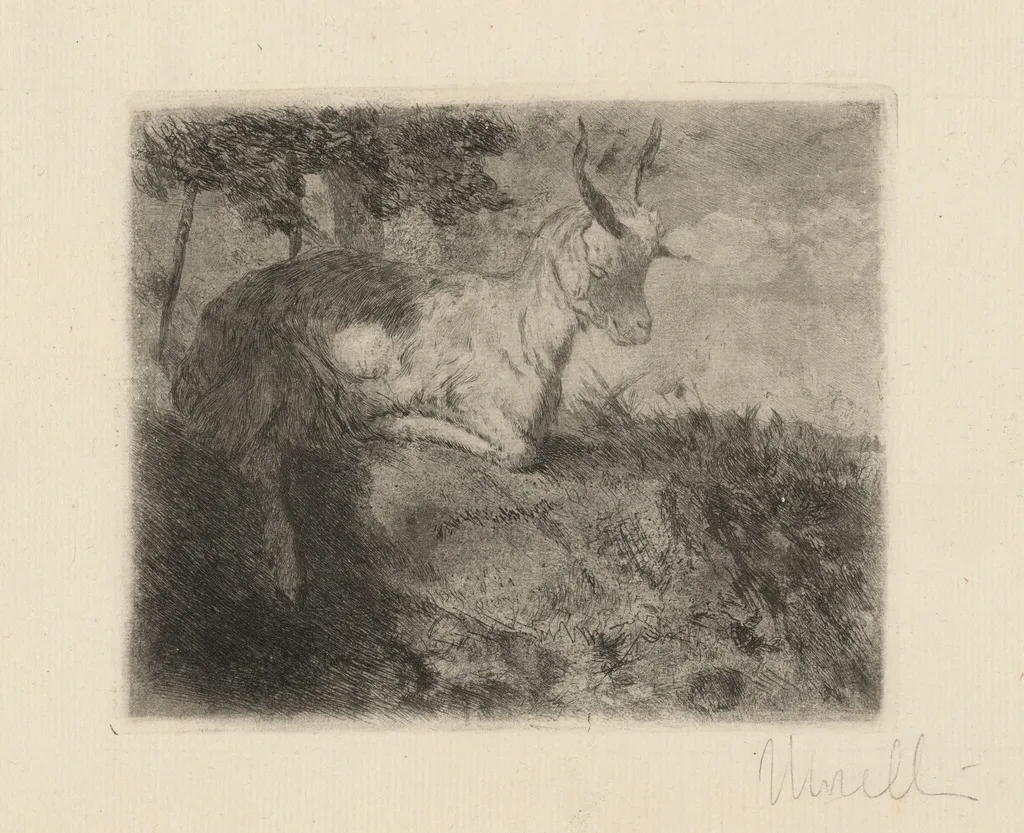
The Little Goat (La capretta) is an ink print by the Impressionist artist Domenico Morelli. It dates from 1879 and is held in the collection of the National Gallery of Art.
About this work
Overview
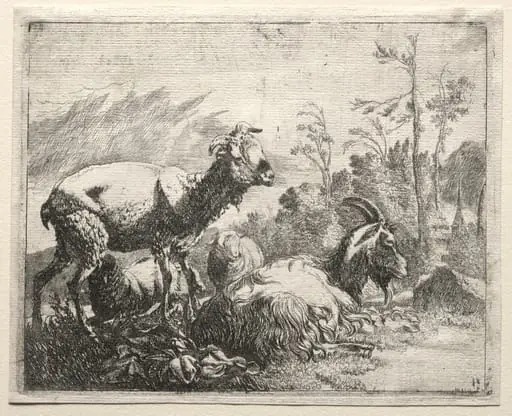
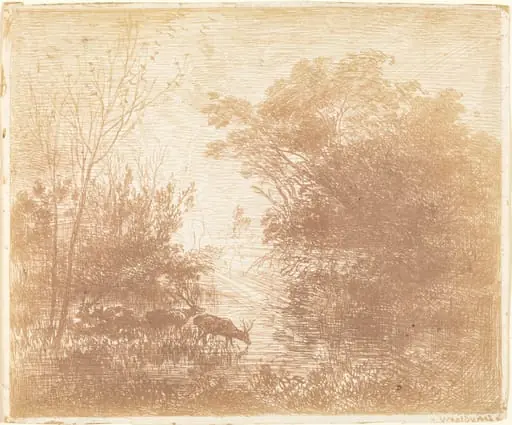
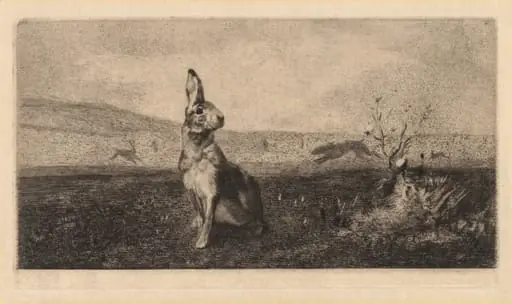
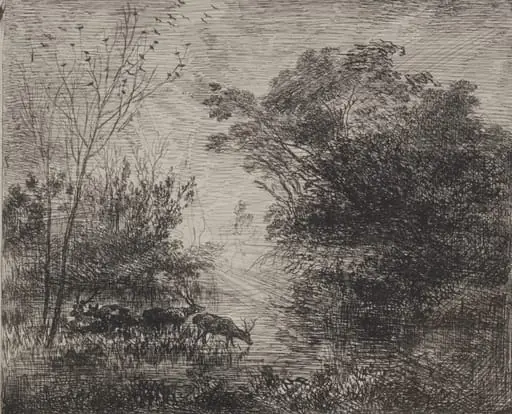
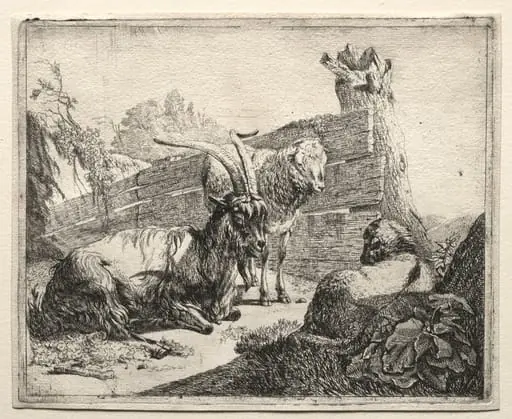
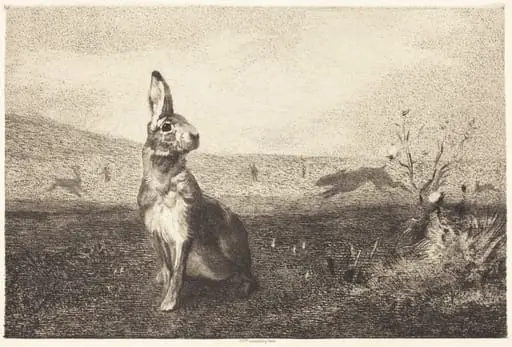
Created circa 1879, *The Little Goat* is an etching and aquatint on laid paper by Italian artist Domenico Morelli. The print presents a solitary goat set against a modest landscape of trees and grass, rendered with a balance of delicate texture and clear detail.
Subject & Meaning
At the center of the composition the goat faces right, its curved horns and fluffy coat drawing the eye. The tranquil setting and the animal’s calm posture suggest a quiet observation of nature, inviting contemplation rather than narrative drama.
Technique & Style
Morelli combines traditional etching lines with aquatint washes, achieving a soft, velvety rendering of the goat’s fur while maintaining sharper, more realistic treatment of the surrounding foliage. The contrast between the two methods creates depth and a tactile quality across the paper surface.
History & Provenance
Domenico Morelli, who later directed the Accademia di Belle Arti in Naples, produced the work during a period when his output blended Romantic sentiment with emerging Symbolist tendencies. The print reflects his interest in expressive, narrative‑driven subjects that marked his broader career in the late nineteenth century.
Context
In the 1870s Italian art was navigating between academic traditions and newer, more personal expressions. Morelli’s *The Little Goat* exemplifies this transition, pairing a modest genre scene with the artist’s characteristic blend of emotional resonance and subtle patriotic undertones.
Own this work as a print
Artist & collection
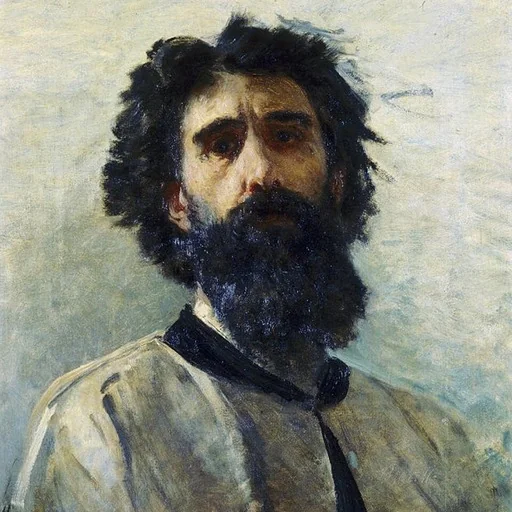
Artist
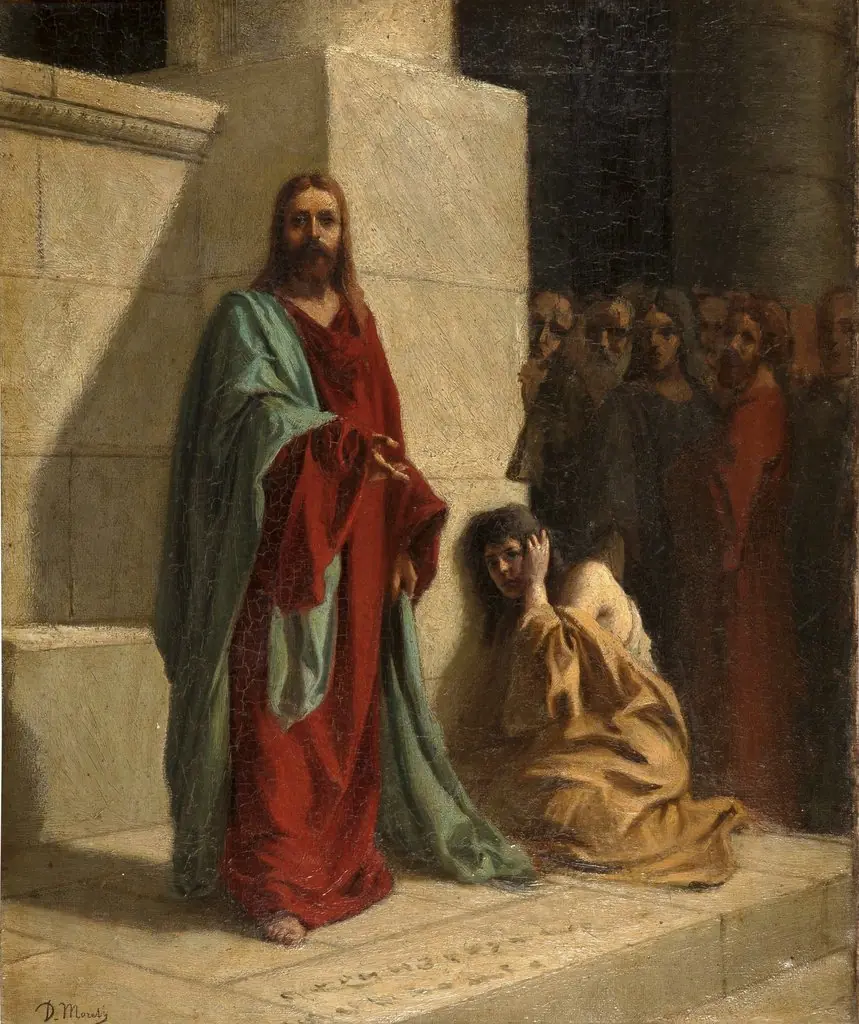
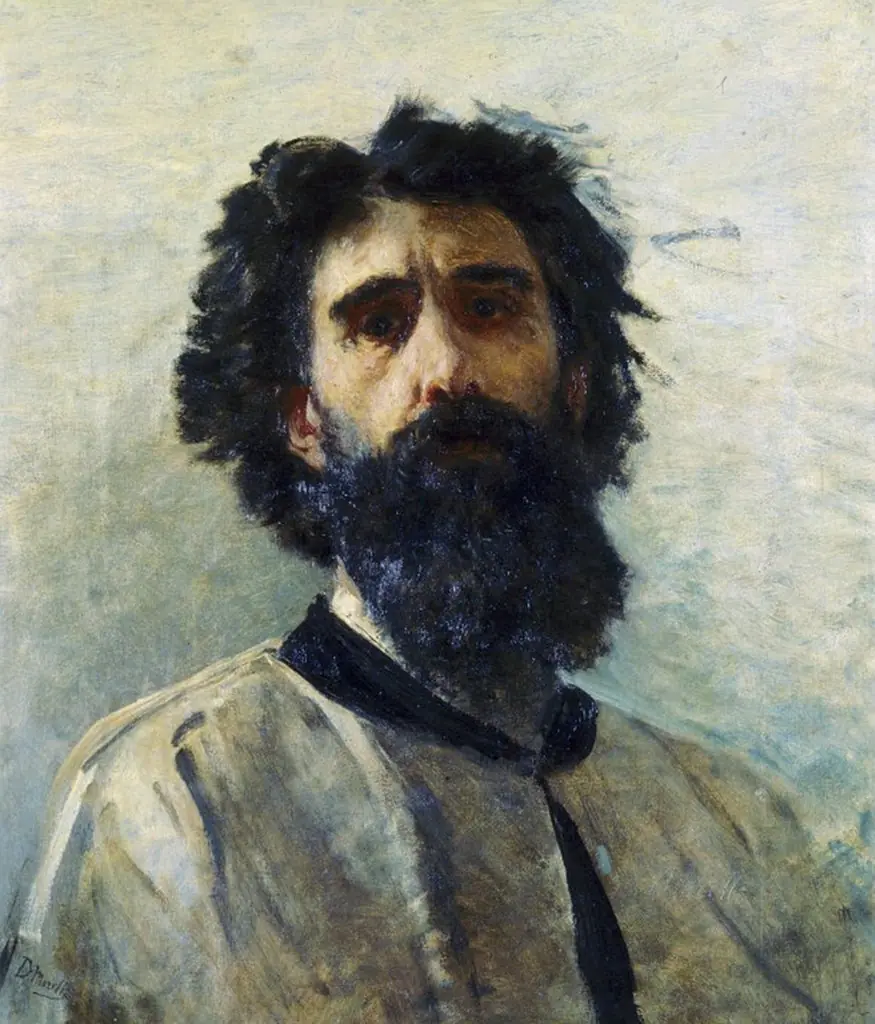
Domenico Morelli (4 August 1823 – 13 August 1901) was an Italian painter, who mainly produced historical and religious works.