Artwork
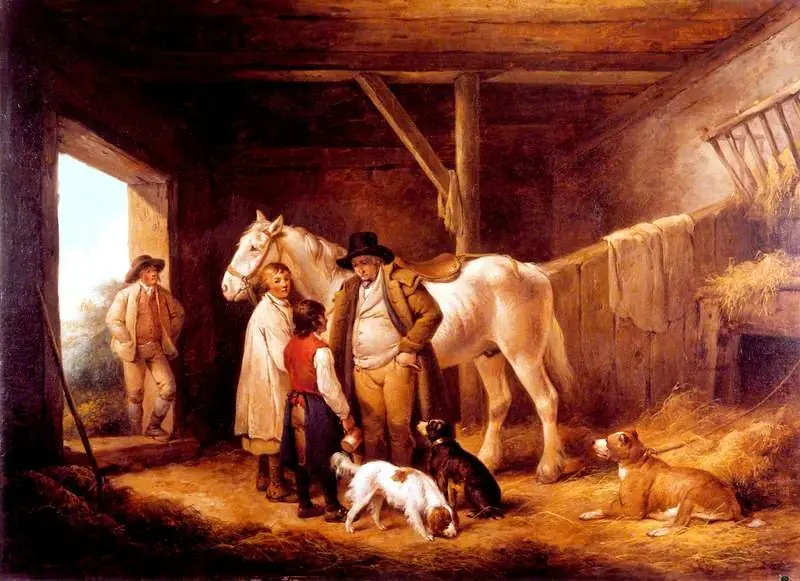
Horses in a stable
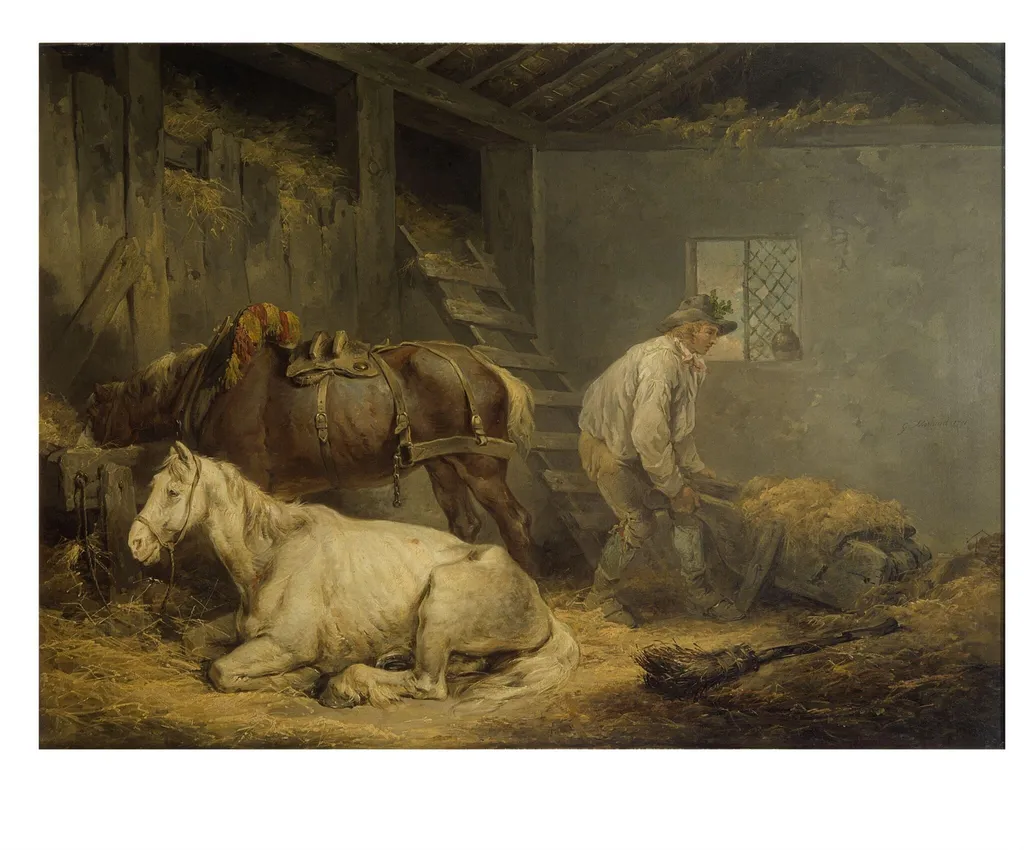
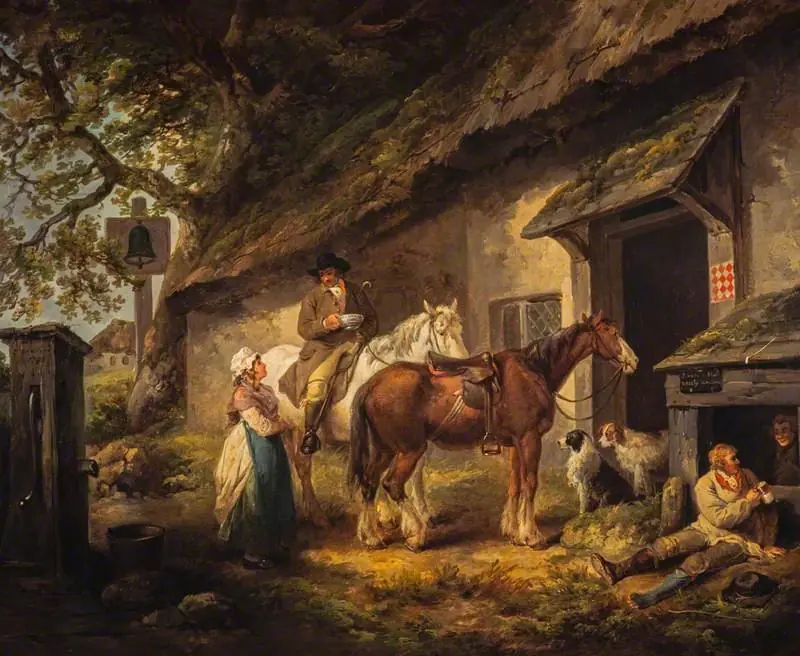
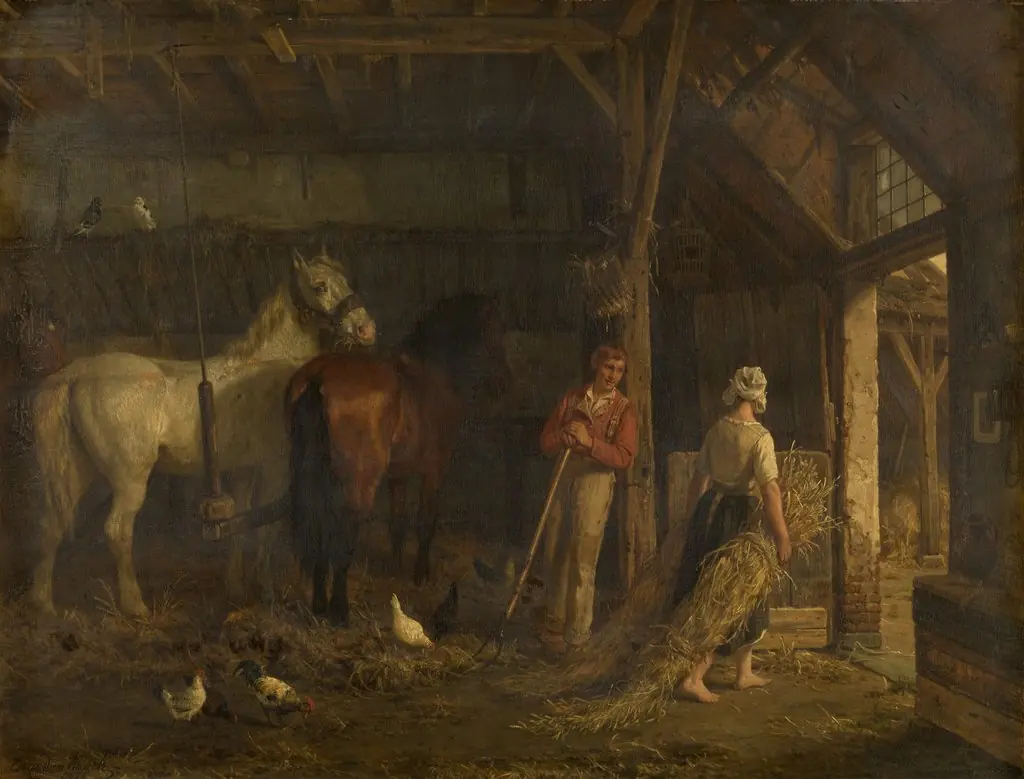
Horses in a stable is an oil painting by the Romanticist artist George Morland. It dates from 1791 and is held in the collection of the Victoria and Albert Museum. This oil painting, dated 1791, is one of many works bequeathed to the Victoria and Albert Museum in 1868 by Rev.
About this work
Overview
Morland, who began exhibiting as a child, developed a distinctive approach to rural life, capturing quiet moments with unembellished realism.
This oil painting, dated 1791, is one of many works bequeathed to the Victoria and Albert Museum in 1868 by Rev. Chauncey Hare Townshend. Attributed to George Morland, it bears his signature and dates from the early phase of his career. Morland, who began exhibiting as a child, developed a distinctive approach to rural life, capturing quiet moments with unembellished realism. The painting reflects his growing focus on rustic scenes after 1790, moving away from moralizing narratives toward uneventful, atmospheric depictions of everyday existence.
Subject & Meaning
The scene portrays horses resting in a modest stable, surrounded by hay and timber beams. There is no dramatic action or human presence; the emphasis lies in the stillness and natural posture of the animals. Morland avoids romanticizing rural life, instead presenting it with quiet dignity. The composition invites contemplation of ordinary labor and animal care, reflecting a broader 18th-century interest in the dignity of humble existence without overt sentimentality.
Technique & Style
Morland employs a restrained palette and loose brushwork to convey the texture of hay, wood, and horsehide. Light filters subtly through the stable, modeling forms without harsh contrast. His technique avoids theatricality, favoring observation over idealization. The painting’s quiet composition and unadorned detail align with his mature style, where atmosphere and quietude replace narrative drama. His early training in copying Dutch landscapes likely influenced his sensitivity to light and spatial depth.
History & Provenance
Painted in 1791, the work entered the Victoria and Albert Museum’s collection through the 1868 bequest of Rev. Chauncey Hare Townshend, a noted collector of Morland’s art. Morland’s prolific output—estimated at over 800 paintings in his final eight years—meant his works circulated widely. Though he struggled financially, his popularity led to numerous engravings across Britain, France, and Germany, ensuring his imagery reached a broad public audience beyond original paintings.
Context
In late 18th-century Britain, genre scenes of rural life gained traction among middle-class collectors. Morland’s shift from moralizing subjects to uneventful rustic imagery aligned with a growing appreciation for authenticity over idealization. His depictions of animals and farmsteads resonated in an era of agricultural change and rising urbanization, offering viewers a grounded, unvarnished vision of the countryside they were increasingly removed from.
Legacy
Morland’s influence extended through widespread reproductive engravings, which made his imagery accessible across Europe. While his personal life was marked by instability, his artistic legacy lies in his quiet, unsentimental portrayal of rural subjects. Later artists and collectors recognized his ability to elevate the mundane, and his work remains a reference point for 18th-century British genre painting that prioritized observation over narrative.
Own this work as a print
Artist & collection
Artist
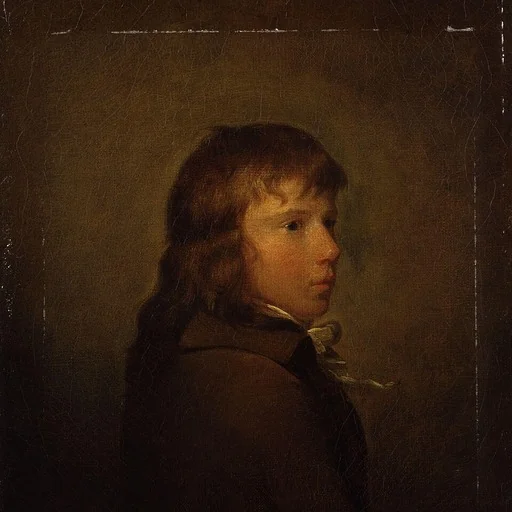
George Morland (26 June 1763 – 29 October 1804) was an English painter. His early work was influenced by Francis Wheatley, but after the 1790s he came into his own style. His best compositions focus on rustic scenes:…