Artwork
Bronzes
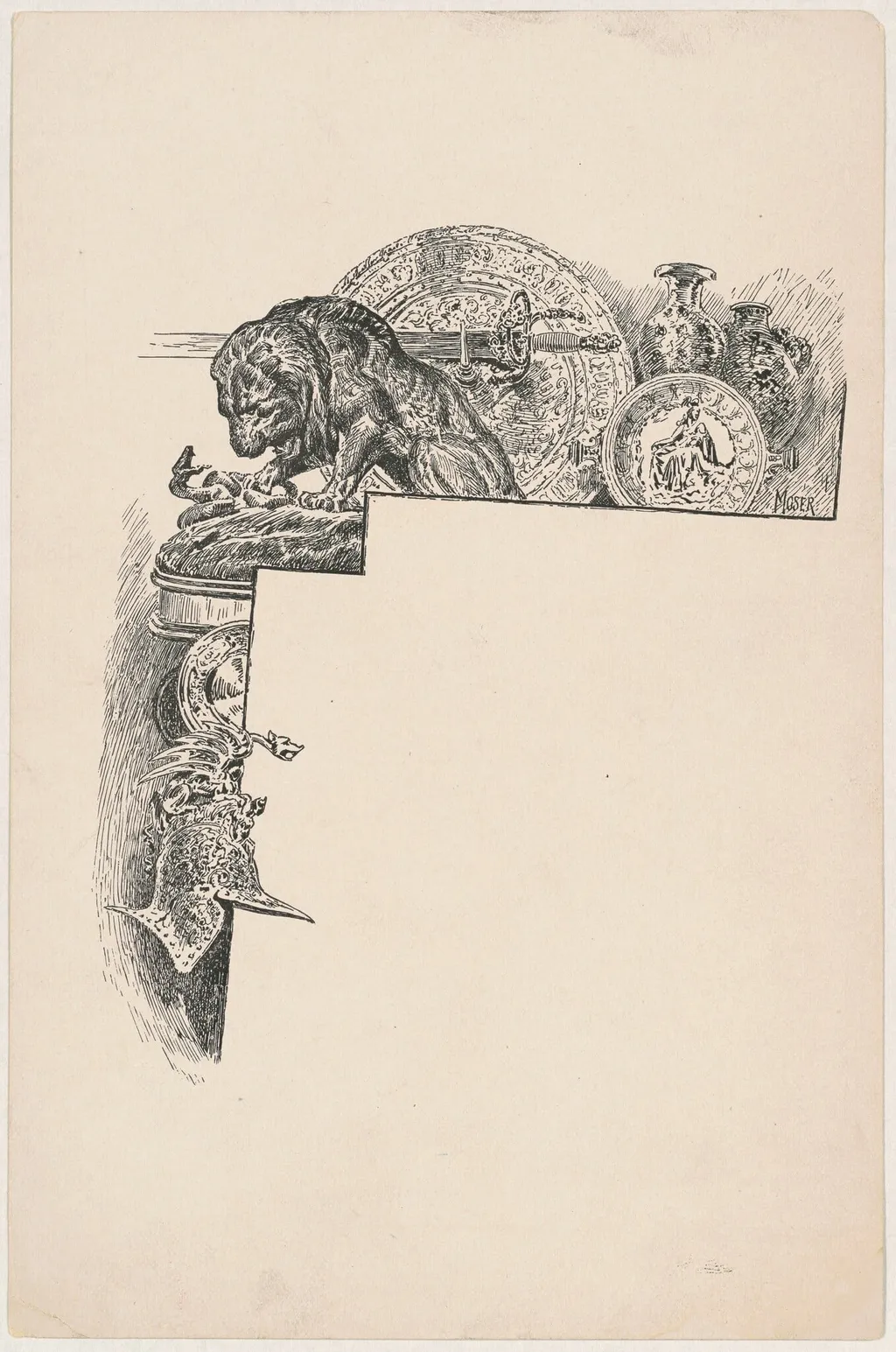
Bronzes is an ink print by the Impressionist artist James Henry Moser. It dates from 1892 and is held in the collection of the National Gallery of Art.
About this work
Overview
The work belongs to a group of prints exploring decorative metal objects from the 19th century.
Bronzes is a 1892 offset lithograph by James Henry Moser, printed in black ink on wove paper. The work belongs to a group of prints exploring decorative metal objects from the 19th century. Its intricate line work and tonal precision reflect the artist’s interest in replicating the texture and detail of forged metal, using lithographic techniques to produce multiple impressions from a single stone.
Subject & Meaning
The image centers on a lion’s head fused to a curved pipe, evoking the ornamental hardware of Victorian-era smoking accessories. Behind it, a clock face contains miniature figures, while a lamp with a flickering flame suggests the passage of time and domestic ritual. Together, these elements form a symbolic still life, blending functional objects with allegorical undertones of leisure and mortality.
Technique & Style
Moser employed offset lithography to achieve fine, dense linework resembling etching. The black ink on uncoated paper enhances contrast and texture, mimicking the weight and sheen of bronze. Details are rendered with meticulous precision—each hair on the lion’s muzzle, each numeral on the clock, and the delicate curl of the lamp’s flame are carefully delineated, emphasizing craftsmanship over color.
History & Provenance
Created in 1892, Bronzes was likely produced as part of a limited series documenting ornamental metalwork popular in late 19th-century interiors. Though little is documented about its early ownership, the print aligns with contemporary interest in reviving historical design motifs. Its survival in institutional collections suggests it was valued for its technical execution and thematic coherence within Moser’s broader body of work.
Context
In the 1890s, artists and designers in Europe and America were re-engaging with pre-industrial craftsmanship amid industrialization. Moser’s print reflects this revivalist trend, translating metalwork motifs into print form. The inclusion of symbolic elements like the clock and lamp situates the piece within a broader cultural fascination with the intersection of utility, art, and time.
Legacy
Bronzes remains a quiet example of how printmaking extended the reach of decorative arts into domestic collections. While not widely exhibited, it contributes to understanding how lithography served as a medium for preserving and disseminating ornamental design. Moser’s work, though modest in scale, offers insight into the aesthetic values of a period seeking to reconcile art with everyday objects.
Artist & collection


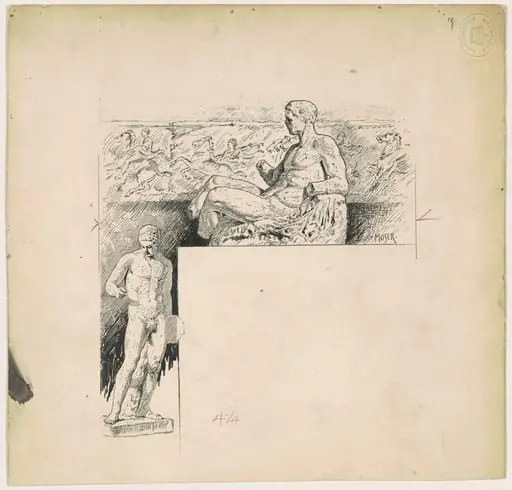
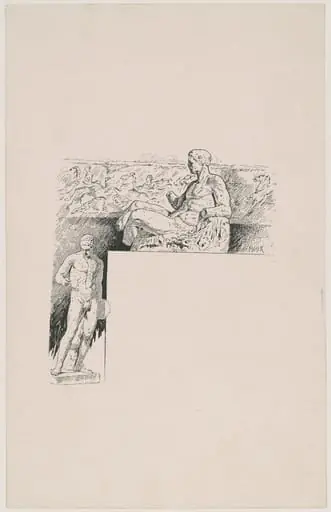 Casts from Antique Sculpture: The Parthenon
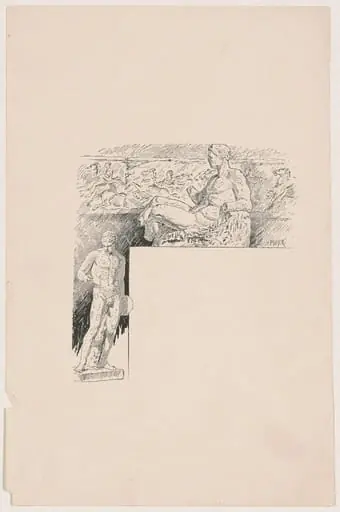 Casts from Antique Sculpture: The Parthenon
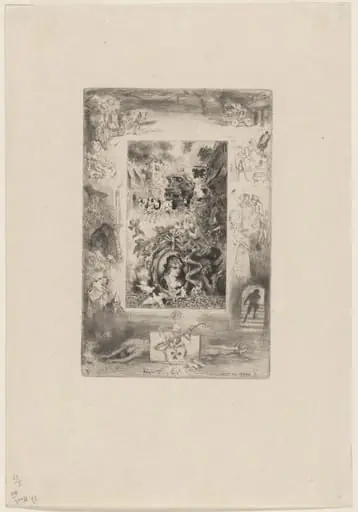 La Diligence de Beaucaire
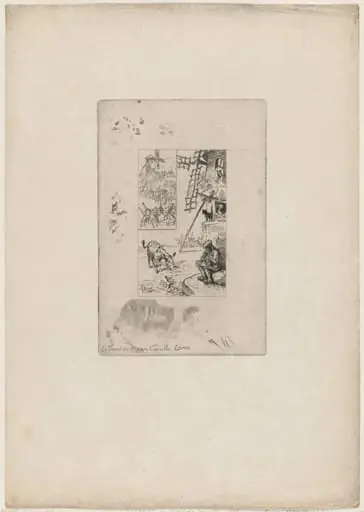 Le Secret du Maîtres Cornille
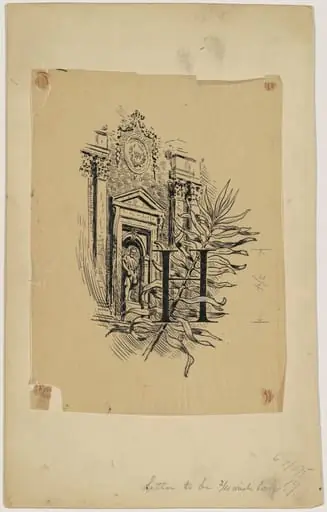 History of the Corcoran Gallery of Art
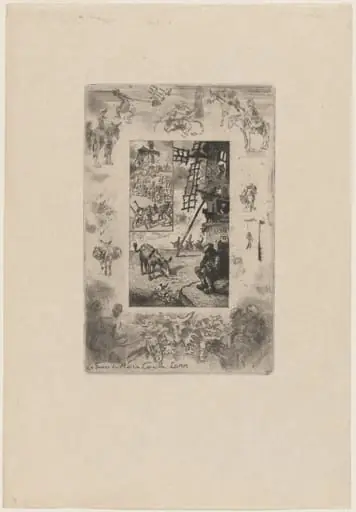 Le Secret du Maîtres Cornille
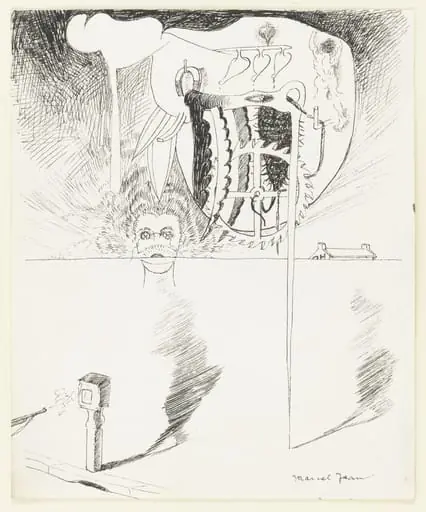 Untitled
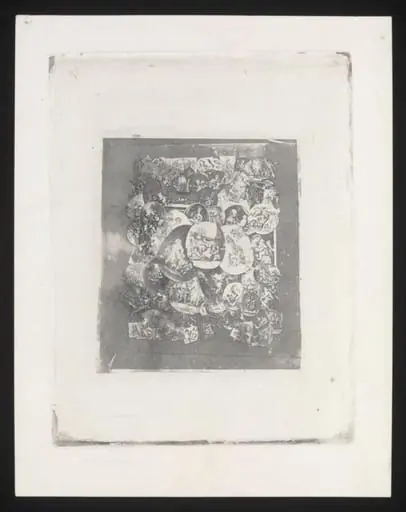 Exp. 670: Composite of oval portrait prints and engravings
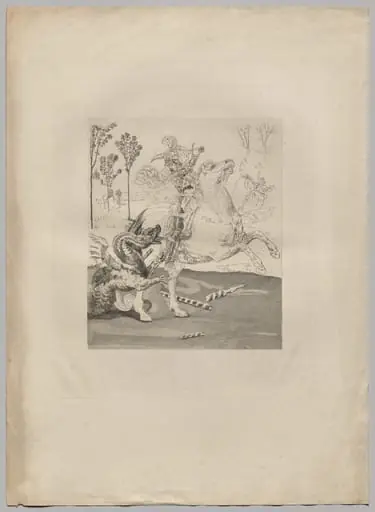 St. George and the Dragon (1)