Artwork
Untitled
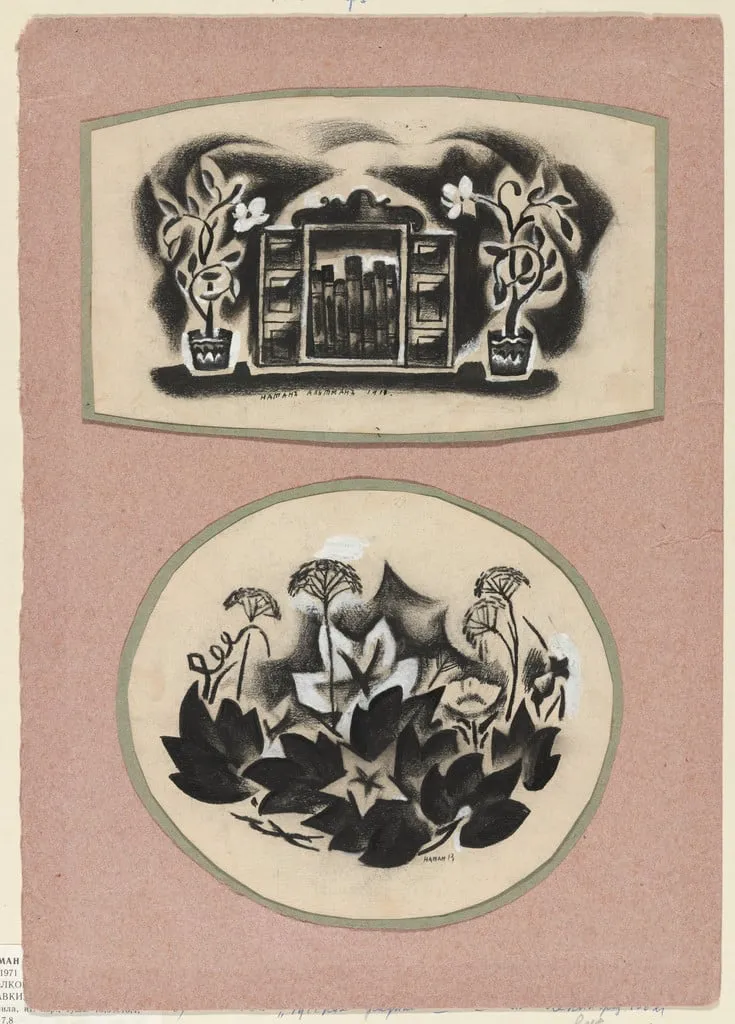
Untitled is a pastel drawing by Natan Al'tman. It dates from 1914 and is held in the collection of the Museum of Modern Art.
About this work
Overview
Created in 1914 by Natan Al'tman, this drawing combines pastel, gouache, and ink on layered, cut-and-pasted paper.
Created in 1914 by Natan Al'tman, this drawing combines pastel, gouache, and ink on layered, cut-and-pasted paper. The composition is mounted on green and red construction paper, emphasizing its constructed nature. Al'tman, active in the Russian avant-garde, used collage to explore abstraction and spatial fragmentation, aligning with broader experimental trends of the period. The work resists traditional pictorial space, instead presenting layered fragments as autonomous visual elements.
Subject & Meaning
The image contains two distinct vignettes: one featuring potted plants and a distant clock tower, the other a circular arrangement of stylized flowers. Neither scene is narrative-driven; instead, they function as symbolic fragments—possibly referencing domesticity and nature, filtered through a modernist lens. The absence of context or detail invites interpretation without resolution, reflecting Al'tman’s interest in evoking mood over storytelling.
Technique & Style
Al'tman employed thick, black outlines to define flat, simplified forms, using pastel for muted color fields and ink for sharp contrast. Cut paper elements are layered to create depth without perspective, a technique shared with contemporaries like Malevich and Chagall. The use of colored construction paper as a ground adds structural emphasis, turning the support into an active component of the composition rather than a passive backdrop.
History & Provenance
The work entered the collection of The Museum of Modern Art, where it remains part of its early 20th-century graphic holdings. While little is documented about its early ownership, its preservation reflects institutional recognition of Al'tman’s role in the Russian avant-garde. Its survival as a fragile collage underscores its significance as a rare example of experimental drawing from this period.
Context
Made in 1914, the work emerged during a period of intense artistic innovation in St. Petersburg and Moscow. Al'tman, influenced by Fauvist color and Cubist fragmentation, was part of a generation redefining art through abstraction and material experimentation. Jewish cultural motifs and urban imagery subtly informed his visual language, though he avoided overt symbolism, favoring formal inquiry over explicit narrative.
Legacy
Al'tman’s use of collage and layered paper anticipated later developments in modernist graphic art. While less known than peers like Malevich, his work contributed to the broader shift toward non-traditional materials and compositional strategies in early 20th-century Russia. This piece exemplifies how drawing, once considered preparatory, became a primary medium for avant-garde experimentation.
Artist & collection
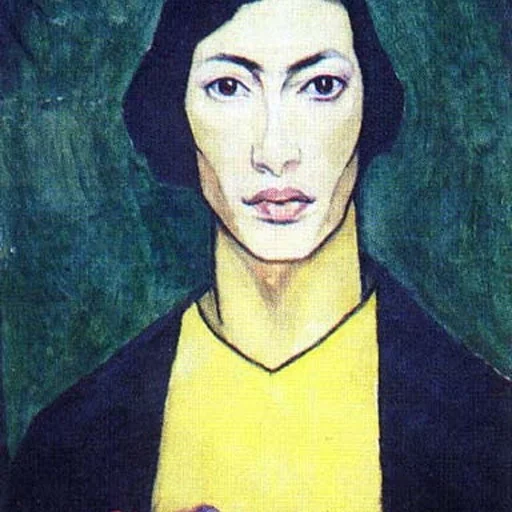
Artist
Nathan Isaevich Altman (Russian: Натан Исаевич Альтман, romanized: Natan Isayevich Altman) (1889–1970) was a virtuoso Ukraine-born artist, notable for his avant-garde contributions to painting, sculpture, illustration,…

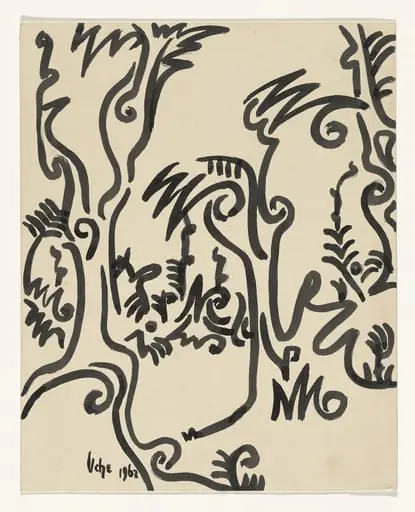 Untitled
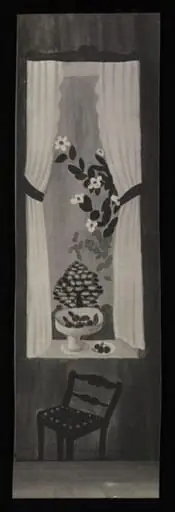 La Boutique Fantastique
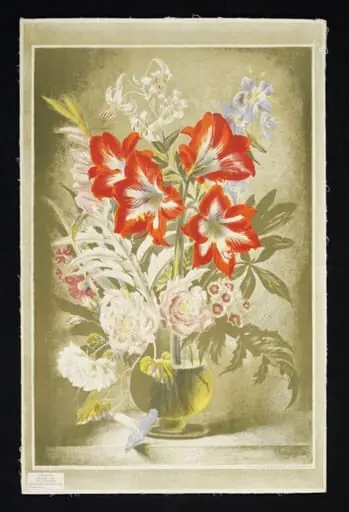 Striped Lily
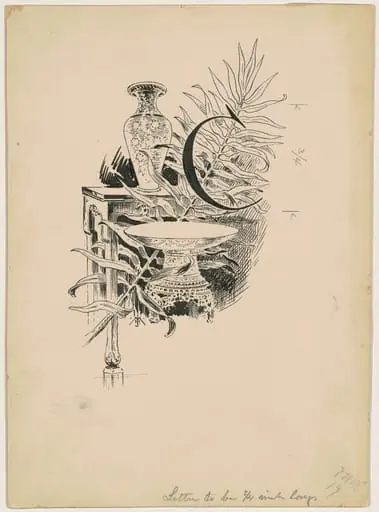 Cloisonné
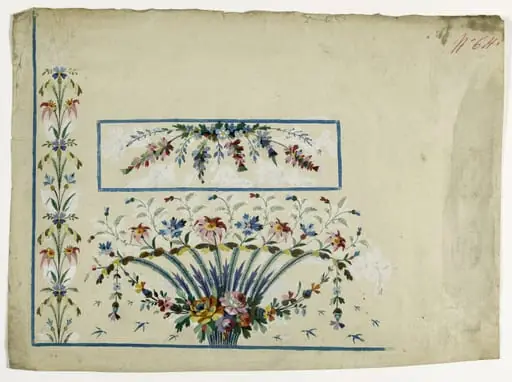 Gilet décor bouquet oeillets et églantines, projets de broderies de gilet, XVIIIème siècle
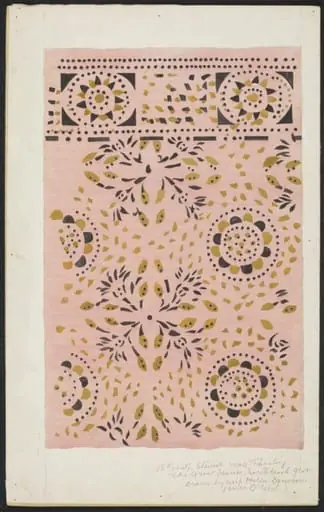 Copy of a 18th century mural painting in the Great House, Northleach, Gloucestershire
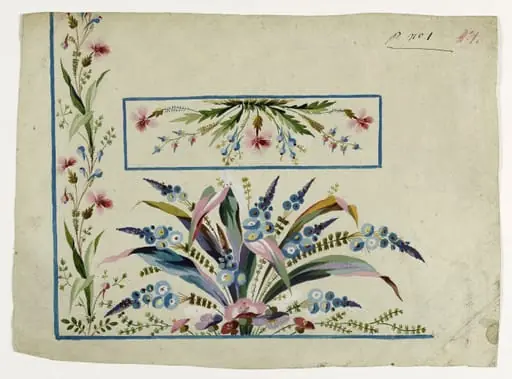 Gilet décor bouquet de bleuets et d'oeillets, projets de broderies de gilet, XVIIIème siècle
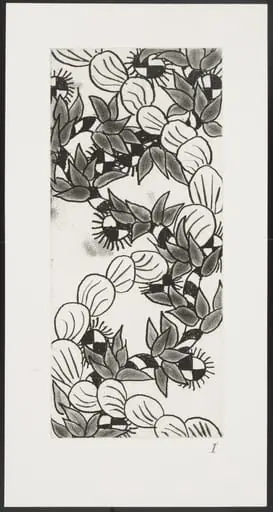 Untitled
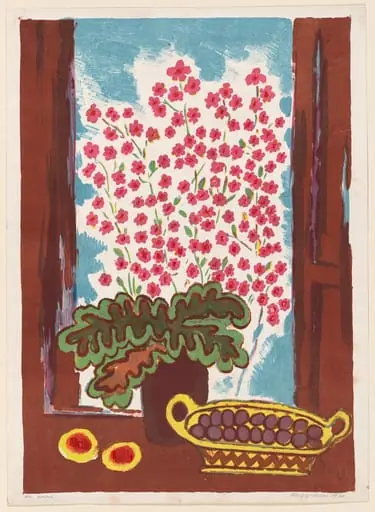 Untitled
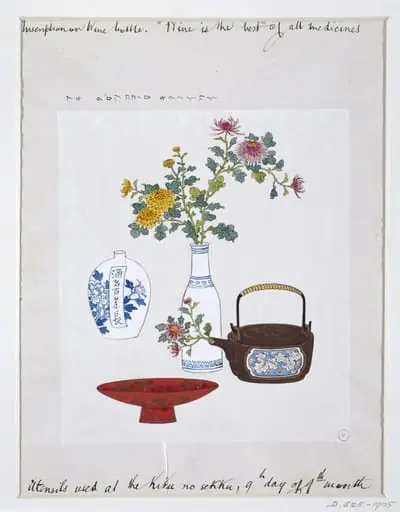 Utensils used at the Kiku no sekku, 9th day of 9th month
 Untitled
 Untitled