Artwork
Study for "Bronzes"
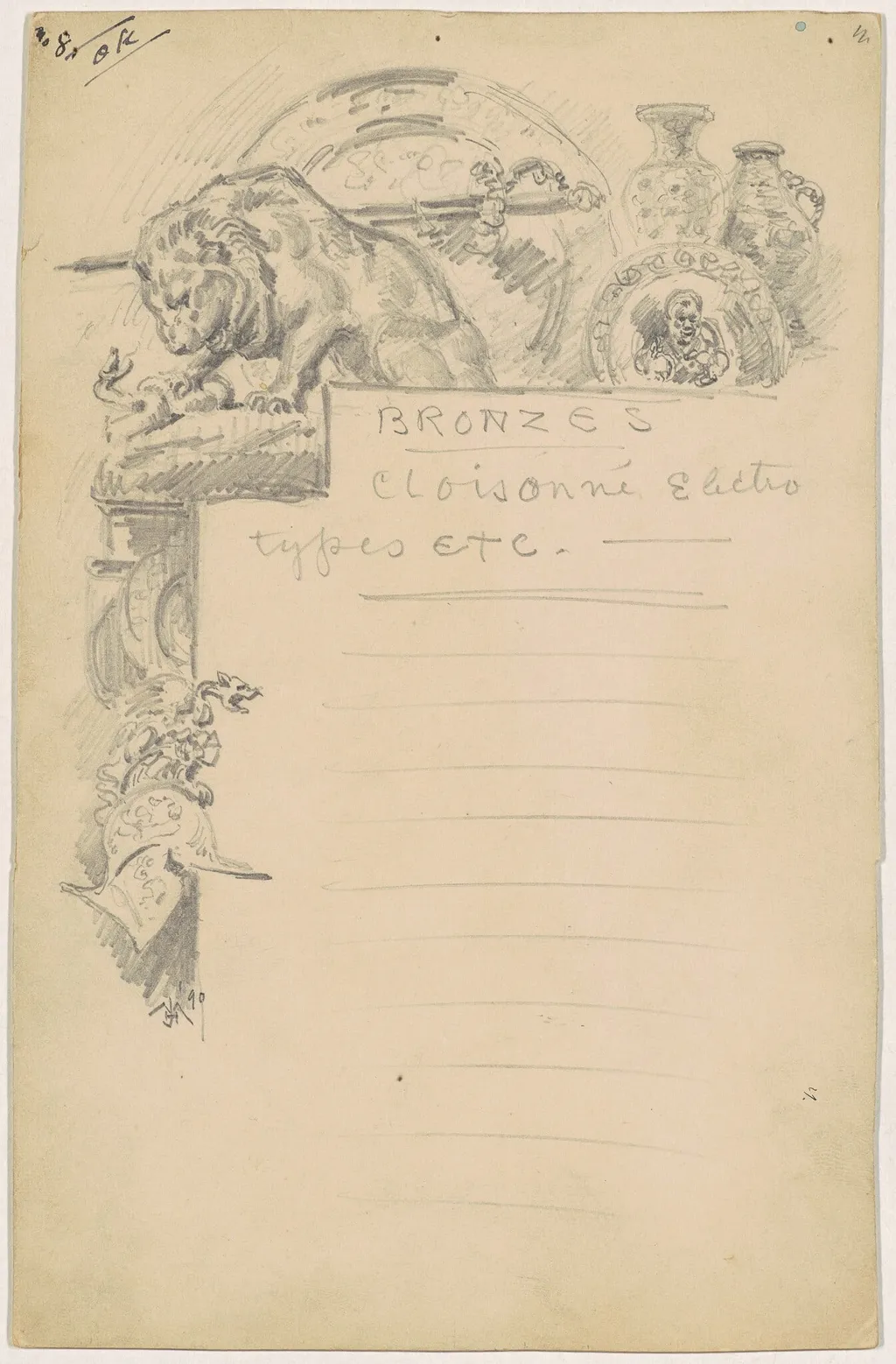
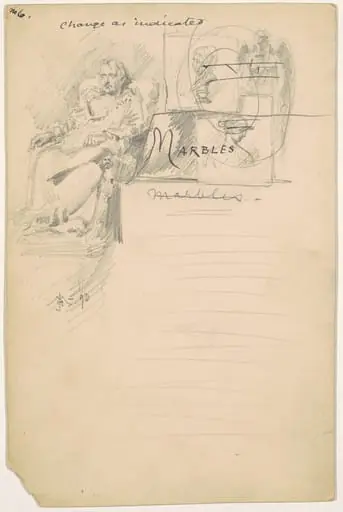
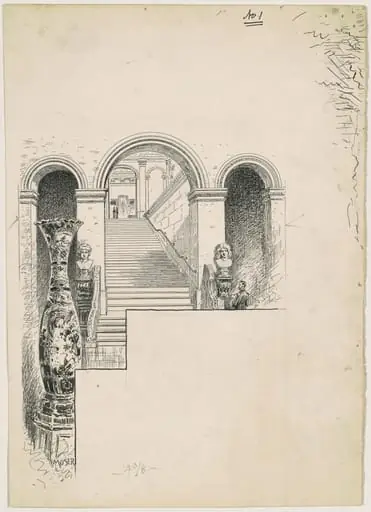
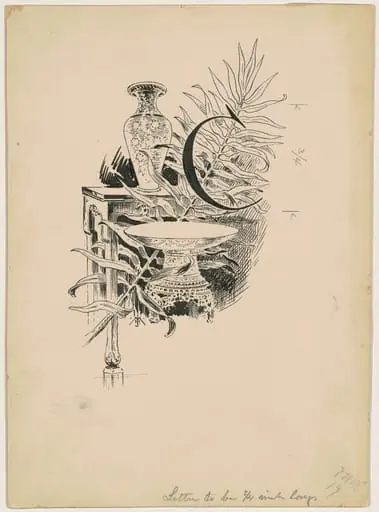
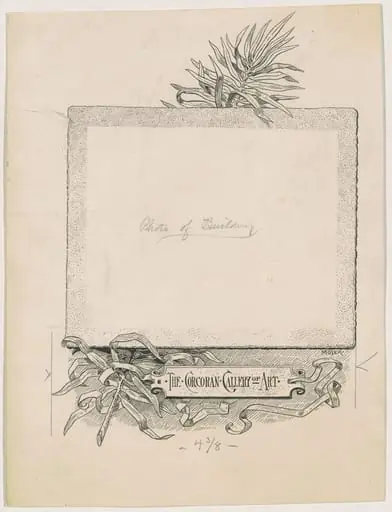
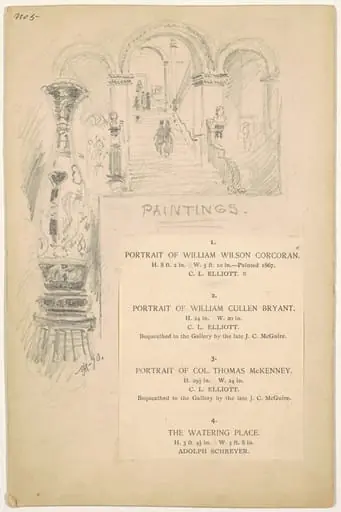
Study for "Bronzes" is a graphite drawing by the Impressionist artist James Henry Moser. It dates from 1890 and is held in the collection of the National Gallery of Art.
About this work
Overview
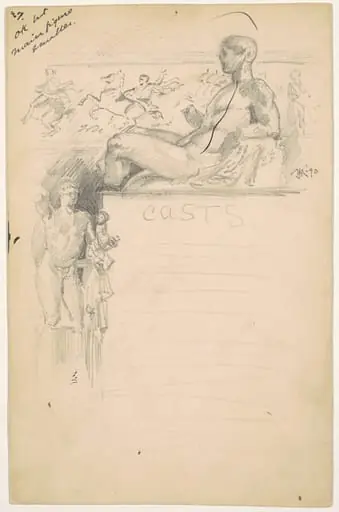
James Henry Moser produced this graphite study in 1890 as a preparatory sketch for a larger composition titled "Bronzes." Executed on paperboard, the drawing records a modest arrangement of objects that would later appear in a finished work, offering insight into Moser’s planning process.
Subject & Meaning
The composition depicts a simple shelf bearing several small bronze items and vases, illuminated by a lamp with a curved shade on the left. A hand is shown holding a diminutive animal figurine, while the central area contains handwritten notes listing "Bronzes, Cloisonné, Electro types etc.," suggesting the artist’s focus on decorative metal objects and their variations.
Technique & Style
Rendered with loose, rapid graphite strokes, the drawing emphasizes gesture over detail. Moser employs light, gestural lines to capture the placement of objects and the play of light, creating a sketch-like quality that functions as a visual inventory rather than a finished rendering.
History & Provenance
Created in 1890, the study forms part of Moser’s broader practice of producing preparatory sketches for his decorative arts series. The work remains documented within the artist’s oeuvre, illustrating his method of translating preliminary observations into completed paintings or prints.
Context
During the late nineteenth century, interest in ornamental metalwork, including bronzes, cloisonné, and electrotypes, was prominent in decorative arts circles. Moser’s note‑taking reflects this contemporary fascination and aligns his work with the period’s emphasis on cataloguing and reproducing decorative objects.
Artist & collection