Artwork
Index
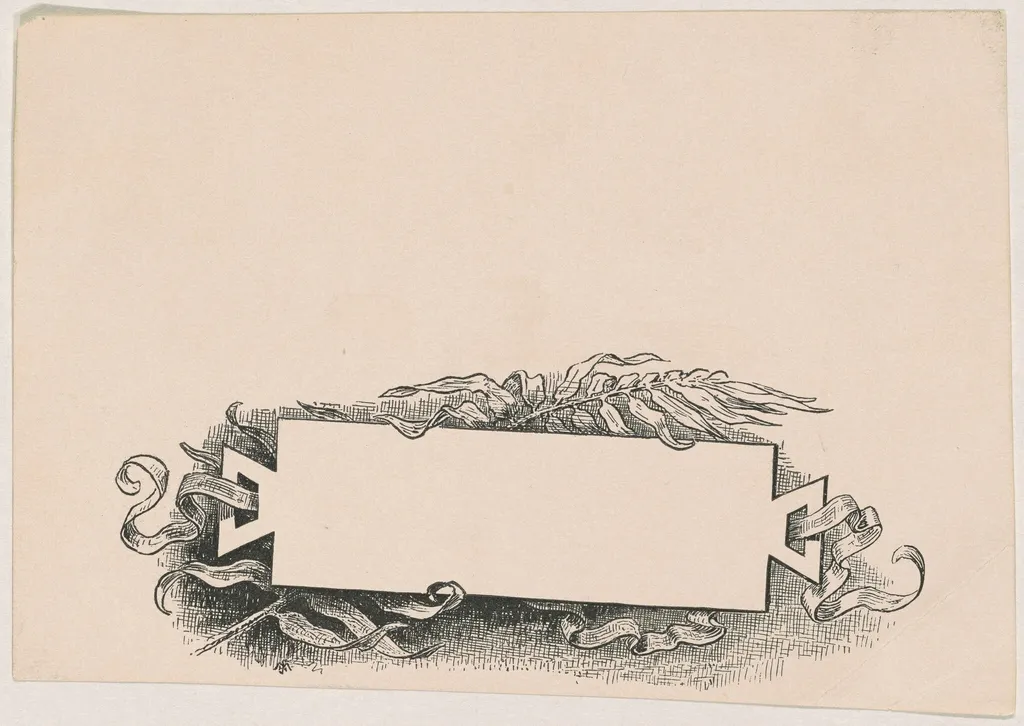
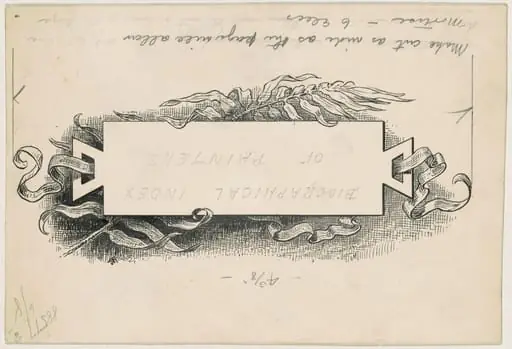
Index is an ink print by the Impressionist artist James Henry Moser. It dates from 1892 and is held in the collection of the National Gallery of Art.
About this work
Overview
The design balances typographic form with decorative flourish, suggesting a symbolic or heraldic intent rather than a purely functional one.
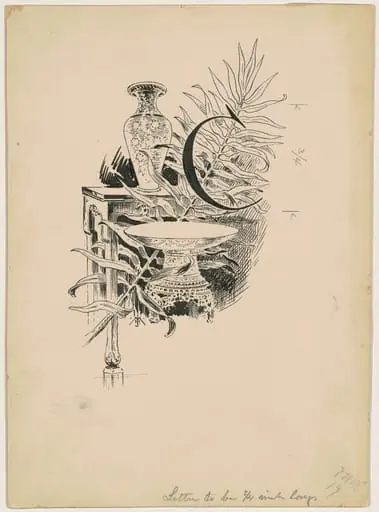
Created in 1892 by James Henry Moser, Index is a black-on-white offset lithograph on wove paper. It presents a compact composition of two stylized letters—F and R—linked by a sinuous, organic line. The design balances typographic form with decorative flourish, suggesting a symbolic or heraldic intent rather than a purely functional one. The print’s texture reflects the lithographic process, where ink adheres selectively to the stone’s surface.
Subject & Meaning
The letters F and R may reference a name, institution, or initials, though their exact significance remains unconfirmed. Their intertwined form, adorned with vine-like curves, evokes a sense of unity or connection. Above them, a sparse, spiky motif resembling a plant or bird adds a naturalistic counterpoint, possibly symbolizing growth or vigilance. The work’s title, Index, implies a marker or signpost, reinforcing its role as a coded emblem.
Technique & Style
Moser employed offset lithography, a method that transfers ink from a stone or plate to a rubber blanket, then to paper. This technique allowed for fine control over line weight and surface texture, resulting in the bold, slightly irregular strokes seen in the letters. The flowing, ribbon-like connections and decorative elements reflect Art Nouveau influences, blending structural clarity with organic ornamentation.
History & Provenance
Index was produced in 1892, during a period when lithography was widely used for commercial and artistic prints. Moser, active in the late 19th century, created works for publishers and institutions, often blending typography with illustrative detail. While specific ownership history is not documented, the print aligns with the era’s interest in decorative printing and graphic design as an emerging art form.
Context
In the 1890s, artists and designers across Europe and America were reimagining typography and graphic symbols, influenced by the Arts and Crafts movement and Art Nouveau. Index reflects this trend, merging functional lettering with expressive line work. Its modest scale and print medium suggest it may have served as a label, logo, or decorative broadside rather than a fine art object.
Legacy
Index stands as a quiet example of late 19th-century graphic experimentation, where typography and ornament intersected. Though not widely known, it contributes to the broader history of print design, illustrating how commercial techniques were adapted for aesthetic expression. Its restrained composition continues to resonate with contemporary interests in minimal yet evocative visual symbols.
Artist & collection


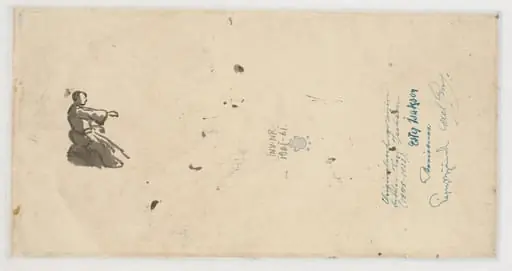 Siddende figur med fremstrakt arm
 Study of "The Roman Orator (Germanicus)"
 S 33 - Peisaj la Sulina (Dunăre și faleză cu tufe de flori grena)
 Ma 1 - Peisaj la Măcin (Case, garduri și pomi)
 Imortele
 Peisaj din deltă
 Study of a Standing Male Figure after the Antique
 Peisaj Deltă
 Peisaj (cu stradă)
 Peisaj de iarnă
 Anul 1821
 Index
Index