Artwork
Seville, Alcázar
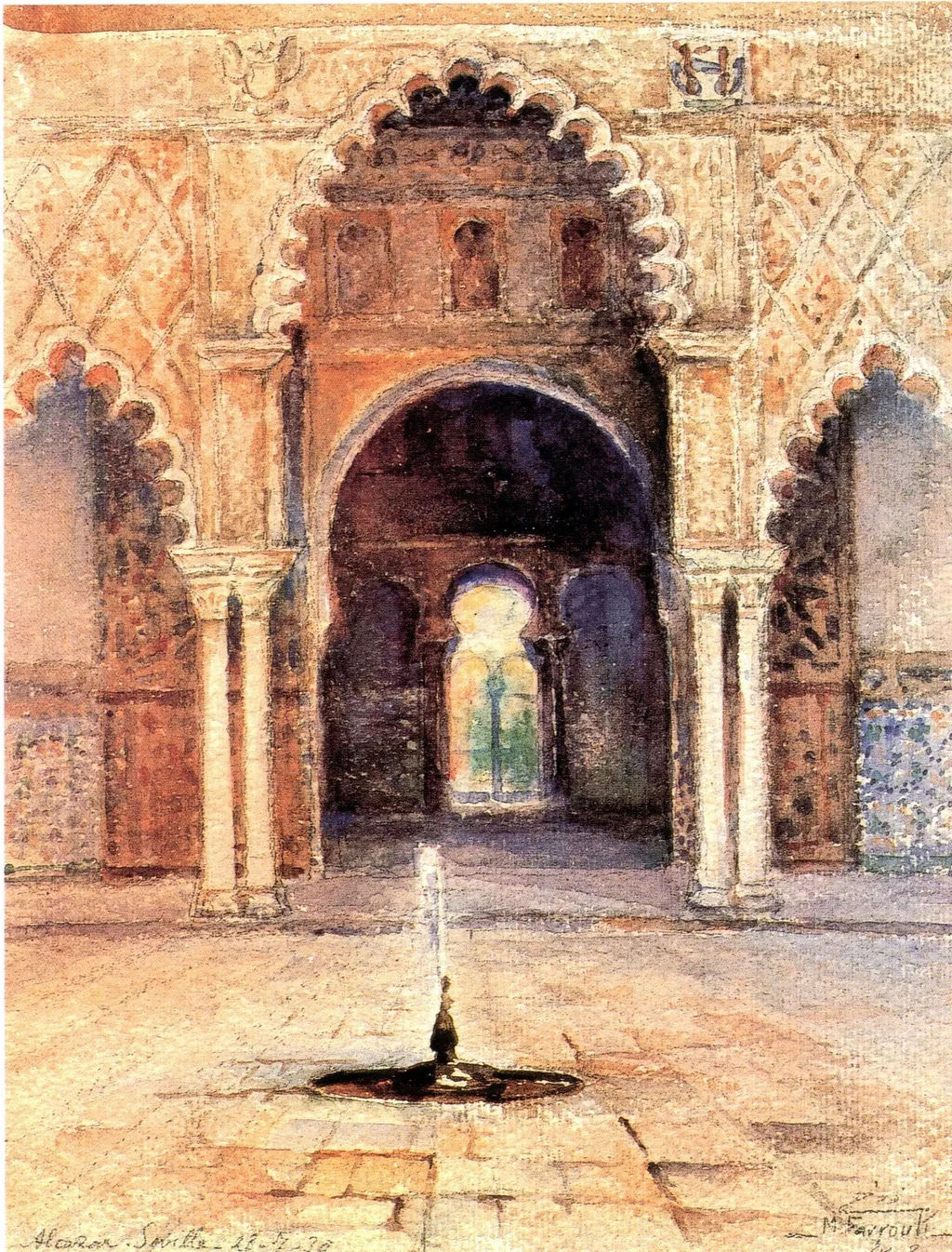
Seville, Alcázar is a watercolor painting by Moustafa Farroukh. It dates from 1939 and is held in the collection of the Sursock Museum.
About this work
Overview
Created circa 1939, this watercolor by Moustafa Farroukh captures the interior of Seville’s Alcázar. The composition focuses on the intricate Islamic geometric motifs, a central fountain, and the vaulted ceilings that define the historic palace complex.
Subject & Meaning
The painting emphasizes the harmonious blend of ornamental design and architectural space, reflecting the Moorish aesthetic that characterizes the Alcázar. By foregrounding the repeating patterns and water feature, Farroukh highlights the interplay of geometry, light, and reflection within the setting.
Technique & Style
Executed in watercolor, the work demonstrates Farroukh’s skill in rendering delicate detail and subtle tonal variations. The medium allows for translucent washes that convey the luminous quality of the palace’s interiors, while the precise line work defines the complex tilework and structural forms.
History & Provenance
Moustafa Farroukh, a prominent Lebanese painter of the twentieth century, produced the piece during a period of extensive travel and study. The watercolor now belongs to the collection of the Sursock Museum in Beirut, where it is displayed among the artist’s extensive oeuvre of more than two thousand works.
Artist & collection
Artist
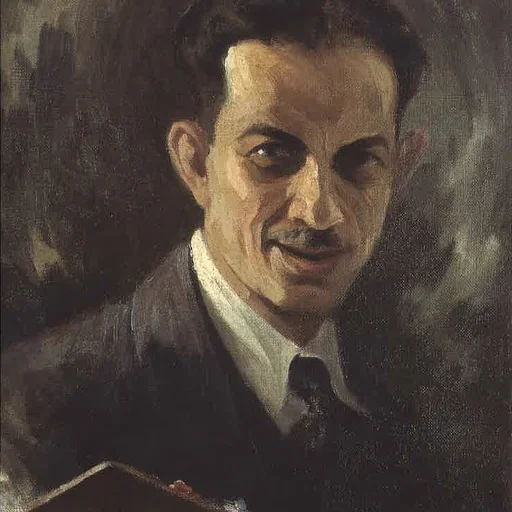
Moustafa Farroukh (Arabic: مصطفى فروخ; 1901 – 1957) was one of Lebanon's most prominent painters of the 20th century.

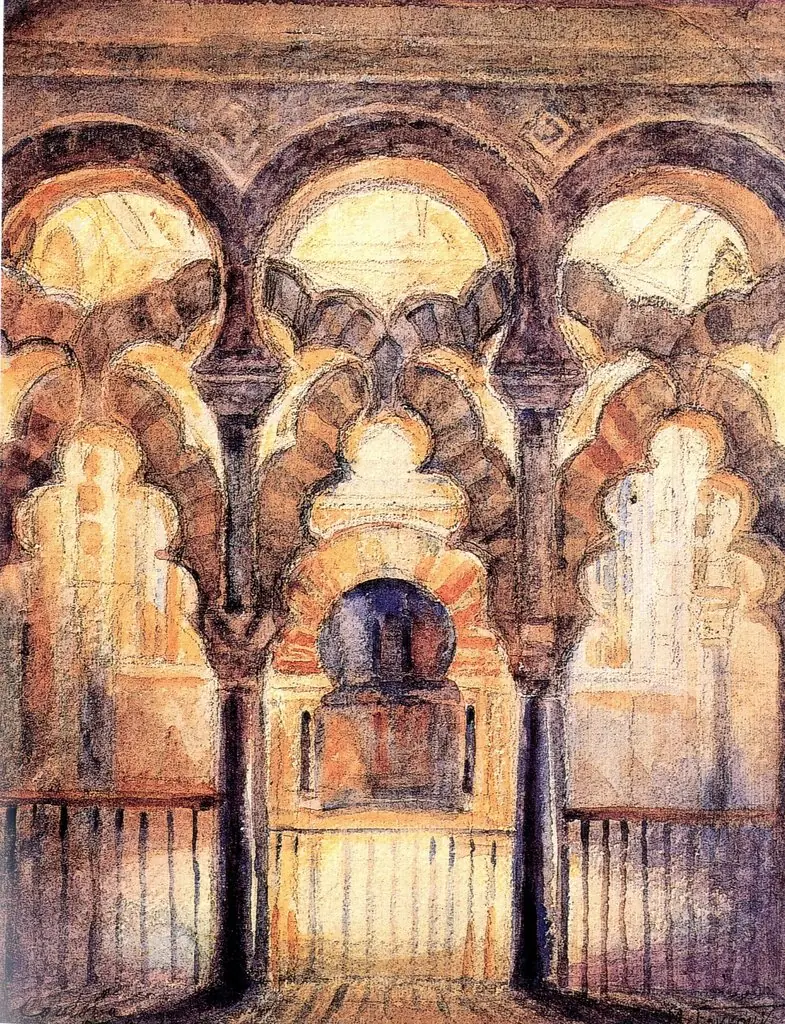 Córdoba, the Grand Mosque's Mihrab
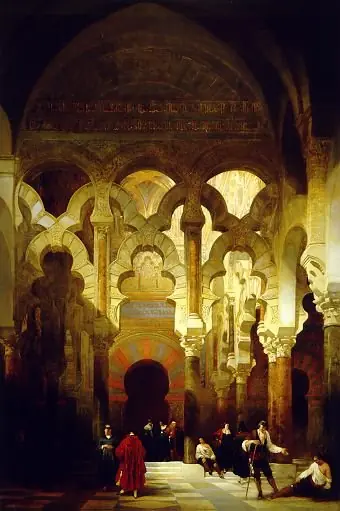 Interior of the Mosque, Córdoba
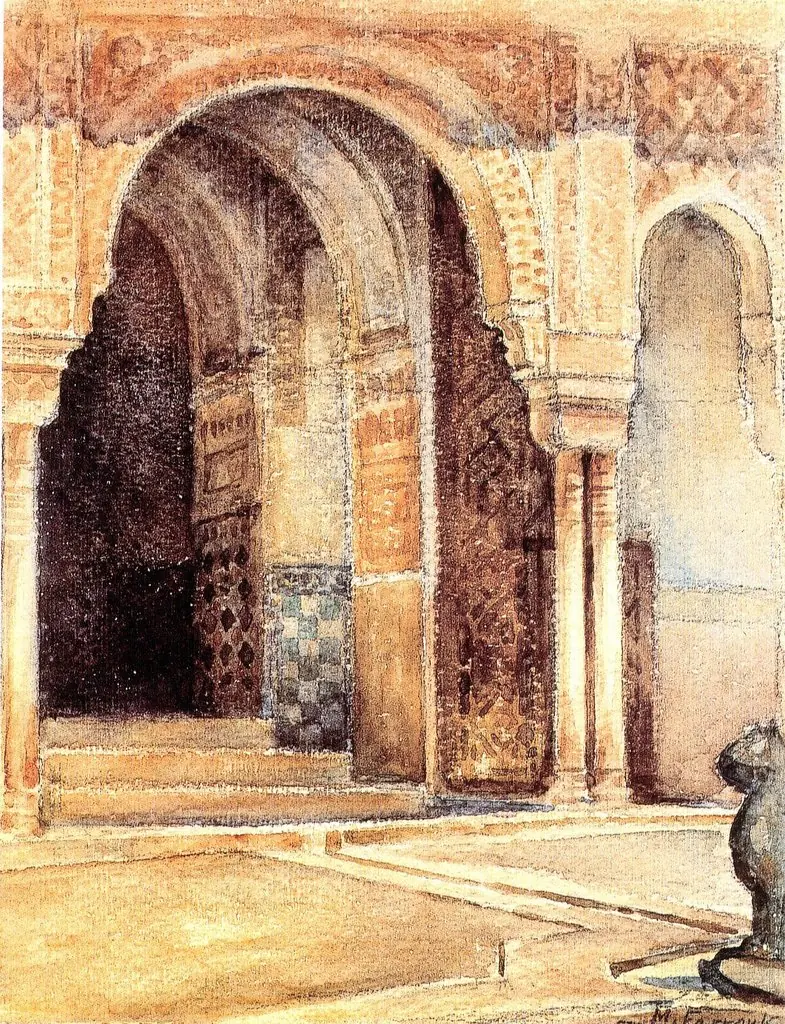 Granada, Alhambra: Entrance to Abencerrages's Hall
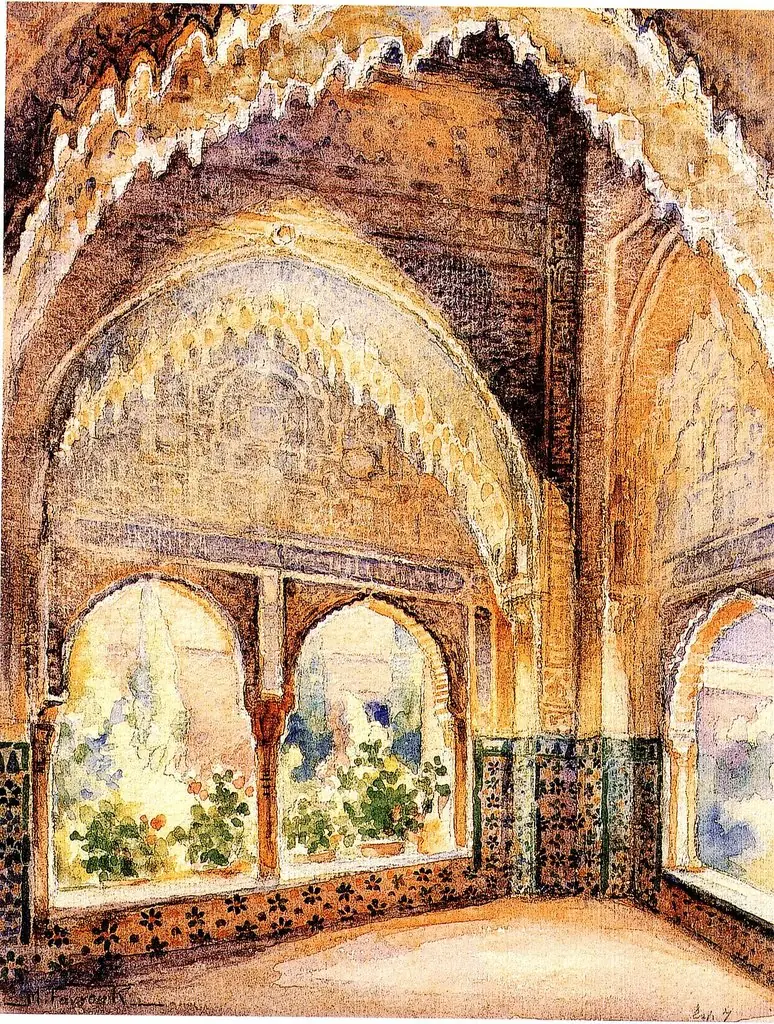 Granada, Alhambra: Lindaraja's Balcony
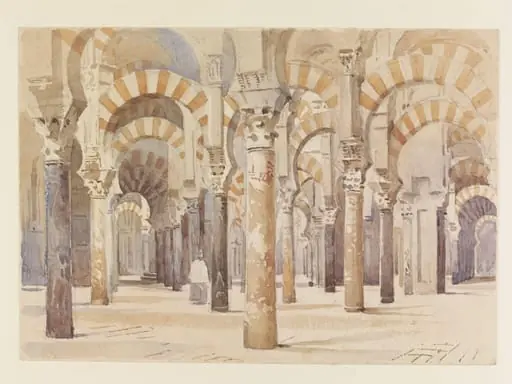 Interior of the Mosque-Cathedral, Cordoba
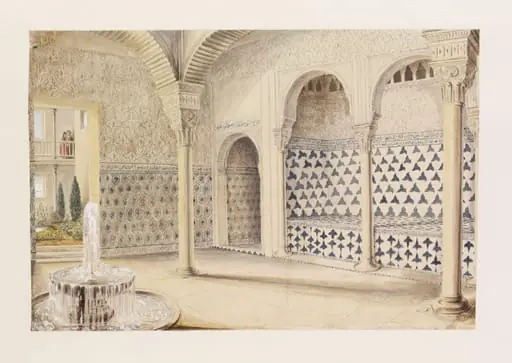 The Room of the Beds in the Alhambra
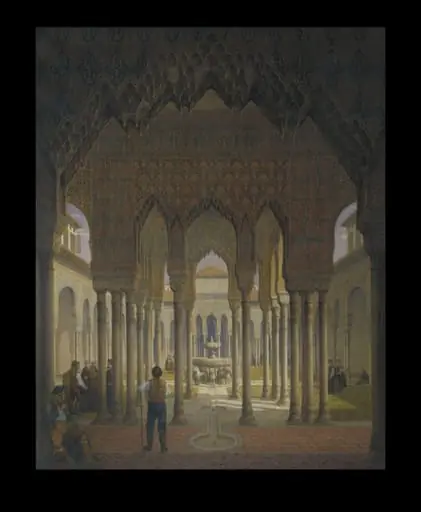 The Court of Lions in the Alhambra, Granada.
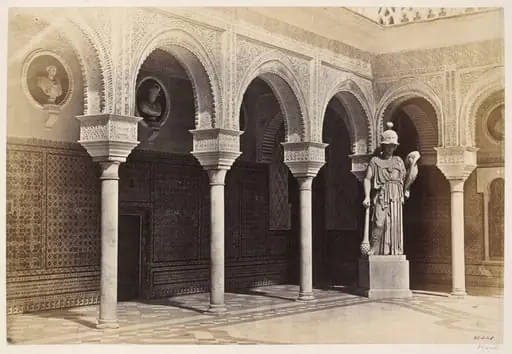 Courtyard, Casa de Pilatos, Seville
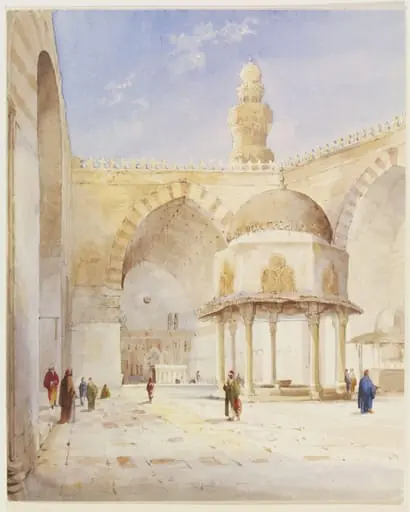 Interior of the Mosque of Sultan Hassan
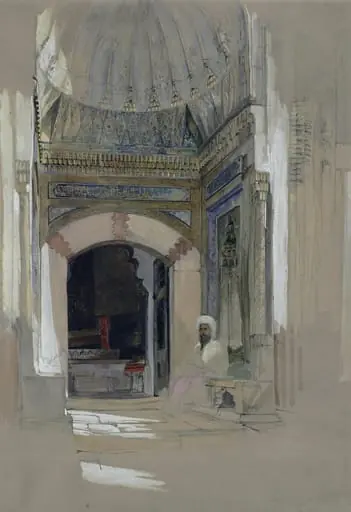 Entrance to the Tomb of Sultan Mehmet I, Bursa