Artwork
Nude Figure of a Boy in a Landscape (Knabe zwischen Blattpflanzen)
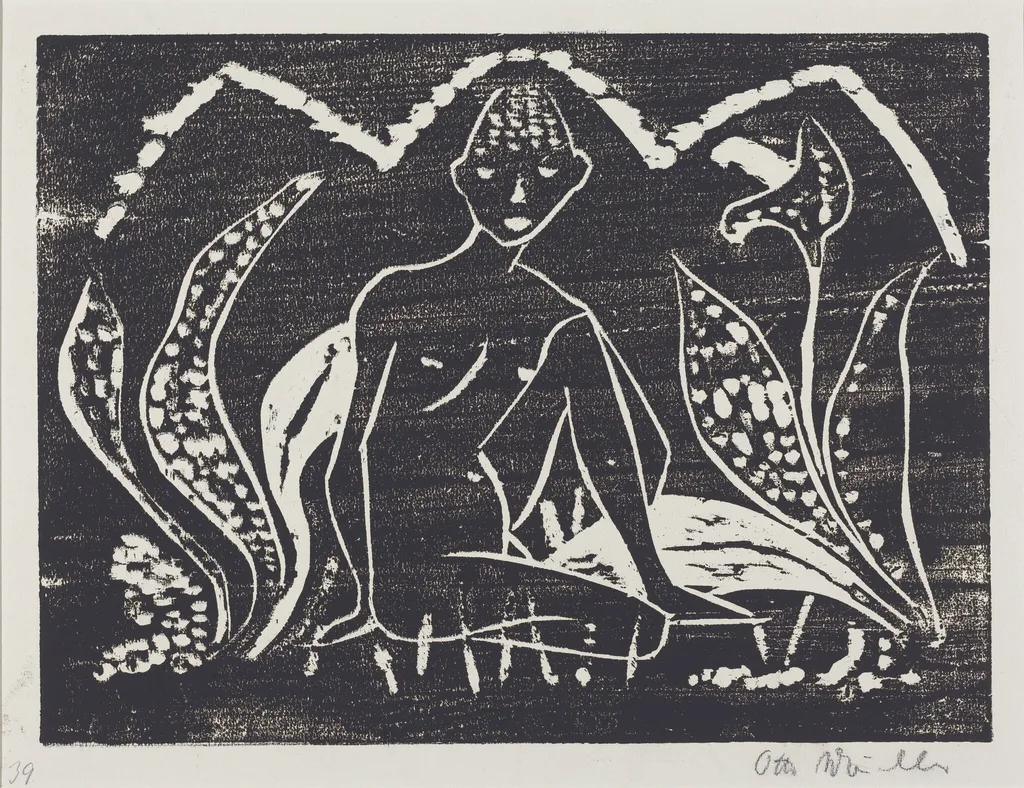
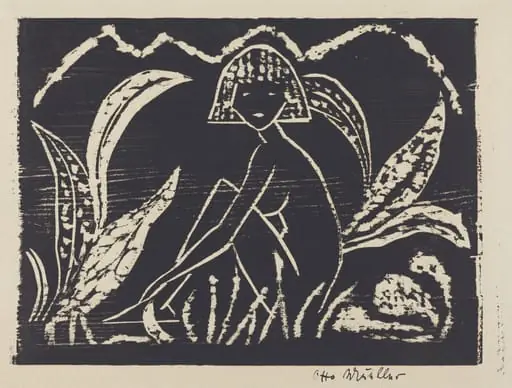
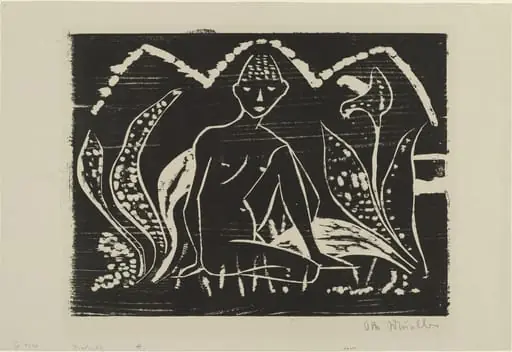
Nude Figure of a Boy in a Landscape (Knabe zwischen Blattpflanzen) is an ink print by Otto Mueller. It dates from 1912 and is held in the collection of the National Gallery of Art.
About this work
Overview
Created in 1912, *Nude Figure of a Boy in a Landscape* is a black-and-white woodcut by German artist Otto Mueller. As a member of Die Brücke, Mueller employed the woodcut medium to explore the relationship between the human body and nature. The print’s stark tonal contrast and simplified forms reflect the movement’s interest in primal expression and direct artistic intervention.
Subject & Meaning
His pose is still and unadorned, with arms relaxed at his sides, suggesting a quiet harmony with the surrounding vegetation.
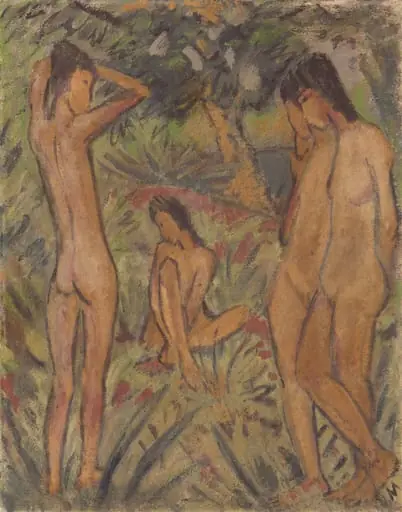
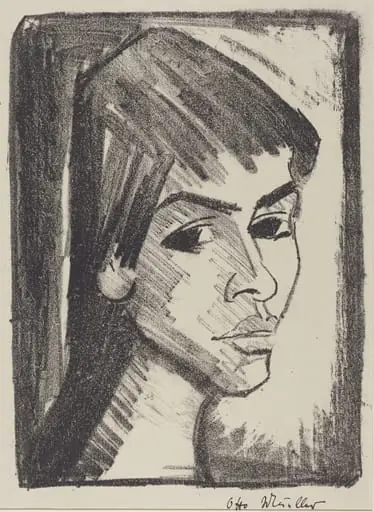
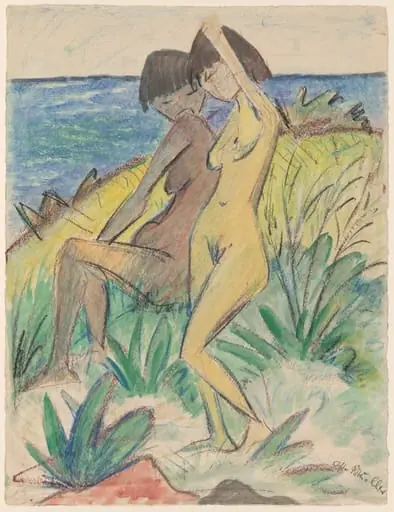
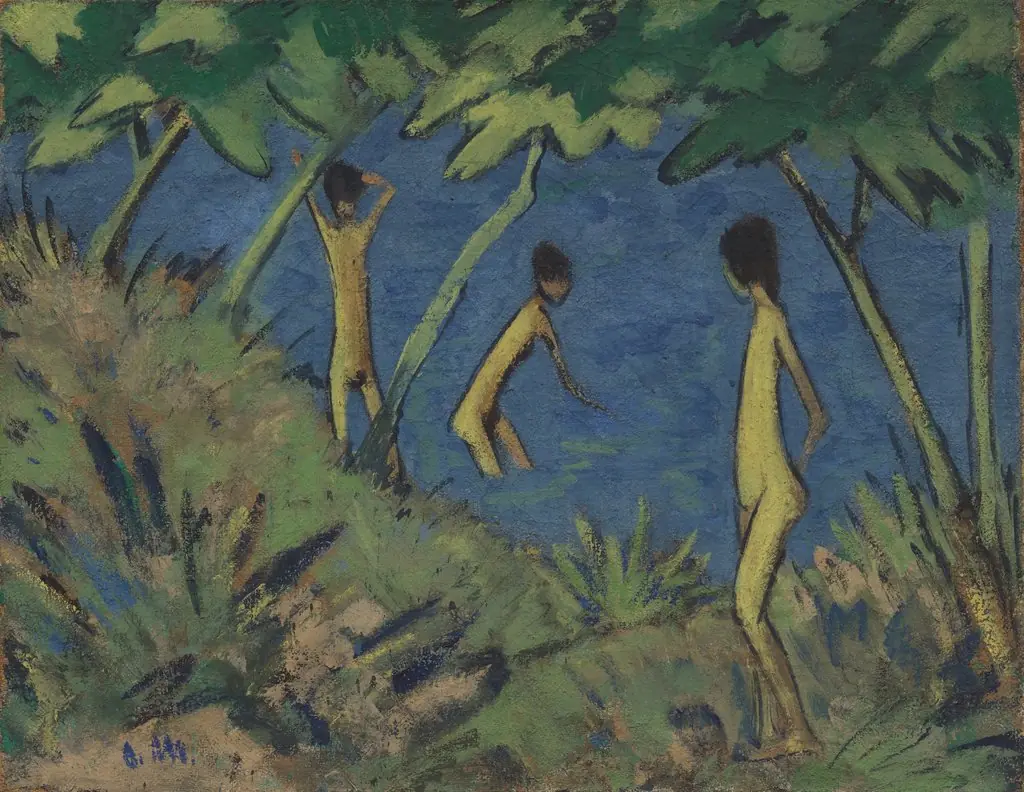
The print centers on a solitary young male figure standing calmly amid tall, undulating plants. His pose is still and unadorned, with arms relaxed at his sides, suggesting a quiet harmony with the surrounding vegetation. The absence of facial detail and the integration of his form into the foliage imply a symbolic unity between human presence and the natural world, a recurring theme in Mueller’s work.
Technique & Style
Mueller carved the image directly into a wood block, using bold, clean lines to define the boy’s blocky silhouette and the rhythmic curves of the leaves. The background is filled with sparse white dots, creating texture without detail. The limited palette of black and white heightens the graphic impact, emphasizing form over realism and aligning with Die Brücke’s preference for expressive abstraction over naturalism.
History & Provenance
The woodcut was produced during Mueller’s active years with Die Brücke, a group committed to revitalizing German art through raw, emotional expression. While specific early ownership records are sparse, the work is part of a broader body of prints Mueller made between 1910 and 1915, many of which entered public collections in Germany after World War I.
Context
In early 20th-century Germany, artists like Mueller sought to break from academic traditions by embracing folk art, non-Western aesthetics, and direct carving techniques. Woodcuts offered a tactile, immediate means of expression. Mueller’s focus on nude figures in nature aligned with contemporary interests in primitivism and the body as a site of spiritual or elemental truth.
Legacy
This print exemplifies Mueller’s contribution to modern printmaking through its distilled forms and emotional resonance. Though less widely known than his paintings, his woodcuts influenced later generations of German artists interested in the expressive potential of the medium. The work remains a quiet but significant example of Expressionist printmaking’s engagement with nature and the human figure.
Artist & collection

Artist
Otto Mueller (16 October 1874 – 24 September 1930) was a German painter and printmaker of the Die Brücke expressionist movement.