Artwork
On the Clyde, 1917-1918: The Tuscania at Glasgow
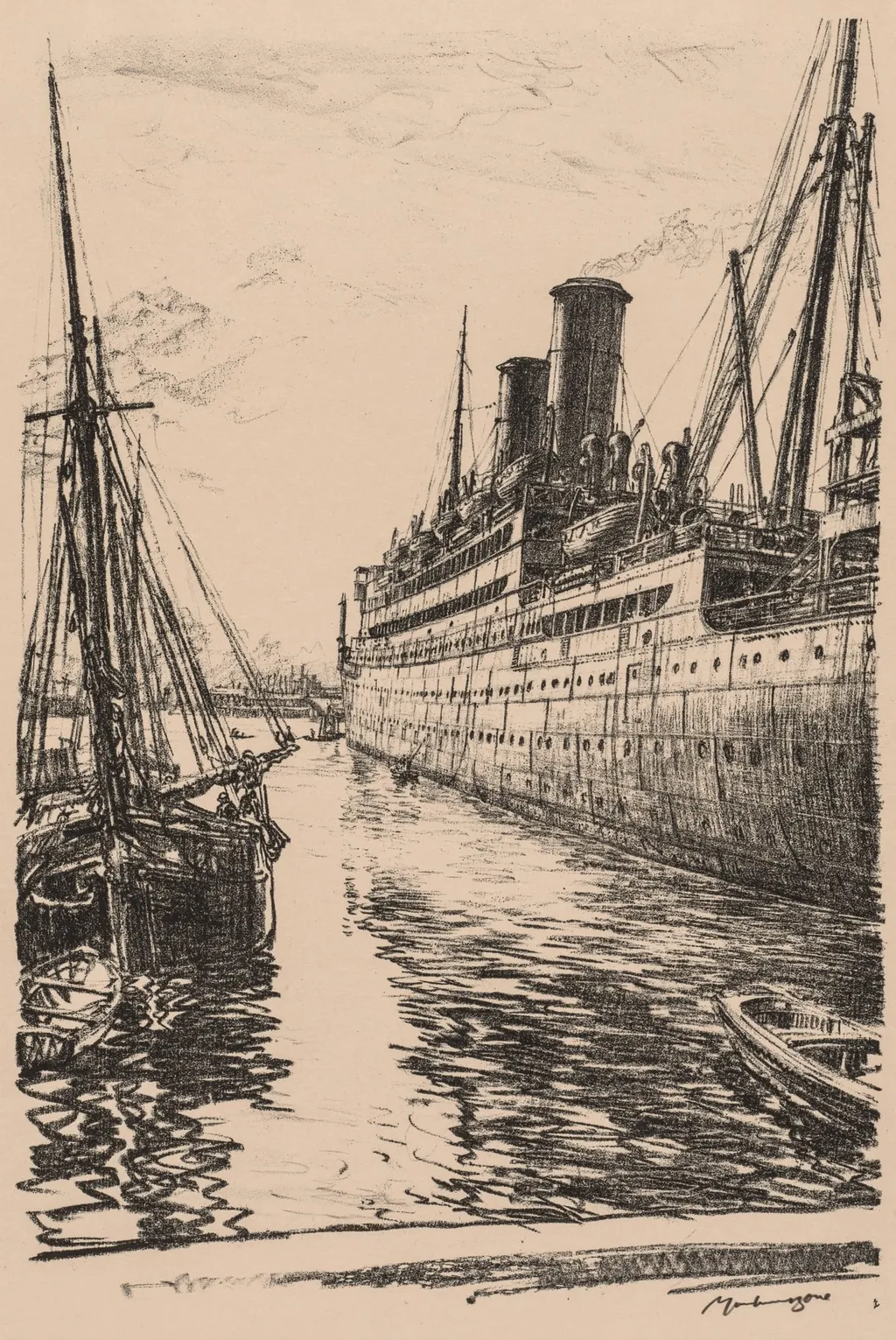
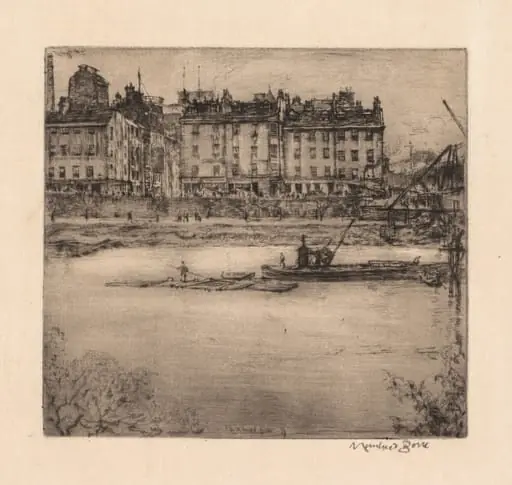
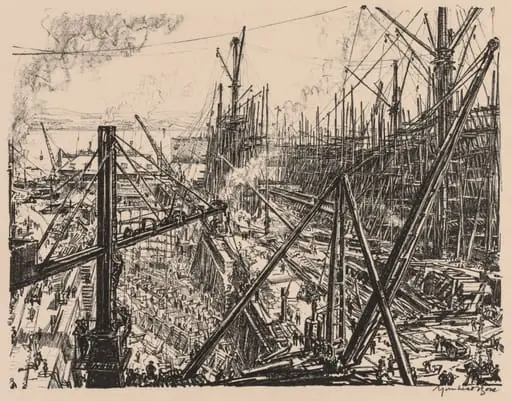
On the Clyde, 1917-1918: The Tuscania at Glasgow is a print by Muirhead Bone. It dates from 1918 and is held in the collection of the Cleveland Museum of Art.
About this work
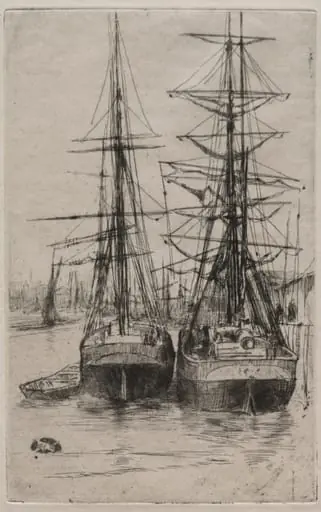
The artist focused on the ships’ details, like the rigging on the sailboat and the ship’s lifeboats.
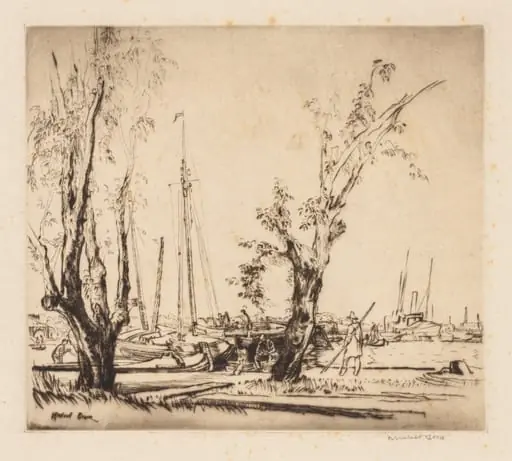
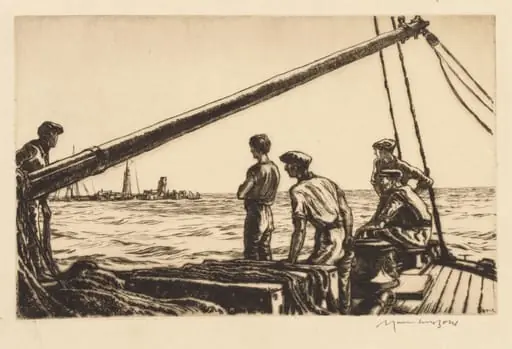
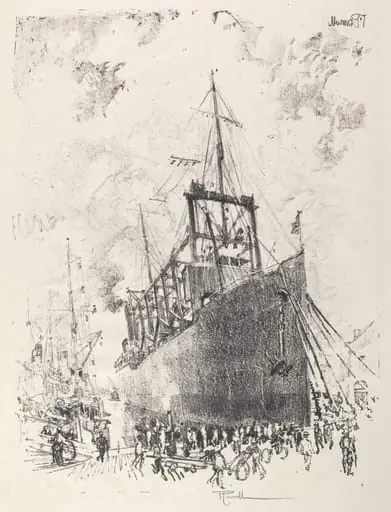
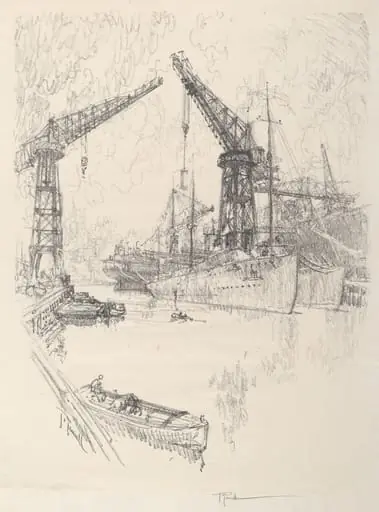
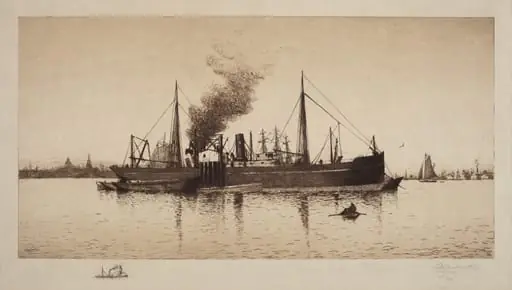
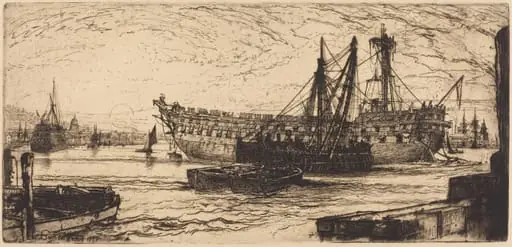
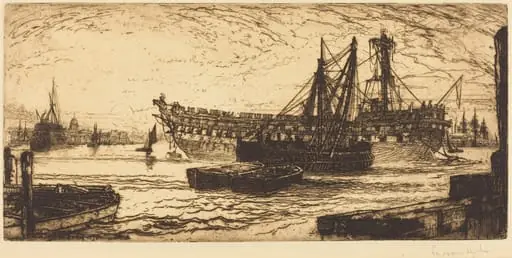
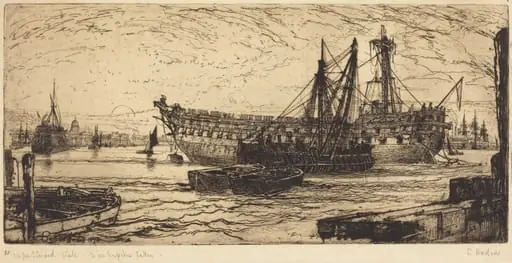
This sketch shows two ships docked side by side in a harbor. One is a big, boxy steamship with tall smokestacks and rows of windows. The other is a smaller sailing ship with masts and ropes. The water is choppy, and the whole scene is drawn in quick, sketchy lines.
The steamship looks like it’s ready for a long trip, with its sturdy build and smokestacks. The artist focused on the ships’ details, like the rigging on the sailboat and the ship’s lifeboats.
Check out the artist’s other work at Muirhead Bone (British, 1876–1953).
Overview
Muirhead Bone’s 1918 etching *On the Clyde, 1917‑1918: The Tuscania at Glasgow* records a moment in the busy Glasgow harbour during the final years of World War I. The print captures two vessels moored side by side, the larger steam‑powered liner Tuscania and a smaller sailing craft, set against a choppy water surface rendered in brisk, sketch‑like lines.
Subject & Meaning
The composition foregrounds the Tuscania, a transatlantic liner that had been requisitioned for wartime service, juxtaposed with a modest sailboat. By placing the massive, industrial ship beside a traditional vessel, Bone highlights the coexistence of modern engineering and older maritime practices that defined the Clyde’s shipbuilding landscape.
Technique & Style
Executed in etching, the work relies on fine line work and varied hatching to suggest texture and movement. Bone’s characteristic emphasis on architectural and industrial detail appears in the precise rendering of the steamship’s smokestacks, windows, and lifeboats, while the looser, more gestural strokes convey the restless water and rigging of the smaller craft.
History & Provenance
Created shortly after the war’s end, the print reflects Bone’s broader involvement as an official war artist. It entered the collection of the Cleveland Museum of Art, where it remains part of the museum’s holdings of early‑20th‑century British prints, documenting both the artist’s career and the maritime heritage of the River Clyde.
Context
Bone, a leading figure in the Etching Revival, was renowned for his depictions of industrial scenes and wartime subjects. This work aligns with his interest in the interplay between human‑made structures and their environments, a theme that recurs throughout his wartime sketches and post‑war prints of British ports.
Own this work as a print
Artist & collection
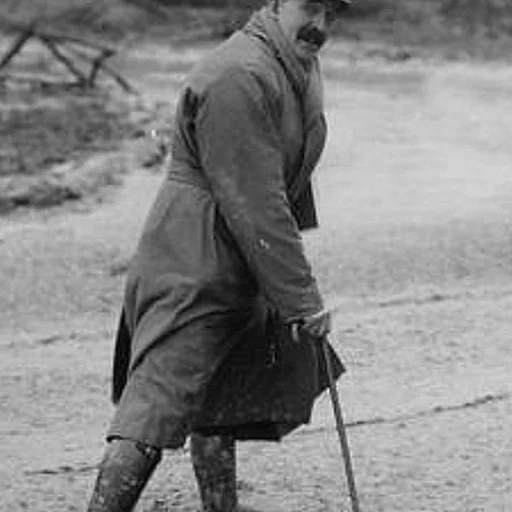
Artist
Sir Muirhead Bone (23 March 1876 – 21 October 1953) was a Scottish etcher and watercolourist who became known for his depiction of industrial and architectural subjects and his work as a war artist in both the First and Second World Wars.