Artwork
La morgue, Paris (The Mortuary)
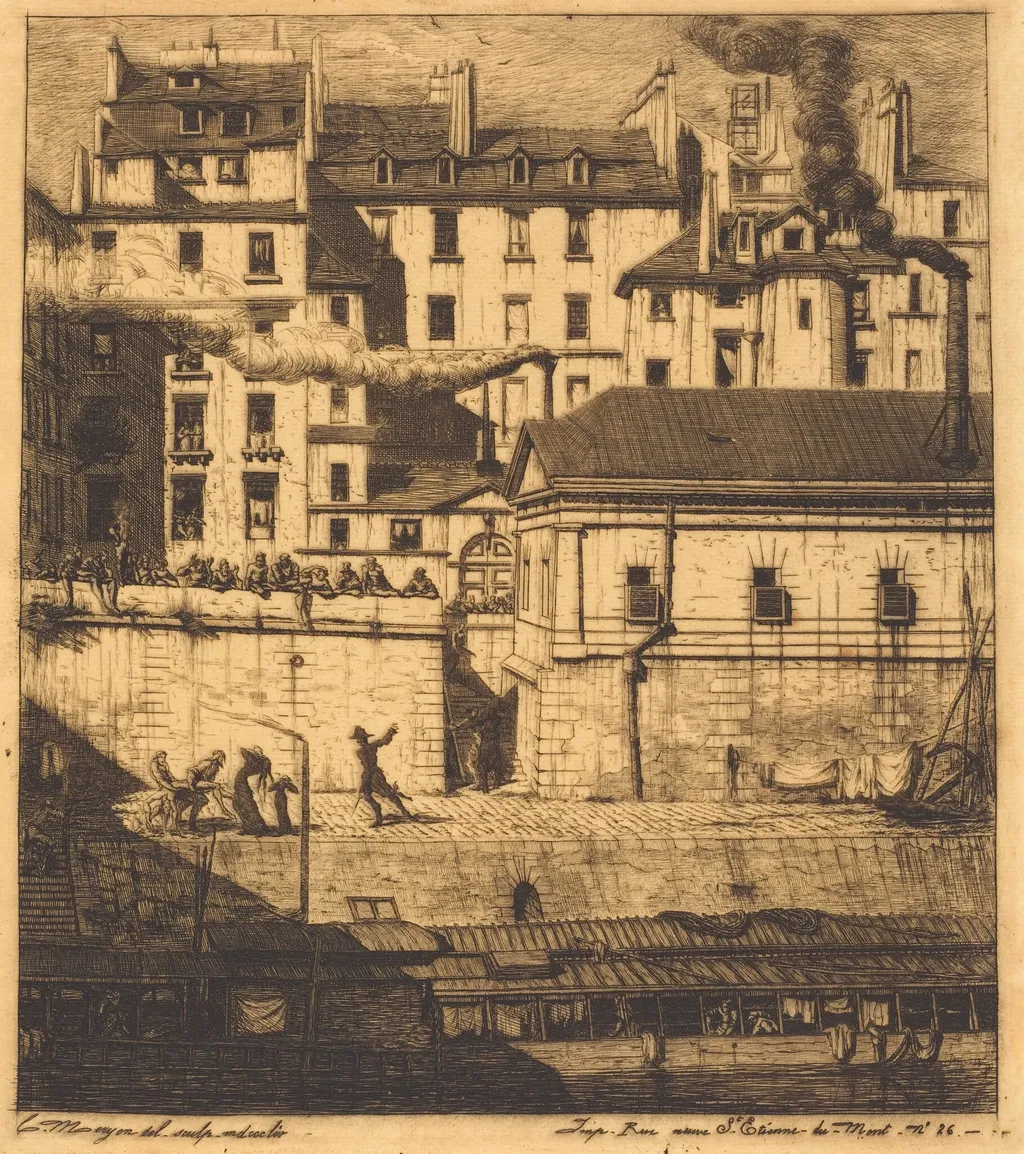
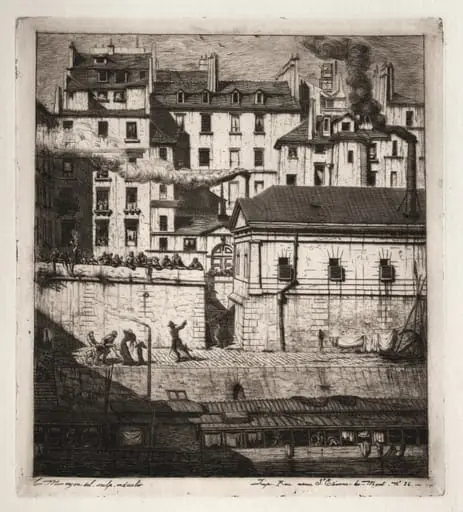
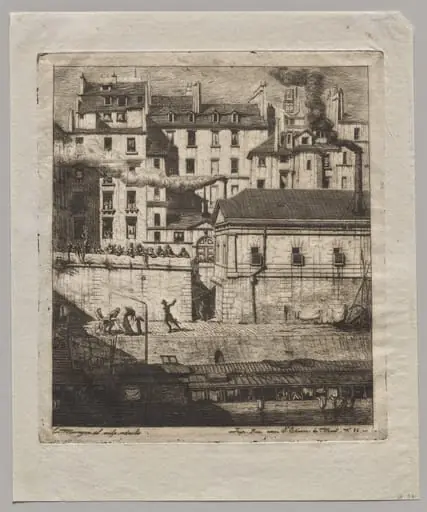
La morgue, Paris (The Mortuary) is an ink print by the Impressionist artist Charles Meryon. It dates from 1854 and is held in the collection of the National Gallery of Art.
About this work
Overview
The work captures a specific public space in the city, reflecting his preoccupation with the architectural and social undercurrents of mid-19th-century Paris.
Charles Meryon created *La morgue, Paris* in 1854 as an etching on laid paper, part of a broader series documenting urban Paris. His choice of medium was shaped by his color blindness, which led him to focus exclusively on monochromatic printmaking. The work captures a specific public space in the city, reflecting his preoccupation with the architectural and social undercurrents of mid-19th-century Paris.
Subject & Meaning
The scene depicts a public mortuary erected in the street, where unidentified corpses were displayed for identification. Crowds gather on sidewalks and lean from windows, their presence suggesting both morbid curiosity and civic routine. The wooden structure, covered and imposing, stands as a silent counterpoint to the bustling life around it, underscoring the proximity of death in daily urban existence.
Technique & Style
Meryon employed fine, incised lines to render the dense urban fabric with precision. The etching captures textures—from the roughness of building facades to the folds of clothing—with a stark, almost clinical clarity. His use of deep shadows and tightly packed forms heightens the sense of confinement, reinforcing the oppressive atmosphere of the scene without overt sentimentality.
History & Provenance
Created during a period of rapid urban transformation in Paris, the print emerged from Meryon’s sustained engagement with the city’s lesser-known corners. It was produced as part of his personal project to document Parisian life, independent of official commissions. The work entered public collections in the decades following his death, recognized for its unflinching realism and technical mastery.
Context
In 1850s Paris, public mortuaries were common features in busy districts, serving as temporary holding sites for the unidentified dead. The practice reflected both public health concerns and the anonymity of urban life. Meryon’s depiction aligns with broader 19th-century interests in social observation, yet his focus on the macabre sets his vision apart from more idealized urban portrayals.
Legacy
Meryon’s etchings, including *La morgue, Paris*, established him as a pivotal figure in 19th-century printmaking. His ability to convey psychological weight through architectural detail influenced later generations of printmakers and urban documentarians. Though largely overlooked in his lifetime, his work gained renewed attention for its unvarnished portrayal of modernity’s hidden edges.
Artist & collection
Artist
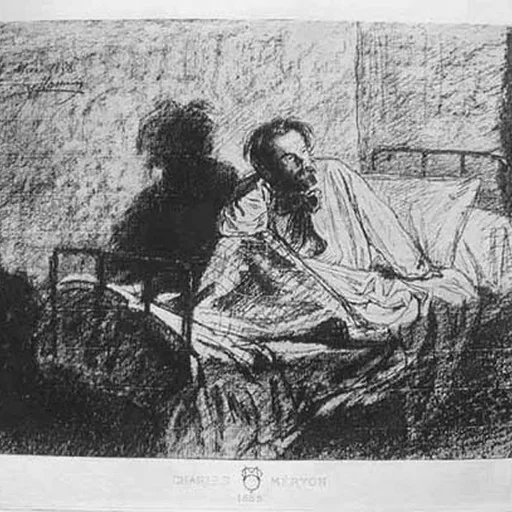
Charles Meryon (sometimes Méryon, 23 November 1821 – 14 February 1868) was a French artist who worked almost entirely in etching, as he had colour blindness.

 Etchings of Paris: The Mortuary
 The Mortuary, Paris
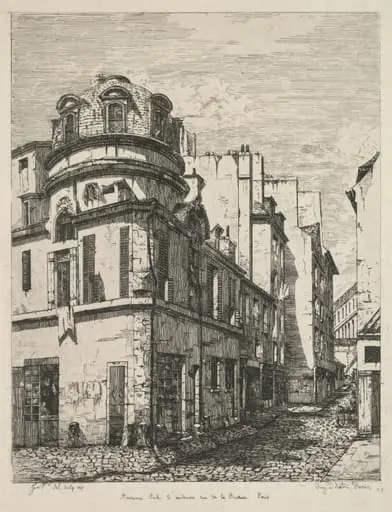 Eaux-Fortes sur le Vieux Paris: Ancienne école de médecine rue de la Bûcherie (Etchings of Old Paris: Former Medical School, rue de la Bucherie)
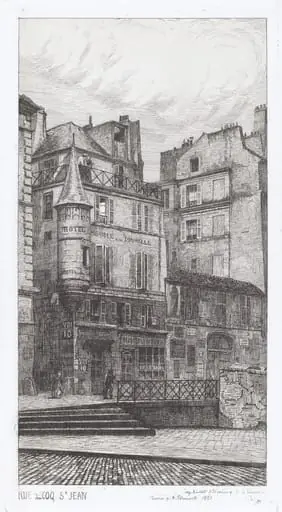 Rue du Coq St. Jean
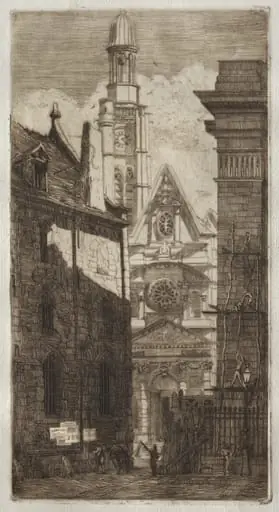 Saint-Etienne-du-Mont
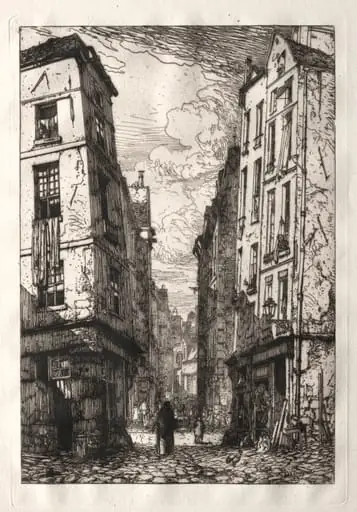 Rue des Marmousets (Old Paris)
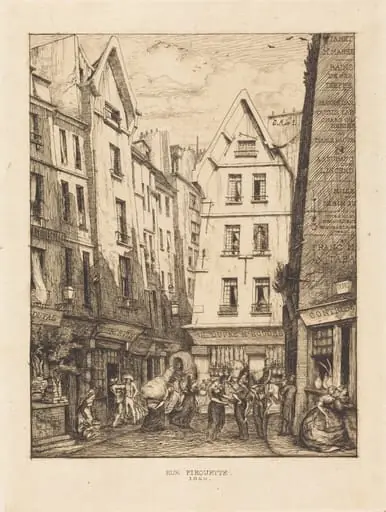 La Rue Pirouette aux halles, Paris (Pirouette Street, Near the Markets, Paris)
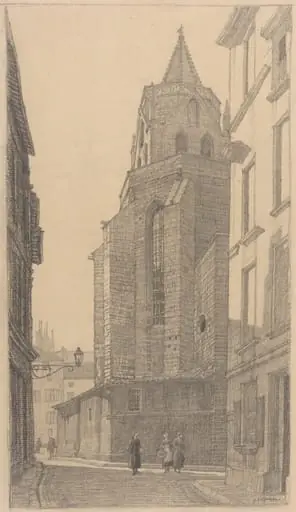 Apse of St.-Didier, Avignon