Artwork
La morgue, Paris (The Mortuary)
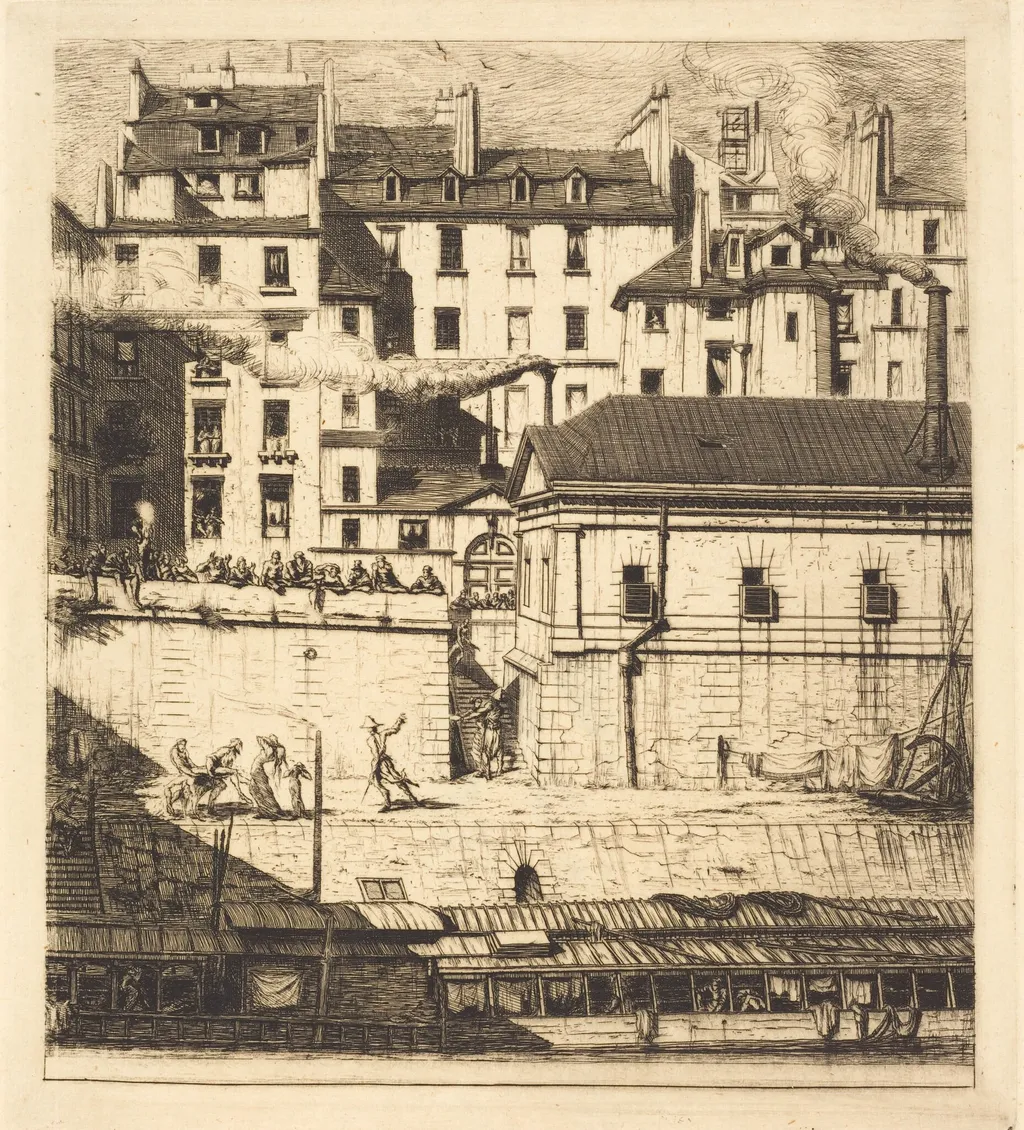
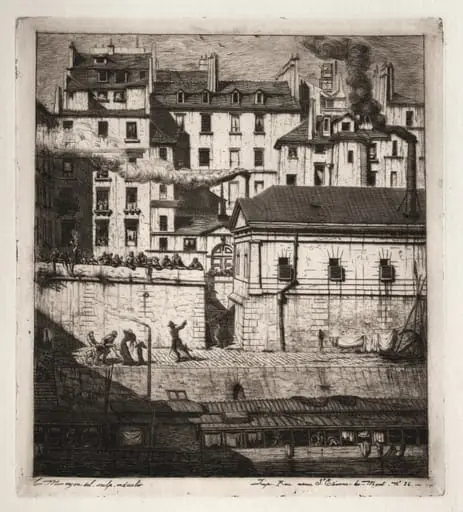
La morgue, Paris (The Mortuary) is an ink print by the Impressionist artist Charles Meryon. It dates from 1854 and is held in the collection of the National Gallery of Art.
About this work
Overview
Charles Meryon’s 1854 etching *La morgue, Paris* captures a quiet yet unsettling moment in the heart of the city.
Charles Meryon’s 1854 etching *La morgue, Paris* captures a quiet yet unsettling moment in the heart of the city. Executed on laid paper, the print reflects his lifelong focus on urban landscapes through the medium of etching. Despite his color blindness, which limited his engagement with painting, Meryon developed a singular graphic language that emphasized texture, shadow, and architectural gravity, establishing him as a leading figure in 19th-century French printmaking.
Subject & Meaning
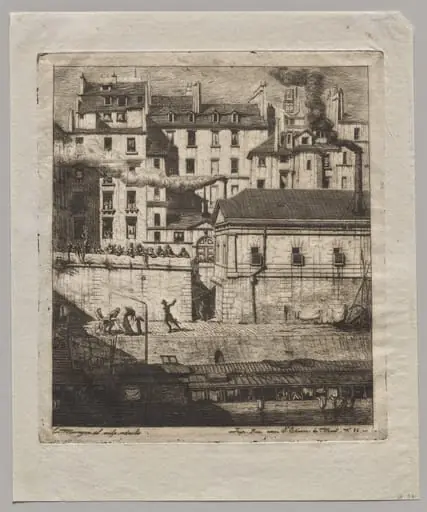
The scene centers on the Paris morgue, a public facility where unidentified bodies were displayed for identification. A dense crowd gathers around the structure, their postures suggesting curiosity, grief, or detachment. Meryon frames the mortuary not as a site of horror but as an ordinary, almost institutional feature of city life, subtly critiquing the public’s desensitized relationship with death amid urban modernity.
Technique & Style
Meryon employed fine, controlled lines to render the intricate facades of buildings, the folds of clothing, and the textures of stone and wood. His etching technique allowed for precise detail and deep tonal contrasts, enhancing the atmospheric weight of the scene. The composition balances vertical architecture with horizontal movement, guiding the viewer’s eye through the bustling street and toward the somber center of the morgue.
History & Provenance
Created during Meryon’s most productive period, the print was part of a series documenting Parisian architecture and public spaces. Though admired by contemporaries such as Baudelaire and later by artists like Van Gogh, Meryon’s work remained largely overlooked in English-speaking collections until the 20th century. The etching survives in several institutional holdings, including the Musée d’Orsay and the British Museum.
Context
In mid-19th-century Paris, the morgue was both a medical facility and a public spectacle, drawing crowds as part of the city’s evolving social fabric. Meryon’s depiction aligns with broader artistic interests in urban realism and the psychological undercurrents of modern life. His focus on overlooked or institutional spaces contrasted with the more celebratory views of Paris common in academic art of the time.
Legacy
Meryon’s etchings, including *La morgue*, influenced later generations of printmakers drawn to urban melancholy and psychological depth. His meticulous technique and refusal to idealize the city helped redefine etching as a vehicle for introspective commentary. Though he died in obscurity, his work gained renewed recognition in the 20th century as a precursor to modernist sensibilities in graphic art.
Artist & collection
Artist
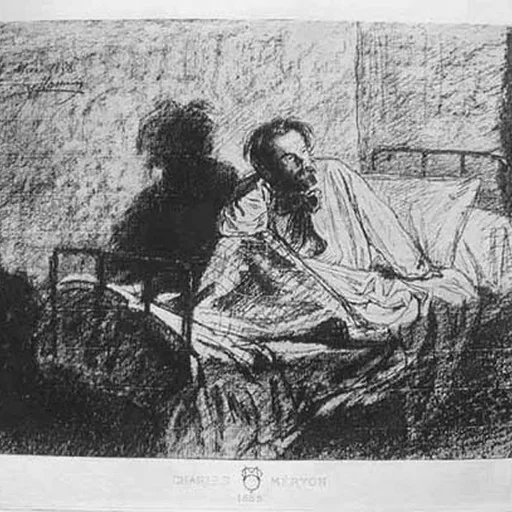
Charles Meryon (sometimes Méryon, 23 November 1821 – 14 February 1868) was a French artist who worked almost entirely in etching, as he had colour blindness.

 Etchings of Paris: The Mortuary
 The Mortuary, Paris
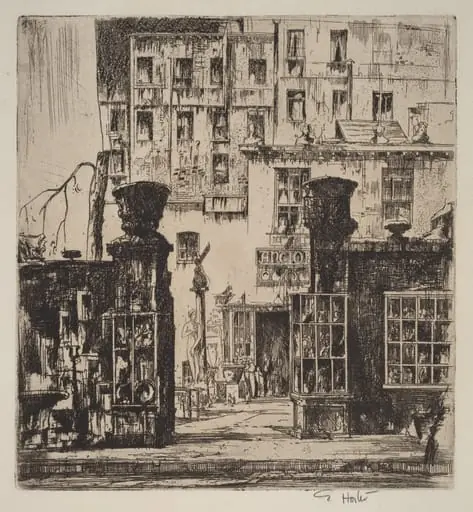 Antique Shop, New York
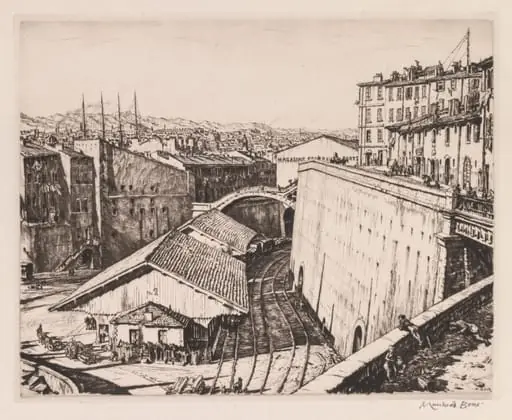 Railway Sheds, Marseilles
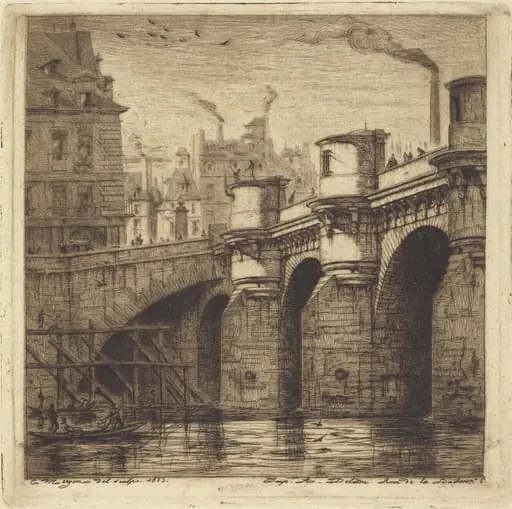 Le Pont Neuf, Paris
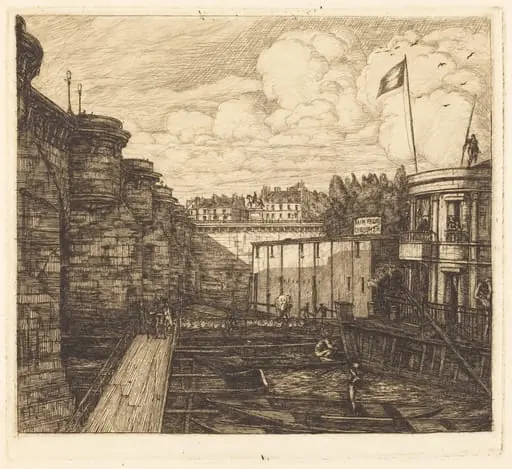 Bain-froid chevrier, dit "de l'École" (Chevrier's Cold-Bath Establishment, Sometimes called the "School-Baths")
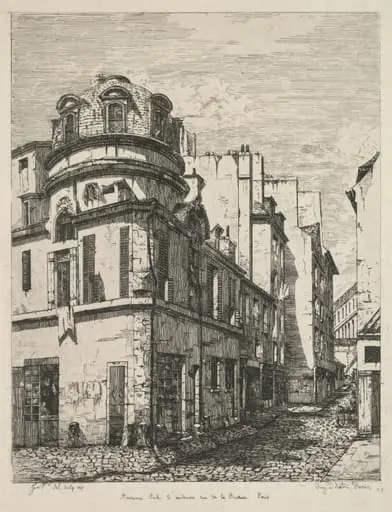 Eaux-Fortes sur le Vieux Paris: Ancienne école de médecine rue de la Bûcherie (Etchings of Old Paris: Former Medical School, rue de la Bucherie)
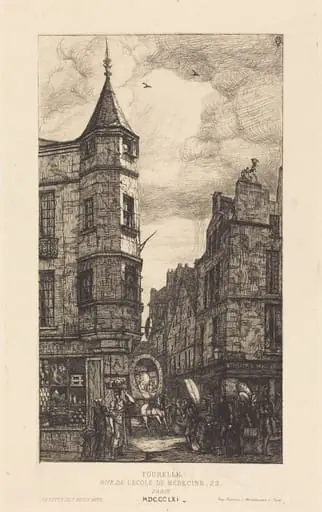 Tourelle, Rue de l'École de Médecine, 22, Paris