Artwork
San Frediano in Cestello, Florence
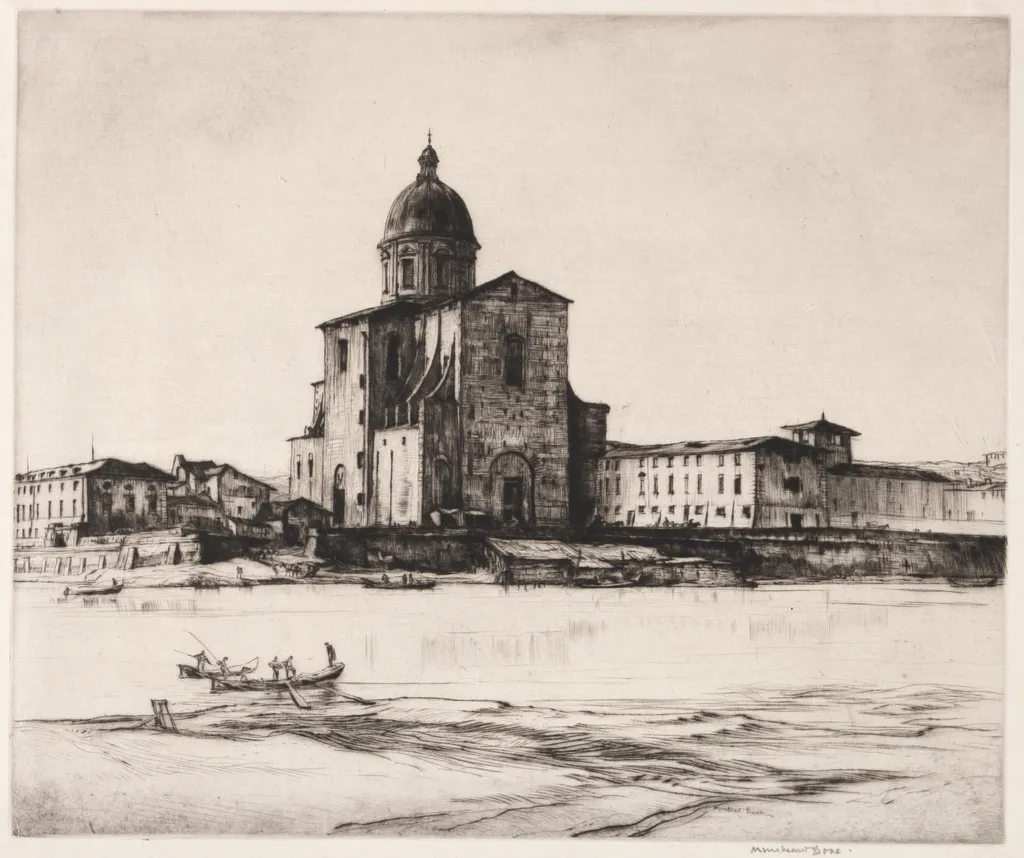
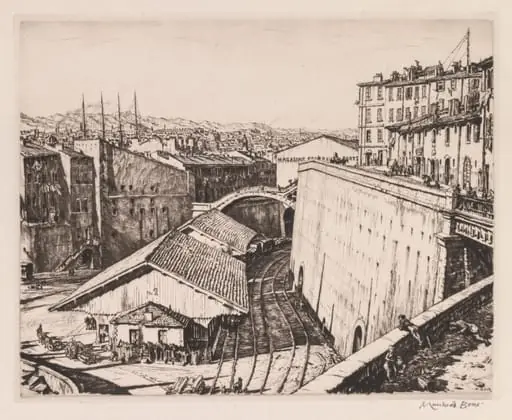
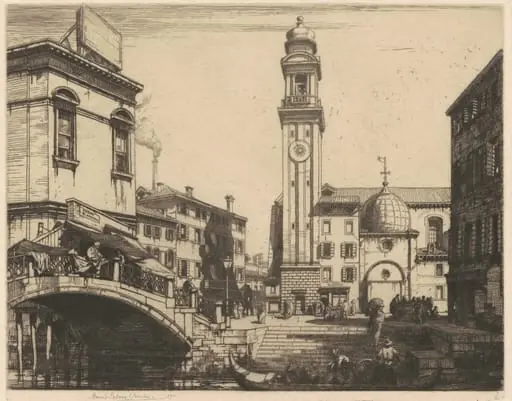
San Frediano in Cestello, Florence is a print by Muirhead Bone. It dates from 1915 and is held in the collection of the Cleveland Museum of Art.
About this work
Overview
Muirhead Bone, a Scottish printmaker active in the early 20th century, produced this etching in 1915 as part of his series documenting European architecture.
Muirhead Bone, a Scottish printmaker active in the early 20th century, produced this etching in 1915 as part of his series documenting European architecture. The work captures the church of San Frediano in Cestello, situated along the Arno River in Florence. Bone’s focus on structural detail and atmospheric tone reflects his commitment to the Etching Revival, a movement that elevated printmaking as a serious artistic medium before its commercial decline in the late 1920s.
Subject & Meaning
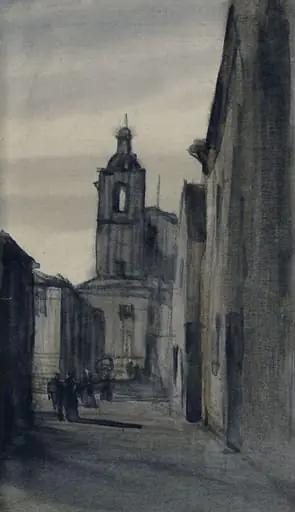
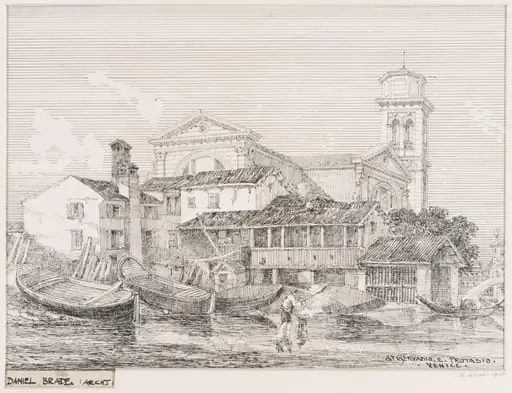
The scene portrays San Frediano in Cestello, a modest yet historically significant church, framed by the quiet waters of the Arno. A small rowboat with two figures approaches the building, introducing human presence without disrupting the stillness. The composition avoids narrative drama, instead emphasizing the church’s enduring presence within its landscape. The work conveys a sense of temporal continuity, where architecture and nature coexist in quiet harmony.
Technique & Style
Bone employed fine, controlled etching lines to model the church’s façade, using gradations of gray to suggest light and shadow. Chiaroscuro enhances the three-dimensionality of the dome and bell tower, while the water’s surface is rendered with delicate, rippling strokes. The contrast between the textured masonry and the smooth, reflective river underscores his skill in balancing detail with tonal restraint. His method prioritizes precision over expressive flourish, characteristic of his architectural studies.
History & Provenance
Created during Bone’s travels in Italy, this print was made before his appointment as an official war artist in the First World War. It belongs to a body of work produced between 1910 and 1918, documenting European landmarks with scholarly attention. The print was likely circulated through print dealers and collectors who favored topographical accuracy and refined craftsmanship. Its survival reflects its appeal to those interested in architectural heritage during a period of rapid social change.
Context
In 1915, Europe stood on the brink of war, yet Bone turned his attention to serene, pre-industrial landscapes. His choice to depict a quiet Florentine church contrasts with the rising tensions of the era. The Etching Revival, which he helped sustain, was a reaction against mass-produced imagery, favoring handcrafted prints as a form of cultural preservation. This work aligns with broader European interests in regional identity and historical continuity.
Legacy
Bone’s architectural prints, including this one, remain valued for their technical discipline and observational clarity. Though his wartime work later overshadowed his pre-war subjects, this etching exemplifies his early dedication to capturing place through meticulous draftsmanship. It contributes to a broader archive of early 20th-century European topography, offering insight into how artists documented the built environment before the upheavals of modern conflict.
Artist & collection
Artist
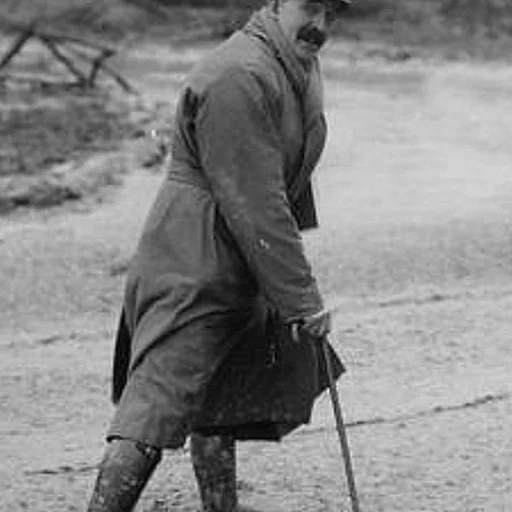
Sir Muirhead Bone (23 March 1876 – 21 October 1953) was a Scottish etcher and watercolourist who became known for his depiction of industrial and architectural subjects and his work as a war artist in both the First and Second World Wars.